Why the PCI Standards for Credit Cards Matter for Business Security
The Payment Card Industry Data Security Standard (PCI DSS) serves as the primary global framework designed to ensure that all organizations that accept, process, store, or transmit credit card information maintain a secure environment....
The Payment Card Industry Data Security Standard (PCI DSS) serves as the primary global framework designed to ensure that all organizations that accept, process, store, or transmit credit card information maintain a secure environment. These standards protect consumers from fraud and identity theft while shielding businesses from the catastrophic financial and reputational damage associated with data breaches.
Contents
The Foundation of Payment Security
At its core, the PCI DSS is not a law, but a set of rigorous security requirements established by the major card brands—Visa, Mastercard, American Express, Discover, and JCB. These entities formed the Payment Card Industry Security Standards Council (PCI SSC) to centralize security protocols, moving away from disparate, brand-specific rules toward a unified global standard.
The primary objective of these standards is to reduce the risk of credit card data exposure. When a business accepts a card payment, the transaction travels through multiple points, including point-of-sale (POS) terminals, e-commerce servers, and payment gateways. Without standardized security, any point in this chain could become a vulnerability, allowing cybercriminals to intercept primary account numbers (PAN), security codes, and sensitive cardholder data. By mandating technical and operational controls, PCI standards create a defensive baseline that evolves alongside emerging cyber threats.
Why Compliance Is Non-Negotiable
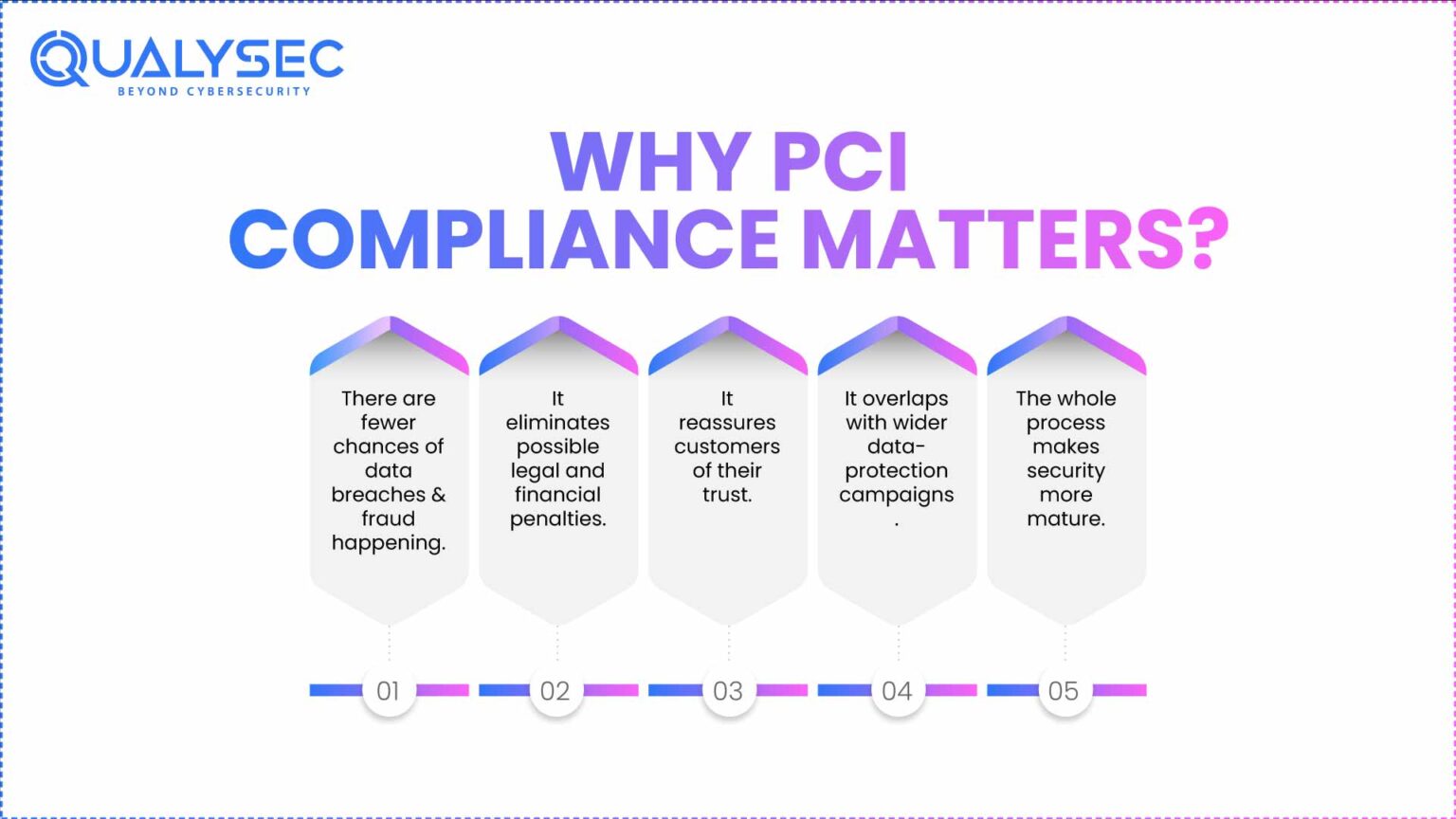
Compliance matters because it serves as the first line of defense for both the merchant and the consumer. For a business, failing to meet these standards invites significant risks that extend well beyond the immediate incident of a data breach.
Financial Consequences
A breach involving credit card data triggers a cascade of expenses. Businesses are often held liable for the costs of forensic investigations, mandatory notification to affected customers, and the issuance of replacement cards. Furthermore, card brands may impose heavy non-compliance fines, which can range from $5,000 to $100,000 per month until the organization achieves compliance.
Operational Impacts
If a merchant experiences a significant breach, the acquiring bank may terminate the business’s ability to process credit card payments entirely. For most modern retailers, restaurants, and e-commerce platforms, the loss of credit card processing capabilities is effectively a shutdown of the business model. Additionally, the merchant may be forced into a higher "tier" of compliance, requiring more frequent and costly audits, such as an annual Report on Compliance (ROC) conducted by a Qualified Security Assessor (QSA).
Brand and Reputational Damage
Consumer trust is a foundational asset for any merchant. A publicized data breach leads to loss of customer loyalty and a negative impact on brand valuation. In an era where consumers are increasingly aware of their digital footprints, customers often abandon brands that fail to demonstrate a commitment to data security.
Understanding the Pillars of PCI Compliance
The PCI DSS is structured around 12 core requirements, organized into six goals that form a comprehensive defensive strategy for any organization handling card data.
The Six Goals of PCI DSS
- Build and Maintain a Secure Network and Systems: This includes installing and maintaining firewall configurations and replacing vendor-supplied defaults (such as default passwords) on all security-critical devices.
- Protect Cardholder Data: This requires protecting stored data through encryption, hashing, or truncation, and ensuring that sensitive authentication data is never stored after authorization.
- Maintain a Vulnerability Management Program: Businesses must regularly update antivirus software and develop and maintain secure systems and applications, often involving patch management for critical security flaws.
- Implement Strong Access Control Measures: This involves restricting access to cardholder data on a "need-to-know" basis and assigning unique IDs to every person with computer access.
- Regularly Monitor and Test Networks: Security systems must be tested frequently, and networks must be monitored to track all access to network resources and cardholder data.
- Maintain an Information Security Policy: Organizations must document a formal security policy that addresses information security for all personnel.
Compliance Levels and Requirements
Not all businesses face the same compliance burdens. The PCI SSC categorizes merchants into levels based on their annual transaction volume. A higher volume of transactions correlates with a higher risk profile, necessitating more stringent verification processes.
| Merchant Level | Annual Transaction Volume | Validation Requirement |
|---|---|---|
| Level 1 | Over 6 million | Annual ROC by QSA, quarterly network scan |
| Level 2 | 1 million – 6 million | Annual Self-Assessment Questionnaire (SAQ), quarterly scan |
| Level 3 | 20,000 – 1 million | Annual SAQ, quarterly scan |
| Level 4 | Fewer than 20,000 | Annual SAQ, quarterly scan (as required by acquirer) |
Note: Level 1 merchants often include those who have experienced a prior data breach, regardless of their transaction volume.
Implementing Security Protocols
For businesses aiming to reach compliance, the process begins with defining the "Cardholder Data Environment" (CDE). The CDE encompasses any system component, process, or person that touches cardholder data. By segmenting the CDE from the rest of the business network, merchants can drastically reduce the scope of their PCI assessment, making compliance easier and more manageable.
The Role of Encryption and Tokenization
Many modern businesses simplify their PCI compliance by utilizing tokenization. Tokenization replaces sensitive cardholder data with a unique, non-sensitive identifier (the "token"). Because the business no longer handles the actual credit card number, the risk of data theft is minimized, and the burden of PCI compliance is significantly reduced.
Third-Party Service Providers (TPSPs)
Many merchants outsource their payment processing to third-party providers. While outsourcing reduces the technical burden, the merchant remains responsible for ensuring that their chosen providers are also PCI-compliant. Always verify the status of payment gateways and hosting providers before integrating them into your business ecosystem.
Common Pitfalls to Avoid
- Ignoring Vendor Defaults: Many breaches occur because businesses leave default usernames and passwords on routers or POS terminals, which are easily searchable online.
- Neglecting Regular Scanning: Quarterly vulnerability scans are mandatory for most levels. Failing to perform these means you are technically non-compliant, even if your systems are generally secure.
- Storing Sensitive Authentication Data: Never store the CVV/CVC code or PIN after authorization, even in encrypted form. This is a direct violation of PCI DSS requirements.
- Incomplete Scoping: Failing to account for all devices—including tablets used for mobile payments or administrative remote-access software—can lead to hidden security gaps.
Frequently Asked Questions
Is PCI compliance required by law? While the PCI DSS is not federal law in the United States, it is a contractual requirement enforced by the major credit card brands. Failure to comply can result in the revocation of your right to process credit cards, which is effectively an operational death sentence for most businesses.
What is the difference between an SAQ and an ROC? An SAQ (Self-Assessment Questionnaire) is a validation tool for smaller merchants to self-certify their compliance status. An ROC (Report on Compliance) is a formal audit performed by an external Qualified Security Assessor (QSA), typically required for large-volume merchants.
Does using a payment gateway remove all my responsibility? Not entirely. While a payment gateway reduces your security burden, you remain responsible for ensuring that the systems you control (such as your website’s security or your internal office network) are configured to meet relevant PCI requirements.
How often does PCI compliance need to be verified? Validation typically occurs annually. However, internal vulnerability scanning must occur quarterly, and any major change to your network infrastructure should trigger an immediate security review.
Where can I find the official standards? The most accurate and up-to-date documentation is maintained directly by the Payment Card Industry Security Standards Council (PCI SSC) on their official website. Always refer to these official documents rather than third-party summaries when implementing technical changes.
Next Steps for Business Owners
To begin the compliance journey, first identify your merchant level through your acquiring bank. Once identified, download the appropriate Self-Assessment Questionnaire (SAQ) from the PCI SSC website to evaluate your current posture. If your business is complex, consider consulting with a QSA to perform a gap analysis. Protecting your customer data is not just a regulatory obligation; it is a critical component of professional business management in 2026 and beyond.
Image Gallery