Who Produced Michael Jackson’s Recordings? The Complete Definitive Guide
Michael Jackson’s sound was crafted by several legendary record producers across his five-decade career. His most famous studio albums—Off the Wall, Thriller, and Bad—were produced by Quincy Jones alongside Jackson himself. Other key p...
Michael Jackson’s sound was crafted by several legendary record producers across his five-decade career. His most famous studio albums—Off the Wall, Thriller, and Bad—were produced by Quincy Jones alongside Jackson himself. Other key producers include Motown’s songwriting team The Corporation, R&B pioneer Teddy Riley, and contemporary hitmaker Rodney "Darkchild" Jerkins.
Contents
The Motown Era: The Corporation and Early Hitmakers (1969–1975)
Before Michael Jackson became a solo global icon, his early sound was established at Motown Records under the direct supervision of Motown founder Berry Gordy. Gordy understood that launching a group of child prodigies required a tailored, foolproof production system that could yield instant pop and R&B hits.
The Corporation
To forge a signature sound for The Jackson 5, Gordy assembled a specialized in-house production and songwriting team known as The Corporation. This team consisted of:
- Berry Gordy (Executive producer and strategic arranger)
- Alphonso Mizell (Arranger and keyboardist)
- Freddie Perren (Arranger, synthesizer pioneer, and keyboardist)
- Deke Richards (Songwriter, guitarist, and team leader)
The Corporation produced and wrote The Jackson 5’s string of historic debut number-one singles on the Billboard Hot 100: "I Want You Back," "ABC," "The Love You Save," and "Mama's Pearl." Their production technique combined lively bubblegum pop hooks with driving R&B basslines, layered vocal arrangements, and energetic rhythm sections designed to highlight young Michael's uncanny vocal power.
Hal Davis and Mel Larson
As Michael Jackson began releasing solo albums alongside his work with his brothers, producer Hal Davis took on a central role. Davis produced Jackson's debut solo single, "Got to Be There" (1971), as well as the chart-topping cover of "Never Can Say Goodbye" for The Jackson 5. Davis was known for pushing Jackson’s vocal range and layering rich orchestral arrangements over classic Motown rhythm tracks.
Producers Mel Larson and Jerry Marcellino were also responsible for shaping Jackson’s early solo catalog, producing iconic tracks such as "Rockin' Robin" and the Oscar-nominated title song "Ben" (1972). During this period, Jackson acted primarily as a vocalist, following strict studio directions set by Motown's established production team.
The Transition to Epic: Gamble & Huff and Self-Production (1976–1978)
Seeking greater creative freedom, artistic control, and higher royalty rates, the Jackson brothers left Motown in 1975 and signed with Epic Records (a subsidiary of CBS Records), renaming themselves The Jacksons.
- Motown Era (1969–1975) (The Corporation / Davis)
- Philadelphia Sound (1976–1977) (Gamble & Huff)
- Self-Production & Quincy Jones (1978–1987) (Michael Jackson / Quincy Jones)
Kenneth Gamble and Leon Huff
To transition the group into the adult disco and funk era, Epic Records paired The Jacksons with Philadelphia soul pioneers Kenneth Gamble and Leon Huff. Operating out of Sigma Sound Studios, Gamble and Huff produced the majority of The Jacksons (1976) and Goin' Places (1977).
Their signature production style featured lush string arrangements, polished brass sections, and smooth disco grooves. While songs like "Enjoy Yourself" became commercial hits, the brothers sought full autonomy over their music.
The Rise of Self-Production
By 1978, Epic granted the group full self-production rights for the album Destiny. Michael Jackson and his brothers wrote, arranged, and produced almost every track on the album, including the smash hits "Shake Your Body (Down to the Ground)" and "Blame It on the Boogie."
This marked a crucial turning point: Michael Jackson gained hands-on experience in rhythm composition, beatboxing vocal percussion, horn arrangements, and multitrack vocal stacking—skills that defined his subsequent solo career.
The Quincy Jones Era: The Legendary Trilogy (1979–1987)
The partnership between Michael Jackson and producer Quincy Jones is widely considered one of the most successful producer-artist collaborations in popular music history. The duo met while working on the 1978 film adaptation of the musical The Wiz, where Jones served as musical director and Jackson starred as the Scarecrow. When Jackson asked Jones to recommend a producer for his upcoming solo album, Jones volunteered himself.
| Off the Wall (1979) | Thriller (1982) | Bad (1987) |
|---|---|---|
| • Disco, Funk, & Ballads• Breakthrough Success | • Pop, Rock, R&B, Funk• Best-Selling Album | • Industrial Pop & Funk• 5 #1 Billboard Hits |
1. Off the Wall (1979)
- Lead Producer: Quincy Jones
- Co-Producer: Michael Jackson
- Key Tracks: "Don't Stop 'Til You Get Enough," "Rock with You," "Off the Wall"
Off the Wall transformed Jackson from a former child star into a dominant solo artist. Quincy Jones brought in top-tier studio musicians, including members of Toto, guitarist Larry Carlton, and songwriter Rod Temperton (keyboardist for the funk group Heatwave).
Jackson self-produced and wrote "Don't Stop 'Til You Get Enough," introducing his trademark vocal hiccups, falsetto flourishes, and driving basslines. Jones blended live disco instrumentation with sophisticated jazz harmonies, establishing a slick, organic aesthetic that earned critical acclaim worldwide.
2. Thriller (1982)
- Lead Producer: Quincy Jones
- Co-Producer: Michael Jackson
- Key Tracks: "Billie Jean," "Beat It," "Thriller," "Human Nature"
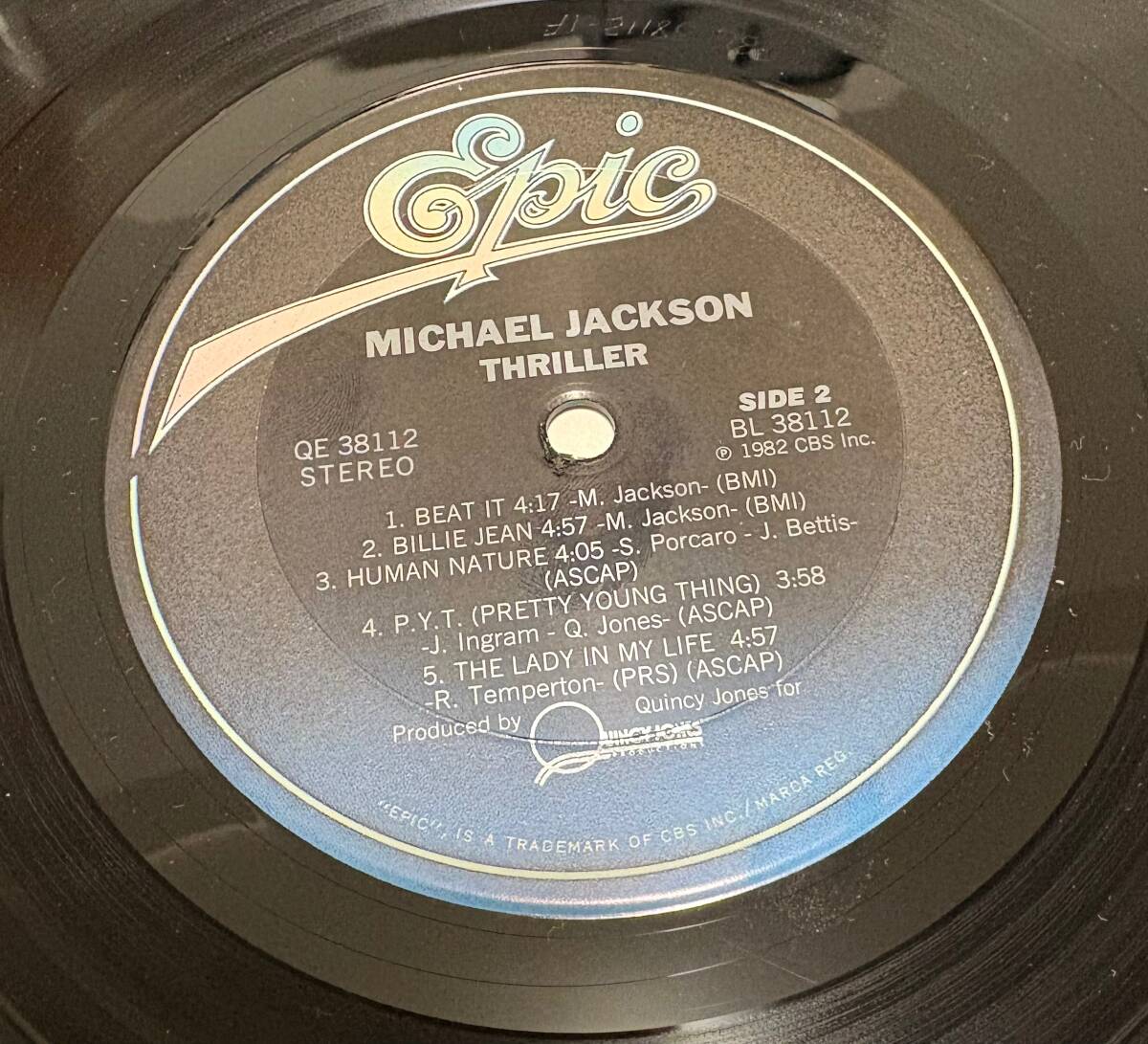
Thriller remains the best-selling album of all time. Jones and Jackson evaluated hundreds of songs to assemble a nine-track record where every song could serve as a commercial single.
Jackson wrote and co-produced four key tracks: "Billie Jean," "Beat It," "Wanna Be Startin' Somethin'," and "The Girl Is Mine."
- "Billie Jean": Feature audio engineer Bruce Swedien and Jackson’s signature minimalist funk groove. Jackson insisted on a long drum intro that took weeks to perfect, using a custom sonic platform to isolate the drum kit sound.
- "Beat It": A ground-breaking crossover between heavy metal and contemporary R&B, featuring Eddie Van Halen's iconic guitar solo and rhythm guitar work by Steve Lukather.
- "Thriller": Written by Rod Temperton and produced by Jones, featuring theatrical sound effects, synthesizer arrangements, and a spoken-word voiceover by horror legend Vincent Price.
3. Bad (1987)
- Lead Producer: Quincy Jones
- Co-Producer: Michael Jackson
- Key Tracks: "Bad," "Smooth Criminal," "The Way You Make Me Feel," "Man in the Mirror"
For Bad, Jackson wrote nine of the eleven tracks, taking a dominant role in sound design, rhythm composition, and synthesizer selection. Jones focused on sonic precision, incorporating modern digital synthesizers (such as the Synclavier II), drum machine layering, and industrial percussion textures.
Bad made history by producing five consecutive number-one singles on the Billboard Hot 100 chart. While the album marked the final full-length collaboration between Jackson and Jones, it solidified Jackson's reputation as a master rhythm strategist and studio technician.
The New Jack Swing Era: Teddy Riley and Dangerous (1991)
Following the completion of his contract with Quincy Jones, Jackson sought to modernize his sound for the 1990s by embracing contemporary R&B, hip-hop beats, and street-level dance grooves. He turned to Teddy Riley, the creator of the "New Jack Swing" genre.
- Traditional Disco/Funk (1970s)
- Quincy Jones Pop/R&B (1980s)
- Teddy Riley New Jack Swing (1990s)
Dangerous (1991)
- Executive Producer: Michael Jackson
- Primary Producers: Teddy Riley, Michael Jackson, Bill Bottrell, Bruce Swedien
- Key Tracks: "Remember the Time," "Jam," "Black or White," "In the Closet"
Riley brought hard-hitting snare samples, metallic drum loops, syncopated swing rhythms, and dense vocal layering to the album. Jackson and Riley spent months at Larrabee Sound Studios tweaking sound elements to ensure maximum punch in dance clubs and on radio speakers.
Songwriter and producer Bill Bottrell co-produced and wrote the rock-pop hybrid single "Black or White," featuring heavy guitar riffs and heavy dance percussion, as well as the heavy metal ballad "Give In to Me" featuring Guns N' Roses guitarist Slash.
Experimental Production: HIStory and Blood on the Dance Floor (1995–1997)
For his ninth studio release, HIStory: Past, Present and Future, Book I (1995), Jackson assembled a diverse group of elite producers to craft an aggressive, autobiographical soundscape.
Jimmy Jam & Terry Lewis
The legendary production duo Jimmy Jam and Terry Lewis (famous for their career-defining work with Janet Jackson) were brought in to co-produce several tracks. Their most notable contribution was "Scream," a hard-edged, industrial R&B duet between Michael and Janet Jackson that targeted tabloid journalism. Jam and Lewis also co-produced "Tabloid Junkie" and "2 Bad," utilizing heavy drum programming, slap bass, and aggressive synthesizer lines.
Additional Collaborators on HIStory
- Dallas Austin: Co-produced the hip-hop-influenced track "This Time Around" featuring the Notorious B.I.G.
- David Foster: Legendary pop producer who arranged and produced the lush orchestrations for "Earth Song" and "Childhood."
- R. Kelly: Wrote and co-produced the Billboard Hot 100 number-one ballad "You Are My Life" (and later wrote "Cry" for Invincible).
In 1997, Jackson released Blood on the Dance Floor: HIStory in the Mix, which featured five new original studio recordings produced primarily by Jackson, Teddy Riley, Jimmy Jam, Terry Lewis, and audio engineer Rene Moore.
The Modern R&B Era: Rodney Jerkins and Invincible (2001)
For his final full studio album released during his lifetime, Invincible (2001), Jackson sought out cutting-edge urban producers to keep his sound aligned with early 2000s R&B and pop trends.
Rodney "Darkchild" Jerkins
Young hitmaker Rodney Jerkins served as the primary producer for the project. Jerkins brought staccato drum rhythms, futuristic synth basslines, and intricate digital edits to songs like "You Rock My World," "Unbreakable," "Heartbreaker," and "Privacy."
Supporting Producers on Invincible
- Teddy Riley: Returned to produce "Heaven Can Wait" and "2000 Watts."
- Dr. Freeze (Elliot Straite): Co-produced "Break of Dawn" and "A Place with No Name."
- Babyface (Kenneth Edmonds): Contributed acoustic production and songwriting on "You Are My Life."
- Andreao "Fanatic" Heard & Nate Hills (Danja): Contributed urban pop production to various late-era recording sessions.
Master Overview: Michael Jackson Album Production Discography
The following table summarizes the primary producers, release years, and standout tracks across Michael Jackson's core studio discography:
| Album Title | Release Year | Primary Producers | Key Standout Tracks |
|---|---|---|---|
| Got to Be There | 1972 | Berry Gordy, Hal Davis | "Got to Be There", "Rockin' Robin" |
| Ben | 1972 | Berry Gordy, Mel Larson, Jerry Marcellino | "Ben", "Everybody's Somebody's Fool" |
| Music & Me | 1973 | Hal Davis, Berry Gordy | "Music & Me", "With a Child's Heart" |
| Forever, Michael | 1975 | Edward Holland Jr., Brian Holland, Hal Davis | "One Day in Your Life", "We're Almost There" |
| Off the Wall | 1979 | Quincy Jones, Michael Jackson | "Don't Stop 'Til You Get Enough", "Rock with You" |
| Thriller | 1982 | Quincy Jones, Michael Jackson | "Billie Jean", "Beat It", "Thriller" |
| Bad | 1987 | Quincy Jones, Michael Jackson | "Bad", "Smooth Criminal", "Man in the Mirror" |
| Dangerous | 1991 | Michael Jackson, Teddy Riley, Bill Bottrell | "Remember the Time", "Black or White", "Jam" |
| HIStory | 1995 | Michael Jackson, Jimmy Jam & Terry Lewis, David Foster | "Scream", "Earth Song", "They Don't Care About Us" |
| Invincible | 2001 | Michael Jackson, Rodney Jerkins, Teddy Riley | "You Rock My World", "Butterflies", "Unbreakable" |
Key Technical Pioneers Behind the Sound
While record producers set the creative direction, Michael Jackson’s recordings relied heavily on technical innovators who engineered, arranged, and sculpted audio in the studio.
| Bruce Swedien | Rod Temperton | Matt Forger |
|---|---|---|
| Technical Engineer• Acusonic Recording• Stereo Soundstaging | Songwriter/Arranger• "Thriller"• "Rock with You" | Audio Archivist & Engineer• Home Demo Recording• Unreleased Tracks |
Bruce Swedien: The Sonic Architect
Grammy Award-winning audio engineer Bruce Swedien worked on virtually every major Michael Jackson recording from Off the Wall through Invincible. Swedien was famous for developing the Acusonic Recording Process, a technique involving paired stereo microphones to capture realistic spatial imaging and depth without phase distortion.
Swedien’s meticulous recording methods gave Jackson’s bass drums, snares, and vocal double-tracks an unparalleled punch that remains a benchmark for studio audio quality.
Rod Temperton: The Harmonic Genius
British songwriter and arranger Rod Temperton was hired by Quincy Jones during the Off the Wall sessions. Temperton wrote several of Jackson’s biggest hits, including "Off the Wall," "Rock with You," and "Thriller." His ability to write tight chord progressions, vocal harmonies, and basslines made him an indispensable collaborator throughout the late 1970s and 1980s.
Brad Buxer and Matt Forger
Keyboardist Brad Buxer served as Jackson's long-time musical director, studio arranger, and digital programmer from the 1990s onward, co-writing and producing tracks behind the scenes. Engineer Matt Forger managed Jackson's private studio at the Havenhurst house in Encino, California, capturing hundreds of early demos and pre-production tracks that laid the groundwork for major album releases.
Frequently Asked Questions
Did Michael Jackson produce his own music?
Yes, Michael Jackson was a co-producer or lead producer on a vast portion of his catalog. Starting with Destiny (1978) with The Jacksons, he took an active role in music production. He wrote and co-produced iconic solo hits like "Don't Stop 'Til You Get Enough," "Billie Jean," "Beat It," "Bad," "Smooth Criminal," and "They Don't Care About Us."
How many albums did Quincy Jones produce for Michael Jackson?
Quincy Jones produced three solo studio albums for Michael Jackson: Off the Wall (1979), Thriller (1982), and Bad (1987). Together, these three albums sold hundreds of millions of copies worldwide and won multiple Grammy Awards.
Who produced "Billie Jean"?
"Billie Jean" was produced by Quincy Jones and co-produced by Michael Jackson. Jackson wrote the song himself and created the initial arrangement on a demo recorded in his home studio before refining it at Westlake Recording Studios with engineer Bruce Swedien.
Who produced Michael Jackson's rock hit "Black or White"?
"Black or White" was written, arranged, and produced by Michael Jackson alongside producer and musician Bill Bottrell. Bottrell played the famous guitar riffs on the track and performed the rap section under the pseudonym LTB.
Who were the main producers on the Dangerous album?
The primary producers on Dangerous were Michael Jackson and Teddy Riley, the pioneer of New Jack Swing. Additional tracks were produced by Bill Bottrell and long-time recording engineer Bruce Swedien.
Key Takeaways for Music Historians and Producers
- Evolution of Autonomy: Michael Jackson shifted from an interpreted performer guided by Motown’s in-house team to an autonomous writer-producer who directed every element of his music.
- The Power of Collaboration: Jackson’s peak critical and commercial successes stemmed from balanced partnerships—balancing Quincy Jones's formal jazz/pop craftsmanship with Jackson's intuitive rhythm arrangement.
- Pioneering Sound Engineering: Audio engineer Bruce Swedien’s Acusonic Recording Process established dynamic studio standards that are still studied by modern recording engineers.
- Adaptability Across Eras: Jackson continually updated his production team—from Motown soul to Philadelphia R&B, Quincy Jones pop-funk, Teddy Riley's New Jack Swing, and Rodney Jerkins's futuristic urban R&B—ensuring his music remained current across four decades.
Image Gallery