The New JFK International Airport Terminal 1 Explained: Design, Timeline, and Passenger Impact
The New Terminal 1 (NTO) at John F. Kennedy International Airport is a $19 billion mega-project replacing existing Terminal 1, Terminal 2, and the former Terminal 3 footprint with a single, state-of-the-art international terminal. Open...
The New Terminal 1 (NTO) at John F. Kennedy International Airport is a $19 billion mega-project replacing existing Terminal 1, Terminal 2, and the former Terminal 3 footprint with a single, state-of-the-art international terminal. Opening its first phase in 2026, the 2.4-million-square-foot facility features 23 widebody-capable gates, advanced biometric technology, expansive indoor dining and retail, and a sustainable, microgrid-powered energy system.
Contents
What Is JFK’s New Terminal 1?
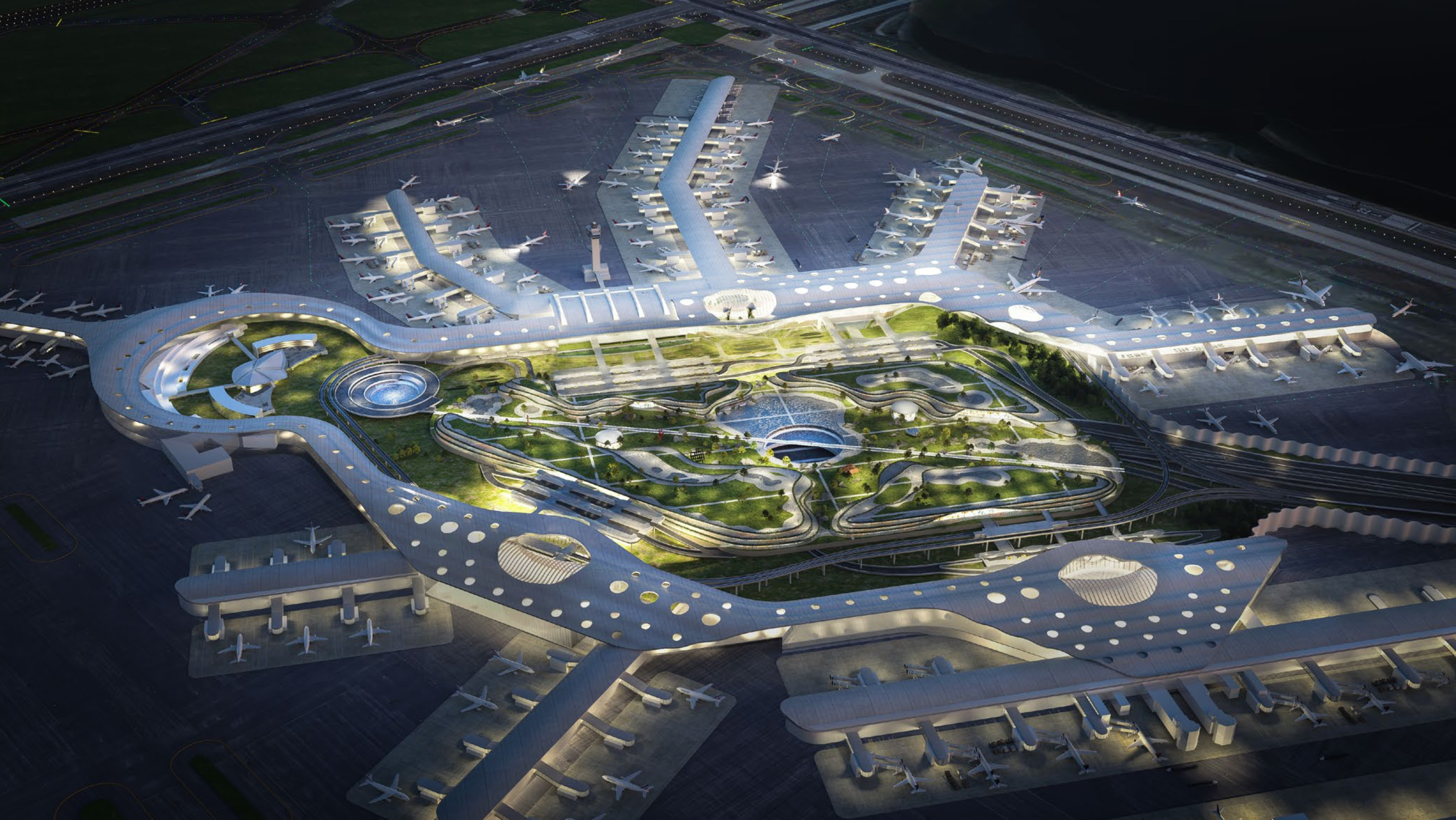
The New Terminal 1 (NTO) represents the largest single facility redevelopment in the history of John F. Kennedy International Airport (JFK). Part of a broader $19 billion master plan spearheaded by the Port Authority of New York and New Jersey, NTO consolidates space previously occupied by legacy Terminal 1, Terminal 2, and the demolished Terminal 3 (the historic Pan Am Worldport) into a unified, world-class international hub.
Spanning 2.4 million square feet upon full completion, NTO is nearly double the combined footprint of the facilities it replaces. The project is financed and managed through a public-private partnership (P3) model between the Port Authority and the New Terminal 1 Consortium—a private development group comprising Ferrovial Airports, Carlyle, JLC Infrastructure, and the Union Labor Life Insurance Company (Ullico).
Designed by the global architectural firm Gensler, the facility is engineered specifically for long-haul international passenger volume. It eliminates the cramped check-in halls, fragmented security checkpoints, and outdated baggage infrastructure that characterized JFK’s older southern terminals. Instead, NTO offers high-ceilinged, light-filled spaces designed to streamline passenger movement from curb to gate while serving as a prominent international gateway to New York City.
Construction Timeline and Phased Rollout
The redevelopment of Terminal 1 was planned in distinct phases to minimize disruption to active airline operations across JFK's southern quadrant. Construction officially broke ground in 2022 after delays tied to pandemic-era travel reductions.
- Phase 1 Opening (2026)
- Main Arrivals/Dep.
- 14 Operational Gates
- AirTrain Connection
- Phase 2 Buildout
- Additional Gates
- Retail Expansion
- Terminal Demolition
- Full Operational Completion (~2030)
- 23 Widebody Gates Active
- Complete Microgrid Network
- 2.4M Sq. Ft. Operational
Phase 1 Launch (2026)
The initial phase opens the core infrastructure of the terminal to passengers. Key components delivered in Phase 1 include:
- The primary Arrivals and Departures Hall, featuring soaring naturally lit concourses and centralized security operations.
- The first 14 operational widebody gates, accommodating international long-haul aircraft.
- Direct linkages to the JFK AirTrain network and a revamped ground transportation center.
- Initial retail, dining, and airline lounge facilities.
Phase 2 and Final Completion (Targeted for ~2030)
Following the Phase 1 opening, construction crews will complete the demolition of remaining legacy structures, allowing for the buildout of the terminal's east wing. Upon final completion:
- The terminal will expand to a total of 23 widebody-capable gates.
- Concession space will reach its full capacity of over 300,000 square feet of retail, dining, and public lounge areas.
- All secondary roadways, curbside pickup lanes, and parking infrastructure will be fully operational.
Participating Airlines and Alliance Hubs
The New Terminal 1 is designed primarily to serve international long-haul carriers, hosting several major global airline alliances under one roof. By co-locating strategic partners, NTO streamlines baggage transfers and passenger connections for international itineraries.
Several flagship international carriers have committed to anchoring their JFK operations at NTO:
- Air France and KLM: Transitioning their major trans-Atlantic hub operations to NTO, providing seamless connections for SkyTeam alliance passengers.
- Lufthansa Group: Including Lufthansa, Swiss International Air Lines, Austrian Airlines, and Brussels Airlines, anchoring Star Alliance long-haul service at the terminal.
- Korean Air: Providing key long-haul connections to Asia and serving as a core partner in the SkyTeam presence at NTO.
- Etihad Airways: Operating primary non-stop service between New York and the Middle East.
- EVA Air, LOT Polish Airlines, SAS, and Turkish Airlines: Bringing additional widebody international routes into the combined terminal footprint.
All 23 gates at NTO are designed to accept widebody aircraft, including dual-decker Airbus A380s, Boeing 777-300ERs, Boeing 787 Dreamliners, and Airbus A350s. Multiple gates feature flexible dual-jetway systems that can accommodate either one large widebody aircraft or two standard narrowbody aircraft, giving airline operational teams maximum scheduling flexibility.
Passenger Experience, Technology, and Amenities
The architecture of NTO centers on reducing passenger stress, shortening processing times, and delivering modern commercial amenities.
- Curbside Drop-off & Ground Transport
- Digital Self-Service Check-In
- Biometric TSA Security Checkpoint
- Central Great Hall: Dining & Retail
- Departure Gates (Dual-Jetway Widebody Access)
Biometric Processing and Smart Security
NTO incorporates advanced technology at every step of the departures and arrivals process:
- Touchless Bag Drop: Self-service bag-drop kiosks use facial recognition technology linked to passport databases to verify passenger identity without requiring physical boarding passes.
- Next-Generation TSA Screening: Security lanes are equipped with Compute Tomography (CT) 3D scanners, allowing passengers to keep electronics and compliant liquids inside their carry-on luggage during inspection. Automated bin-return systems keep checkpoint lines moving continuously.
- Biometric E-Gates: International departure gates and U.S. Customs and Border Protection (CBP) arrival corridors use facial scanning to speed up identity verification, reducing boarding times for 300+ passenger widebody aircraft.
Dining, Retail, and Public Spaces
The commercial core of NTO is modeled after iconic New York City neighborhoods. Rather than standard airport retail, the terminal features localized culinary concepts, boutique retail storefronts, and duty-free shopping districts.
- Sense of Place Architecture: Public plazas within the terminal feature high ceilings, indoor green spaces, floor-to-ceiling windows providing airfield views, and public art installations curated in partnership with New York-based artists.
- Premium Lounges: Air France, Lufthansa, and independent lounge operators are constructing expansive flagship lounges on upper levels, offering quiet work zones, fine dining, spa facilities, and direct gate views.
- Accessibility Services: NTO exceeds standard ADA mandates, featuring sensory room environments for neurodivergent travelers, fully accessible restrooms with adult changing tables, companion-care facilities, and clear, high-contrast digital wayfinding in multiple languages.
Sustainability Infrastructure and Microgrid Power
A defining characteristic of NTO is its commitment to environmental sustainability and energy resilience. The terminal aims to achieve LEED Gold certification, reflecting green design principles across construction and ongoing operations.
- NTO Energy Resilience
- Rooftop Solar Array (13,000+ Panels)
- Fuel Cells & Battery Storage (12-MW Capacity)
- Continuous Power for Critical Operations (Security, IT, Baggage, Life-Safety)
The facility hosts the largest rooftop solar array in New York City and the largest on any U.S. airport terminal. Combined with a localized microgrid system developed in partnership with AlphaStruxure, NTO can generate its own power independent of the main municipal electrical grid.
- 12-Megawatt Microgrid: Powered by a combination of rooftop solar photovoltaics, natural gas fuel cells, and battery energy storage systems.
- Operational Resilience: During regional power outages or grid instability, the microgrid can isolate (or "island") the terminal, keeping critical operations—including security checkpoints, baggage handling systems, IT networks, and life-safety systems—functioning without interruption.
- Water Conservation and HVAC Efficiency: Rainwater harvesting systems collect runoff for non-potable building uses, while high-efficiency HVAC systems reduce overall energy consumption for heating and cooling the large indoor spaces.
Key Terminal Specifications Comparison
The following table details the key operational and physical differences between the legacy terminal infrastructure and the completed New Terminal 1 project.
| Specification Feature | Legacy Terminal 1 / Terminal 2 | New Terminal 1 (NTO) | Operational Benefit |
|---|---|---|---|
| Total Floor Area | ~1.2 million sq. ft. (combined) | ~2.4 million sq. ft. | Doubles physical capacity, reducing crowding |
| Total Aircraft Gates | 12 legacy gates | 23 widebody-capable gates | Increases long-haul international flight handling |
| Security Capacity | Fragmented checkpoints | Centralized high-throughput CT screening | Faster passenger processing and shorter wait times |
| Power Source | Municipal electrical grid | 12-MW Microgrid + Rooftop Solar Array | Operational resilience during power grid outages |
| Baggage Systems | Older conventional conveyor systems | High-speed automated tote baggage system | Lower rate of delayed or misrouted international luggage |
| Sustainability Rating | Non-certified legacy structures | Targeted LEED Gold Certification | Significantly reduced carbon footprint and energy use |
Navigating NTO: Guidance for Travelers
Traveling through JFK during major redevelopment phases requires planning, as road configurations, AirTrain routes, and terminal access patterns undergo periodic adjustments.
Arriving at the Airport
- AirTrain Access: The JFK AirTrain connects directly to NTO, providing transfer connections to both the Long Island Rail Road (LIRR) and NYC Subway lines at Jamaica and Howard Beach stations. Passengers are strongly advised to use rail transit to bypass roadway congestion around the central terminal area.
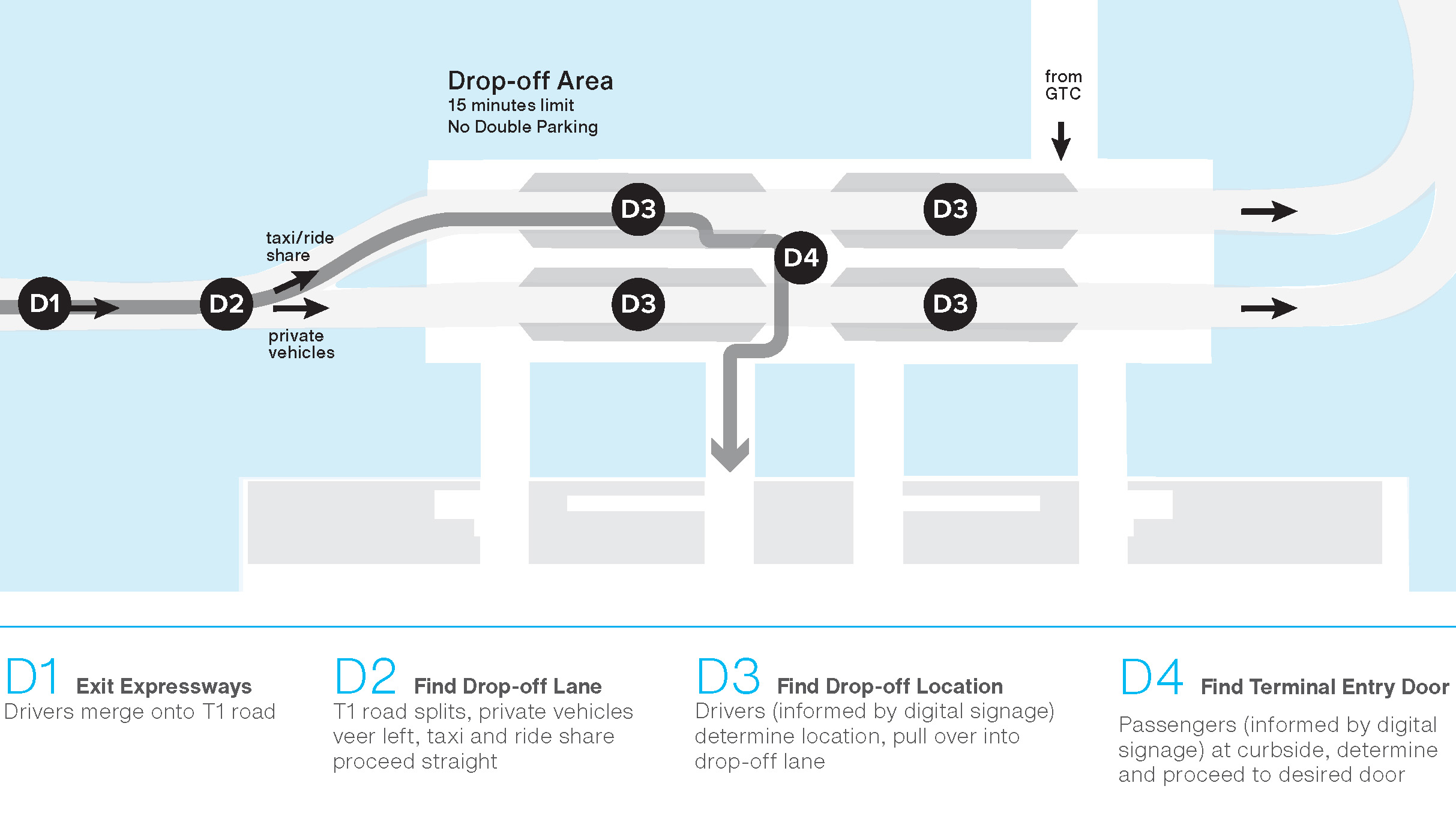
- Vehicular Drop-off: If arriving by taxi, ride-share, or personal vehicle, follow signage carefully. Roadways leading to NTO separate commercial vehicles, ride-shares, and private drop-offs into distinct multi-lane corridors to reduce curbside bottlenecks.
Check-in and Security Transit
- Digital Arrival Registration: Ensure your airline app is updated before arriving. Most NTO carriers allow passengers to upload passport data and security credentials in advance, permitting direct entry to self-service bag-drop or security lines.
- Connecting Between Terminals: If connecting from a domestic flight arriving at Terminal 4 or Terminal 8 to an international flight departing NTO, allow at least 90 to 120 minutes for terminal transfer, as post-security airside connections between distinct terminals may require exiting security and re-clearing screening at NTO.
Frequently Asked Questions
Which terminal numbers are being replaced by the New Terminal 1?
The New Terminal 1 occupies the combined footprint of the original Terminal 1, the former Terminal 2 (demolished), and the former Terminal 3 (demolished). Once fully complete, NTO serves as the primary international gateway on the south side of JFK Airport.
Is the New Terminal 1 fully open?
NTO follows a phased opening schedule. Phase 1 opens in 2026, featuring the main Arrivals/Departures hall and the first 14 widebody gates. The final phase, expanding the facility to its full 23-gate capacity and complete commercial footprint, is targeted for completion by around 2030.
Can I connect airside between NTO and other JFK terminals?
Because JFK terminals are physically separate buildings linked by the landside AirTrain system, international connections between NTO and other terminals (such as Terminal 4, Terminal 5, or Terminal 8) generally require exiting the terminal, riding the AirTrain, and re-clearing TSA security at your departure terminal. Always check your specific connecting flight details with your airline.
What airlines operate out of NTO?
Major international long-haul carriers anchor NTO, including Air France, KLM, Lufthansa, Swiss International Air Lines, Austrian Airlines, Brussels Airlines, Korean Air, Etihad Airways, EVA Air, LOT Polish Airlines, SAS, and Turkish Airlines.
How does NTO's solar microgrid work?
NTO utilizes a localized 12-megawatt microgrid system that combines over 13,000 rooftop solar panels with natural gas fuel cells and battery storage. This system generates clean electricity on-site and allows the terminal to function independently of the municipal power grid during electrical outages.
Recommended Next Actions for Travelers
If you have upcoming international travel planned through JFK International Airport:
- Verify Your Terminal Departure Location: Confirm your departing or arriving terminal with your operating airline prior to travel, as carrier relocations occur as new phases of NTO open.
- Utilize Public Rail Transit: Take the LIRR or NYC Subway to Jamaica Station and transfer to the JFK AirTrain to avoid construction-related roadway congestion around the southern airport loop.
- Allow Extra Transit Time: Plan to arrive at NTO at least 3 hours prior to scheduled international departures to navigate updated check-in, security, and boarding procedures comfortably.
Image Gallery