Comprehensive Guide to UPS Store Mailbox Requirements and Registration for 2026
To rent a UPS Store mailbox in 2026, you must provide two valid forms of identification—one must include a photo—and complete the federally mandated USPS Form 1583. These requirements comply with Commercial Mail Receiving Agency (CMRA)...
To rent a UPS Store mailbox in 2026, you must provide two valid forms of identification—one must include a photo—and complete the federally mandated USPS Form 1583. These requirements comply with Commercial Mail Receiving Agency (CMRA) regulations, granting you a professional street address suitable for personal use or business registration.
Contents
The Regulatory Framework of Private Mailbox Rentals
Understanding the requirements for a UPS Store mailbox begins with the legal designation of the facility. The UPS Store operates as a Commercial Mail Receiving Agency (CMRA). Unlike the United States Postal Service (USPS), which is a government entity, a CMRA is a private business authorized by the USPS to receive and handle mail on behalf of third parties.
Because CMRAs handle sensitive documents and packages, the federal government enforces strict oversight to prevent mail fraud, identity theft, and the anonymous shipment of illicit goods. In 2026, these regulations remain the cornerstone of the application process. When you sign a mailbox service agreement, you are not just entering a private contract with a local franchise; you are participating in a regulated federal process that authorizes the store to act as your agent for mail delivery.
Primary Identification Requirements: The Two-ID Rule
The most critical hurdle for any applicant is the "Two-ID Rule." Per USPS regulations, every individual authorized to receive mail at a UPS Store mailbox must present two forms of identification. These documents must be current and valid; expired identification is grounds for immediate rejection of the application.
1. Primary Identification (Photo ID)
The primary ID must include a clear, recognizable photograph of the applicant. This document serves as the legal proof of identity. Acceptable forms of primary ID in 2026 include:
- State-Issued Driver’s License: A standard or REAL ID-compliant license from any U.S. state.
- U.S. Government ID: This includes federal, state, or tribal government-issued identification cards.
- U.S. Passport or Passport Card: A valid international travel document.
- Armed Forces ID: Military identification for active duty, reserves, or retired personnel.
- Permanent Resident Card: Often referred to as a "Green Card" (Form I-551).
- Certificate of Naturalization: Official documentation of U.S. citizenship.
- Nexus or Global Entry Cards: Trusted traveler program cards issued by U.S. Customs and Border Protection.
2. Secondary Identification (Address Verification)
The secondary ID does not require a photo but must serve as proof of your current residential or business physical address. This address must match the address listed on your mailbox application. Acceptable secondary IDs include:
- Voter Registration Card: Current documentation of your voting precinct and address.
- Vehicle Registration: A valid state-issued registration for an automobile or motorcycle.
- Vehicle Insurance Policy: A current policy declaration page showing the insured address.
- Homeowner’s or Renter’s Insurance Policy: Proof of coverage for your residence.
- Lease or Mortgage Documents: A signed legal agreement for your current home or office.
- Utility Bill: Most locations accept water, electric, or gas bills issued within the last 60 days.
Critical Exclusion List
Non-Acceptable Documents Per USPS and CMRA guidelines, several common documents are strictly prohibited for use as identification during the mailbox setup process. This is a common point of friction for new customers.
Social Security Cards These are not considered valid forms of ID for CMRA registration because they lack security features and address verification.
Credit or Debit Cards Even those with photos are rejected as they are private financial instruments rather than government-verified identity documents.
Birth Certificates While essential for many legal processes, they do not provide current physical descriptions or residential verification.
Navigating USPS Form 1583 in 2026
The "Application for Delivery of Mail Through Agent" (USPS Form 1583) is the mandatory document that authorizes the UPS Store to receive your mail. Without a correctly completed Form 1583, the store cannot legally place mail into your box.
In 2026, the process for filing this form has become increasingly digitized, though many local franchises still require an in-person signature to verify the physical presence of the IDs. The form requires the following specific details:
- Box Number: Assigned by the UPS Store upon selection of your service tier.
- Applicant Information: Your full legal name and current residence address.
- Business Information: If the mailbox is for a company, you must provide the business name, address, and the nature of the business.
- Authorized Recipients: You must list every person or entity (LLC, Corp) authorized to receive mail at that address. Each person listed must also provide the two required forms of ID.
- Notarization: If you are not applying in person at the specific UPS Store location where you intend to rent the box, your Form 1583 and the copies of your IDs must be notarized by a certified Notary Public.
Mailbox Size Options and Physical Requirements
Selecting the correct mailbox size is more than a matter of cost; it is a functional requirement based on your expected mail volume. UPS Store locations typically offer three standardized sizes. If your mail volume consistently exceeds the physical capacity of your box, the store may require you to upgrade to a larger size to maintain operational safety and organization.
| Mailbox Size | Typical Dimensions | Best Use Case | 2026 Estimated Monthly Cost |
|---|---|---|---|
| Small | 3" x 5" | Individuals, students, and light personal mail. | $25 – $35 |
| Medium | 5" x 10" | Small business owners and frequent online shoppers. | $40 – $55 |
| Large | 10" x 10" | Corporations, law firms, and high-volume entities. | $60 – $85 |
Note: Pricing in 2026 varies significantly by geographic region (e.g., Manhattan, NYC vs. rural Ohio) and the specific franchise owner's overhead.
Comparison: UPS Store Mailbox vs. USPS PO Box
When evaluating the requirements, it is essential to understand why a user would choose a UPS Store over a standard USPS Post Office Box. The differences are foundational to how you can use the address for legal and shipping purposes.
| Feature | UPS Store Mailbox (2026) | USPS PO Box (2026) |
|---|---|---|
| Address Format | Real Street Address (e.g., 123 Main St, Suite 101) | PO Box Number (e.g., PO Box 999) |
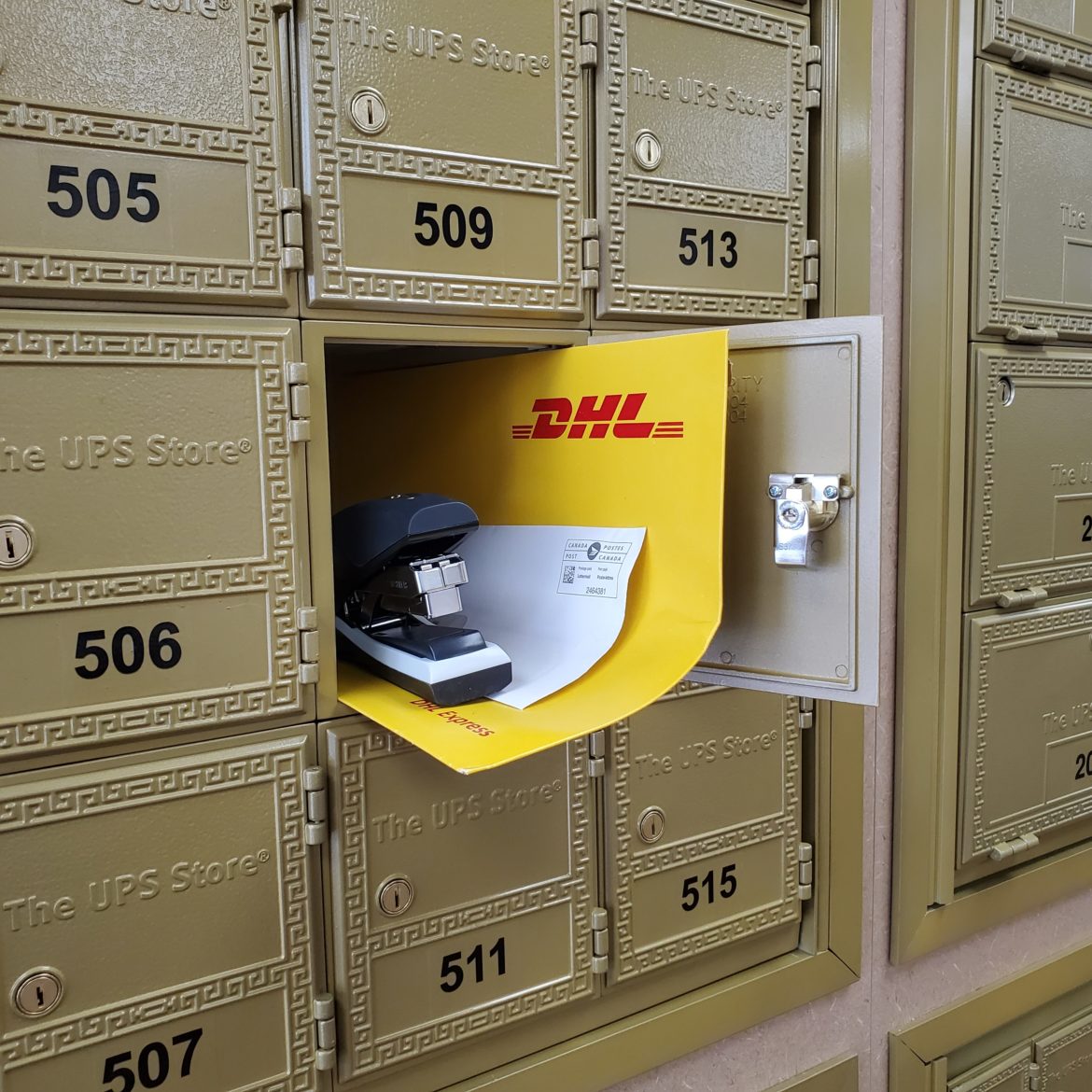
| Carrier Acceptance | UPS, FedEx, DHL, USPS, Amazon, Courier | Primarily USPS Only |
| Package Notifications | Real-time app/text notifications | Yellow slip or basic email |
| LLC Registration | Generally accepted by most Secretaries of State | Usually rejected as a registered office |
| 24-Hour Access | Available at most participating locations | Limited to lobby hours |
| Full-Service Handling | Package signing and call-in mail check | Limited to basic delivery |
Step-by-Step Guide to Opening a UPS Store Mailbox
Following these steps ensures a seamless setup process and prevents multiple trips to the store.
- Verify Your Documents: Gather your Primary and Secondary IDs. Ensure they are original documents; photocopies are not accepted for the initial verification.
- Choose Your Location: Visit the specific UPS Store where you want the box. Mailboxes are not "global" across the franchise network; your contract is with one specific location.
- Select Your Term: Standard contracts are usually 3, 6, or 12 months. Long-term contracts (12 months) in 2026 often include a "13th month free" incentive or discounted setup fees.
- Complete Form 1583: Fill out the form clearly. If registering a business, have your Articles of Organization or business license handy, as some franchisees require proof of business existence.
- Pay the Fees: You will typically pay a one-time setup fee (usually $15–$25), a key deposit ($5–$10), and the first term's rent.
- Receive Your Key and Address: Once the background check of the IDs is complete (usually instant), you will receive your box number and physical key or 24-hour access code.
Using Your Mailbox for Business and LLC Requirements
One of the most frequent reasons for seeking a UPS Store mailbox in 2026 is for small business registration. While a UPS Store provides a physical street address, there are nuances regarding its use as a "Registered Office."
Most states require a "Registered Agent" to have a physical location where they can be personally served with legal documents during business hours. While the UPS Store provides the address, they are not your Registered Agent unless they specifically offer that service. However, for general business correspondence, website footers, and marketing materials, a UPS Store address is highly effective at maintaining privacy and professional credibility.
Modern 2026 Features: The Smart Mailbox Ecosystem
By 2026, the UPS Store has fully integrated "Smart Mailbox" features into the standard rental agreement. These technological requirements often involve downloading the proprietary UPS Store app.
- Digital Mail Preview: Many locations now offer a snapshot of the exterior of your mail, delivered via push notification.
- Package Density Management: If you receive large volumes of packages, 2026 guidelines often include "overage" fees if items are not picked up within 48 to 72 hours, due to limited back-room storage space in urban franchises.
- Mail Forwarding: You can set up automated forwarding requirements where the store bundles your mail and ships it to a secondary address (home or international) on a weekly or monthly basis.
Troubleshooting Common Registration Issues
Even with all documents in hand, several factors can delay the activation of your mailbox service.
- Inconsistent Addresses: If your primary ID shows an old address and your secondary ID shows a new one, you may be asked for additional proof of residency, such as a recent mortgage statement.
- Out-of-State IDs: If you are moving to a new state and haven't updated your license, you must provide a valid secondary ID from your current location or the new location, depending on the store’s specific risk management policies.
- Expired Identification: This is the number one reason for rejection. Ensure your passport or driver's license has at least 30 days of validity remaining at the time of application.
- Authorized User Disputes: If you want to add a spouse or business partner later, they must come into the store with their two forms of ID. You cannot vouch for them or bring their IDs on their behalf.
Frequently Asked Questions
Can I use a UPS Store mailbox as my legal residence for a Driver’s License? No, most Department of Motor Vehicles (DMV) offices and state agencies cross-reference addresses against a national CMRA database. While it is a "real street address," it is flagged as a commercial receiving agency and cannot be used as a primary residence for government-issued identification.
Is there a limit to how many packages I can receive? There is generally no limit on the number of packages, but there are physical limits on storage. If you receive oversized items (pallets or furniture), you must coordinate with the store manager, as additional "holding fees" or "large item fees" typically apply in 2026.
What happens if I lose my mailbox key? For security reasons, the UPS Store will usually replace the entire lock cylinder rather than just cutting a new key. In 2026, the standard fee for a lock replacement and new key set ranges from $25 to $50.
Can I receive mail for multiple business names in one box? Yes, but each business name must be listed on a separate Form 1583 or an addendum provided by the store. Some franchises charge a small monthly "additional name" fee for processing mail under multiple corporate identities.
Does a UPS Store mailbox accept certified mail? Yes. One of the primary benefits of a CMRA is that store personnel are authorized to sign for certified mail, registered mail, and packages requiring a signature (such as those from FedEx or UPS), ensuring you never miss a critical delivery.
Securing a UPS Store mailbox in 2026 offers a blend of physical security and digital convenience. By ensuring your identification is current and your Form 1583 is accurately completed, you can establish a professional presence and a reliable mail management system for your personal or professional needs.
Image Gallery