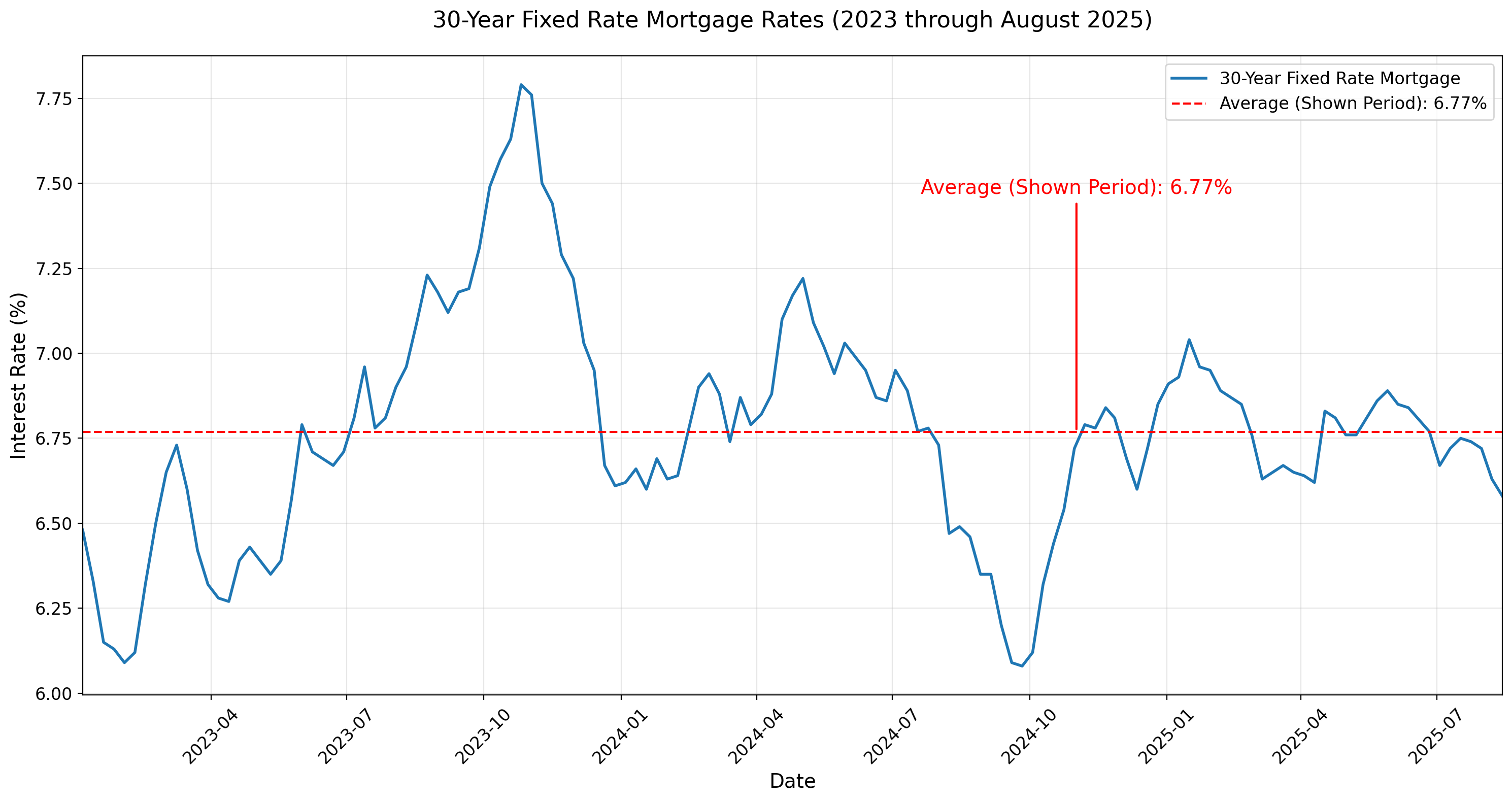
The Current Reality of 10-Year ARM Rates in the 2026 Mortgage Market
In 2026, the 10-year Adjustable-Rate Mortgage (ARM) occupies a strategic middle ground between short-term teaser rates and the rigid security of 30-year fixed-rate loans. By offering a decade of stable payments followed by periodic adj...
In 2026, the 10-year Adjustable-Rate Mortgage (ARM) occupies a strategic middle ground between short-term teaser rates and the rigid security of 30-year fixed-rate loans. By offering a decade of stable payments followed by periodic adjustments, this product serves borrowers who prioritize lower initial interest costs while preparing for potential future rate fluctuations.
Contents
Understanding the 10-Year ARM Structure
An Adjustable-Rate Mortgage (ARM) is a home loan with an interest rate that can change periodically. Specifically, a 10-year ARM—often referred to as a 10/6 or 10/1 ARM—features an initial fixed-rate period that lasts for the first ten years of the loan term. During this decade, your monthly principal and interest payments remain constant, functioning identically to a fixed-rate mortgage.
The "adjustment" component is defined by the suffix. In the current market, most 10-year ARMs are structured as 10/6 ARMs, meaning that after the initial 120 months, the rate adjusts every six months based on a specific financial index and a pre-defined margin. This shift is governed by "caps"—legal limits on how much the rate can increase during the first adjustment period, subsequent periods, and over the life of the loan.
The Macroeconomic Environment of 2026
As of 2026, the mortgage market remains highly sensitive to Federal Reserve policies and broader economic indicators such as the 10-Year Treasury Yield and the Secured Overnight Financing Rate (SOFR). Because a 10-year ARM essentially locks in an interest rate for a long-duration window, lenders price these loans based on long-term capital stability.
The reality for borrowers today is that the "discount" offered on a 10-year ARM compared to a 30-year fixed mortgage is narrower than it was in previous volatile economic cycles. Lenders have tightened their underwriting standards, often requiring higher credit scores and lower debt-to-income (DTI) ratios to mitigate the long-term risk of holding a variable-rate asset for an extended decade-long period.
Comparing 10-Year ARMs with Fixed-Rate Alternatives
When deciding between a 10-year ARM and a traditional 30-year fixed loan, the decision matrix rests on your "time-in-home" horizon.
| Feature | 10-Year ARM | 30-Year Fixed |
|---|---|---|
| Initial Rate Stability | 10 Years | 30 Years |
| Primary Advantage | Lower initial interest | Total payment certainty |
| Adjustment Risk | Begins in Year 11 | None |
| Typical Target User | Medium-term occupant | Permanent homeowner |
If your residency plans are firmly under ten years, or if you anticipate refinancing due to life events (such as upsizing or downsizing) before the decade concludes, the 10-year ARM allows you to capitalize on a lower starting APR. Conversely, if you intend to remain in your home for the duration of a standard 30-year amortization schedule, the fixed-rate mortgage eliminates the risk of payment shock in the second decade of the loan.
Identifying the Risks: Payment Shock and Amortization
The most critical aspect of the 10-year ARM reality in 2026 is the potential for payment shock. Because the loan is amortized over 30 years, once the initial 10-year period ends, the interest rate may reset to a higher level. If market rates are significantly higher at that ten-year milestone than they were at your origination, your monthly payment will increase.
Borrowers must review their Loan Estimate and Closing Disclosure documents to identify the "index" and "margin." The index is a variable market rate, while the margin is a fixed percentage added by the lender. Your future rate is mathematically tied to these two numbers. Before signing, ensure you understand your specific adjustment caps:
- Initial Adjustment Cap: Limits the interest rate increase at the first adjustment.
- Subsequent Adjustment Cap: Limits increases in future adjustment periods.
- Lifetime Cap: The maximum interest rate you can be charged over the life of the loan.
Strategies for Borrowers in 2026
For those considering a 10-year ARM, the strategy should not be based solely on immediate monthly savings. Instead, follow these steps to manage the long-term liability:
- Assess Your Exit Strategy: Do you have a documented plan to move or refinance within ten years? If not, verify that you can afford a potential payment increase in year 11.
- Evaluate Current Caps: Favor loan products with lower lifetime caps. In a high-interest environment, a lifetime cap acts as a critical safety net against runaway market inflation.
- Calculate the "Break-Even" Point: Compare the total interest paid over the first ten years of the ARM versus the fixed-rate loan. If the savings are minimal, the additional risk of the ARM may not be justified.
- Monitor Your Loan-to-Value (LTV): By the end of the ten-year period, you will have paid down a significant portion of the principal. If your home value has appreciated, you will be in a much stronger position to refinance into a new fixed-rate loan at the ten-year mark, even if market rates are high.
Frequently Asked Questions
What happens if I sell my home before the 10-year period ends? If you sell the property, the ARM is paid off in full, and the potential for rate adjustments becomes irrelevant. This is why 10-year ARMs are often recommended for borrowers who view their current home as a "stepping stone" property.
Can I refinance a 10-year ARM into a fixed loan later? Yes. You can refinance at any time, provided your credit and property equity meet lender requirements. You are not "locked in" for the full ten years. Many borrowers use the initial period to improve their financial standing before locking into a long-term fixed rate.
How do lenders calculate my rate after the 10-year mark? Lenders use the specified index—often SOFR—plus the margin established in your original note. They add these together to calculate your new interest rate. If the market rate (index) rises, your rate rises; if it falls, your rate may also fall.
Are 10-year ARMs safer than 5-year ARMs? Generally, yes. A 10-year ARM provides twice the stability of a 5-year ARM. The longer fixed period significantly reduces the probability that market volatility will affect your housing costs during the early years of homeownership.
Are there prepayment penalties for these loans? In 2026, most conventional residential mortgages do not carry prepayment penalties. However, always review your specific note to ensure your lender has not included a provision for early payoff fees, particularly if you are using a non-conforming or "jumbo" loan product.
Next Steps for Your Mortgage Journey
The current reality of 10-year ARM rates requires a disciplined approach to financial planning. If you are exploring this option, request a "Worst Case Scenario" amortization schedule from your loan officer. This document will show you exactly what your monthly payment would look like if your interest rate hit the maximum allowed under your adjustment caps. By visualizing the maximum possible payment, you can determine if the 10-year ARM aligns with your risk tolerance and long-term budgetary goals.
Image Gallery