What Is Lance Mountain Skateboarding? The Legacy, Style, and Impact of a Transition Pioneer
Lance Mountain skateboarding represents a foundational era of creative, transition-focused skateboarding characterized by pool carving, backyard ramps, and infectious humor. As an original 1980s Powell-Peralta Bones Brigade member, Mou...
Lance Mountain skateboarding represents a foundational era of creative, transition-focused skateboarding characterized by pool carving, backyard ramps, and infectious humor. As an original 1980s Powell-Peralta Bones Brigade member, Mountain transformed professional skateboarding from sterile athletic competition into an accessible, expressive lifestyle blending distinct graphic art, DIY ethos, and technical vert mastery.
Contents
The Origins: From Pasadena to the Bones Brigade
Robert Lance Mountain was born in Pasadena, California, in 1964, emerging as a prominent skateboarder during the late 1970s and early 1980s. This period was marked by the closure of commercial concrete skateparks across North America due to skyrocketing liability insurance costs. While the loss of commercial parks killed off skateboarding's first mainstream boom, it forced dedicated riders underground into backyard pools, hand-built wooden halfpipes, and drainage ditches.
Mountain quickly distinguished himself through his tenacity and raw enthusiasm. After an early sponsorship with Variflex—a proving ground that also featured future legends like Allen Losi—Mountain was recruited by Stacy Peralta in 1981 to join the newly formed Powell-Peralta team, the Bones Brigade.
The Bones Brigade was not merely a corporate demonstration squad; it was an incubator of progression. Within this elite roster, each skater occupied a distinct persona and tactical role:
- Tony Hawk represented robotic aerial consistency and technical progression.
- Rodney Mullen pioneered modern flatground mechanics in freestyle.
- Steve Caballero delivered explosive height, power, and contest dominance.
- Tommy Guerrero brought the raw, fast flow of San Francisco street riding.
- Lance Mountain served as the relatable heart and creative catalyst of the squad.
While peers often approached contests with rigid intensity, Mountain approached skateboarding as play. His skating communicated to spectators that having fun and experimenting with transition lines was just as legitimate as winning trophies.
Skateboarding Style and Technical Innovations
Mountain's technical contributions to transition and vert skateboarding stem from a balance of classic pool-skating fundamentals and spontaneous, off-beat maneuvers.
- Transition Fundamentals (Carving, Coping Grinds)
- Invert Variations (Sadplants, Eggplants, Andrecht)
- Street-to-Transition Hybrids (Fingerflips, Boneless Ones, Fastplants)
- DIY Pool Adaptations (Rough Coping, Tiles, Shallow-End Lines)
The Anatomy of the Sadplant
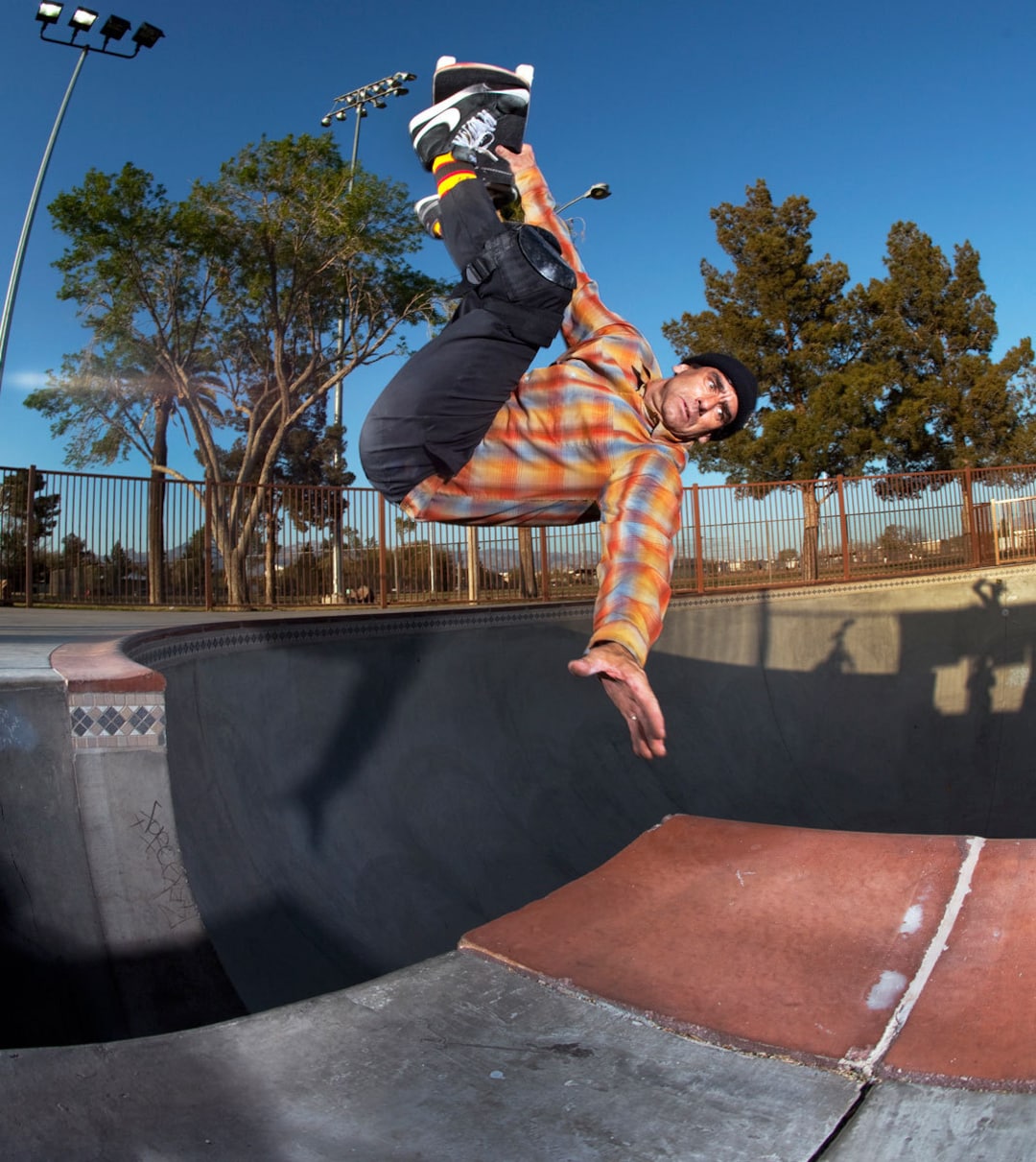
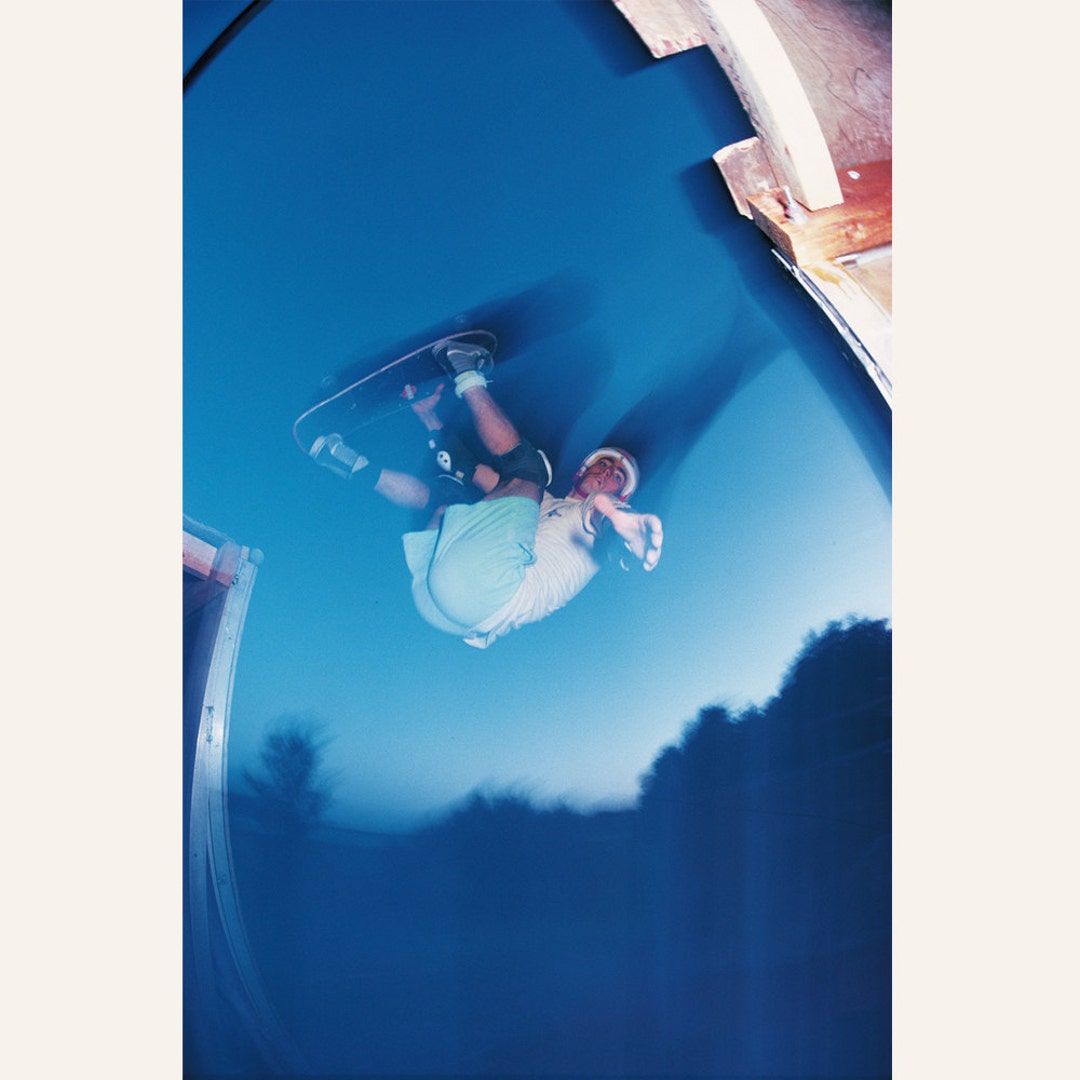
Mountain popularized and refined several classic handplant variations, most notably the Sadplant. While a standard invert involves planting the lead hand on the coping while inverted and extending the legs to balance the board above the ramp, the Sadplant alters this geometry:
- The Approach: The skater launches up the ramp transition with enough speed to carry the torso clear of the deck lip.
- The Plant: The rider places their front hand firmly on the pool coping or ramp deck.
- The Extension and Tweak: Instead of keeping the front leg tucked or arched symmetrically, the skater completely straightens the front leg while pulling the board in toward the body with the rear hand, bending the rear knee.
- The Drop-In: The skater absorbs the compression back into the transition, maintaining edge control through the radius.
This maneuver demanded immense shoulder stability, core compression, and spatial awareness, becoming a visual signature of Mountain's skating throughout the 1980s.
DIY Pool and Backyard Ramp Mastery
Mountain excelled in non-standard terrain. Commercial ramps possessed predictable radiuses and smooth surfaces, but Mountain made his reputation in backyard swimming pools featuring uneven plaster, death boxes, steep shallow ends, and abrasive tile lines. His skating emphasized high-speed frontside and backside grinds around tight radius corners, deep carves beneath the coping tiles, and creative footplants on surrounding fences, deck walls, and backyard architecture.
Cultural Milestones and Iconic Video Appearances
In the mid-1980s, Powell-Peralta fundamentally altered action sports marketing by releasing full-length skate videos on VHS. Mountain became the emotional centerpiece of these groundbreaking films, directed by Stacy Peralta and Craig Stecyk.
The Bones Brigade Video Show (1984)
In this first Powell-Peralta release, Mountain demonstrated that professional skateboarding could thrive outside the structured contest arena. His segment highlighted backyard ramp sessions, street exploration, and informal sessions, introducing viewers to skateboarding as a lifestyle rather than an organized tournament sport.
Future Primitive (1985)
Mountain’s segment in Future Primitive is one of the most culturally influential video parts ever filmed. Set to the music of The Faction, the sequence features Mountain skating through suburban neighborhoods, navigating sidewalks, launching off curbs, and casually skating backyard ramps. It established the archetype of the everyday street and transition skater, directly inspiring thousands of kids to pick up a board without needing a formal skatepark.
The Search for Animal Chin (1987)
This release remains skateboarding's most famous narrative film. Mountain, Tony Hawk, Steve Caballero, and Mike McGill travel across California, Nevada, and Hawaii in search of a mythical skate guru named "Animal Chin."
Mountain carried the film’s comedic weight, acting as the curious, bumbling investigator. The film culminated at a top-secret mega-ramp built in a California desert—featuring the first spine ramp with an adjoining channel. The session showcased Mountain holding his own alongside the most technically advanced vert skaters in history, immortalizing the famous four-man simultaneous invert photo.
Lance Mountain Career Eras and Technical Influence
Over four decades, Mountain adapted across multiple industry transitions, shifting from corporate powerhouse team rider to company founder and heritage ambassador.
| Era / Decade | Primary Sponsor / Venture | Defining Skate Style & Focus | Key Contribution / Cultural Impact |
|---|---|---|---|
| 1981–1991 | Powell-Peralta (Bones Brigade) | Vert, backyard pools, creative street-plant hybrids | Mainstreamed skate video culture; popularized the Sadplant; introduced relatable humor into skate media. |
| 1991–2005 | The Firm Skateboards | Transition, ditch riding, mature park skating | Founded an independent, skater-run brand; supported emerging legends like Bob Burnquist and Ray Barbee. |
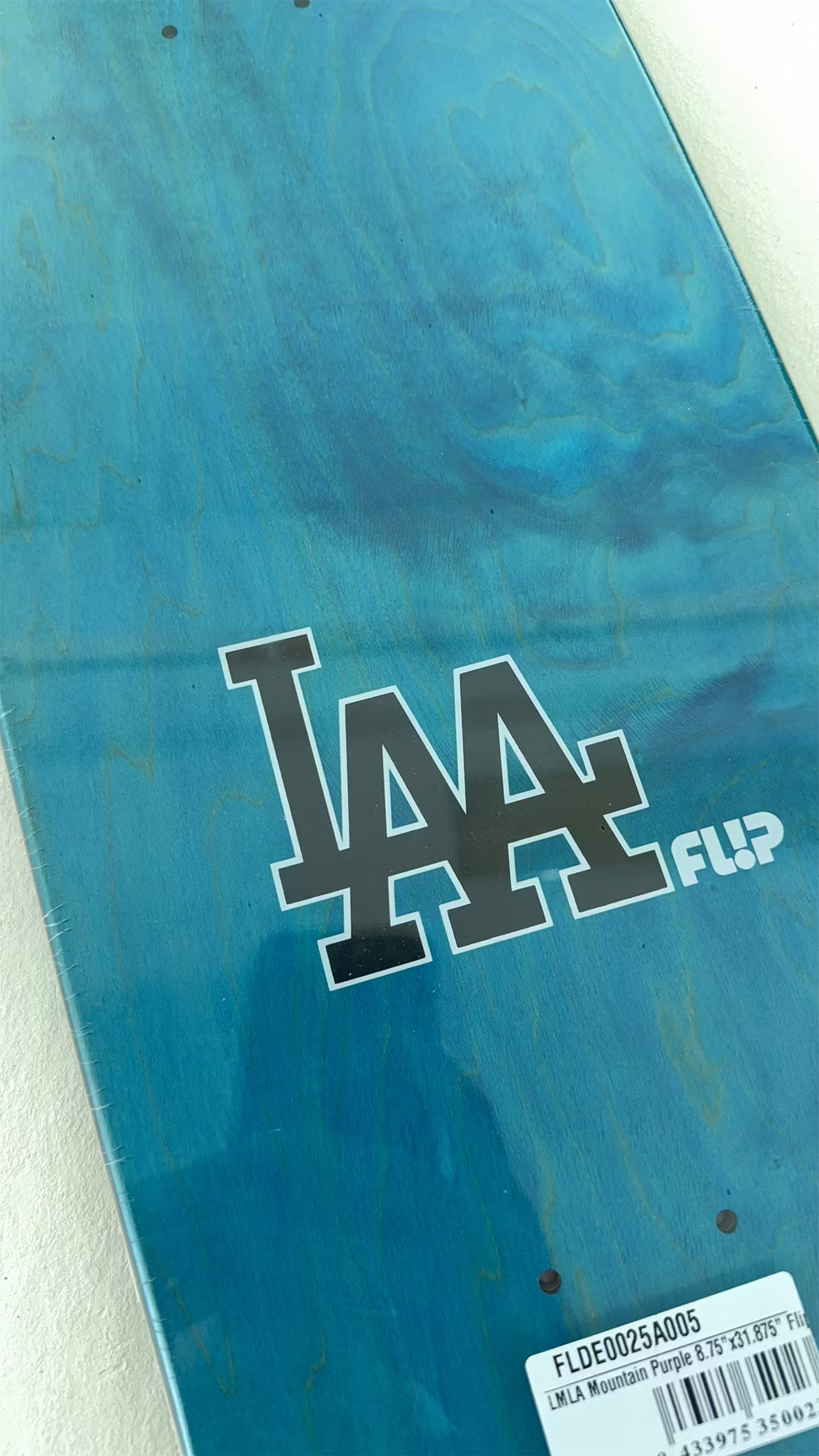
| 2005–2010s | Flip Skateboards & Nike SB | Backyard pool preservation, deep-bowl carving | Integrated heritage transition style into modern street-dominated brands; anchored the resurgence of masters-division bowl riding. |
| 2014–Present | Independent / Nike SB Legacy | Concrete bowl preservation, art installations | Designed wear-away Air Jordan 1 SB; advocates for backyard DIY pool culture and skate history documentation. |
Art, Board Graphics, and the DIY Ethos
Lance Mountain's influence extends far beyond his trick selection; his visual art is woven into skate design history. Unlike brands that hired external commercial illustrators, Mountain designed many of his own graphics, establishing an outsider, punk-adjacent aesthetic.
The "Doughboy" Graphic
Mountain created the iconic Doughboy graphic—a crude, simplified, hand-drawn figure that appeared across several Powell-Peralta decks in the late 1980s. In an era dominated by hyper-detailed, macabre skulls drawn by legendary artist Vernon Courtlandt Johnson (VCJ), Mountain’s minimalist, cartoonish design stood out precisely because it rejected polished technical illustration. It proved that a graphic did not need high-end airbrushing to connect with skaters.
Ramp Building and Pool Resourcing
Mountain maintained the physical spaces of skate culture. When municipalities cracked down on unauthorized skating, Mountain was instrumental in designing, financing, and physically framing wooden ramps in backyards across Southern California.
In later years, he became an authority on tracking, cleaning, and restoring abandoned California swimming pools for skateboarding. Draining stagnant pool water, patching crumbling concrete transitions with quick-setting hydraulic cement, and smoothing pitted plaster allowed generations of transition riders to skate authentic terrain.
Footwear History and the Nike SB Jordan 1 Collaboration
Skateboarding shoe history intersects directly with Lance Mountain’s personal footwear choices from the 1980s.
When the Air Jordan 1 was released in 1985 at a retail price of $65, it flooded the market. Following its initial hype, surplus inventory wound up on clearance racks for as low as $19.99. Skateboarders, including Mountain, snapped them up because they offered features skate-specific shoes lacked:
- High-top ankle collars with dense foam padding to protect against board slap.
- Durable leather uppers that resisted griptape abrasion better than standard canvas shoes.
- Thin rubber cupsole outsoles that provided exceptional board feel and traction on grip tape.
Because skaters frequently bought mismatched pairs from discount bins or received single leftover shoes from friends, Mountain famously wore mismatched Air Jordan 1s—often a Royal Blue shoe on one foot and a Black/Red ("Bred") shoe on the other. To make the mismatched shoes look uniform, Mountain often painted them black with spray paint, which wore off as his shoes scraped against grip tape during sessions.
- 1985: Air Jordan 1 hits clearance bins
- Late 1980s: Bones Brigade skaters adopt AJ1 for durability and ankle support
- Mountain paints mismatched pairs black to uniform appearance
- 2014: Official Nike SB x Lance Mountain Air Jordan 1 release
- Wear-away paint mechanic permanently bridges basketball and skate history
In 2014, Nike SB collaborated with Mountain to celebrate this organic intersection. The Nike SB x Air Jordan 1 "Lance Mountain" featured solid black or white uppers treated with a specialized wear-away paint coating. As the owner skated or distressed the shoes, the outer coat rubbed away to reveal a classic Royal Blue shoe on one foot and a Bred shoe on the other. This release remains one of the most celebrated sneaker crossovers in history because it honored real subcultural history rather than artificial branding.
Hardware and Setup Dynamics for Transition Skating
Mountain’s hardware configurations reflect the unique physical requirements of concrete bowl and pool skateboarding. While contemporary street skaters often ride narrow decks with small, hard wheels, transition setups require different physics to generate and maintain momentum across curved surfaces.
Deck Dimensions and Wheelbase
Mountain predominantly skates wider directional boards:
- Width: 8.75 to 9.5 inches or wider, providing substantial surface area for foot placement when landing high-impact airs and deep carves.
- Wheelbase: 14.5 to 15.25 inches. A longer wheelbase provides high-speed stability over coping and prevents wobbles when dropping into 11-foot-deep transitions.
- Nose and Tail: Flattened or gently curved kicktails with full spoon concaves to lock the feet securely against lateral G-forces.
Trucks and Bushings
Transition skating applies extreme lateral force to axle hangers:
- Truck Width: 159mm to 169mm (e.g., Independent Stage 11s), matching the edge of the wide wooden deck to prevent wheel bite and ensure predictable coping contact.
- Bushings: Medium-hard barrel-and-cone setups that allow riders to carve tight arcs without experiencing wheel drag against the board.
Wheel Selection
Concrete pool and ramp surfaces demand a specific balance between traction and slide:
- Diameter: 56mm to 60mm. Larger wheels preserve rotational inertia, allowing skaters to maintain speed through the flat bottom without constant pushing.
- Durometer: 97a to 101a. Harder urethane prevents the wheel from dragging on rough concrete and produces a distinct screech when braking or performing tail-slides along pool tile.
Frequently Asked Questions
Why is Lance Mountain considered so influential if he didn't win as many contests as Tony Hawk?
Contest scores only capture technical difficulty and consistency; they do not measure cultural resonance. Lance Mountain represented the soul, accessibility, and humor of skateboarding during its formative video era. His relatable, self-deprecating presence proved that skateboarding was an expressive art form and an enduring lifestyle, not just an athletic contest.
Did Lance Mountain invent the Sadplant?
While handplants were pioneered by early vert skaters like Rick Blackhart and extended by John Gibson, Mountain created the specific "Sadplant" variation. By fully straightening his front leg and pulling the board tightly into his body during the invert, Mountain created a dramatically tweaked silhouette that became one of transition skating's most recognizable tricks.
What happened to The Firm Skateboards?
Mountain founded The Firm Skateboards in 1991 under the Blitz Distribution umbrella after leaving Powell-Peralta. The Firm operated successfully for roughly 15 years, supporting respected pros like Bob Burnquist and Ray Barbee. Mountain chose to retire the brand around 2006, after which he joined the professional roster at Flip Skateboards.
How did the Lance Mountain Nike SB Jordan 1 wear-away design work?
The 2014 collaboration featured an under-layer of original 1985 Air Jordan 1 leather (one Royal Blue shoe, one Black/Red shoe) completely coated in a top layer of specially formulated black or white paint. As the shoe experienced friction against griptape, concrete, or daily wear, the paint slowly abraded, revealing the underlying colors.
Is Lance Mountain still skating today?
Yes. Mountain continues to skate pools, concrete parks, and bowls. He regularly participates in heritage events, collaborates on skateboarding art projects, and designs hardware and footwear, standing as one of skateboarding's most active and respected elder statesmen.
Applying the Lance Mountain Skateboarding Philosophy
To integrate the Lance Mountain approach into your own skateboarding, step away from strict performance metrics and prioritize flow, environment, and creative expression:
- Focus on Transition Fundamentals: Prioritize high-speed carving, balance, and solid coping grinds over rapid trick acquisition. Learn how to pump transitions efficiently to generate your own speed without pushing.
- Embrace Terrain Imperfections: Seek out varied, non-standard concrete surfaces—such as DIY parks, drainage banks, and pump tracks—instead of relying solely on laser-smooth commercial skateparks.
- Engage with Skateboarding Culture: Learn the history of trick origins, support skater-owned initiatives, design your own grip tape art, and treat skateboarding as a lifelong creative pursuit rather than a short-term sport.
Image Gallery