Gwinnett County GA Tax Commissioner: 2026 Comprehensive Guide to Property Taxes and Vehicle Tags
The Gwinnett County Tax Commissioner is the constitutional officer responsible for the billing and collection of property taxes and the registration of motor vehicles for the county's residents. For the 2026 fiscal year, taxpayers can...
The Gwinnett County Tax Commissioner is the constitutional officer responsible for the billing and collection of property taxes and the registration of motor vehicles for the county's residents. For the 2026 fiscal year, taxpayers can manage payments, apply for homestead exemptions, and renew vehicle tags through the centralized online portal, self-service kiosks, or at one of the five regional tag offices located throughout Gwinnett County.
Contents
The Gwinnett County Tax Commissioner’s Office serves as the financial gateway for local government funding, ensuring that revenue is accurately collected and distributed to the Gwinnett County Public Schools, the Board of Commissioners, and various municipal authorities. Navigating these requirements demands an understanding of the specific deadlines, exemption eligibility, and the digital tools implemented for the 2026 calendar year.
The Mandate of the Gwinnett County Tax Commissioner
The Tax Commissioner is an elected official whose duties are strictly defined by the Georgia Constitution and state law. Unlike the Tax Assessor’s Office—which determines the value of your property—the Tax Commissioner’s Office is strictly a billing and collection entity.
For 2026, the office continues to prioritize "customer-first" digital initiatives. This includes the expansion of the Georgia DRIVES system for vehicle services and a streamlined property tax interface that allows for real-time payment tracking. The office handles two primary areas:
- Property Tax: Managing real estate, personal property (business assets), and mobile home taxes.
- Motor Vehicle Services: Overseeing titles, registrations, and the Title Ad Valorem Tax (TAVT) for vehicles.
Operating with a high degree of technical precision, the office ensures that billions of dollars in revenue are processed with minimal error. In 2026, residents can expect continued integration between county systems and the state’s Department of Revenue (DOR) for seamless data synchronization regarding vehicle emissions and insurance verification.
2026 Property Tax Deadlines and Billing Cycles
Understanding the timeline of property tax administration is critical for Gwinnett homeowners to avoid late fees and interest penalties. The 2026 cycle follows a standardized state-mandated schedule, though specific dates may shift slightly based on the calendar year.
Crucial 2026 Property Tax Calendar
January 1, 2026: Assessment Date. The value and ownership of your property as of this date determine your tax liability for the entire year.
April 1, 2026: Deadline for filing Homestead Exemptions and Personal Property Returns. This is the most significant date for homeowners looking to reduce their tax burden.
August 2026: Property tax bills are typically mailed to homeowners. If you have a mortgage with an escrow account, your lender will receive the bill electronically, but you will still receive a copy for your records.
October 15, 2026: Standard deadline for property tax payments. Payments must be postmarked or processed online by this date to be considered timely.
Failure to pay by the October deadline results in an immediate 5% penalty on the unpaid balance, followed by additional monthly interest as mandated by Georgia law (O.C.G.A. § 48-2-40). If taxes remain unpaid for 120 days, an additional penalty is applied, and the property may eventually be subject to a tax lien and sheriff’s sale.
Maximizing Savings: 2026 Homestead Exemptions
The most effective way to lower your Gwinnett County tax bill is through Homestead Exemptions. In Gwinnett, these exemptions are not automatic; you must apply for them by the April 1 deadline. Once granted, they renew automatically each year as long as you continue to occupy the home as your primary residence.
The following table outlines the most common exemptions available in 2026:
| Exemption Type | Eligibility Requirements | Primary Benefit |
|---|---|---|
| Regular Homestead (S1) | Must own and occupy the home as a primary residence. | Reduces the assessed value of the home for county and school taxes. |
| Senior Exemption (L1) | Homeowners 65 or older as of January 1. | Provides a significant reduction in school tax, often the largest portion of the bill. |
| Disability Exemption (S4) | Requires medical certification of total and permanent disability. | Offers substantial tax relief regardless of the homeowner's age. |
| Disabled Veteran (S5) | 100% service-connected disability or surviving spouse. | Provides a high statutory exemption amount set annually by the VA. |
| Surviving Spouse (SS) | Unmarried surviving spouse of a firefighter or officer killed in the line of duty. | Full exemption from certain ad valorem taxes for the primary residence. |
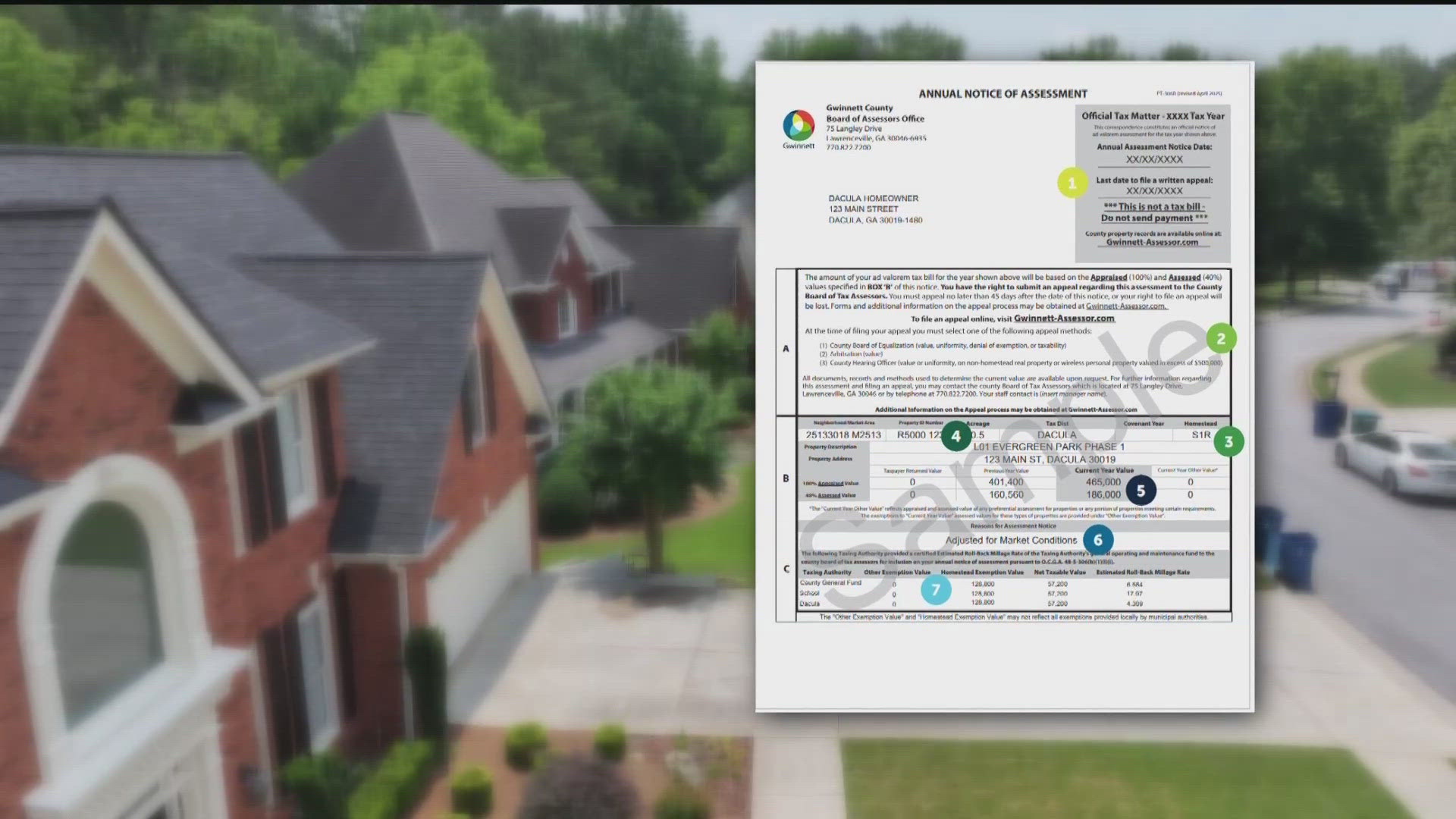
To apply in 2026, homeowners should use the "Gwinnett Tax" online portal. You will need your parcel ID (which can be found on your assessment notice) and proof of Georgia residency, such as a valid driver’s license showing the property address.
Motor Vehicle Services: Tags, Titles, and TAVT
The Gwinnett County Tax Commissioner also acts as the Tag Agent for the Georgia Department of Revenue. For 2026, the motor vehicle division focuses on three core areas: annual tag renewals, title transfers for newly purchased vehicles, and the collection of Title Ad Valorem Tax (TAVT).
Title Ad Valorem Tax (TAVT) vs. Annual Ad Valorem Tax
Since 2013, Georgia has transitioned away from the old "birthday tax" (Annual Ad Valorem Tax) for most vehicles. Instead, a one-time TAVT is paid when the vehicle is titled in the owner's name. In 2026, the TAVT rate is generally 6.6% of the fair market value of the vehicle, though this is subject to legislative adjustments.
- New Residents: If you move to Gwinnett County from out of state in 2026, you have 30 days to register your vehicle. You will be required to pay the TAVT (typically split into two payments if preferred) to obtain your Georgia tag.
- Annual Renewals: Even if you have paid TAVT, you must still renew your registration annually by your birthday. This involves a $20 tag fee and a valid emissions inspection if the vehicle is between 3 and 25 years old.
Emissions Testing Requirements for 2026
Gwinnett County is one of the 13 metro Atlanta counties requiring annual emissions testing. For 2026 renewals, vehicles with model years from 2002 through 2023 must pass an inspection. New vehicles (model years 2024–2026) are exempt from testing for the first three years.
Digital and Physical Payment Channels for 2026
The Gwinnett County Tax Commissioner has diversified payment options to reduce wait times and improve accessibility. In 2026, taxpayers are encouraged to use digital-first methods, though traditional options remain available.
1. Online Payments
The official website (GwinnettTaxCommissioner.com) remains the most efficient portal. Payments can be made via:
- E-Check: Typically carries the lowest processing fee (often a flat $1.50).
- Credit/Debit Cards: Subject to a percentage-based convenience fee (usually around 2.25%).
2. Self-Service Kiosks
Located in several Kroger grocery stores throughout Gwinnett County, these kiosks allow residents to renew their vehicle tags and print the decal on the spot. This service is available 24/7 during store hours and is a primary recommendation for avoiding office lines.
3. Physical Branch Locations
If you require in-person assistance for complex title issues or cash payments, there are five main offices. Note that wait times in 2026 can be monitored via the office's "Wait Times" app or website dashboard before you leave your home.
| Office Name | Location Address | Primary Services |
|---|---|---|
| Main Office (Lawrenceville) | 75 Langley Dr, Lawrenceville, GA | Property Tax, Motor Vehicle, Heavy Decals |
| North Gwinnett | 2735 Mall of Georgia Blvd, Buford, GA | Motor Vehicle Renewals & Titles |
| South Gwinnett | 3525 Hwy 124, Snellville, GA | Motor Vehicle Renewals & Titles |
| Peachtree Corners | 6135 Peachtree Pkwy, Peachtree Corners, GA | Motor Vehicle Renewals & Titles |
| Norcross | 5030 Georgia Belle Ct, Norcross, GA | Motor Vehicle Renewals & Titles |
Resolving Tax Disputes and Delinquent Accounts
If you believe your property tax bill is too high for 2026, you must address this through the Gwinnett County Board of Tax Assessors, not the Tax Commissioner. The Tax Commissioner cannot change your property value; they can only collect the amount billed.
The Appeal Process
When you receive your Annual Notice of Assessment in the spring (usually May or June), you have 45 days to file an appeal. If your appeal is successful, the Board of Assessors will issue a corrected value, and the Tax Commissioner will then issue a revised bill. If you have already paid the original bill, a refund for the difference will be mailed to you.
Delinquency and Tax Liens
If property taxes remain unpaid after the October 15 deadline, the Tax Commissioner is legally obligated to protect the county's interest.
- Fi.Fa. (Fieri Facias): A tax lien is placed against the property and recorded with the Clerk of Superior Court. This can severely damage your credit score and prevents the sale or refinancing of the property.
- Tax Sale: If delinquency persists, the property may be auctioned at a Sheriff’s Sale. Gwinnett County follows strict legal notification processes before this occurs, providing owners multiple opportunities to satisfy the debt.
Technical Tips for Gwinnett Taxpayers in 2026
Proactive Account Management
Verify Your Mailing Address: Ensure the Tax Commissioner has your correct mailing address. Under Georgia law, failure to receive a bill does not relieve the taxpayer of the responsibility to pay on time or exempt them from late fees.
Check Insurance Status: Before attempting to renew your tag online or at a kiosk, ensure your insurance company has electronically filed your coverage with the Georgia Department of Revenue. Manual insurance cards are generally not accepted for renewals unless there is a system error.
Utilize the "Bill Search" Feature: You can view, print, and pay your property tax bill or view your vehicle's TAVT estimate by using the search function on the Tax Commissioner's website. This provides a transparent look at how your tax dollars are allocated across the county and school systems.
Frequently Asked Questions
What should I do if I didn't receive my 2026 property tax bill?
You should immediately visit the Gwinnett County Tax Commissioner’s website and search for your property by address or parcel ID. You can download a PDF of your bill and pay online; Georgia law stipulates that the property owner is responsible for the tax regardless of whether a physical bill was received in the mail.
Can I pay my Gwinnett County property taxes in installments?
While Gwinnett County typically issues one main bill due in October, you can make partial payments toward your future tax bill throughout the year. However, the total amount must be paid in full by the October 15 deadline to avoid penalties and interest on the remaining balance.
How do I change my name on my vehicle registration after a marriage or divorce?
You must visit a Gwinnett County tag office in person with your current title, your Georgia driver’s license with the updated name, and the legal document (marriage certificate or divorce decree) authorizing the name change. There is a $18 title fee for this update.
Are there any new tax exemptions for 2026?
Voters occasionally approve new local exemptions during election cycles. It is recommended to check the "Exemptions" section of the Tax Commissioner’s website in January 2026 to see if any new legislative changes have expanded senior or veteran benefits for the current tax year.
Is an emissions test required for 100% electric vehicles in Gwinnett?
No, 100% electric vehicles (EVs) are exempt from emissions testing in Gwinnett County for 2026. However, owners of EVs must still pay the annual Alternative Fuel Vehicle fee, which is adjusted annually by the state to offset the loss of gas tax revenue used for road maintenance.
The Gwinnett County Tax Commissioner’s Office remains dedicated to fiscal integrity and efficient service. By utilizing the 2026 digital tools and staying mindful of the April and October deadlines, residents can manage their tax obligations with ease and avoid unnecessary financial penalties.
Image Gallery