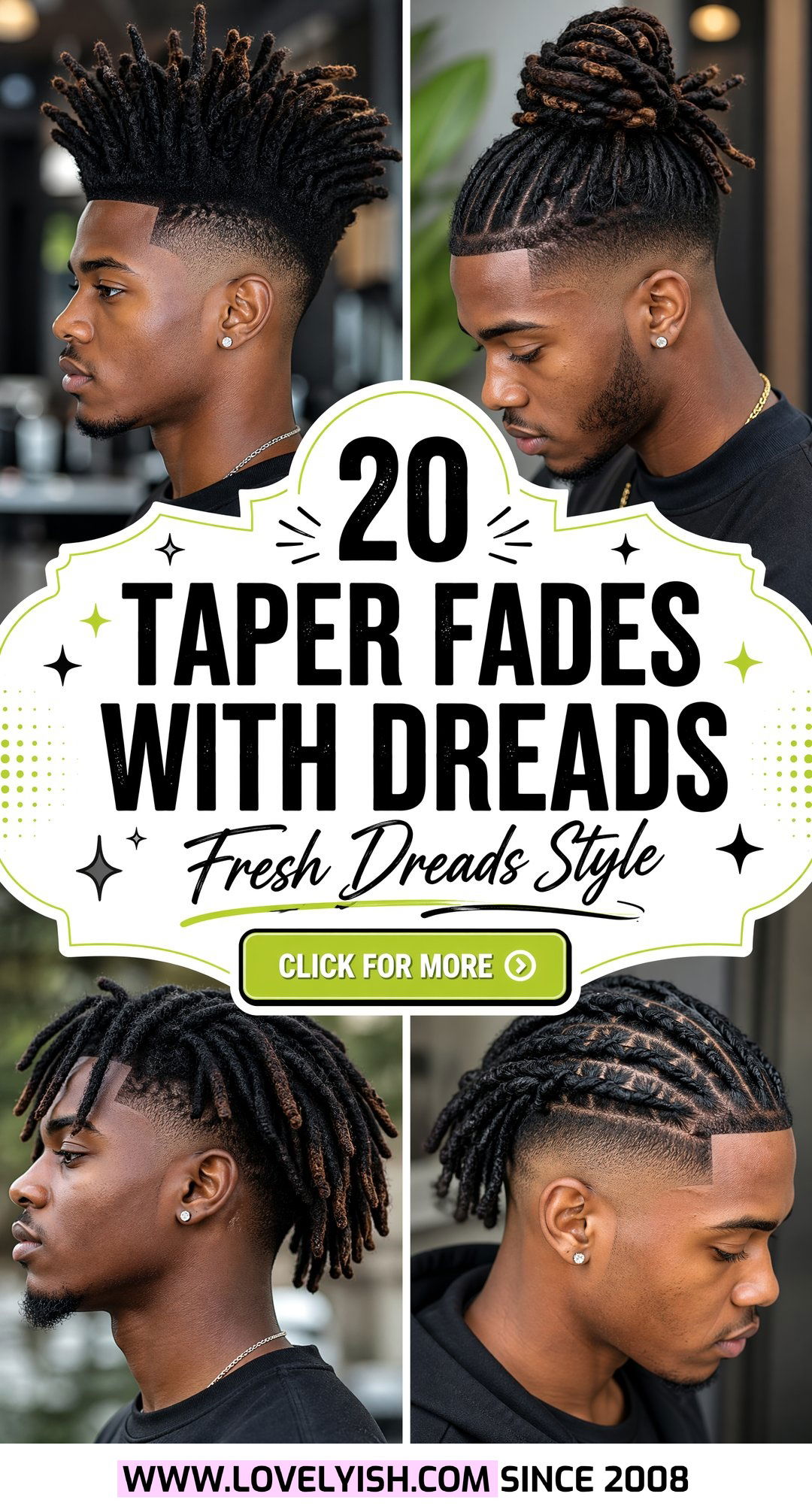
Achieving the Perfect All Around Taper with Dreads in 2026
An all around taper with dreads is a precision grooming technique that removes hair in a circular, graduated fashion around the hairline while maintaining the volume, length, and integrity of locs on the crown. By blending the faded pe...
An all around taper with dreads is a precision grooming technique that removes hair in a circular, graduated fashion around the hairline while maintaining the volume, length, and integrity of locs on the crown. By blending the faded perimeter into the existing dreadlock style, this cut provides a clean, professional aesthetic without compromising the loc structure.
Contents
Understanding the Anatomy of the All Around Taper
The all around taper, often referred to as a "taper fade" or "burst taper" depending on the specific arc, requires a sophisticated understanding of hair density and loc maturation. Unlike a standard fade, which might follow a straight horizontal line, the all around taper contours the temporal bone, the area behind the ear, and the nape of the neck.
When working with dreads, the primary technical challenge is the transition point. You must account for:
- Loc Thickness: The diameter of individual locs dictates how high the taper can safely go without exposing the scalp too aggressively.
- Hairline Integrity: If the locs are pulled tight or have significant tension at the edges, the taper must be adjusted to avoid thinning or alopecia-prone areas.
- Growth Patterns: Natural cowlicks at the nape often require a lower taper to ensure the transition remains seamless as the hair grows out.
Technical Execution for Professional Results
Achieving this style in 2026 requires utilizing high-torque, cordless magnetic motor clippers and precision trimmers capable of handling the unique texture of matted or locked hair.
Step-by-Step Shaping Process
- Preparation and Sectioning: Begin by dampening the perimeter hair if it is loose or has significant new growth. Clip the dreads away from the perimeter using sectioning clips to prevent accidental length reduction.
- Defining the Arc: Use a trimmer to establish the desired taper line. For an "all around" look, follow the natural curvature of the ear.
- Graduation (The Taper): Utilize guards starting from the lowest setting (typically a 0.5 or 1) at the base, working upward in half-inch increments to blend into the base of the locs.
- Refinement: Use a neck duster and a fine-tooth comb to identify stray hairs that escaped the initial cut.
- Edge-Up: Finalize the hairline using a zero-gapped trimmer. Ensure the vertical bar and the connection to the taper are sharp and symmetrical.
Pro Tip for 2026 Styling Standards Modern barbering techniques emphasize the use of moisturizing balms before the taper. Applying a light, non-greasy sealant to the base of the locs near the taper line prevents the clippers from snagging on dry or brittle hair, ensuring a clean cut every time.
Comparison of Taper Styles for Loc Wearers
Selecting the right taper depends on your personal style and the current maturity of your locs.
| Taper Type | Best For | Technical Difficulty | Maintenance Frequency |
|---|---|---|---|
| Low Taper | Beginners/Short Locs | Moderate | Every 3-4 Weeks |
| Burst Taper | Mohawk/Top-Heavy Locs | High | Every 2 Weeks |
| All Around Taper | Standard Locs | Moderate | Every 3 Weeks |
| Skin Taper | Sharp, High Contrast | High | Every 10-14 Days |
Maintaining Your Taper and Loc Health
In 2026, the focus in professional grooming has shifted toward preserving the health of the follicle while maintaining a sharp appearance. Constant cutting can lead to irritation if the skin is not treated correctly.
- Sanitization: Ensure your barber uses sterilized tools. Cross-contamination between locs and skin can lead to scalp folliculitis.
- Moisture Retention: Your scalp becomes more exposed with a taper. Use a scalp oil with tea tree or peppermint extract to soothe the skin after a fresh cut.
- Loc Maintenance: Avoid over-tightening during retwist sessions that coincide with your taper. Excess tension on the hairline combined with a fresh shave can lead to traction alopecia.
Common Troubleshooting and Challenges
When transitioning to an all around taper, users often face specific issues that require immediate attention:
- The "Gap" Effect: If the locs are too thick, the taper might look like a harsh line rather than a fade. Remedy this by "de-bulking" the hair just above the taper line using thinning shears or a clipper-over-comb technique.
- Ingrown Hairs: If you are prone to bumps, request that your barber uses a high-quality pre-shave oil and avoid using a razor to line up the very back of the neck if your skin is sensitive.
- Uneven Growth: Since hair grows at different rates, ensure you stick to a consistent schedule. In 2026, many professionals suggest booking your appointments in advance to maintain the crispness of the fade.
Frequently Asked Questions
Can I get an all around taper if my dreads are very long?
Yes, long dreads actually benefit from an all around taper as it removes the weight and bulk from the perimeter, making the style look more intentional and polished.
How often should I get my taper touched up?
For a professional, high-definition look, most people visit the shop every 2 to 3 weeks to keep the lines sharp and the transition clean.
Does a taper fade damage the hair at the roots?
When performed by a professional, it does not. The issue arises when the taper is cut too high, hitting the "weft" or the base of the locked hair, which can cause the loc to thin or break off.
Is this style suitable for all hair textures?
The all around taper works on all hair types, but the clipper guard settings must be adjusted based on hair density and color to ensure the fade looks smooth rather than patchy.
What is the difference between a temple fade and an all around taper?
A temple fade is localized specifically to the side corners of the forehead, whereas an all around taper follows a continuous path around the entire head, including the nape.
Strategic Maintenance Recommendation
To maximize the longevity of your style, invest in a quality silk or satin bonnet for sleep. Friction against cotton pillowcases causes the hair around your taper to frizz, which ruins the sharp contrast between your shaved perimeter and your groomed locs. If you are preparing for a professional event in 2026, schedule your taper no more than 48 hours prior to the date to ensure the skin has settled but the lines remain crisp.
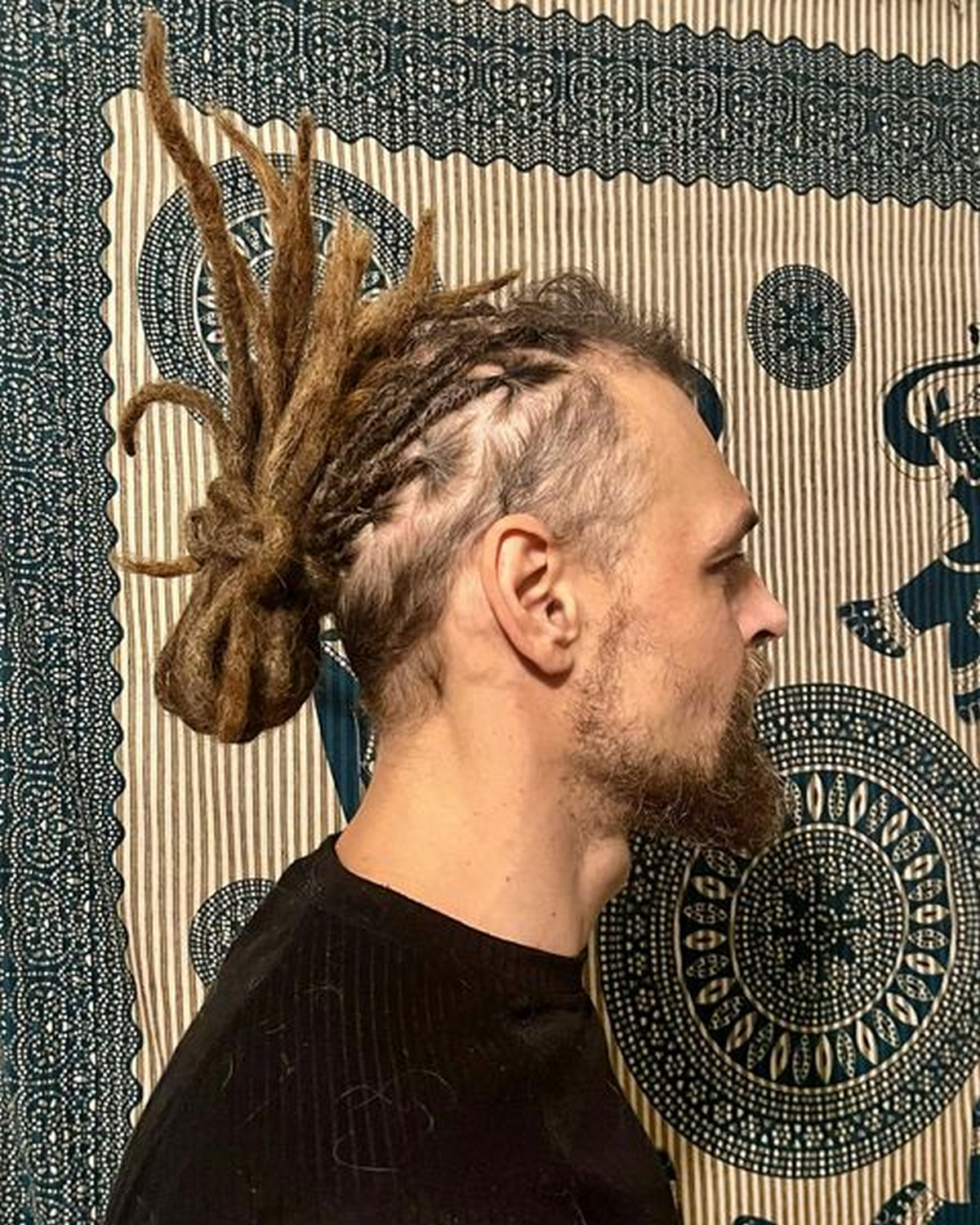
Image Gallery