How Much Liquid Laundry Detergent to Use: Exact Dosage Guide for All Machine Types
For a standard laundry load in a high-efficiency (HE) washing machine, you only need 1 tablespoon (15 ml) of liquid laundry detergent. For large or heavily soiled loads in HE machines, use 2 tablespoons (30 ml). Standard non-HE top-loa...
For a standard laundry load in a high-efficiency (HE) washing machine, you only need 1 tablespoon (15 ml) of liquid laundry detergent. For large or heavily soiled loads in HE machines, use 2 tablespoons (30 ml). Standard non-HE top-loading machines require 2 tablespoons (30 ml) for regular loads and up to 4 tablespoons (60 ml) for extra-large, heavily soiled loads.
Contents
Why Detergent Dosage Matters: The Hidden Costs of Overusing Soap
Using the correct amount of liquid laundry detergent is one of the most effective ways to preserve your clothes, protect your washing machine, and save money on household supplies. Modern detergent formulas are highly concentrated chemical matrixes of surfactants, enzymes, optical brighteners, and water softeners designed to suspend dirt in water so it can be flushed away.
When you use more liquid detergent than necessary, the excess soap creates a dense lather that the machine cannot rinse away effectively. Instead of leaving your clothes cleaner, detergent overuse leads to several distinct problems:
- Fabric Stiffness and Residue: Excess liquid detergent remains trapped within the woven fibers of garments. Once dried, this residue leaves towels scratchy, athletic wear stiff, and dark clothing covered in dull streaks or chalky films.
- Odors and Mold Growth: Undissolved detergent and trapped organic matter accumulate in the outer drum, rubber door seals, and drain lines of your washer. This sludge creates an ideal environment for mold, mildew, and bacteria, leading to a lingering sour smell on supposedly clean laundry.
- Reduced Moisture Wicking: Modern synthetic fabrics, such as polyester gym clothing, rely on microscopic channels to wick sweat away from the skin. Detergent residue clogs these channels, sealing in body oils and odor-causing bacteria (often called "permastink").
- Machine Wear and Pump Failure: High-efficiency washing machines rely on sensor-driven rinse cycles. Excessive suds confuse water-level sensors, trigger extra rinse cycles that waste gallons of water, and strain the drain pump motor, shortening the appliance's lifespan.
Conversely, under-dosing detergent leaves dirt and mineral deposits in the wash water. Without enough surfactant molecules to encapsulate soil, suspended dirt redeposits onto garments, causing white fabrics to turn gray or yellow over time.
High-Efficiency (HE) vs. Standard Washing Machines
Understanding how your washing machine operates is crucial to choosing the right dose of liquid laundry detergent. The two primary categories of residential washers—High-Efficiency (HE) and traditional standard top-loaders—handle water and detergent completely differently.
| HE Front/Top Loaders | Standard Top Loaders |
|---|---|
| Water Vol: 7 to 14 gal | Water Vol: 30 to 45 gal |
| Low water level | Full water immersion |
| Requires low-sudsing detergent | Traditional agitator pool |
| Recommended: 1 to 2 Tbsp | Recommended: 2 to 4 Tbsp |
High-Efficiency (HE) Washers (Front-Load and Top-Load)
HE machines are engineered to consume significantly less water and energy than standard washers. A typical HE cycle uses between 7 and 14 gallons of water per load, compared to 30 to 45 gallons in traditional machines.
Because HE machines use low water levels, they rely on mechanical tumbling action to lift garments and drop them against the drum walls. Detergents designed for HE machines contain suds suppressants. If you add too much liquid detergent to an HE washer, the resulting cushion of suds absorbs the kinetic energy of the tumbling action, preventing garments from rubbing against each other. This paradoxical effect, known as "suds lock," causes clothes to come out dirty despite being submerged in soap.
Standard Top-Loading Washers
Traditional top-loading washers use a central post agitator and submerge clothing entirely in a large tub of water. Because of the high volume of water diluting the detergent, standard machines require a higher volume of liquid soap to maintain an effective surfactant concentration. However, even in standard machines, filling a dosing cap to the top line often supplies double or triple the amount of detergent needed for a clean wash.
Complete Dosage Recommendations by Load Size and Machine Type
To achieve optimal cleaning results without building up residue, measure your liquid laundry detergent using standard tablespoon or milliliter markings rather than relying visually on manufacturer dosing caps.
Load Size Definitions
- Small Load: Machine tub is 1/3 full (approx. 3–5 lbs / 1.4–2.3 kg of dry laundry).
- Medium Load: Machine tub is 1/2 full (approx. 6–7 lbs / 2.7–3.2 kg of dry laundry).
- Large Load: Machine tub is 3/4 full (approx. 8–11 lbs / 3.6–5.0 kg of dry laundry).
- Extra-Large Load: Machine tub is filled to capacity without tightly packing (12+ lbs / 5.4+ kg).
| Machine Type | Load Size | Soil Level | Water Hardness | Recommended Liquid Detergent Dose |
|---|---|---|---|---|
| HE (Front or Top Load) | Small (3–5 lbs) | Normal | Soft / Medium | 1.5 Teaspoon (7.5 ml / 0.25 fl oz) |
| HE (Front or Top Load) | Medium (6–7 lbs) | Normal | Soft / Medium | 1 Tablespoon (15 ml / 0.5 fl oz) |
| HE (Front or Top Load) | Large (8–11 lbs) | Normal / Heavy | Soft / Medium | 1.5 to 2 Tablespoons (22.5–30 ml) |
| HE (Front or Top Load) | Extra-Large (12+ lbs) | Heavy | Hard Water | 2 to 2.5 Tablespoons (30–37.5 ml) |
| Standard Top Loader | Small / Medium | Normal | Soft / Medium | 2 Tablespoons (30 ml / 1 fl oz) |
| Standard Top Loader | Large (8–11 lbs) | Normal | Soft / Medium | 3 Tablespoons (45 ml / 1.5 fl oz) |
| Standard Top Loader | Extra-Large (12+ lbs) | Heavy | Hard Water | 4 Tablespoons (60 ml / 2 fl oz) |
Understanding Liquid Detergent Concentration Levels
Not all liquid detergents share the same chemical density. In recent years, manufacturers have transitioned away from diluted formulas toward concentrated options to reduce packaging waste and shipping weights. When calculating your dose, check the product label for concentration indicators (such as 2X, 4X, or 10X).
| 2X Concentrated | 4X Concentrated | 10X Ultra-Concentrated |
|---|---|---|
| Base standard dose | Reduce dose by 50% | Requires pre-set metered pump |
| 1 Tbsp (15 ml) for medium HE loads | 1.5 tsp (7.5 ml) | 1 pump (~1.5 tsp) |
Standard (2X) Concentration
Most off-the-shelf liquid detergents are 2X concentrated. The dosages listed in the table above apply directly to 2X concentrated formulas.
High-Concentration Formulas (4X to 10X)
Ultra-concentrated liquid detergents require proportional dose reductions:
- 4X Concentrated: Reduce the recommended 2X dosage by 50%. A medium HE load requires only 1.5 teaspoons (7.5 ml).
- 10X Concentrated: These formulas are typically dispensed via auto-metered pumps. A single pump (approximately 1.5 teaspoons or 6 ml) is sufficient for a standard 6–7 lb load in an HE machine.
The Measuring Cap Problem
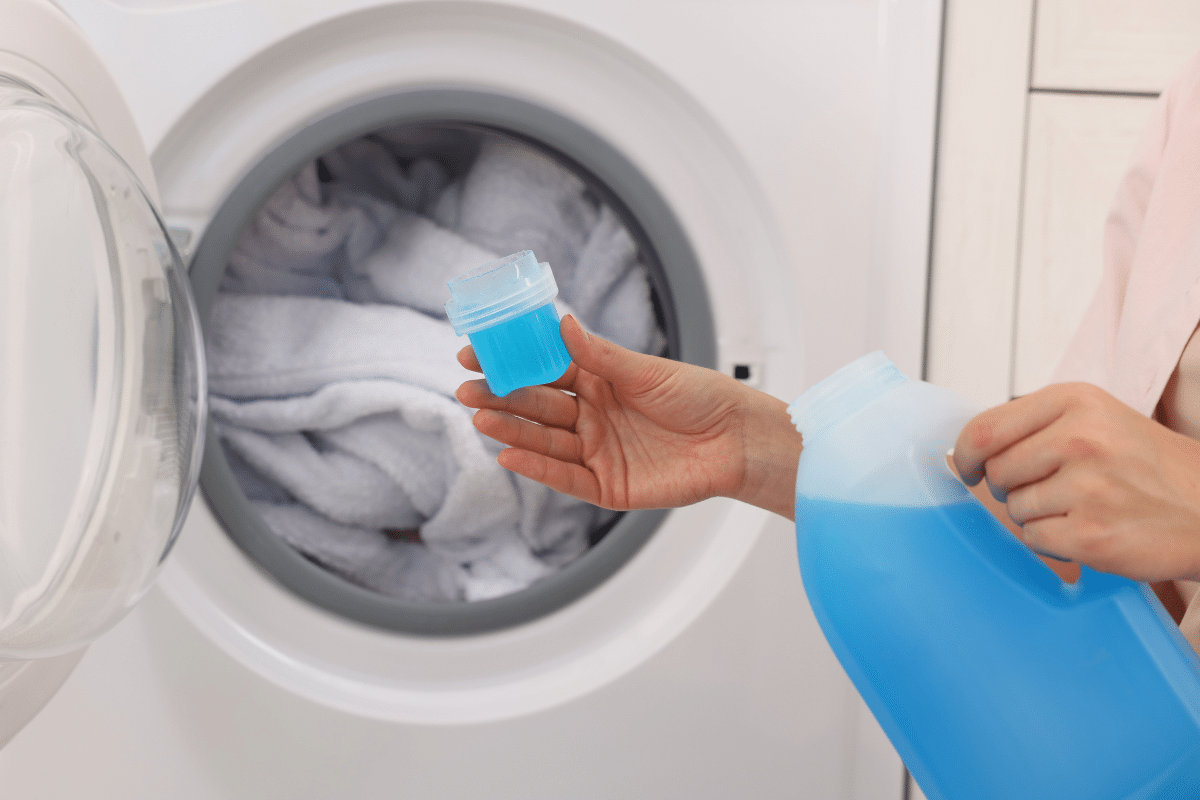
The dosing caps supplied with liquid laundry detergents are designed by marketing teams, not appliance technicians. On many popular detergent caps, the lowest fill line (Line 1) represents 1.5 to 2 fluid ounces (45–60 ml)—which is 3 to 4 times the amount of liquid detergent required for an HE washer load.
To prevent over-dosing, measure your detergent with a dedicated measuring spoon or mark the accurate 1-tablespoon (15 ml) and 2-tablespoon (30 ml) levels on your detergent cap using a permanent marker.
Key Factors That Adjust Your Required Dose
While base dosage guidelines work for standard loads, three environmental variables dictate whether you should slightly increase or decrease your detergent volume.
- Dose Factors
- Water Hardness
- Hard: +25-50% dose
- Soft: -25% dose
- Soil Level
- Light: Reduce dose
- Heavy: Add 1 Tbsp
- Water Temperature
- Cold: Liquid excels
- Hot: Maximizes enzymes
- Water Hardness
1. Water Hardness
Water hardness measures the concentration of dissolved minerals, primarily calcium and magnesium ions.
- Hard Water (Above 120 ppm or 7 grains per gallon): Calcium ions bind to surfactant molecules, neutralizing them before they can clean your clothes. If you live in a hard-water area, increase your liquid detergent dose by 25% to 50%, or use a mechanical water softener additive (such as washing soda).
- Soft Water (Below 60 ppm or 3.5 grains per gallon): Soft water allows surfactants to foam and lather easily. If you have a home water softener, reduce your detergent dose to 2 to 3 teaspoons (10–15 ml) for a full HE load to prevent oversudsing.
2. Soil Level and Fabric Types
- Heavily Soiled Items: Muddy work clothes, cloth diapers, and greasy garments require extra surfactants to suspend heavy oil and soil loads. Add 1 additional tablespoon (15 ml) of liquid detergent to the base load dose, or pretreat heavy stains directly with a few drops of detergent prior to washing.
- Lightly Worn Items: Delicate clothes worn briefly indoors require minimal surfactant power. Reduce your standard dose by 25%.
3. Water Temperature
Liquid detergent dissolves readily in all water temperatures, making it superior to powder detergents in cold water settings. Cold water cycles (below 60°F / 15°C) reduce the chemical reactivity of enzymes. While you should not increase detergent volume in cold water—as this worsens soap residue—ensuring you use a dedicated cold-water liquid detergent helps preserve cleaning performance without leaving excess residue.
How to Tell If You Are Using Too Much (or Too Little) Detergent
Your clean laundry and your washing machine offer clear warning signs when your detergent ratio is out of balance.
Signs You Are Over-Dosing
- Stiff, Crunchy Towels: Fabric fibers coated in hardened surfactant residue lose their natural flexibility and absorbency.
- Visible Suds During Rinse: Look through the glass door of your front-loading machine during the final rinse cycle. If suds are present on the drum walls or glass, too much soap was added.
- Dull or Chalky Dark Clothes: Black jeans and dark shirts show grey, cloudy streaks caused by unrinsed soap films.
- Musty Machine Odor: The washing machine drum or gasket emits a sour smell within 24–48 hours of completing a cycle.
- Gasket Sludge: A slimy grey or black film forms inside the folds of a front-load rubber door boot.
Signs You Are Under-Dosing
- Yellowing or Greying Fabrics: White cotton garments gradually turn dull grey due to dirt redepositing during the wash.
- Unremoved Body Odors: Clean clothes smell acceptable straight out of the washer, but emit body odor as soon as they are ironed or worn.
- Persistent Body Oil Stains: Yellowing around shirt collars and underarm seams indicates insufficient surfactant coverage to dissolve sebum oils.
How to Flush Detergent Build-Up from Clothes and Machines
If you discover that you have been over-dosing liquid laundry detergent, you must strip the accumulated soap residue from your wardrobe and wash drum before returning to proper dosage routines.
Flushing Your Clothes (Laundry Stripping Method)
To remove detergent build-up from towels and clothing without damaging fabrics:
- Place the affected clean garments into your washing machine drum without adding any new detergent.
- Add 1 cup (240 ml) of distilled white vinegar to the fabric softener compartment or directly into the drum during the rinse cycle. The acetic acid in vinegar neutralizes alkaline surfactant residues, breaking down build-up.
- Run a complete wash cycle using hot water (or the warmest setting safe for the fabric care label).
- Inspect the rinse cycle water. If visible foam or suds appear without detergent added, repeat the water-only hot cycle until the rinse water runs completely clear.
Cleaning the Washing Machine Drum
To remove soap scum, biofilm, and odor-causing bacteria from the washer itself:
- Wipe down the rubber door gasket and dispenser drawer with a microfiber cloth soaked in equal parts warm water and white vinegar.
- Pour 2 cups of white vinegar or add an oxygen-based washing machine cleaner tablet into the tub.
- Run the machine's dedicated "Clean Washer" or "Tub Clean" cycle using hot water.
- Leave the washer door or lid open for several hours after the cycle completes to allow the drum to dry thoroughly.
Frequently Asked Questions
Can I use the detergent cap to measure accurately?
Most factory detergent caps are designed with vague, hard-to-read fill lines where line 1 often represents 3 to 4 times the amount of soap needed for an HE machine. It is best to use an actual measuring spoon (tablespoon) or paint a clear line on the cap at the 15 ml (1 Tbsp) and 30 ml (2 Tbsp) marks.
What happens if I use non-HE liquid detergent in an HE washing machine?
Non-HE detergents lack suds-suppressing agents. Using traditional detergent in an HE washer creates an excessive suds layer that cushions garments, reducing cleaning effectiveness. It can also cause foam to leak out of the machine's air vents, trigger "SUDS" error codes, or flood your laundry area.
Is liquid laundry detergent better than pods or powder?
Liquid detergent excels at dissolving quickly in cold water and pretreating grease, oil, and food stains. Laundry pods offer convenient pre-measured doses, but they prevent you from adjusting detergent amounts for small or lightly soiled loads, which often leads to over-dosing. Powder detergents are generally more effective for heavy mud and clay soil, but may fail to dissolve completely in cold water.
Should I put liquid detergent directly on clothes or in the dispenser drawer?
In machines with automatic dispensers, always pour liquid detergent directly into the designated dispenser drawer compartment. This allows the washer to mix the detergent with water before it contacts your clothes. In top-loaders without a dispenser, add the liquid detergent to the bottom of the empty drum before loading your garments so it dilutes as the tub fills.
Does hard water require twice as much detergent?
Hard water reduces detergent efficiency, but you rarely need to double your dose. In hard water conditions (above 120 ppm), start by increasing your liquid detergent dose by 25% to 50% (e.g., moving from 1 tablespoon to 1.5 tablespoons in an HE machine). Alternatively, add a water-softening additive like washing soda to the drum alongside your standard detergent dose.
Practical Action Plan for Better Laundry Results
To maximize cleaning power, protect your clothes, and extend your washer's life, adjust your detergent habits starting with your next load:
- Locate your machine type: Determine whether your washer displays the official "HE" logo (on the front control panel or inside the door rim).
- Ditch the cap lines: Use a kitchen measuring spoon to measure out 1 tablespoon (15 ml) of 2X liquid detergent for your next medium-sized load.
- Adjust for heavy loads: Increase to 2 tablespoons (30 ml) only when washing large items, thick towels, or heavily soiled workwear.
- Perform a monthly tub clean: Run a tub cleaning cycle once every 30 days to clear out minor soap accumulations before mold or odors develop.
EDITORIAL CATEGORY METADATA:
Image Gallery