Understanding Paid Time Off for Salaried Employees: Rights, Policies, and Best Practices
Paid Time Off (PTO) for salaried employees is a flexible leave policy that bundles sick leave, vacation days, and personal time into a single bank of hours. Unlike hourly wages, salaried compensation remains consistent regardless of th...
Paid Time Off (PTO) for salaried employees is a flexible leave policy that bundles sick leave, vacation days, and personal time into a single bank of hours. Unlike hourly wages, salaried compensation remains consistent regardless of the hours worked in a given pay period, making the integration of PTO into an employment agreement a critical aspect of workplace benefits, regulatory compliance, and total compensation strategy.
Contents
The Foundation of PTO in Salaried Roles
In a salaried employment arrangement, the individual is paid a fixed annual amount rather than an hourly rate. Because these roles are often exempt from overtime requirements under the Fair Labor Standards Act (FLSA) in the United States, there is a common misconception that salaried employees are entitled to unlimited work hours or that PTO is a discretionary favor rather than a contractual benefit.
In reality, PTO is governed by the specific employment contract or the company handbook. Because federal law in the U.S. does not mandate paid vacation or sick time, the structure of your PTO is almost entirely determined by state statutes and the internal policies established by your employer. Understanding your specific policy requires moving beyond general labor assumptions and reviewing the official documents provided during your onboarding or accessible through your company’s human resources portal.
Types of PTO Structures
Employers typically categorize PTO using one of three primary frameworks. Knowing which one applies to your contract is the first step in managing your time effectively.
- The Consolidated PTO Bank: This is the most common modern approach. The employer provides a single allotment of days to be used for any purpose. This offers the employee maximum autonomy, as there is no distinction between a "sick day" and a "vacation day."
- The Categorical Model: In this traditional structure, vacation time, sick leave, and personal holidays are tracked in separate "buckets." This is often used by organizations subject to specific municipal or state sick-leave mandates, which may require separate tracking to ensure compliance with legal accrual requirements.
- Unlimited PTO: Increasingly common in tech and professional services, this policy allows employees to take as much time off as they need, provided they meet their performance goals and receive manager approval. While this sounds liberating, it often lacks the clear "accrual" benefits of traditional systems and can sometimes lead to employees taking less time off due to the lack of a defined balance.
Accrual vs. Front-loading
When evaluating your PTO benefits, you must determine how the time is earned.
- Accrual Systems: You earn a fraction of your annual allotment each pay period. If you have a 15-day annual allowance and are paid bi-weekly, you earn roughly 0.57 days per pay period. This system encourages consistent usage and helps the employer manage workforce capacity.
- Front-loaded Systems: The full allotment of days is granted at the start of the calendar year or the anniversary of your employment. This provides immediate access to your full balance but often requires the company to "claw back" used time if an employee leaves the firm before the end of the year.
Legal Considerations and State Mandates
While federal law is silent on vacation pay, state and local jurisdictions have become increasingly active. Some states, such as California and Massachusetts, have strict rules regarding PTO as "earned wages." In these jurisdictions, if you leave your job, your employer is legally required to pay out any accrued but unused PTO. In states where PTO is considered a "gift" or "fringe benefit" rather than an earned wage, employers may have policies that allow them to forfeit your remaining balance upon termination. Always check your local labor department’s website for the most recent status of payout requirements in your specific jurisdiction as of 2026.
Comparison of Common PTO Policy Features
| Feature | Accrual-Based PTO | Unlimited PTO | Categorical Leave |
|---|---|---|---|
| Tracking | Tracked by HR/Payroll | Rarely tracked | Rigorous separation |
| Payout | Often paid upon exit | Usually zero payout | Varies by category |
| Flexibility | Moderate | High | Low |
| Compliance | Standard reporting | Requires usage monitoring | High regulatory burden |
Managing Your PTO Balance Effectively
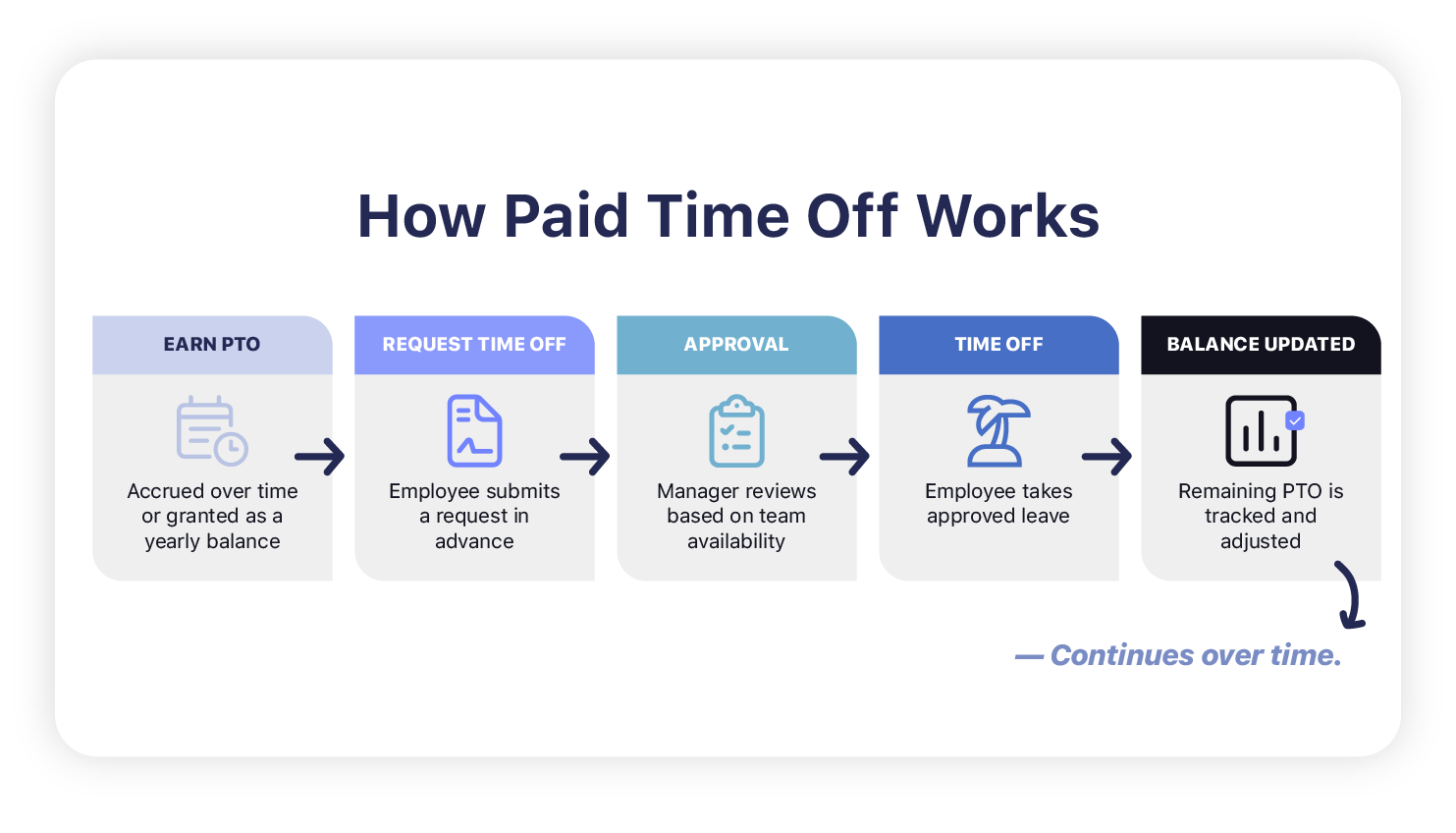
To maximize your benefits, you should approach PTO as part of your total compensation. If your company uses an accrual system, check your balance via the company portal at the start of every quarter.
If you are approaching the end of the year, verify your company’s "carry-over" policy. Some organizations operate on a "use-it-or-lose-it" basis, meaning any hours remaining in your bank at midnight on December 31 are forfeited. Others may allow for a "rollover," where a limited number of days can be moved into the next year. Failing to track these dates can result in the loss of thousands of dollars in earned value.
Troubleshooting Common Issues
- Denied Requests: If a manager denies a PTO request, review the employee handbook. Most companies have clauses that allow them to deny leave during "blackout periods" or when business needs dictate. If the denial seems discriminatory or violates a contract, reach out to your HR representative for clarification.
- Incorrect Balances: If your portal shows an incorrect number of days, gather your pay stubs and employment contract. Present these as evidence to HR to initiate a correction.
- Unclear Carry-over Rules: If the handbook is ambiguous regarding rollover, request a written email clarification from HR to ensure you have a record of the policy should a dispute arise later.
Strategic Planning for Salaried Professionals
Because salaried roles prioritize outcomes over hours logged, your PTO strategy should align with your project cycles.
- Map Your Projects: Review your 2026 project calendar. Identify periods of high demand where leave will be difficult to secure, and plan your time off during natural lulls in the workload.
- Coordinate with Coverage: Proactively discuss your planned absences with your manager and team. By ensuring your responsibilities are covered before you leave, you remove a major barrier to request approval.
- Understand the "Disconnect": True professional rest requires a complete digital disconnect. Before departing, set clear expectations regarding your availability. As a salaried employee, you may be tempted to check emails, but consistent use of PTO is vital for preventing burnout and maintaining long-term productivity.
Frequently Asked Questions
Does federal law guarantee PTO for salaried employees? No. In the United States, there is no federal requirement for private employers to provide paid vacation or sick leave. PTO is a benefit determined by your individual employment contract or company policy.
What happens to my PTO if I quit? This depends on state law and company policy. In states like California, accrued PTO must be paid out as wages. In other states, companies may have policies that state "use it or lose it," meaning you are not entitled to payment for unused time upon resignation.
Can my employer change my PTO policy mid-year? Generally, yes. Employers have the right to modify benefits policies, provided they notify employees in advance. They cannot, however, retroactively revoke leave that has already been accrued and vested according to the previous policy.
Is it better to have a consolidated PTO bank or separate sick/vacation days? A consolidated bank offers more flexibility for personal time, but separate banks can protect your vacation time from being exhausted by unexpected illness. The preference depends on your health needs and desire for scheduling autonomy.
Does "Unlimited PTO" mean I can take as much time as I want? Technically, yes, but practically, it is subject to management approval. You are still required to meet performance objectives, and excessive time off may be flagged by HR or management as a performance issue.
Next Steps for Employees
The most immediate action is to locate your company’s Employee Handbook or internal policy document. Verify your current accrual rate, the carry-over policy for the 2026 calendar year, and the approval process for taking time off. If you are in a state with strict "earned wage" laws, document your current balance and ensure it aligns with your final pay stubs. Treating your PTO as a contractual asset rather than an arbitrary favor is essential to ensuring you receive the full value of your compensation package.
Image Gallery