Understanding the Canadian 200 Dollar Bill Value: Historical Context and Collectible Worth
When people ask about a Canadian 200 dollar bill value, they are usually surprised to learn that the Bank of Canada has never officially issued a standard-circulation $200 banknote. While Canada’s currency system features well-known de...
When people ask about a Canadian 200 dollar bill value, they are usually surprised to learn that the Bank of Canada has never officially issued a standard-circulation $200 banknote. While Canada’s currency system features well-known denominations like the $5, $10, $20, $50, and $100 bills, along with historical $1 and $2 notes, a regular-issue $200 bill does not exist in modern circulation, though specialized commemorative or unique issues often spark widespread public curiosity and numismatic interest.
Contents
The Reality of Bank of Canada Denominations
To understand why a Canadian 200 dollar bill value is a frequent point of inquiry, it helps to examine the official denomination structure established by the Bank of Canada. Since the foundation of the central bank in 1935, Canadian currency series have intentionally skipped certain increments to simplify cash transactions and coin-to-bill transitions.
The historical and modern paper currency issued for circulation includes:
- One Dollar ($1): Issued from 1935 until the introduction of the loonie coin in 1987.
- Two Dollars ($2): Issued from 1935 until the introduction of the twoonie coin in 1996.
- Five Dollars ($5): A staple denomination present in every major series, currently featuring Sir Wilfrid Laurier on the polymer note.
- Ten Dollars ($10): Historically and currently prominent, featuring figures like Sir John A. Macdonald and, more recently, Viola Desmond.
- Twenty Dollars ($20): The most widely circulated and used denomination in Canadian ATMs and retail transactions, featuring Queen Elizabeth II or King Charles III depending on the series.
- Fifty Dollars ($50): A common mid-tier bill featuring William Lyon Mackenzie King.
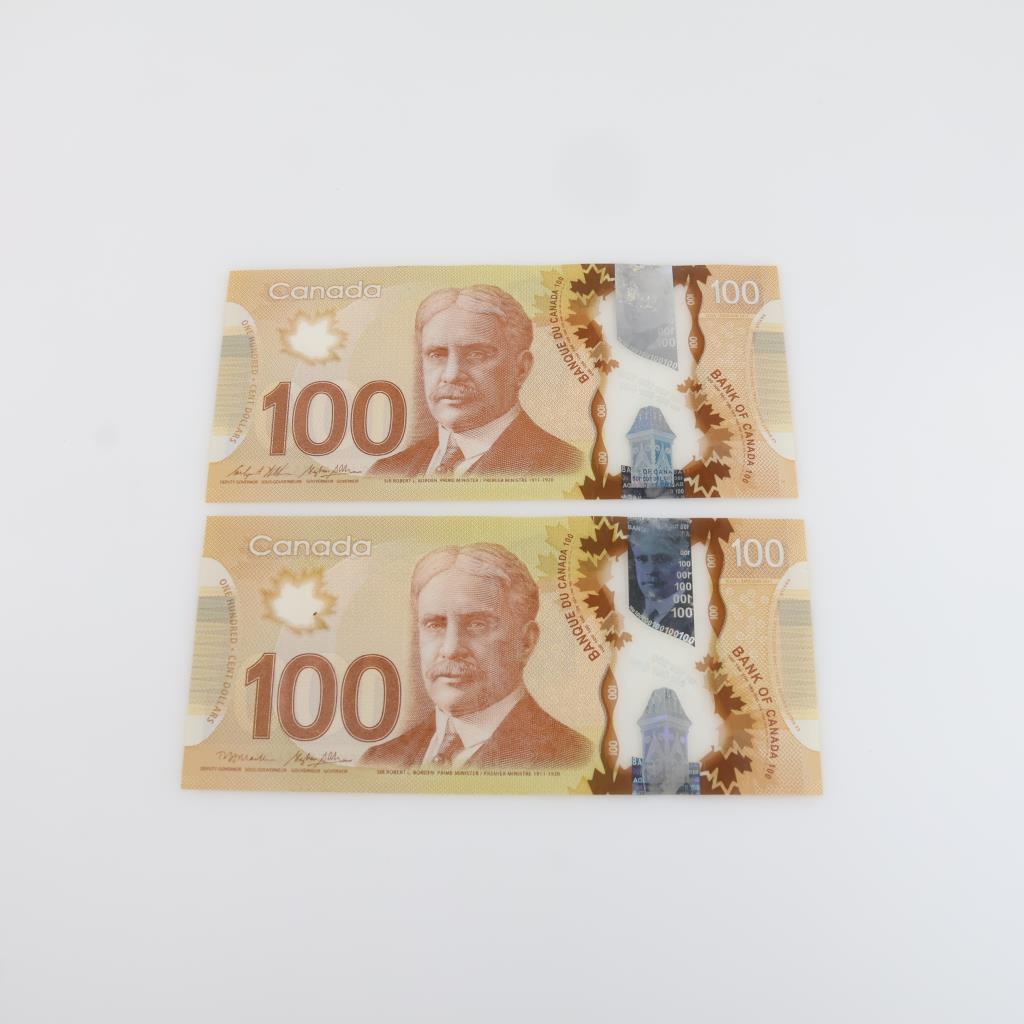
- One Hundred Dollars ($100): The highest regular circulation denomination, featuring Sir Robert Borden.
Because the progression leaps directly from $100 to the next logical step (which never materialized as $200), any physical object resembling a Canadian 200 dollar bill typically falls into one of a few specific categories: novelty items, counterfeit attempts, foreign currency confusion, or misunderstandings of commemorative sets.
Why People Search for a Canadian 200 Dollar Bill
The persistence of queries regarding a Canadian 200 dollar bill value stems from several distinct psychological and economic factors. Understanding these drivers helps clarify what holders of unusual items actually possess.
Novelty Notes and Movie Props
Many items found in collections or passed down through estates are not legal tender. Movie prop companies, novelty manufacturers, and souvenir shops frequently print replica banknotes with exaggerated denominations. A "200 Dollar Bank of Canada" novelty note usually features disclaimers printed in small text, such as "FOR MOTION PICTURE USE ONLY" or "SPECIMEN," rendering its monetary value zero while occasionally holding minor novelty value for collectors of cinematic memorabilia.
Confusion with Other Currencies
Travelers and collectors sometimes mistake high-value foreign banknotes for Canadian currency. Countries with hyperinflation histories or different monetary scales routinely issue 200-denomination notes (such as the 200 Euro note, various Latin American currencies, or historical banknotes from countries like Zimbabwe or post-WWI Germany). When these are discovered alongside Canadian currency collections, owners mistakenly search for a Canadian equivalent.
Speculation on Future Denominations
As inflation erodes purchasing power, economic analysts and numismatists occasionally debate whether central banks should introduce higher denominations. While the United States retains the $100 bill as its highest circulating note, other nations have introduced higher-value bills. Rumors or internet hoaxes occasionally circulate claiming the Bank of Canada is about to release a $200 or $500 polymer note to combat bulk storage of wealth or adjust for inflation, though the Bank of Canada has consistently maintained that $100 remains their absolute ceiling for circulation.
Evaluating Paper Money Collectibles and Rare Banknotes
If you possess a unique, rare, or unexpected Canadian banknote and wish to determine its actual market worth, you must evaluate specific numismatic criteria. The value of any collectible Canadian paper money relies heavily on technical grading standards and historical scarcity.
| Denomination / Note Type | Official Status | Typical Market Value | Primary Value Drivers |
|---|---|---|---|
| Regular Circulation $100 Bill | Legal Tender | Face Value to Premium | Series year, condition (UNC), replacement status (asterisk notes). |
| Rare Historical $1 or $2 Note | Withdrawn / Legal Tender | $5 to $500+ | Signature combinations, serial numbers, pristine paper condition. |
| 1935 Series Masterpieces | Legal Tender (Non-spendable easily) | $1,000 to $50,000+ | First series ever issued, French/English bilingual variants, low serial numbers. |
| Novelty / Prop "200 Dollar Bill" | Not Legal Tender | $0 (Zero) | Material quality, cinematic novelty interest only. |
Step-by-Step Guide to Identifying and Assessing Unusual Banknotes
If you have stumbled upon an item that looks like a Canadian banknote with an unusual denomination like $200, execute the following verification steps to determine its authenticity and true nature.
- Examine the Text and Legal Disclaimers: Look closely at all microprinting and border text. Authentic Bank of Canada notes state "This note is legal tender" alongside the signatures of the Bank of Canada Governor and Deputy Governor. Novelty items will explicitly state they are replicas or for prop use.
- Check Security Features: Modern Canadian polymer notes feature transparent windows, metallic portraits, frosted maple leaves, and raised ink. A fake or novelty $200 note will typically lack these sophisticated anti-counterfeiting technologies.
- Consult the Bank of Canada Official Archives: Visit the official Bank of Canada currency portal to cross-reference every official series released since 1935. If a denomination does not appear in their historical catalog, it was never officially produced for circulation.
- Consult a Professional Numismatist: If you suspect you hold a rare prototype, a printing error, or an extremely rare historical specimen, take the item to a professional coin and currency dealer certified by the Canadian Numismatic Association (CNA) for an official appraisal.
Common Pitfalls and Misconceptions in Currency Collecting
Navigating the market for paper money requires vigilance against common errors in evaluation. Many amateur collectors fall victim to misconceptions regarding how condition and serial numbers impact worth.
- Assuming Old Age Equals High Value: Just because a banknote is old does not automatically make it valuable. Millions of certain historical series were printed and survive in high quantities, keeping their market value close to face value unless they are in pristine, uncirculated condition.
- Ignoring Handling Damage: Folding, creases, pinholes, stains, and tears drastically reduce a banknote's grade. A note graded "Choice Uncirculated" commands exponentially higher prices than one graded "Good" or "Fair."
- Misinterpreting Replacement Notes: Canadian banknotes with an asterisk (*) in the serial number were issued to replace defective sheets during the printing process. While rare and sought after by advanced collectors, their value still depends heavily on the specific series and overall grade.
Practical Recommendations for Holders of Unusual Currency
If you are holding an item labeled as a Canadian 200 dollar bill, your best course of action depends entirely on its physical characteristics. If it is a confirmed novelty item or movie prop, treat it as a conversation piece or discard it, as banks will not exchange it, and collectors will not buy it as currency. If you are looking to invest in legitimate Canadian numismatics, focus your efforts on certified graded notes from the 1935 Series, low-serial-number polymer notes, or rare commemorative issues from established denominations like the $20 or $50 notes. Always rely on certified appraisal standards before buying or selling high-value paper currency in the secondary market.
Image Gallery