The History, Evolution, and Reality of the Wonderlic Test for NFL Players
The Wonderlic test is a 12-minute, 50-question cognitive ability exam historically used by National Football League teams during the Scouting Combine to evaluate the problem-solving and learning capabilities of prospective players. Whi...
The Wonderlic test is a 12-minute, 50-question cognitive ability exam historically used by National Football League teams during the Scouting Combine to evaluate the problem-solving and learning capabilities of prospective players. While its prominence in pre-draft evaluations has significantly declined in recent years, it remains one of the most widely discussed metrics in sports analytics and football lore.
Contents
Understanding the Wonderlic Test: Origins and Structure
The Wonderlic Personnel Test was not originally created for professional athletes. Developed in the late 1930s by E.F. Wonderlic, a graduate student at Northwestern University, the exam was designed as a streamlined method for businesses to assess the cognitive capacity of prospective employees during hiring processes. Based on the Otis Self-Administering Test of Mental Ability, the assessment measures an individual's ability to understand instructions, solve problems, and handle spatial relationships, vocabulary, and basic logic under tight time constraints.
When football executives and personnel departments sought an edge in player evaluation during the mid-20th century—particularly under legendary coaches like Tom Landry of the Dallas Cowboys—they began adopting industrial psychology tools for sports. The logic was straightforward: football playbooks are dense, complex documents requiring rapid memorization, split-second decision-making, and high-level spatial awareness. Proponents argued that a test measuring general cognitive aptitude could theoretically highlight which players might struggle to digest complex schemes or adapt to the mental demands of professional football.
The test format itself is remarkably concise. Candidates are given exactly 12 minutes to answer up to 50 multiple-choice questions. Because the questions increase in difficulty as the test progresses, it is statistically rare for any test-taker to complete all 50 questions within the allotted window. Scoring is calculated simply by counting the total number of correct answers. A score of 20 is traditionally considered average for the general population, roughly corresponding to an IQ of 100, though NFL front offices have historically established their own internal benchmarks based on position groups.
The Evolution of Cognitive Testing at the NFL Scouting Combine
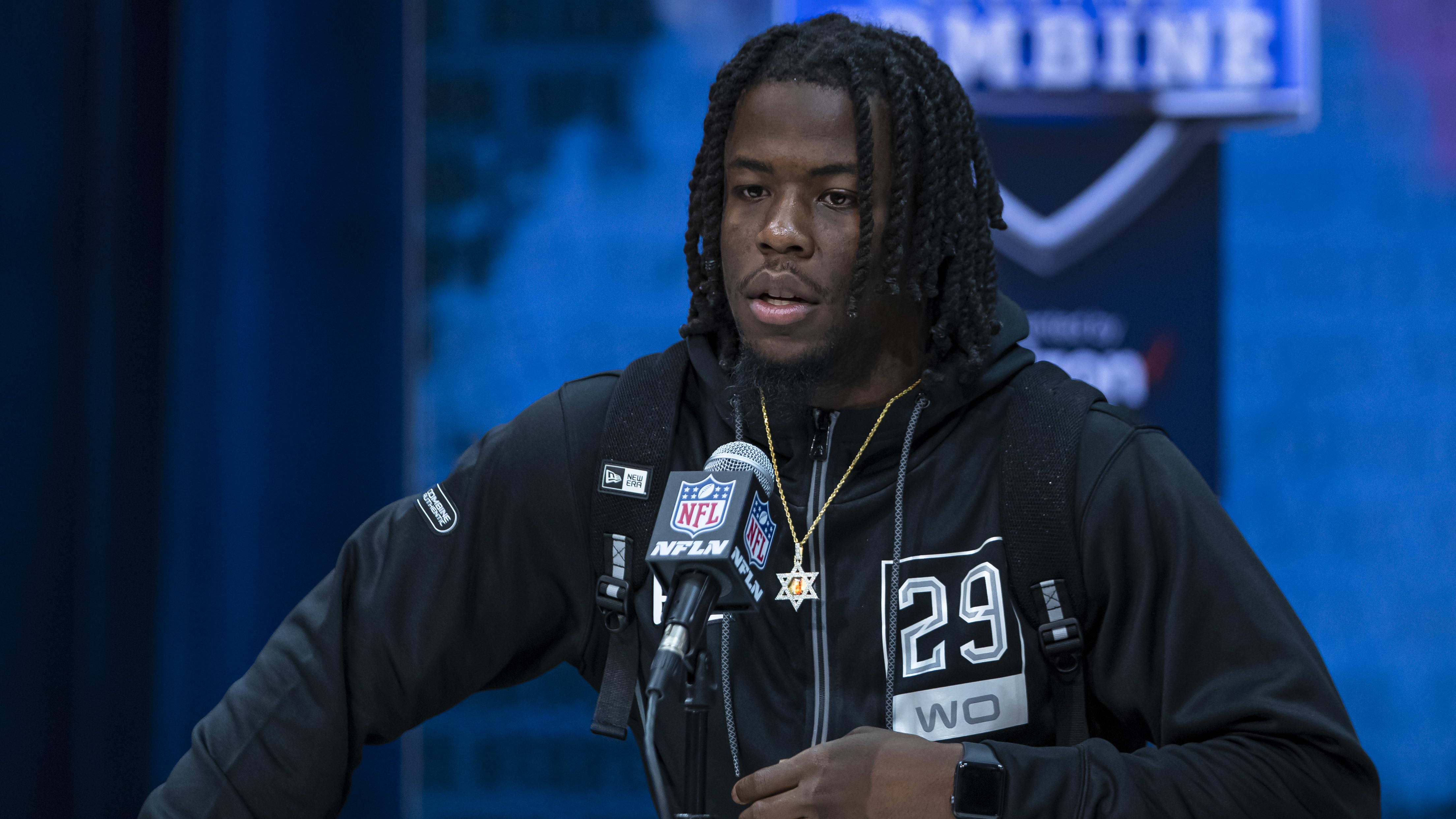
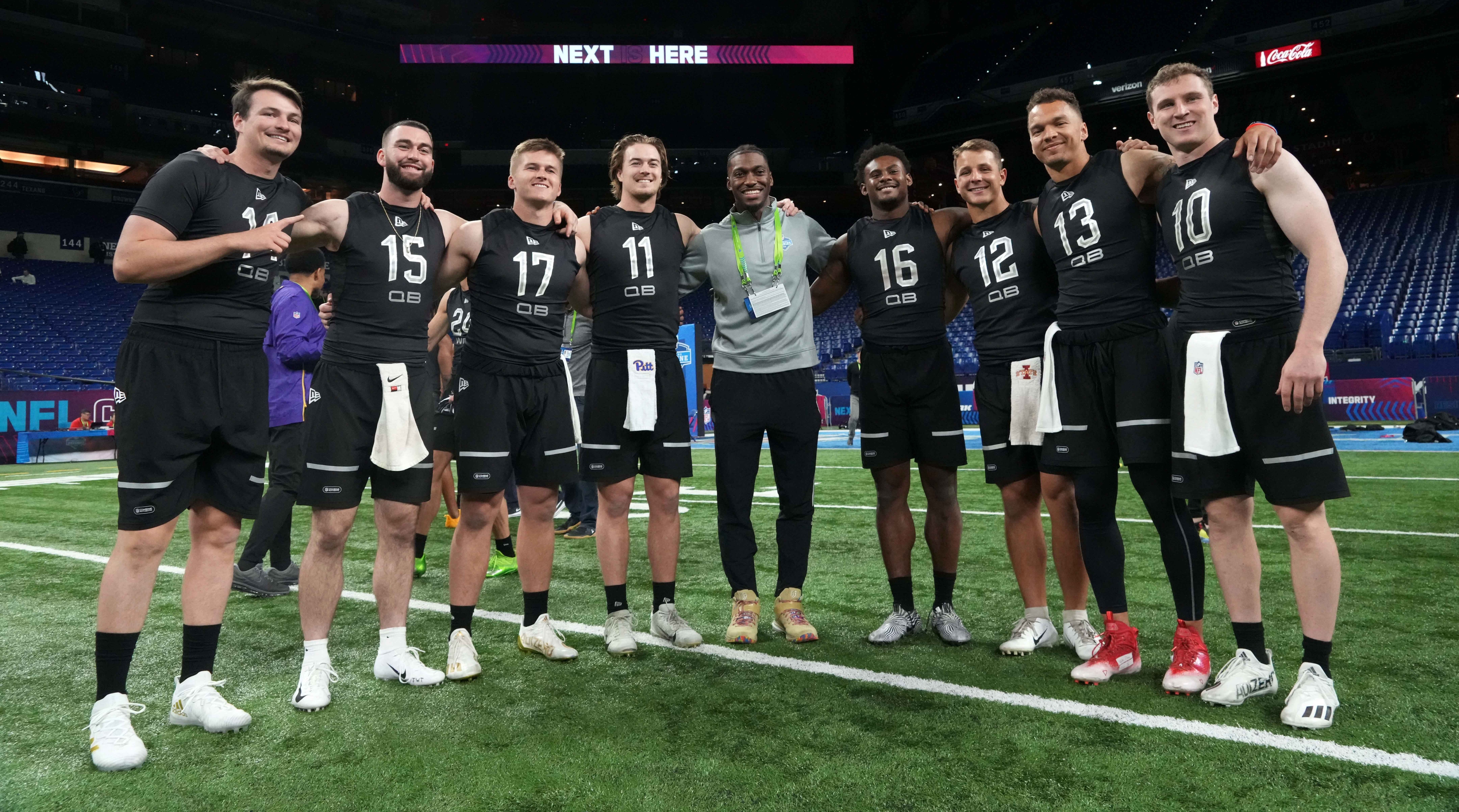
For decades, the Wonderlic test was a mandatory and highly publicized staple of the NFL Scouting Combine held annually in Indianapolis. Prospects would sit in a controlled environment, taking the pencil-and-paper (and later computerized) exam alongside medical evaluations and physical drills. However, the public obsession with these scores often overshadowed their actual utility within football operations.
Media outlets and fans frequently scrutinized leaked scores, turning high marks into praise for a player's preparation and low marks into meme-worthy critiques. High-profile anomalies fueled endless sports talk radio debates. For instance, elite quarterbacks and hall-of-fame signal-callers recorded widely divergent scores, demonstrating that testing outcomes did not neatly correlate with on-field production, leadership, or success.
Recognizing that the public spectacle often distorted the true value of cognitive evaluations, the NFL began shifting its approach. In 2022, the league notified teams that administration of the traditional Wonderlic test at the official Scouting Combine would no longer be supported or mandated. Instead, individual franchises retained the right to administer cognitive assessments independently during private workouts, top-30 team visits, or through alternative evaluation tools.
This pivot reflects a broader modernization within sports science. Front offices increasingly realized that a generic 12-minute industrial aptitude test might not accurately capture the specific, football-centric cognitive processing required to read a zone defense in fractions of a second. Consequently, teams transitioned toward customized football-specific testing systems and virtual reality simulations.
Wonderlic Scores Across Position Groups
Historically, NFL front offices analyzed Wonderlic scores within the context of specific position groups rather than holding every player to a uniform standard. The cognitive demands placed on a quarterback—who must memorize extensive playbooks, adjust protections at the line of scrimmage, and diagnose coverages post-snap—differ significantly from the physical, repetitive assignments of other positions, though every role requires high-level football intelligence.
Football analysts and researchers have historically compiled aggregate data showing average scores across positions. While these numbers fluctuated slightly from year to year based on draft classes, general trends remained consistent across decades of Combine data.
| Position Group | Traditional Average Score Range | General Cognitive Demands |
|---|---|---|
| Quarterback (QB) | 24 – 30+ | High-level play diagnosis, protection adjustments, complex playbook retention |
| Offensive Tackle (OT) / Center (C) | 22 – 26 | Complex blocking scheme coordination, defensive alignment identification |
| Linebacker (LB) / Safety (S) | 20 – 25 | Defensive recognition, run-pass keys, spatial awareness across the field |
| Wide Receiver (WR) / Cornerback (CB) | 16 – 22 | Route-tree mastery, geometric spacing, quick spatial adjustments |
| Running Back (RB) / Defensive Lineman (DL) | 14 – 20 | Gap responsibility, immediate physical reaction, assignment execution |
It is essential to note that these ranges are broad historical averages, and individual outliers frequently defied expectations. Players with below-average scores have achieved legendary status through exceptional physical traits, instincts, and dedicated film study, while high scorers have occasionally struggled with the speed of the professional game.
Common Misconceptions and Limitations
The debate surrounding Wonderlic test nfl players is fraught with misconceptions, largely driven by media sensationalism and a fundamental misunderstanding of what psychological tests can and cannot predict.
Myth: A High Score Guarantees Success
One of the most persistent fallacies is that a near-perfect Wonderlic score indicates a prospect is a foolproof investment. Intelligence in a controlled testing environment does not translate directly to processing speed under physical fatigue, poise under pressure, or physical durability. Football performance relies heavily on kinesthetic awareness, emotional resilience, physical traits, and extensive repetition—elements that a multiple-choice paper test cannot measure.
Myth: A Low Score Ensures Failure
Conversely, leaked low scores have unfairly damaged player reputations during the draft process. Several star players who recorded modest or low scores went on to have elite, long-lasting careers characterized by exceptional football IQ on the field. On-field intelligence—often referred to as "football sense" or spatial intuition—frequently manifests differently than academic test-taking ability. A player who struggles with abstract math or logic puzzles under a strict time limit may effortlessly track opposing formations and diagnose plays in real-time.
The Problem of Cultural and Educational Bias
Psychometric testing has long faced academic scrutiny regarding potential cultural and educational biases. Disparities in educational resources across high school and collegiate systems can influence standardized test performance independently of an individual's native intelligence or capability to learn a professional playbook. This realization contributed heavily to the NFL's decision to move away from standardized industrial exams in favor of more tailored, sport-specific cognitive evaluations.
The Modern Era of Player Evaluation
As the NFL continues to embrace advanced analytics, player evaluation has evolved far beyond the basic metrics of the past. Front offices now employ multidisciplinary research teams comprising sports scientists, data analysts, biomechanists, and former players.
Modern assessment strategies focus on tracking data from collegiate games, evaluating physical traits through precise GPS and optical tracking metrics, and utilizing proprietary cognitive tools. These newer systems evaluate reaction times, multitasking abilities, and visual processing speeds under simulated game conditions. By replacing the blunt instrument of the traditional Wonderlic test with nuanced, sport-specific metrics, NFL teams can better understand how a prospect processes information in an environment that mimics the chaos and speed of professional football.
Frequently Asked Questions
What was the highest Wonderlic score ever recorded by an NFL player?
While exact records for unverified tests are difficult to confirm, former Harvard University and Cincinnati Bengals punter Pat McInally famously scored a legendary 50 out of 50 on the test. Other notable high scorers include quarterback Ryan Fitzpatrick, who scored a 48.
Do NFL teams still use the Wonderlic test today?
While the official administration of the traditional Wonderlic test at the NFL Scouting Combine was discontinued in 2022, individual franchises may still choose to administer cognitive tests privately during pre-draft interviews, though most have transitioned to modern, football-specific cognitive tools.
How much time are prospects given to complete the test?
Test-takers are given exactly 12 minutes to answer up to 50 multiple-choice questions, which is intentionally designed to be a rapid pace that very few individuals can finish entirely.
Does a low Wonderlic score mean a player cannot learn a playbook?
No. Standardized test-taking ability under strict time limits does not correlate directly with a player's capacity to learn a football playbook. On-field learning involves visual, auditory, and kinesthetic processing that differs substantially from taking a paper exam.
Why did the NFL stop using the Wonderlic test at the Combine?
The league phased out the test primarily due to media leaks of confidential scores, public scrutiny that often unfairly targeted players, and the availability of more advanced, sport-specific cognitive evaluation tools developed by sports scientists.
Conclusion and Next Steps
For those examining the intersection of sports analytics and psychology, the history of cognitive testing in professional football offers a fascinating study in organizational adaptation. While the traditional Wonderlic test has faded from the official Scouting Combine stage, the quest to accurately measure and project player intelligence remains a central focus of NFL front offices. When analyzing pre-draft evaluations, observers should look beyond legacy metrics and consider how modern franchises utilize comprehensive, sport-specific data to make multimillion-dollar personnel decisions.
Image Gallery