AARP Life Insurance With Pre-Existing Conditions: What You Need to Know
Securing life insurance when managing a pre-existing medical condition can be challenging, but options like AARP-branded life insurance products—offered through New York Life Insurance Company—provide viable pathways for older adults....
Securing life insurance when managing a pre-existing medical condition can be challenging, but options like AARP-branded life insurance products—offered through New York Life Insurance Company—provide viable pathways for older adults. These policies often feature simplified underwriting processes, meaning applicants may not need to undergo a medical exam, though eligibility criteria, waiting periods, and coverage caps still apply based on health history.
Contents
Understanding AARP Life Insurance and New York Life
When individuals look for AARP life insurance, they are typically exploring products designed specifically for members of the American Association of Retired Persons (AARP). However, AARP itself is not an insurance provider. Instead, AARP licenses its name and logo to New York Life Insurance Company, which underwrites, issues, and administers the actual insurance policies available to members.
This distinction matters because approval, pricing, payout structures, and claims processing are governed entirely by New York Life’s underwriting guidelines rather than AARP. The portfolio primarily focuses on products tailored to seniors and older adults, including whole life insurance, term life insurance, and guaranteed acceptance life insurance. For individuals with chronic illnesses or past health complications, understanding how New York Life evaluates risk is essential before submitting an application.
How Pre-Existing Conditions Impact Life Insurance Underwriting
A pre-existing condition is any medical issue diagnosed or treated before applying for an insurance policy. Traditional life insurance underwriting requires an exhaustive review of medical records, prescription history, and often a paramedical exam involving blood and urine samples. Applicants with serious pre-existing conditions—such as diabetes, heart disease, cancer in remission, or chronic obstructive pulmonary disease (COPD)—frequently face high premium rates, rating classes, or outright denials from standard insurance carriers.
In contrast, AARP-endorsed life insurance products offered through New York Life often utilize simplified or guaranteed issue underwriting. This structural design shifts how pre-existing conditions are evaluated:
- Simplified Issue Policies: These require answering a series of health-related questions on the application rather than submitting to a physical medical exam. If your condition is well-managed and you meet the criteria outlined in the health questionnaire, you can be approved. However, answering "yes" to certain disqualifying questions will lead to denial.
- Guaranteed Acceptance Policies: These require no medical exam and no health questions. Everyone within the eligible age range is accepted, regardless of their medical history. While this guarantees coverage, it usually comes with a graded death benefit for non-accidental deaths occurring during the first two policy years.
Key Types of AARP-Endorsed Policies for Health-Challenged Applicants
Navigating the options requires evaluating which specific product aligns with your health status, financial goals, and age. New York Life structures its AARP-branded life insurance line into distinct categories.
AARP Whole Life Insurance
Designed to build permanent coverage that does not expire with age, AARP Whole Life features fixed premiums that never increase as long as the policy remains active. It also builds cash value over time.
Applications for whole life typically involve answering health questions. If an applicant has a well-controlled condition—such as mild, managed hypertension—they may qualify. If the condition is severe or unstable, approval may be denied under the simplified underwriting guidelines, pushing the applicant toward guaranteed alternatives.
AARP Term Life Insurance
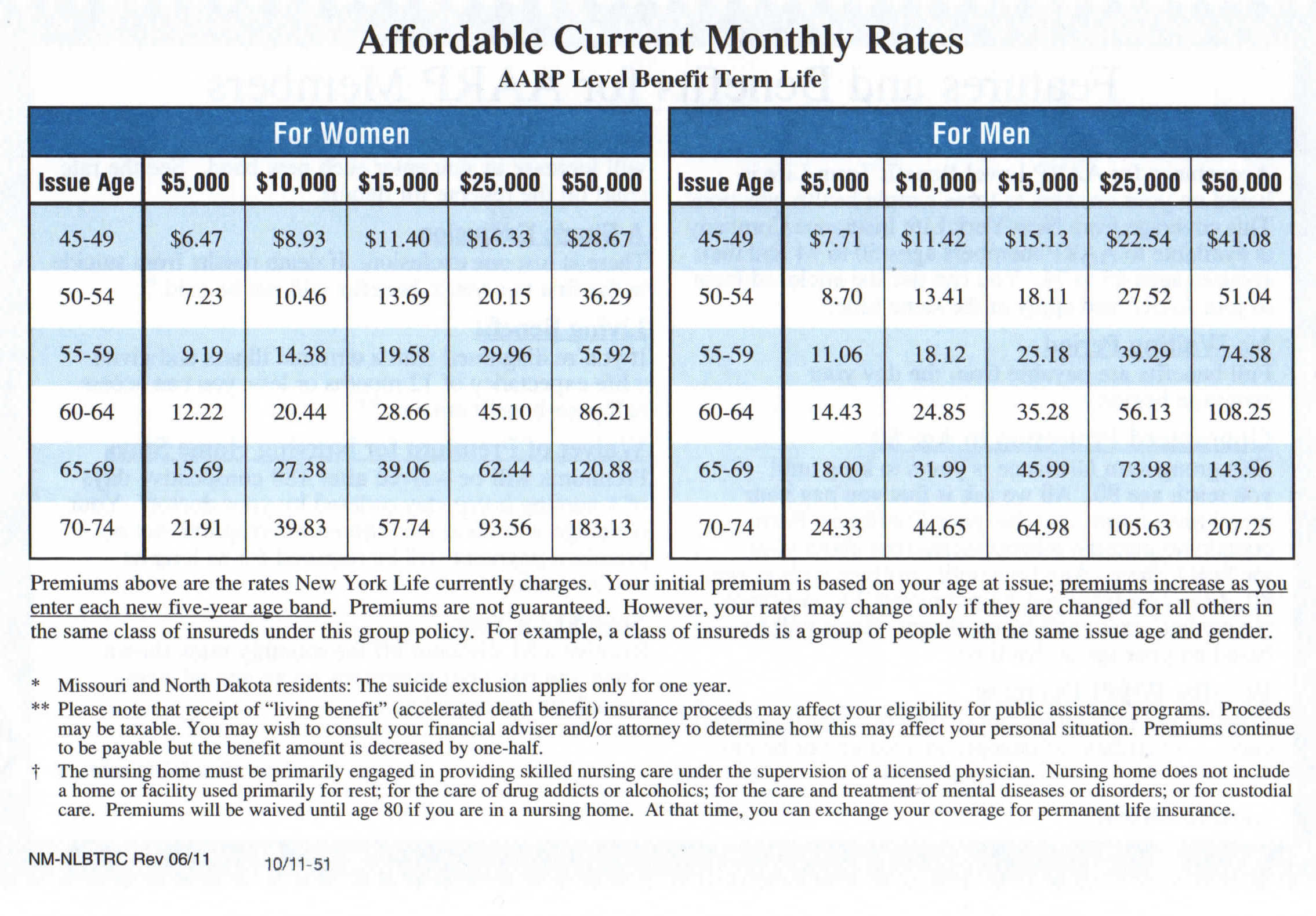
Term life insurance provides coverage for a specific period, such as 10 or 15 years, or up to a certain age. It is typically more affordable than whole life insurance initially, making it attractive for income replacement or covering final expenses during working or early retirement years.
Like the whole life product, term policies require answering health questions. Applicants must demonstrate that their pre-existing conditions fall within acceptable parameters. Furthermore, AARP term life policies generally have an age ceiling for renewal or conversion, making them less suitable for very advanced ages.
AARP Guaranteed Acceptance Life Insurance
For individuals whose pre-existing conditions disqualify them from simplified issue term or whole life policies, the guaranteed acceptance program serves as a safety net.
- Eligibility: Available typically to AARP members aged 50 to 80 (or up to 85 depending on the state).
- No Medical Hurdle: Acceptance is guaranteed. No medical exams and no health questions are required.
- Graded Benefit Caveat: If the insured passes away from natural causes (illness or health-related events) within the first two years of the policy, beneficiaries typically receive a refund of all premiums paid plus interest (often 10%), rather than the full face value. Full benefits are paid out immediately for accidental death or after the two-year waiting period expires.
| Feature / Policy Type | AARP Simplified Issue Term | AARP Simplified Issue Whole Life | AARP Guaranteed Acceptance |
|---|---|---|---|
| Medical Exam Required | No | No | No |
| Health Questions | Yes | Yes | No |
| Pre-Existing Condition Impact | May cause denial if severe | May cause denial if severe | None (Accepted regardless) |
| Premium Structure | Increases with age brackets | Fixed for life | Fixed for life |
| Waiting Period / Graded Benefit | None | None | 2-year graded death benefit for illness |
Evaluating Pros and Cons for Applicants with Health Issues
Choosing an insurance policy when you have a medical history involves weighing distinct operational trade-offs.
Advantages
- Accessibility: Guaranteed acceptance options ensure that virtually no applicant is turned away due to severe health conditions.
- Simplicity: The lack of medical exams streamlines the application process, eliminating the need for invasive lab work or lengthy physician statement retrievals.
- Brand Stability: Policies are backed by New York Life, a carrier with high financial strength ratings, offering security regarding long-term claim payouts.
Disadvantages
- Cost Efficiency: Simplified and guaranteed acceptance policies generally cost more per dollar of coverage than fully underwritten traditional policies, because the insurer assumes higher risk without individual medical profiling.
- Coverage Limits: Maximum face value amounts for guaranteed acceptance policies are typically lower (often capped around $25,000), which may fall short of comprehensive estate planning needs.
- Waiting Periods: The two-year graded death benefit on guaranteed plans means beneficiaries will not receive the full payout if death occurs from a pre-existing medical issue early in the policy lifecycle.
Steps to Apply and Maximize Approval Odds
If you decide to pursue an AARP-endorsed life insurance policy through New York Life, following a structured approach helps ensure a smooth application process.
- Verify AARP Membership: You must be a member of AARP to apply for these specific insurance products. Membership is open to individuals aged 50 and older, though younger adults can join.
- Review Your Medical History Accurately: Gather details regarding your diagnoses, treatment dates, and current prescription medications. Complete honesty on simplified issue health questionnaires is legally mandatory; misrepresentation can lead to policy rescission.
- Assess Coverage Needs: Calculate your financial obligations, including final expenses, outstanding debts, and immediate family support needs, to determine whether a $10,000, $25,000, or higher policy limit is necessary.
- Compare Policy Types: Determine if you can pass the health questions for simplified issue products (which offer immediate full coverage) or if your condition necessitates the guaranteed acceptance route.
- Submit the Application: Complete the application online or via mail through the official New York Life / AARP insurance portal, ensuring all payment information and beneficiary designations are clearly recorded.
Frequently Asked Questions
Can I be denied AARP life insurance because of a pre-existing condition?
Yes, for simplified issue term or whole life policies. If your medical history includes conditions that fall outside New York Life’s underwriting guidelines, your application for those specific products can be declined. However, you cannot be denied the AARP Guaranteed Acceptance Life Insurance policy based on your health.
What is a graded death benefit, and how does it affect pre-existing conditions?
A graded death benefit means that if the insured dies from natural causes within the first two policy years, the beneficiary receives a return of premiums paid plus interest rather than the full face value. This mechanism protects insurers against individuals purchasing policies specifically because of an imminent terminal illness.
Do I need to take a physical exam to qualify?
No. All AARP-branded life insurance products underwritten by New York Life utilize either simplified issue or guaranteed acceptance formats, meaning medical exams, blood draws, and physical checkups are not required.
Can my premiums increase as my health declines after I get the policy?
For whole life and guaranteed acceptance policies, premium rates are locked in at the time of purchase and will not increase due to aging or declining health. For term life insurance, premiums are fixed for the duration of the term, but renewal rates in later term blocks may adjust upward based on age brackets.
Are pre-existing mental health conditions evaluated differently than physical illnesses?
Underwriting guidelines evaluate both physical and psychological health conditions based on stability, frequency of treatment, and severity. Controlled conditions managed with standard medications may be permissible under simplified guidelines, while unstable conditions require careful evaluation of the specific policy rules.
Next Actions and Recommendations
Before committing to a policy, review your current health documentation and financial requirements carefully. If your pre-existing conditions are mild and well-managed, check your eligibility for simplified issue products to secure immediate full coverage without a waiting period. If your health history is complex or involves multiple severe diagnoses, explore the guaranteed acceptance option as a reliable way to cover final expenses, keeping the two-year graded benefit restriction in mind. Consult with a licensed insurance professional or financial advisor to ensure the selected coverage structure aligns with your overall estate plan.
Image Gallery