A Look at Computer Technical College: Programs, Accreditation, and Career Pathways
A computer technical college provides targeted, hands-on education designed to prepare students for direct entry into information technology, software development, cybersecurity, and network administration roles. Offering applied assoc...
A computer technical college provides targeted, hands-on education designed to prepare students for direct entry into information technology, software development, cybersecurity, and network administration roles. Offering applied associate degrees, technical diplomas, and professional certificates, these specialized institutions focus on practical technical skills and industry-standard certifications, presenting an efficient, cost-effective alternative to traditional four-year computer science university programs.
Contents
Understanding the Role of Computer Technical Colleges
Computer technical colleges—often operating as public technical institutes, community colleges, or specialized private vocational schools—fill a vital bridge in higher education. Unlike traditional research universities that prioritize theoretical concepts, advanced mathematics, and general liberal arts coursework, technical colleges center their curricula on direct, applied technical execution.
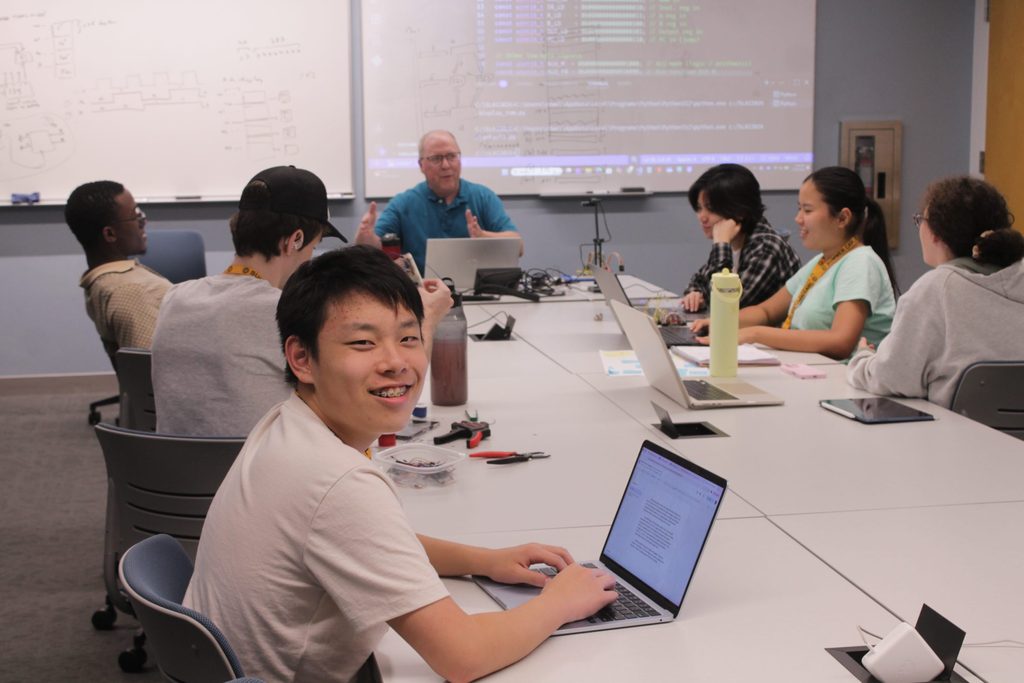
Students attending a computer technical college spend a significant portion of their instruction time in interactive computer labs, virtual environments, and hardware sandbox spaces. The primary educational objective is workforce readiness: ensuring that graduates can configure network infrastructure, secure enterprise systems, troubleshoot hardware failures, build software applications, or manage cloud environments immediately upon entering the job market.
Programs at technical colleges typically confer three main types of postsecondary credentials:
- Associate of Applied Science (AAS) Degrees: Two-year degree programs combining core technical specializations with essential general education courses, tailored specifically for direct entry into technical employment.
- Technical Diplomas: Focused credentials usually taking 12 to 18 months, eliminating most general education requirements to concentrate purely on specialized core coursework.
- Career Certificates: Short-term training sequences (often lasting 3 to 9 months) targeted toward specific skill sets, software systems, or industry certification examinations.
For adult career changers, recent high school graduates, and working professionals seeking skills upgrades, technical colleges offer flexible scheduling, lower tuition costs, and structured career pipelines into the technology sector.
Core Specializations and Academic Curricula
Computer technical colleges structure their academic programs around distinct subfields within the broader technology industry. These concentrations ensure students gain deep, role-specific competencies aligned with current workplace demands.
- Computer Technical College Core
- Networking & SysAdmin
- Cybersecurity & Defense
- Software Dev & Applied CS
- Cloud & IT Infrastructure
Network Administration and Systems Architecture
Network and systems administration programs train students to design, implement, maintain, and troubleshoot corporate hardware and communications infrastructure. Coursework focuses on network routing and switching protocols, server management (spanning Windows Server and Linux distributions), virtualized infrastructure, and enterprise data storage systems.
Students learn hands-on configuration techniques using physical hardware—such as routers, switches, patch panels, and server racks—alongside virtualized simulation tools like Cisco Packet Tracer and GNS3. Graduates typically qualify for roles such as network administrator, systems support analyst, and infrastructure technician.
Cybersecurity and Information Assurance
Cybersecurity concentrations focus on protecting organizational data, computing assets, and network perimeters against unauthorized access and cyber threats. The curriculum addresses key domain areas including network security protocols, ethical hacking techniques, vulnerability assessment, digital forensics, incident response, and regulatory compliance frameworks.
Instruction emphasizes practical defense mechanisms, using sandbox environments where students practice configuring firewalls, setting up Intrusion Detection and Prevention Systems (IDS/IPS), monitoring Security Information and Event Management (SIEM) tools, and conducting penetration testing.
Software Development and Applied Computer Science
Unlike theoretical computer science degrees that heavily stress algorithm theory and advanced calculus, technical college software development tracks emphasize applied programming, full-stack web application development, and software lifecycle management.
Students learn syntax, design patterns, and framework application using mainstream programming languages such as Python, Java, C#, JavaScript, and SQL. Course projects involve building relational databases, developing web applications, interfacing with Application Programming Interfaces (APIs), and utilizing modern version control systems like Git.
Cloud Computing and IT Infrastructure Support
As enterprise computing shifts toward hybrid and multi-cloud architectures, technical colleges offer programs centered on enterprise cloud platforms like Amazon Web Services (AWS), Microsoft Azure, and Google Cloud Platform (GCP).
Students gain practical experience provisioning virtual servers, configuring cloud networks, managing IAM (Identity and Access Management) roles, and deploying automated deployment pipelines. Alongside cloud operations, foundational coursework covers help desk operations, hardware diagnostics, and IT Service Management (ITSM) frameworks like ITIL.
Accreditation and Integrated Industry Certifications
When evaluating a computer technical college, two foundational factors dictate the value and marketability of the credential: institutional accreditation and the incorporation of industry-recognized certifications into the curriculum.
Navigating Accreditation Standards
Accreditation verifies that an institution meets established quality standards regarding faculty qualifications, academic rigor, student support services, and financial stability. In the United States, prospective students should look for institutional accreditation recognized by the U.S. Department of Education or the Council for Higher Education Accreditation (CHEA).
Accredited technical colleges offer two distinct advantages:
- Financial Aid Eligibility: Only accredited institutions can participate in federal Title IV financial aid programs, including Pell Grants and Federal Direct Student Loans.
- Credit Transferability: Credits earned at regionally accredited technical colleges are significantly more likely to transfer toward a four-year bachelor's degree program if a student chooses to continue their education later.
Embedded Certification Preparation
A key differentiator of modern computer technical colleges is the integration of professional vendor and vendor-neutral certification preparation directly into degree plans. Employers frequently use certifications to screen candidates for baseline technical competency.
Leading programs map their individual course outcomes directly to the examination objectives of major certification bodies:
- CompTIA: A+, Network+, Security+, Linux+, and Cloud+.
- Cisco: Cisco Certified Network Associate (CCNA) and Cisco Certified CyberOps Associate.
- Microsoft: Microsoft Certified: Azure Fundamentals and Azure Administrator Associate.
- Amazon Web Services: AWS Certified Cloud Practitioner and AWS Certified Solutions Architect – Associate.
Many technical colleges partner directly with these vendors as official academies (e.g., Cisco Networking Academy or AWS Academy), providing students with discounted certification exam vouchers, official learning materials, and specialized lab environments.
Comparing Education Pathways: Technical College vs. Bootcamp vs. University
Choosing the optimal educational model depends on an individual's career goals, financial resources, timeline, and preferred learning style. The table below details how computer technical colleges compare against four-year university computer science degrees and short-term coding bootcamps.
| Evaluation Parameter | Computer Technical College | Four-Year University | IT / Coding Bootcamp |
|---|---|---|---|
| Typical Duration | 1 to 2 Years | 4 Years | 3 to 6 Months |
| Credential Awarded | Associate Degree (AAS) or Certificate | Bachelor of Science (BS) | Certificate of Completion |
| Primary Curriculum Focus | Applied IT, Network Admin, System Sec, Applied Code | Computer Science Theory, Advanced Math, Algorithms | Specialized Coding or Cyber Skill Stack |
| Average Cost Range | $6,000 – $18,000 (Total public tuition) | $40,000 – $120,000+ (Total tuition) | $9,000 – $16,000 (Total cost) |
| Federal Financial Aid | Available (FAFSA/Pell Eligible at accredited schools) | Fully Available (FAFSA/Pell/Federal Loans) | Generally Ineligible (Unless partnered with a university) |
| Target Entry Roles | Network Technician, SysAdmin, Help Desk L2/L3, Junior Dev | Software Engineer, Data Scientist, Systems Architect | Junior Frontend/Backend Developer, SOC Analyst |
| Theoretical Depth | Moderate / Applied Focus | High / Research & Math Intensive | Low / Rapid Skill Application |
Trade-Off Analysis
A four-year computer science degree provides a comprehensive theoretical framework that prepares graduates for advanced engineering, research, and algorithmic software design roles. However, it requires a substantial investment of time and capital, alongside extensive general education requirements.
Conversely, coding bootcamps provide rapid, hyper-focused training aimed at immediate job entry in a single narrow stack (such as frontend web development). However, bootcamps lack institutional accreditation, rarely qualify for federal financial aid, and may omit foundational computing knowledge such as operating system architecture, low-level networking, and enterprise database governance.
Computer technical colleges occupy a balanced middle ground. They offer broader foundational knowledge than a bootcamp, lower costs and faster completion times than a university, and the institutional stability of accredited higher education.
Admission Requirements, Costs, and Financial Aid
Navigating the entry requirements and financial structure of a computer technical college is generally straightforward, as most public technical institutes operate under open-enrollment or accessible admissions policies.
Admission Requirements and Prerequisites
While specific requirements vary by institution, standard entry criteria typically include:
- Educational Attainment: A high school diploma, General Educational Development (GED) transcript, or recognized equivalent.
- Placement Assessments: Standardized testing or internal placement exams (such as ACCUPLACER) in mathematics, reading, and English to determine baseline competency and place students in appropriate introductory or developmental courses.
- Basic Technical Proficiency: Although introductory courses start with fundamental concepts, familiarity with basic computer navigation, operating systems, and file management is expected.
Certain specialized technical programs—such as advanced cybersecurity or enterprise cloud architecture—may require prerequisite coursework in basic networking or introductory programming prior to formal admission into the specialized track.
Tuition Structures and Financial Support
Tuition at public computer technical colleges is primarily billed on a per-credit-hour basis, making it one of the most affordable higher education choices available. Rates vary based on residency status (in-district, in-state, or out-of-state).
Funding options for technical college students include:
- Federal Pell Grants: Need-based federal grants that do not require repayment, applicable toward tuition, fees, and required equipment.
- Work-Study Programs: Campus-based employment opportunities, often placed within college IT help desks or computer lab maintenance teams, providing practical experience alongside funding.
- State Vocational Grants: Many state governments offer targeted workforce development grants covering 100% of tuition for high-demand technical fields like IT and cybersecurity.
- Military and Veterans Benefits: GI Bill® funds and Military Tuition Assistance frequently apply to accredited technical college programs and associated professional certification exams.
Key Factors When Evaluating a Technical College Program
To select a high-quality program that delivers strong career outcomes, prospective students should conduct thorough institutional research evaluating the following structural parameters:
1. Modern Lab Facilities and Virtual Infrastructure
Computing technology evolves rapidly. Facilities must feature modern hardware, up-to-date software environments, and dedicated virtual lab infrastructure. Ask admissions representatives whether the program utilizes industry-standard tools (such as vSphere, Cisco hardware labs, AWS cloud sandboxes, and modern IDEs) and whether students receive remote access to virtual lab environments for off-campus practice.
2. Faculty Industry Experience and Credentials
Instructors in technical programs should possess relevant professional background in the fields they teach. High-quality technical colleges employ faculty who hold active industry certifications (such as CISSP, CCNA, or AWS Solutions Architect) and have direct enterprise experience as working systems administrators, engineers, or software developers.
3. Industry Partnerships and Advisory Boards
Reputable technical colleges maintain active advisory boards composed of local employers, IT managers, and enterprise tech executives. These boards regularly review program curricula to ensure taught skills align with local hiring needs. Strong enterprise partnerships also lead directly to internship pipelines, field experiences, and direct graduate hiring.
4. Career Placement Services and Co-op Opportunities
Evaluate the strength of the institution's career services department. Key metrics include job placement rates within six months of graduation, enterprise career fairs, resume workshops tailored to technical roles, and structured cooperative education (co-op) or internship programs that award academic credit for hands-on workplace experience.
Frequently Asked Questions
Is an associate degree from a computer technical college enough to start an IT career?
Yes. An Associate of Applied Science (AAS) degree from an accredited computer technical college, combined with vendor certifications (such as CompTIA Security+ or Cisco CCNA), qualifies graduates for entry-level and mid-level roles, including network support specialist, junior systems administrator, cybersecurity technician, and help desk analyst.
Can credits from a technical college transfer to a four-year university?
Credit transfer depends on institutional accreditation and formal articulation agreements. Many public technical colleges maintain "2+2 agreements" with state universities, allowing students to transfer their entire two-year associate degree directly toward a Bachelor of Science in Information Technology (BSIT) or Technology Management, completing the bachelor's degree in two additional years.
What is the difference between Computer Science and Computer Information Technology at a technical college?
Computer Science focuses heavily on theoretical computing, algorithm analysis, mathematical foundations, and software architecture principles. Computer Information Technology (CIT) or Applied IT focuses on practical business implementation, including network administration, system configuration, hardware troubleshooting, cybersecurity operations, and database management.
Are industry certification exams included in technical college tuition?
Tuition generally covers coursework and lab instruction, but certification exam fees paid to third-party testing providers (like Pearson VUE) are usually separate. However, many technical colleges participate in academy programs that grant students exam discount vouchers (often 40% to 60% off standard retail testing costs), and some specialized programs include voucher costs directly within course lab fees.
Are online computer technical college degrees held in the same regard as on-campus programs?
Accredited online technical programs that provide robust, hands-on virtual lab environments (such as remote server access and cloud sandboxes) are held in equal regard by employers. Employers focus primarily on institutional accreditation, practical technical competencies, portfolio projects, and verified certifications rather than whether learning occurred in a physical or virtual classroom.
Strategic Recommendations for Prospective Students
For prospective students planning to enroll in a computer technical college, taking an organized, proactive approach ensures maximum return on educational investment:
- Verify Accreditation: Confirm that the college holds recognized institutional accreditation to guarantee credit transferability and federal financial aid access.
- Audit the Curriculum for Certifications: Select programs that map coursework directly to industry certifications and provide access to vendor academy resources (Cisco, AWS, CompTIA).
- Inspect Hands-On Infrastructure: Request a tour of physical hardware labs or a demonstration of the college’s virtual laboratory platforms to ensure up-to-date technical infrastructure.
- Inquire About Articulation Agreements: If pursuing a future bachelor's degree is a goal, confirm that formal credit-transfer agreements exist between the technical college and regional four-year universities.
- Engage Career Services Early: Utilize career counseling, employer networking events, and internship placement assistance during the first academic semester rather than waiting until graduation.
Image Gallery