Comprehensive Guide to Horse Mating and Post-Coital Separation Protocols
Horse mating, primarily termed live cover, is the physical breeding process between a stallion and a mare, while separation involves the strategic and safe withdrawal of the stallion immediately following ejaculation. Successful manage...
Horse mating, primarily termed live cover, is the physical breeding process between a stallion and a mare, while separation involves the strategic and safe withdrawal of the stallion immediately following ejaculation. Successful management requires precise timing based on the mare’s estrous cycle and strict handling protocols to prevent physical injury during the high-energy post-coital phase.
Contents
The Biological Foundations of Equine Mating in 2026
To understand the process of mating and the subsequent need for controlled separation, one must first grasp the reproductive physiology of the horse. Equines are seasonally polyestrous, meaning they undergo multiple heat cycles during the long days of spring and summer. In 2026, equine reproductive specialists utilize advanced ultrasound technology and hormonal monitoring to pinpoint the exact moment of ovulation, ensuring that mating occurs when the mare is most receptive.
The estrous cycle typically lasts 21 days, with the mare being in "heat" (estrus) for five to seven days. Mating is most effective when performed within 24 to 48 hours before ovulation. Veterinary standards in 2026 emphasize the importance of "teasing"—the practice of exposing the mare to a stallion under controlled conditions to observe behavioral cues such as frequent urination, tail raising, and "winking" of the vulva, which signal her readiness for mating.
Pre-Mating Health and Safety Requirements
Before the stallion and mare are brought together, several technical prerequisites must be met to ensure the safety of the animals and the handlers:
- Coggins Testing and Health Certificates: Verification that both animals are free from Equine Infectious Anemia and other transmissible reproductive diseases such as Contagious Equine Metritis (CEM).
- Vaccination Status: Ensuring the mare has updated titers to protect the potential fetus.
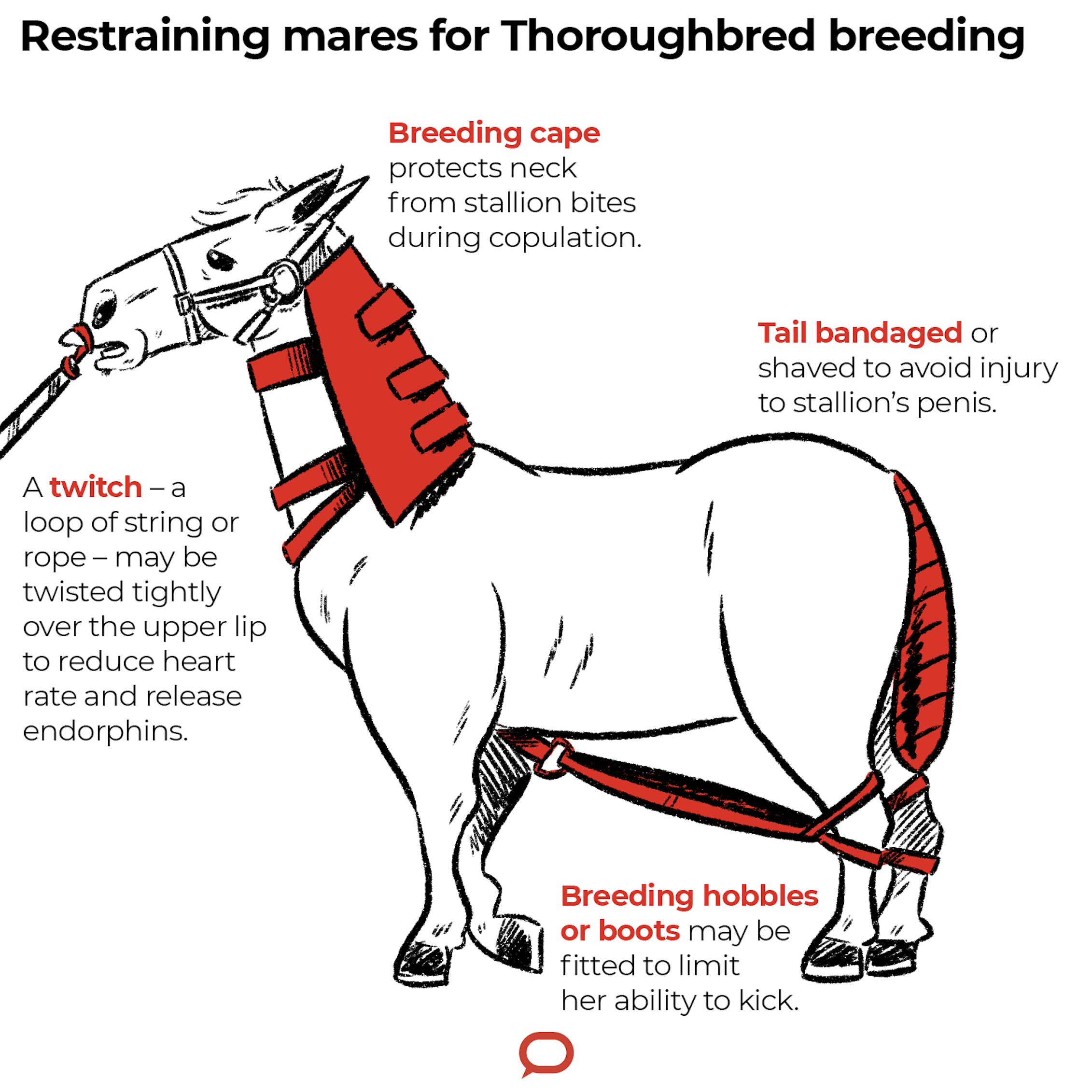
- Physical Preparation: The mare’s tail is typically wrapped to prevent hair from interfering with the mating process or causing penile lacerations to the stallion. The perineal area is cleaned with warm water and mild soap.
- Protective Gear: Stallions may wear breeding rolls to prevent excessive penetration depth, while mares may be fitted with breeding hobbles or neck covers to prevent them from kicking or biting the stallion during the mount.
The Mating Process: Live Cover Mechanics
The act of mating in horses is rapid but intense. It begins with the stallion approaching the mare, often from the side, to gauge her receptivity. Once the stallion mounts, he achieves intromission quickly. In 2026, professional breeding sheds prioritize a "quiet" environment to minimize stress, which can negatively impact the stallion’s libido and the mare’s uterine environment.
During the mating process, handlers must maintain a specific distance that allows for control without interfering with the animals' natural movements. The stallion will typically thrust several times before ejaculation occurs. The primary indicator of successful ejaculation is "tail flagging"—the rhythmic up-and-down movement of the stallion's tail.
Expert Observation on Ejaculatory Signs
In addition to tail flagging, experienced handlers monitor the stallion’s respiratory rate and the pulsing of the urethra at the base of the penis. Once these signs are observed, the stallion will usually rest his head on the mare’s neck or shoulder for a brief period of exhaustion, often referred to as the refractory moment. This is a critical window where the transition to separation begins.
Safe Separation Protocols and Post-Coital Management
Separation is arguably the most dangerous phase of the breeding process. As the stallion dismounts, his physical coordination is temporarily diminished, and the mare may suddenly become aggressive or "rejection-sensitive" once the hormonal peak of the mount subsides.
Immediate Post-Dismount Actions
As the stallion begins to slide back, the stallion handler must guide him away from the mare’s hindquarters. This prevents the mare from kicking the stallion as he retreats. Simultaneously, the mare handler must keep her head turned toward the stallion, which naturally swings her hindquarters away from him, creating a safe buffer zone.
In 2026, the industry standard for separation involves a "three-point check":
- Penile Inspection: The stallion’s penis is inspected for any signs of injury or hemorrhage before he is allowed to retract into the sheath.
- Walking the Mare: The mare is walked immediately for 10 to 15 minutes. This helps prevent the pooling of semen in the vagina and encourages uterine contractions that move the sperm toward the oviducts, while also calming her nervous system.
- Hygiene: The stallion’s penis is washed with warm water (without harsh detergents that could disrupt the natural flora) to prevent the buildup of smegma and reduce the risk of post-breeding infections.
Comparing Breeding Methods and Separation Complexity
The complexity of the mating and separation process varies significantly depending on the chosen breeding method. While "pasture breeding" is the most natural, "hand breeding" (controlled live cover) is the standard for high-value Thoroughbreds and other breeds where the Jockey Club or specific registries mandate physical contact.
| Breeding Method | Human Intervention Level | Separation Risk | Success Rate (Per Cycle) | 2026 Cost Estimate (USD) |
|---|---|---|---|---|
| Pasture Breeding | Minimal | High (Animal-led) | 60-70% | $500 - $1,500 |
| Controlled Live Cover | Maximum | Moderate (Handler-led) | 65-75% | $2,500 - $10,000+ |
| Artificial Insemination (AI) | High (Clinical) | Zero (No physical contact) | 70-80% | $1,500 - $4,000 |
| Embryo Transfer | Maximum (Surgical/Clinical) | Zero | 50-60% | $5,000 - $12,000 |
Technical Challenges in 2026 Equine Husbandry
Despite advancements in veterinary science, certain physiological and behavioral challenges remain prevalent in the mating and separation process.
Management of "Silent Heat"
Some mares exhibit "silent heat," where they ovulate without showing outward behavioral signs of receptivity. In 2026, this is managed through the use of blood-serum progesterone tests and electronic "E-Teasing" sensors that monitor subtle changes in skin temperature and vaginal pH. If a mare in silent heat is forced to mate, the separation phase becomes highly volatile, as she may fight the stallion during the mount.
Stallion Behavioral Issues
Over-aggressive stallions or those with low libido require specialized handling. Behavioral modification techniques in 2026 focus on positive reinforcement and the use of "phantom" mounts to transition stallions safely into a breeding frame of mind. If a stallion becomes too aggressive during separation, handlers use lead chains and specific pressure points to regain control without causing injury.
Post-Mating Veterinary Monitoring
Following successful separation, the focus shifts to confirming pregnancy and managing the mare’s health. In 2026, the timeline for post-mating care is strictly regulated by reproductive efficiency standards.
- 14-16 Days Post-Mating: The first ultrasound is performed to check for a pregnancy vesicle. This is also the critical time to detect "twins." Since a mare’s uterus is rarely capable of supporting two fetuses safely, a veterinarian will "pinch" one vesicle to ensure the survival of the other.
- 25-30 Days Post-Mating: A second ultrasound confirms the presence of a heartbeat.
- 45-60 Days Post-Mating: The pregnancy is considered established, and the mare can typically return to her normal social group, though her nutritional requirements will begin to shift in the third trimester.
Advanced Safety Equipment for 2026 Breeding Sheds
The modern breeding shed is designed with safety as the primary directive. Floor surfaces are made of high-traction, antimicrobial rubberized polymers to prevent slipping during the mount and dismount.
Breeding Shed Safety Standards
Padded Walls and Rounded Corners High-density foam padding up to six feet high on all interior walls reduces the risk of impact injuries if a stallion loses his balance during separation.
Quick-Release Tethering Systems In the event of a mare becoming panicked during the mount, quick-release systems allow handlers to instantly free her head, preventing neck injuries or "flipping" backwards.
Automated Hygiene Stations 2026 facilities utilize temperature-controlled, filtered water systems for pre- and post-mating washes, ensuring that no pathogens are introduced into the breeding environment.
Troubleshooting Common Mating and Separation Failures
Even with expert handlers, complications can arise. Understanding how to mitigate these risks is essential for any breeding operation.
- Incomplete Ejaculation: If tail flagging is not observed, the stallion must be separated, rested, and then represented to the mare. Handlers should check for an "ejaculatory bean" (a hardened accumulation of smegma) which can cause discomfort and prevent completion.
- Mare "Breaking Down": If the mare’s legs buckle under the weight of the stallion, immediate separation is required. This often occurs in older mares or those with undiagnosed orthopedic issues.
- Post-Coital Pain in Stallions: Some stallions experience cramping after dismounting. Walking the stallion and ensuring he is well-hydrated before the breeding session can alleviate this.
FAQs Regarding Horse Mating and Separation
What is the most common sign that a stallion has successfully mated?
The most reliable physical sign is "tail flagging," where the stallion moves his tail in a rhythmic, vertical motion during ejaculation. This is usually accompanied by a noticeable decrease in physical tension and a brief period where he rests his weight on the mare before naturally beginning to dismount.
Why is it necessary to walk the mare immediately after separation?
Walking the mare for 10 to 20 minutes helps prevent the pooling of inflammatory fluids and semen in the uterus. It also stimulates mild uterine contractions which assist in transporting sperm toward the oviducts while helping the mare’s heart rate return to baseline after the exertion of mating.
Can a mare be bred safely if she is not in full estrus?
No, attempting to breed a mare not in estrus (heat) is dangerous for the stallion, the mare, and the handlers. A mare not in heat will typically kick or bite the stallion aggressively, and her cervix will be tightly closed, making successful fertilization impossible and physical injury likely.
What equipment is used to protect the mare during live cover?
Standard safety equipment includes breeding hobbles (to prevent kicking), a neck cover or "leather" (to prevent the stallion from biting her crest), and a tail wrap (to prevent hair from cutting the stallion). Some breeders also use a "breeding roll" between the mare’s tail and the stallion’s chest to control penetration depth.
How long does the actual mating process take?
The actual time the stallion is mounted usually lasts between 30 seconds and two minutes. However, the preparation, teasing, and the post-coital separation and cleanup process can take anywhere from 30 to 60 minutes per session to ensure all safety and hygiene protocols are met.
Is separation different in 2026 compared to older methods?
In 2026, separation is more data-driven, utilizing heart-rate monitors and behavioral software to determine the optimal second to guide the stallion away. There is also a much higher emphasis on the "quiet dismount" to prevent the adrenaline spikes that traditionally led to post-breeding accidents.
Technical Summary for Breeding Managers
Effective horse mating and separation in 2026 rely on a synthesis of biological timing, animal psychology, and rigorous safety standards. The goal is always to maximize the probability of conception while minimizing the physical risk to the stallion and mare. By adhering to standardized separation protocols—including the three-point check and post-coital walking—breeders can ensure a sustainable and safe reproductive environment. For those looking to optimize their 2026 breeding season, constant communication between the stallion manager, the mare owner, and the attending veterinarian is the most critical factor for success.
Image Gallery