What Is a Tanker Endorsement? CDL Requirements, Testing, and FMCSA Rules
A tanker endorsement (designated as the "N" endorsement) is an official certification added to a Commercial Driver's License (CDL) that authorizes a driver to operate vehicles carrying bulk liquids or gaseous materials. Federal regulat...
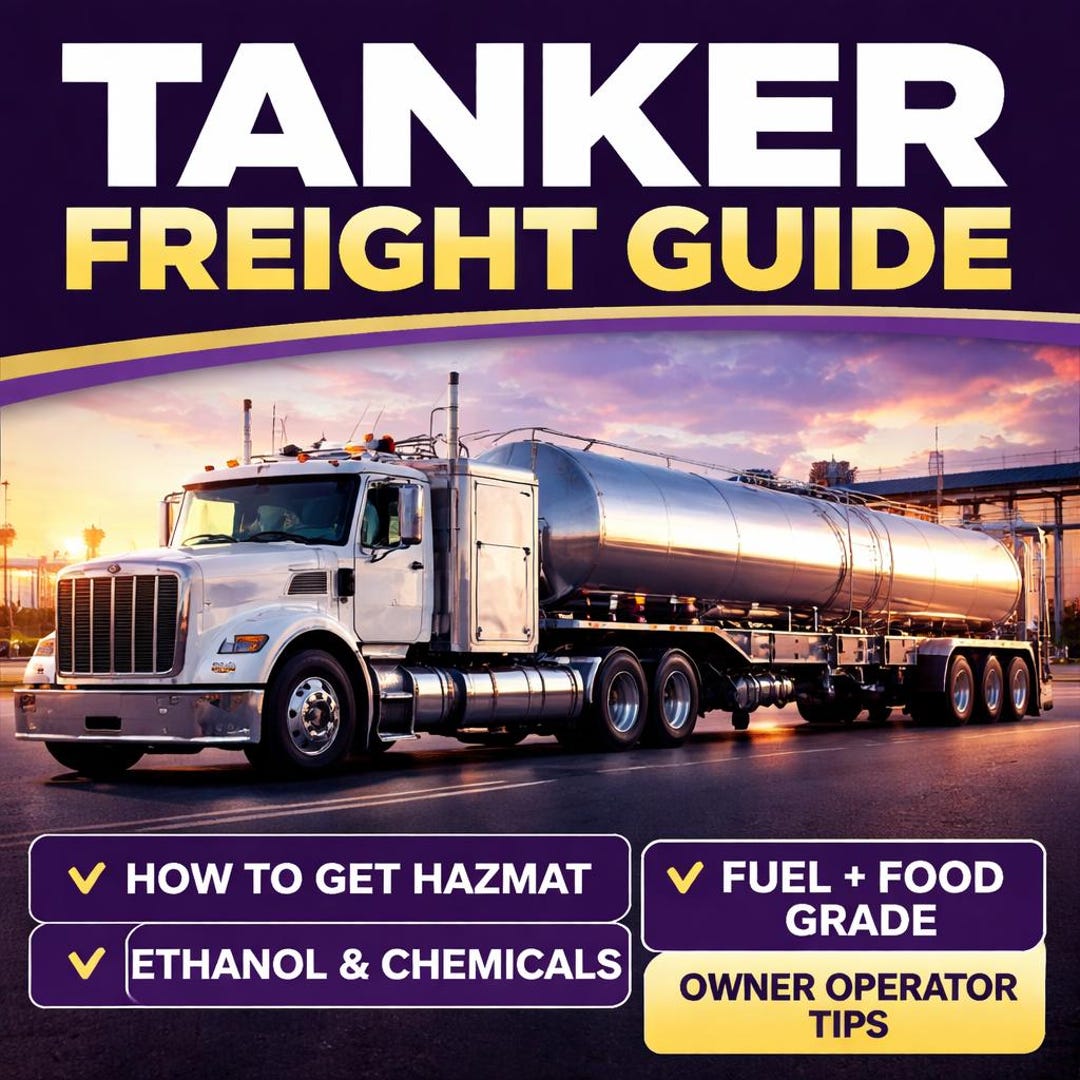
A tanker endorsement (designated as the "N" endorsement) is an official certification added to a Commercial Driver's License (CDL) that authorizes a driver to operate vehicles carrying bulk liquids or gaseous materials. Federal regulations require this endorsement when hauling permanent or temporary tanks with individual capacities over 119 gallons and an aggregate capacity of 1,000 gallons or more.
Contents
Understanding the Tanker Endorsement: Legal Definition and FMCSA Rules
The Commercial Motor Vehicle Safety Act mandates specific training and licensing protocols for commercial drivers transporting hazardous or physically challenging loads. A tanker endorsement serves as legal proof that a driver has demonstrated the theoretical knowledge required to safely operate commercial vehicles carrying fluid bulk loads.
Under the regulations set by the Federal Motor Carrier Safety Administration (FMCSA), governed specifically by 49 CFR § 383.5, a tank vehicle is officially defined as any commercial motor vehicle designed to transport any liquid or gaseous materials within a tank or tanks.
Note on Capacity Thresholds: The rule applies to tanks that are attached permanently or temporarily to the chassis or the vehicle. This includes, but is not limited to, cargo tanks and portable tanks (such as Intermediate Bulk Containers or IBC totes).
The Aggregate Capacity Rule
A common point of confusion among commercial drivers is the threshold that triggers the legal requirement for an N endorsement. The FMCSA established specific volumetric parameters to close regulatory loopholes:
- Individual Tank Rating: The tank or container must have an individual rated capacity of more than 119 gallons (450 liters).
- Aggregate System Capacity: The total combined (aggregate) rated capacity of all qualifying tanks on the vehicle must equal 1,000 gallons or more.
If a vehicle carries ten 120-gallon Intermediate Bulk Containers (IBC totes), the total aggregate capacity reaches 1,200 gallons. Because each individual container exceeds 119 gallons and the aggregate capacity exceeds 1,000 gallons, the driver must possess a valid tanker endorsement, even if the vehicle is a standard box truck or flatbed trailer rather than a traditional liquid tank trailer. Conversely, if a vehicle carries one hundred 10-gallon containers (aggregate 1,000 gallons), a tanker endorsement is not required because no single container exceeds the 119-gallon threshold.
Types of CDL Tanker Endorsements: N vs. H vs. X
Commercial drivers operating bulk fluid transport vehicles must understand the differences between standard tank endorsements and combination hazard classifications. The Department of Transportation (DOT) categorizes these endorsements using specific codes:
N Endorsement (Tank Vehicles): Authorizes the driver to haul non-hazardous liquids or gases in bulk quantities exceeding statutory limits. Examples include milk, potable water, food-grade juices, non-hazardous industrial waste, and liquid concrete additives.
H Endorsement (Hazardous Materials): Authorizes the transportation of hazardous materials in quantities that require placarding under DOT rules. It does not permit driving bulk liquid tank vehicles unless combined with an N endorsement.
X Endorsement (Tanker / HazMat Combination): Combines the authority of both the Tank Vehicle (N) and Hazardous Materials (H) endorsements into a single credential code. The X endorsement is mandatory for drivers operating fuel tankers, propane transport trucks, chemical tank trailers, or flatbeds transporting bulk hazardous liquid totes.
Drivers opting for the X endorsement must pass both the Tank Vehicle knowledge test and the Hazardous Materials knowledge test, complete a Transportation Security Administration (TSA) background check, submit fingerprints, and fulfill Entry-Level Driver Training (ELDT) requirements.
Who Needs a Tanker Endorsement?
The requirement for an N endorsement depends on the cargo container specifications, individual volume ratings, and aggregate load totals rather than the outward appearance of the truck.
Primary Freight and Vehicle Types Requiring the "N" Code
- Fuel Tanker Operators: Gasoline, diesel, aviation fuel, and heating oil delivery drivers (requires the X endorsement due to hazardous classification).
- Food-Grade Liquid Transport: Drivers hauling bulk milk, liquid sugar, wine, vegetable oil, or potable water in specialized stainless-steel tank trailers.
- Chemical and Industrial Haulers: Drivers transporting liquid fertilizers, industrial acids, solvents, or lubricants.
- LTL and Dry Van/Flatbed Drivers carrying IBC Totes: Logistics operators loading multiple IBC totes, "tote tanks," or flexible liquid bladders inside standard dry van trailers or secured to flatbeds.
- Environmental & Waste Management Crews: Vacuum truck operators, septic haulers, and environmental remediation drivers transporting liquid waste.
- Construction & Municipal Fleet Drivers: Water truck drivers used for dust suppression on highway construction sites or concrete mixer units utilizing auxiliary liquid additive tanks.
Physics and Technical Driving Challenges of Liquid Cargo
The FMCSA mandates specialized testing for tanker drivers primarily due to the unique physical dynamics involved in moving liquid freight. Liquid cargo behaves fundamentally differently than dry, rigid freight, presenting severe stability challenges that demand specialized driving techniques.
Liquid Surge and Slosh Dynamics
Liquid surge occurs when a partially filled tank accelerates, decelerates, or changes direction. The movement of the fluid creates a dynamic kinetic force that transfers weight across the vehicle's axles.
- Forward and Backward Surge: When stopping, fluid sloshes forward, exerting immense pressure against the front bulkhead of the tank. This dynamic force can push a stopped vehicle forward into an intersection or cause air brakes to lock up unpredictably.
- Side-to-Side Surge: When negotiating curves, lane changes, or off-ramps, fluid moves toward the outer wall of the tank, shifting the vehicle's center of mass and significantly increasing the risk of a rollover accident.
Tank Construction Types and Their Physical Behaviors
| Tank Design Type | Structural Characteristics | Dynamic Effect on Fluid Surge | Typical Freight Applications |
|---|---|---|---|
| Smoothbore (Unbaffled) | Completely open single interior cavity without internal cross-walls or dividers. | Maximum forward, backward, and lateral surge. Unchecked fluid velocity during braking. | Food-grade liquids (milk, juice) requiring strict sanitation where baffles cannot be cleaned easily. |
| Baffled Tanks | Contains internal bulkheads with flow-through holes (baffles) to slow fluid movement. | Moderately reduces forward and backward surge; offers limited protection against lateral (side-to-side) surge. | Fuel transport, water haulage, and general industrial liquid movement. |
| Compartmentalized Tanks | Divided into two or more completely sealed, isolated bulkheads with individual valves. | Significantly reduces surge if compartments are filled completely; partial loads in single compartments reintroduce surge. | Mixed-fuel delivery vehicles (carrying gasoline, diesel, and kerosene in a single run). |
Center of Gravity and Rollover Thresholds
Tank vehicles naturally feature a high center of gravity due to the cylindrical geometry of cargo tanks elevated above the truck frame. Combined with lateral liquid surge, a tanker can roll over at speeds significantly lower than the posted speed limit on highway curves and cloverleaf interchanges. Drivers must decelerate before entering a turn, rather than braking while steering, to prevent catastrophic lateral load shifts.
Step-by-Step Guide to Obtaining a CDL Tanker Endorsement
Acquiring a tanker endorsement requires meeting federal prerequisites, demonstrating specialized knowledge, and completing state DMV administrative steps.
Step 1: Confirm Eligibility and CDL Status
You must possess a valid Commercial Learner’s Permit (CLP) or a full Class A or Class B Commercial Driver's License. Class C CDL holders may also add an N endorsement if operating specialized vehicles designed for bulk liquid transit.
Step 2: Complete FMCSA Entry-Level Driver Training (ELDT)
Under federal standards, first-time applicants seeking an N endorsement must complete an FMCSA-approved ELDT curriculum if required by their state or program track. The training provider must submit proof of completion directly to the Training Provider Registry (TPR) before the driver can schedule their knowledge test.
Step 3: Master the Tank Vehicles Knowledge Topics
Study Section 6 (Tank Vehicles) of the official State Commercial Driver License Manual. Essential topics covered on the written exam include:
- Controlling liquid surge during emergency stops and steady braking.
- Calculating ullage (expansion space) required for thermal liquid expansion.
- Managing high centers of gravity during evasive maneuvers.
- Operating emergency shutoff valves and discharge piping systems.
- Identifying out-of-service defects on tank chassis, mounts, and valves.
Step 4: Pass the Written Knowledge Test
Visit your local State Department of Motor Vehicles (DMV) or driver licensing agency to sit for the written exam:
- Format: Multiple-choice computer exam.
- Length: Typically 20 to 30 questions (varies slightly by state jurisdiction).
- Passing Score: Minimum 80% correct answers required.
- Road Skills Test: The FMCSA does not require a separate behind-the-wheel road skills test to add an N endorsement to an existing CDL. The driver's existing CDL skill class covers vehicle handling, provided knowledge requirements are met.
Step 5: Pay Credentialing Fees and Issue the Updated License
Upon passing the written examination, you must pay state processing fees (typically $10 to $50, depending on state fee schedules) to issue a new physical CDL card displaying the "N" designation under the Endorsement column.
Comprehensive Endorsement Comparison Matrix
Understanding how the Tanker (N) endorsement compares with other CDL endorsements helps drivers plan their career pathways and compliance targets effectively.
| Endorsement Code | Endorsement Name | Primary Freight / Vehicle Scope | Prerequisites | Testing Required | TSA Security Clearance Needed? |
|---|---|---|---|---|---|
| N | Tank Vehicle | Non-hazardous bulk liquids or gases in tanks >119 gal (indiv.) / ≥1,000 gal (agg.). | Class A, B, or C CDL/CLP | Written Knowledge Test | No |
| H | Hazardous Materials | Placardable quantities of chemicals, explosives, or hazardous waste in non-bulk packaging. | Class A, B, or C CDL | Written Knowledge Test + ELDT | Yes (Fingerprinting & Threat Assessment) |
| X | Tanker / HazMat Combo | Bulk hazardous liquids, compressed gases, fuel, acids, or toxic bulk liquids. | Class A, B, or C CDL | Written Tanker Test + Written HazMat Test + ELDT | Yes (Fingerprinting & Threat Assessment) |
| P | Passenger Vehicles | Commercial passenger vehicles, buses, and shuttles designed to carry 16+ passengers. | Class A, B, or C CDL/CLP | Written Knowledge Test + Road Skills Test + ELDT | No |
| T | Double / Triple Trailers | Operating double or triple tractor-trailer combinations. | Class A CDL | Written Knowledge Test | No |
Regulatory Compliance, Penalties, and Inspection Points
Failing to hold a valid tanker endorsement when operating a covered vehicle constitutes a major safety violation under federal law, risking severe consequences for both the driver and the motor carrier.
Roadside Inspection Enforcement
During roadside inspections under the Commercial Vehicle Safety Alliance (CVSA) guidelines, law enforcement officers review the vehicle's bill of lading (BOL), inspect cargo bays, and review the driver’s license credential.
If an inspector discovers an unendorsed driver operating a vehicle with intermediate bulk containers or tanks meeting the aggregate 1,000-gallon criteria:
- Out-of-Service Order: The driver will be placed Out-of-Service (OOS) immediately. They cannot move the truck until an appropriately licensed driver takes control of the vehicle.
- Driver Civil Penalties: The driver faces individual administrative fines levied by state and federal authorities.
- Carrier Fines and SMS Scores: The motor carrier risks substantial civil penalties under 49 CFR Part 386 and severe hits to their Safety Measurement System (SMS) scores under the Unsafe Driving BASIC category.
Critical Operating Guidelines: Always check the rated capacity stamped on the manufacturer data plate of every tote or tank loaded onto your trailer. Never rely solely on actual fluid weight or fluid level; legal enforcement is strictly based on the manufacturer's maximum *rated capacity* of the containers.
Common Misconceptions About Tanker Endorsements
- Misconception 1: "I'm carrying empty tanks, so I don't need an endorsement."
- Reality: If a tank previously contained hazardous materials or retains residual liquids that require regulatory oversight, or if the vehicle configuration is permanently engineered as a tanker, an endorsement remains mandatory regardless of fill level.
- Misconception 2: "My flatbed isn't a liquid tanker, so IBC totes don't trigger the rule."
- Reality: The FMCSA rule focuses explicitly on containers, not vehicle body styles. Transporting eight 150-gallon totes of non-hazardous water treatment chemicals on a flatbed requires an N endorsement because aggregate capacity exceeds 1,000 gallons.
- Misconception 3: "I need to take a driving test in a real tanker truck to get the endorsement."
- Reality: Adding a standalone N endorsement to an existing CDL requires only passing a written computer knowledge exam, not a behind-the-wheel skills test.
Frequently Asked Questions
Do I need a tanker endorsement to haul empty portable tanks?
If the tanks are completely clean and purged of all residues, and are legally classified as unattached freight items rather than active cargo vessels, an endorsement may not be strictly enforced. However, if the tanks contain residual liquids or gases exceeding regulatory thresholds, or are permanently mounted cargo tanks, a valid tanker endorsement is legally required.
What is the difference between an N and an X endorsement?
The N endorsement permits drivers to haul non-hazardous bulk liquids or gases. The X endorsement is a combination credential that unites the Tank Vehicle (N) and Hazardous Materials (H) endorsements, permitting drivers to haul bulk hazardous fluids like gasoline, liquid propane, or toxic industrial chemicals.
Does getting a tanker endorsement require a practical road test?
No. Adding a standard N endorsement to an existing valid Commercial Driver's License requires passing a written knowledge test administered by your state's DMV. No practical behind-the-wheel road test is required.
How many questions are on the CDL tanker endorsement exam?
Most state DMV written exams consist of 20 to 30 multiple-choice questions based on Section 6 of the Official Commercial Driver License Manual. Applicants must score 80% or higher to pass.
Do dry van and flatbed drivers ever need a tanker endorsement?
Yes. If a dry van or flatbed driver transports portable tanks or Intermediate Bulk Containers (IBC totes) with individual capacities greater than 119 gallons and an aggregate capacity of 1,000 gallons or more, they must hold a valid tanker endorsement.
Advance Your Commercial Driving Career
Obtaining a tanker endorsement is one of the most cost-effective ways for commercial drivers to expand their career opportunities and increase earning potential. Fuel transport, food-grade liquid distribution, and chemical hauling routinely rank among the highest-paying sectors within the commercial transportation industry.
To add the N or X endorsement to your CDL, obtain a copy of your state’s current Commercial Driver License Manual, enroll in an approved Entry-Level Driver Training (ELDT) program if required, and schedule your knowledge exam at a local driver licensing facility.
Image Gallery