Titanic II Launch: When Is the Titanic 2 Setting Sail?
The Titanic II is not currently setting sail, and no confirmed launch date exists. While Australian billionaire Clive Palmer and his company Blue Star Line have intermittently revived the project since 2012, construction has never offi...
The Titanic II is not currently setting sail, and no confirmed launch date exists. While Australian billionaire Clive Palmer and his company Blue Star Line have intermittently revived the project since 2012, construction has never officially begun, leaving the replica ship in a state of indefinite suspension.
Contents
When individuals search for phrases like "titanic ii launch when is the titanic 2 setting sail," they are usually looking for clarity amidst a sea of sensationalized headlines, viral social media posts, and recurrent press releases. The concept of building a modern, fully functional replica of the ill-fated RMS Titanic has captured the global imagination for over a decade. However, separating maritime engineering realities, financial obstacles, and corporate announcements from verified construction milestones is essential to understanding the true status of this ambitious undertaking.
The Origin and Evolution of the Titanic II Project
The Titanic II project was first officially announced in April 2012 by Clive Palmer, a prominent Australian mining magnate and politician. The initiative was spearheaded by Blue Star Line, a shipping company established specifically for this purpose. The stated vision was to construct a close physical replica of the original White Star Line ocean liner, incorporating modern safety standards, satellite navigation systems, and advanced propulsion technology while maintaining the interior aesthetic and layout of the 1912 ship.
Initially, Palmer announced a projected maiden voyage for 2016, which would have traced the original route from Southampton, England, to New York City. As financial and contractual disputes arose between Palmer’s companies and various shipyards, that timeline slipped. Subsequent press conferences held in 2013, 2015, and 2018 provided updated target launch windows—ranging from 2018 to 2022—yet each of these deadlines passed without physical construction commencing on a hull.
Financial Hurdles and Contractual Disputes
The primary reason the Titanic II has not set sail involves complex financial restructuring and shipyard selection. Building a custom, vintage-styled passenger liner requires specialized maritime engineering and enormous capital investment.
- Initial Agreements: Early memorandums of understanding were signed with CSC Jinling Shipyard in China, but progress stalled amid corporate disputes and funding realignments.
- Project Freezes: The project was officially put on hold around 2015 due to financial disagreements involving Palmer's corporate entities.
- Revival Efforts: In late 2018 and subsequent years, Palmer announced that the project was back on track, citing new global shipping partnerships, though no binding construction contracts with verified shipyards have been publicly finalized and executed.
Current Verified Status of Titanic II Construction
As of 2026, the Titanic II remains a theoretical engineering project rather than an active shipbuilding endeavor. No steel has been cut for the main hull, no keel has been laid in a dry dock, and no operational crew or captain has been appointed.
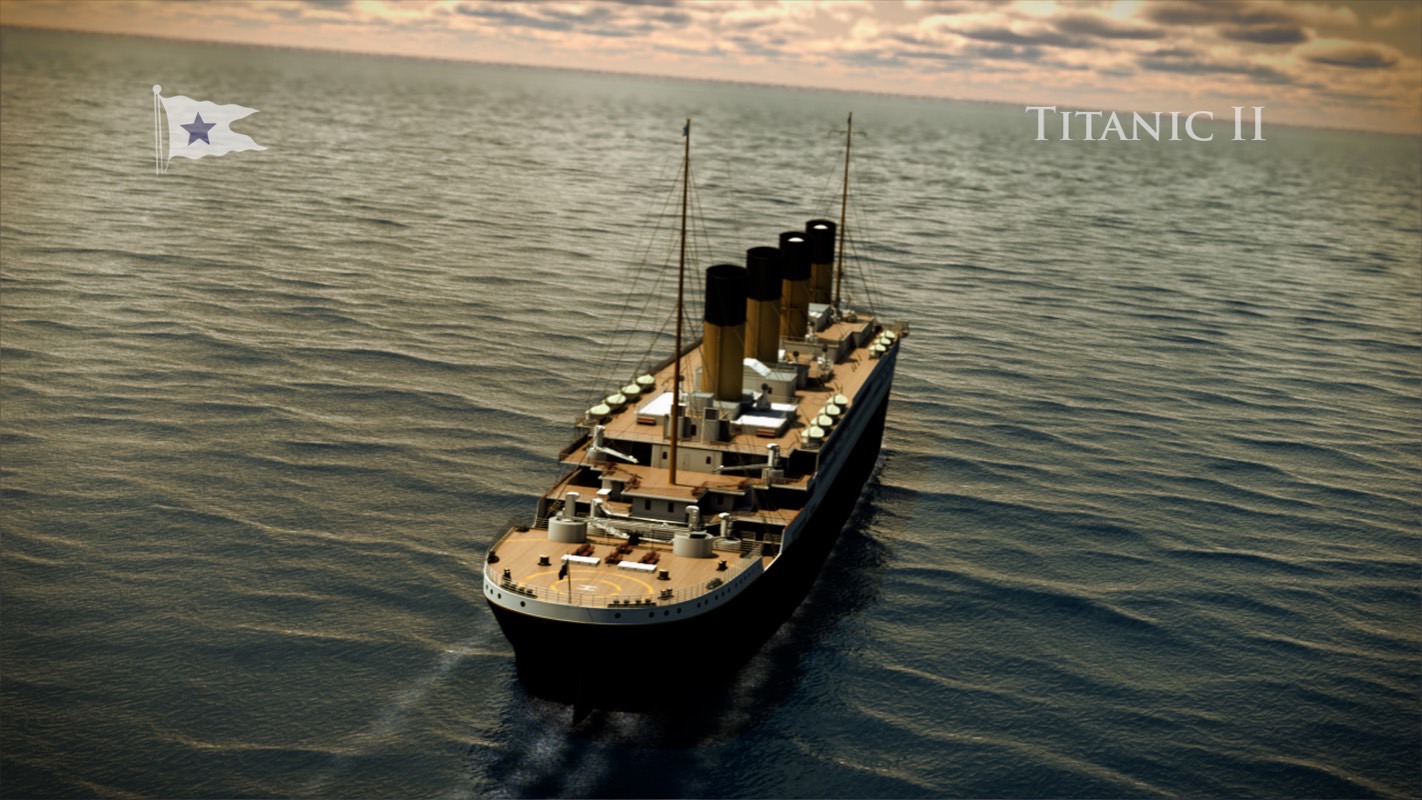
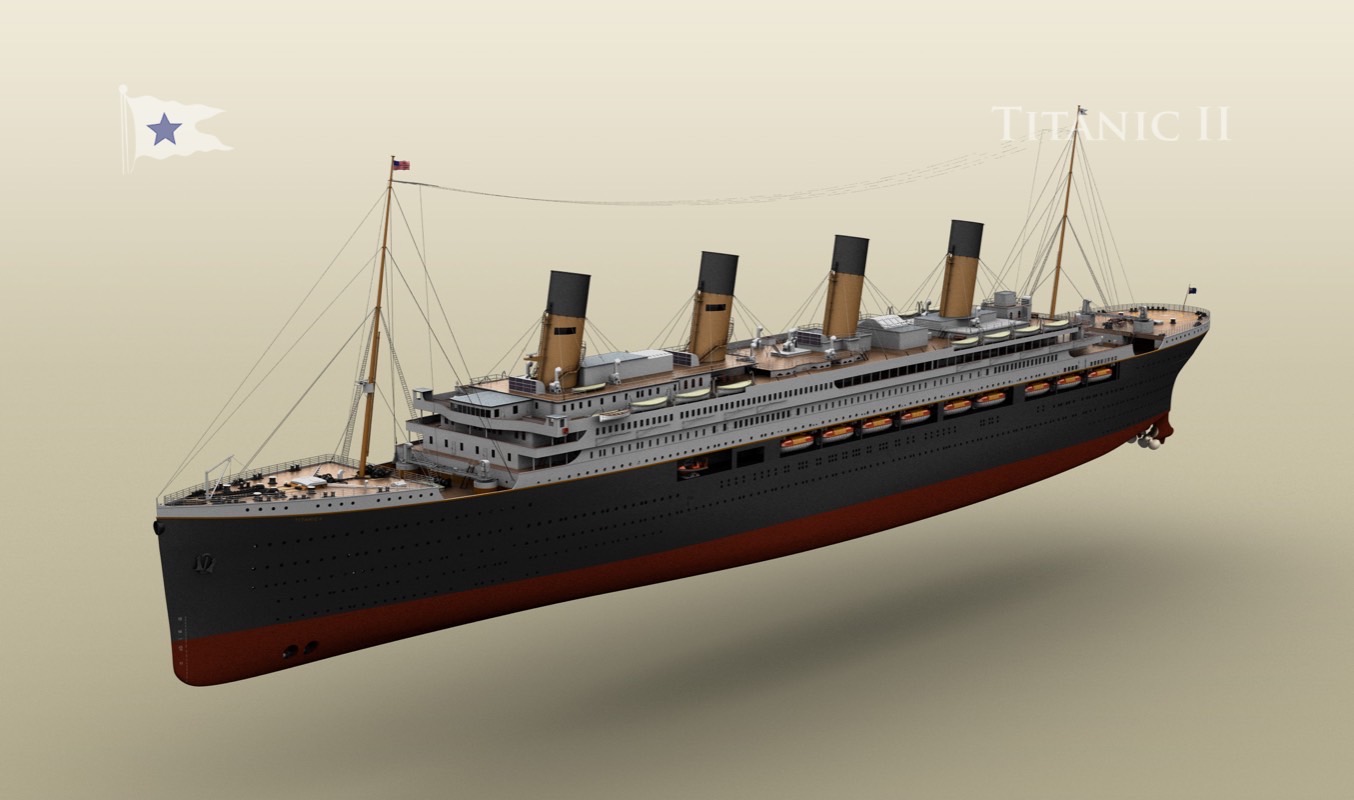
In maritime construction, a vessel transitions from a concept to a reality only when a shipyard secures confirmed financing, procures raw materials, and begins physical assembly under the oversight of international classification societies, such as Lloyd's Register or DNV. Blue Star Line has released conceptual computer-generated imagery (CGI) and digital walkthroughs of what the ship's Grand Staircase, smoking rooms, and first-class cabins would look like, but these digital assets do not represent physical progress.
Regulatory and Safety Compliance Challenges
Designing a ship that mimics the exterior and interior of a 1912 liner while complying with modern International Maritime Organization (IMO) safety regulations presents a massive engineering challenge.
- 1912 Titanic
- Limited lifeboat cap.
- Riveted iron plates
- Traditional funnels
- Modern Safety Mandates
- 100% evacuation assets
- Welded steel hulls
- Modern radar/sonar
- Titanic II Proposal
- Concealed modern pods
- Expanded hull width
- Dummy third/fourth fun
Modern SOLAS (Safety of Life at Sea) conventions require structural elements that directly conflict with the historical architecture of the original Titanic:
- Hull Width: To ensure stability and modern damage-stability standards, Titanic II is planned to be slightly wider than the original (approximately 32 meters compared to the original 28 meters), which slightly alters its hydrodynamic profile.
- Safety Evacuation: Modern regulations mandate sufficient lifeboats and modern marine evacuation systems for every passenger and crew member on board, requiring discreet integration into the historical deck layout.
- Bridge and Navigation: The navigation bridge must incorporate modern radar, electronic chart display and information systems (ECDIS), and satellite communications, hidden or styled to preserve the vintage atmosphere for passengers.
Comparison: Original RMS Titanic vs. Proposed Titanic II
To understand the scope of the Blue Star Line proposal, examining how the proposed replica compares to the historical vessel clarifies the technical and operational adjustments required for a 21st-century voyage.
| Feature | Original RMS Titanic (1912) | Proposed Titanic II (Blue Star Line) |
|---|---|---|
| Length | 269 meters (882 feet) | Approx. 269 meters (882 feet) |
| Beam (Width) | 28 meters (92 feet) | 32 meters (105 feet) — widened for stability |
| Propulsion | Coal-fired reciprocating engines & turbine | Modern diesel-electric propulsion |
| Funnels | 3 active, 1 dummy (ventilation) | 2 active, 2 dummy (aesthetic styling) |
| Passenger Capacity | ~2,435 passengers | ~2,435 passengers (modern standards) |
| Lifeboat Capacity | Insufficient (~1,178 spaces) | 100% modern marine evacuation systems |
Frequently Asked Questions
Is the Titanic II actually being built?
No. While Clive Palmer and Blue Star Line have announced intentions to build the ship multiple times over the past decade, no shipyard has commenced physical construction, and no verified keel-laying ceremony has taken place.
When will the Titanic II set sail if construction starts?
Maritime experts estimate that constructing a specialized passenger liner of this magnitude requires a minimum of three to five years from the moment steel is cut and financing is secured. Because construction has not begun, any projected launch dates circulating online are speculative.
What route is the Titanic II planned to sail?
The original proposed itinerary intended to replicate the historic maiden voyage, departing from Southampton, England, and arriving in New York City. Later announcements suggested potential voyages originating from other global ports, such as Dubai or Singapore, before entering regular transatlantic service.
Will the Titanic II have modern safety features?
Yes. Regardless of its historical styling, any commercial passenger ship operating in international waters must comply with strict modern safety regulations, including satellite navigation, welded steel hulls, redundant diesel engines, and comprehensive life-saving appliances.
How much is a ticket for the Titanic II?
Although early promotional campaigns generated significant public interest and inquiries regarding ticket prices—with some individuals reportedly offering substantial sums to secure a berth on the inaugural voyage—Blue Star Line is not currently selling tickets, as no operational schedule exists.
Next Actions and Reality Check
Travelers and maritime enthusiasts fascinated by the project should monitor official announcements from Blue Star Line or major international maritime news outlets for verified updates. Until a binding construction contract with an established shipbuilder is executed and physical work begins, the Titanic II remains a visionary concept without a definitive launch date.
Image Gallery