The Best Christmas Markets in Montreal: A 2026 Holiday Guide
Montreal’s Christmas markets are renowned for their European charm and Quebecois hospitality. For the 2026 season, the best markets include Le Grand Marché de Noël at Place des Festivals for its grand scale, the Village de Noël de Mont...
Montreal’s Christmas markets are renowned for their European charm and Quebecois hospitality. For the 2026 season, the best markets include Le Grand Marché de Noël at Place des Festivals for its grand scale, the Village de Noël de Montréal at Atwater Market for its cozy family atmosphere, and the Marché de Noël de Jean-Talon for gourmet local delicacies.
Contents
Montreal transforms into a winter wonderland every November and December, blending centuries-old North American traditions with the festive aesthetics of German and Alsatian holiday fairs. The 2026 season continues this evolution, offering a mix of massive downtown spectacles and intimate neighborhood gatherings. Whether you are seeking hand-crafted jewelry, regional maple spirits, or a simple cup of vin chaud (mulled wine) by a fire pit, Montreal’s market circuit provides a comprehensive holiday experience.
Le Grand Marché de Noël (The Great Christmas Market)
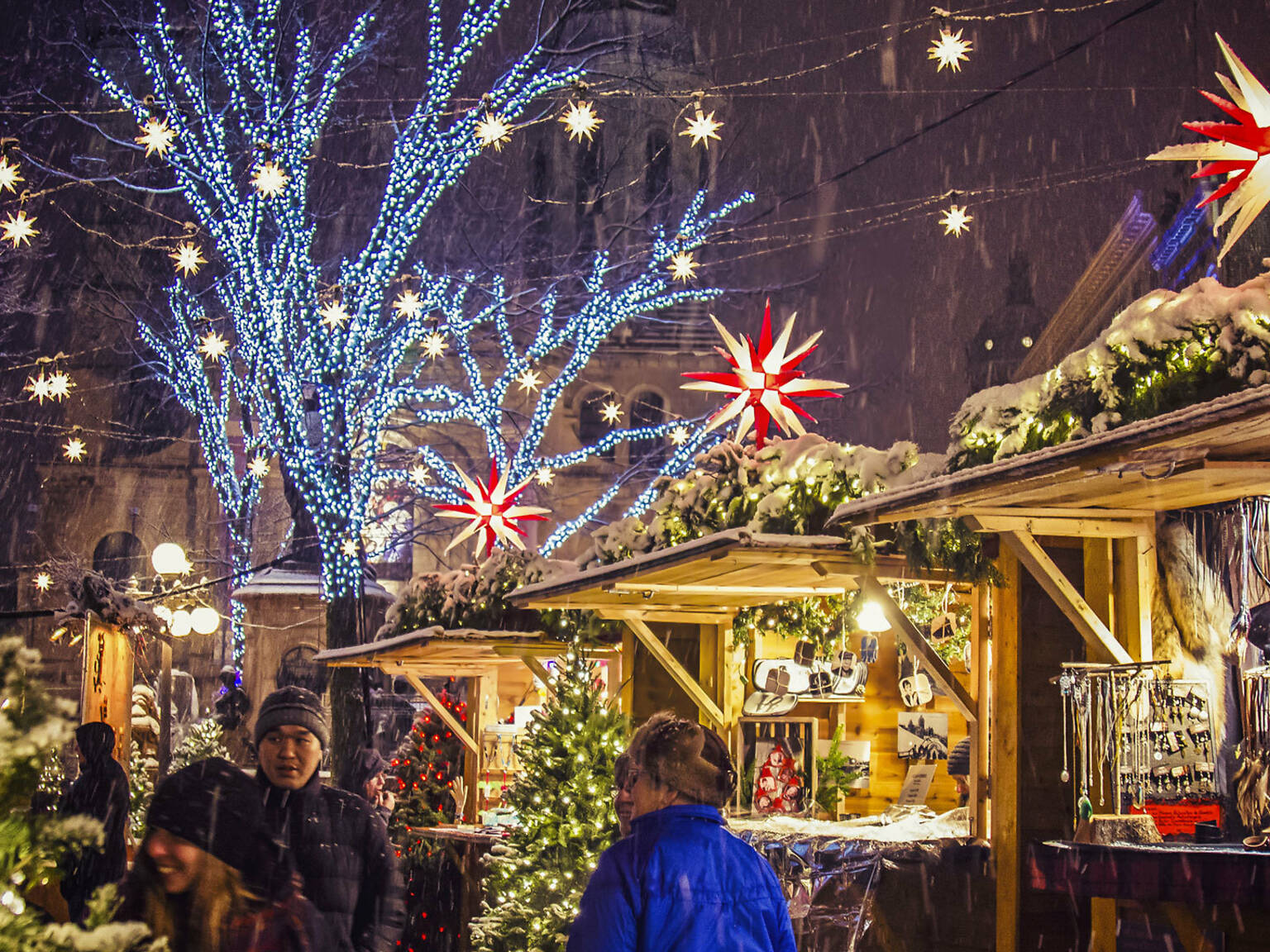
Located in the heart of the Quartier des Spectacles at Place des Festivals, Le Grand Marché de Noël is the city's flagship holiday event. In 2026, it continues to serve as the primary destination for visitors who want a high-energy, visually stunning experience. The market typically features over 30 to 40 wooden chalets, each housing local artisans and food producers.
The primary draw of this market is its integration with the city’s cultural hub. Because it is situated among Montreal’s major theaters and the Place des Arts, the market often hosts live musical performances, theatrical sketches, and light installations that change throughout the season. For 2026, the programming emphasizes "Nordicity," celebrating Montreal’s identity as a cold-weather metropolis through interactive art.
Visitors should prioritize this market for its central location and its proximity to the Esplanade Tranquille skating rink. You can spend an afternoon skating for free (rentals available) and then walk a few steps into the market for a chimney cake or a hot chocolate. It is the most "tourist-friendly" market due to its accessibility via the Place-des-Arts and Saint-Laurent Metro stations. However, because of its popularity, it is best visited on weekday evenings to avoid the heavy Saturday crowds.
Village de Noël de Montréal (Atwater Market)
For those seeking a more traditional, "village-style" atmosphere, the Village de Noël at the Atwater Market in the Saint-Henri neighborhood is the premier choice. Located along the Lachine Canal, this market leans heavily into the aesthetic of a festive woodsman’s camp. The 2026 layout focuses on creating "thermal comfort zones," with numerous fire pits and heated seating areas where visitors can rest.
What distinguishes the Atwater Village is its focus on the Kingdom of the Elves (Le Royaume des Lutins). This is arguably the best market for families with children. The programming includes storytelling sessions, creative workshops, and a dedicated trail designed for younger visitors. While the kids are occupied, adults can explore the "Sugar Shack" stalls, which offer hot maple taffy on snow—a quintessential Quebecois treat even in the early winter.
The artisanal selection here is curated to support local creators from the Sud-Ouest borough and across Quebec. You will find high-quality leather goods, hand-knitted winter wear, and artisanal soaps. The market’s location near the historic Atwater Market building also means you can combine your holiday shopping with a visit to the permanent gourmet butchers and florists that have occupied the site since 1933.
Marché de Noël de Jean-Talon
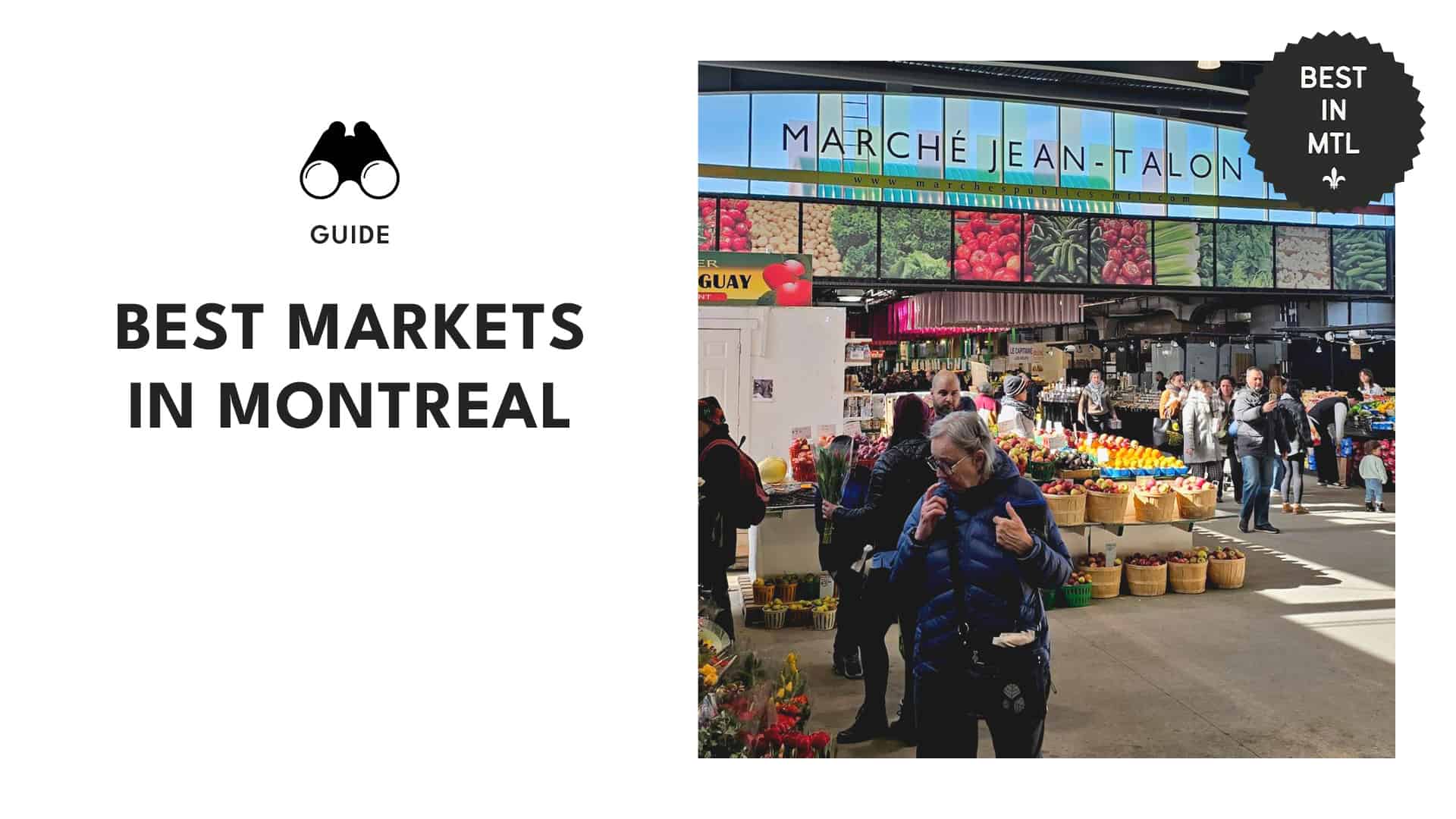
Situated in the heart of Little Italy, the Jean-Talon Market hosts a holiday event that is a dream for food enthusiasts. While smaller in physical footprint than the Place des Festivals site, the Jean-Talon Christmas Market focuses almost exclusively on gastronomy and high-end terroir products.
In 2026, the market remains the best place to source ingredients for a traditional French-Canadian "Réveillon" (Christmas Eve) dinner. The chalets here specialize in:
- Regional Spirits: Including Quebec-made gins, ice ciders, and maple liqueurs.
- Charcuterie and Cheeses: Small-batch products from the Eastern Townships and Charlevoix.
- Baked Goods: Traditional tourtière (meat pie), fruitcakes, and artisanal breads.
The atmosphere at Jean-Talon is more local and less frantic than the downtown markets. It is a place where locals do their actual shopping rather than just sightseeing. The covered nature of much of the Jean-Talon market also provides a slight reprieve from the wind, making it a more comfortable option during a heavy 2026 snowfall.
The Nutcracker Market (Marché Casse-Noisette)
The Nutcracker Market is a unique indoor experience held at the Palais des Congrès (Montreal Convention Centre). Unlike the outdoor wooden chalets of other markets, this is a sophisticated, large-scale craft fair with a significant philanthropic mission. A percentage of all sales—typically 10%—goes toward Les Grands Ballets’ Nutcracker Fund, which allows underprivileged children to attend ballet performances and participate in educational programs.
For 2026, the Nutcracker Market is the ideal solution for visitors who want to shop in a climate-controlled environment. It features over 100 exhibitors ranging from high-end fashion designers to specialty toy manufacturers. Because it is indoors, the presentation of products is often more elaborate than what you will find in the outdoor stalls.
This market usually runs for a shorter duration—typically 10 to 12 days in late November and early December—so travelers must time their visit carefully. It is the best destination for finding unique, high-value gifts that might be too fragile for an outdoor market setting, such as hand-painted glass ornaments or delicate jewelry.
Comparison of Montreal's Top 2026 Christmas Markets
| Market Name | Location | Primary Vibe | Best For |
|---|---|---|---|
| Le Grand Marché | Place des Festivals | Urban, High-Energy | Sightseeing & Skating |
| Atwater Village | Atwater Market | Cozy, Rustic | Families & Children |
| Jean-Talon Market | Little Italy | Gourmet, Local | Foodies & Gifts |
| Nutcracker Market | Palais des Congrès | Sophisticated, Indoor | Philanthropy & Jewelry |
| Merry Montreal | Old Montreal | Historic, Romantic | Couples & Photography |
Merry Montreal (Montréal en Fêtes)
Located in Place Jacques-Cartier within the historic Old Montreal district, Merry Montreal (Montréal en Fêtes) offers the most picturesque setting of all. In 2026, the cobblestone streets and 17th-century architecture provide a backdrop that feels authentically European.
This market focuses heavily on "The Warm-Up," a series of installations including oversized fire pits where visitors can roast marshmallows or sip warm cider. The programming here often stretches into the New Year, culminating in one of the city's largest New Year's Eve celebrations.
While the number of retail stalls may be fewer than at the Place des Festivals, the quality of the "experience" is high. It is the most romantic market in the city, making it a favorite for couples. The nearby Saint-Paul Street, with its art galleries and boutiques, complements the market stalls, allowing for a full day of exploration. Note that parking in Old Montreal is notoriously difficult; taking the Metro to Champ-de-Mars station is highly recommended.
Gastronomy: What to Eat and Drink
Navigating a Montreal Christmas market in 2026 is as much about the palate as it is about the shopping. The culinary offerings are a point of pride for the city, reflecting its mixed heritage.
Vin Chaud and Caribou Most markets feature a central bar serving vin chaud (mulled wine spiced with cinnamon and cloves). For a more local experience, look for Caribou, a traditional Quebecois drink made from red wine, hard liquor (usually whisky or vodka), and maple syrup or sugar. It is served warm and is famously effective at warding off the Montreal chill.
Savory Treats While poutine is available year-round, the Christmas versions often feature holiday twists, such as turkey gravy or cranberry infusions. You will also find traditional Bratwurst sausages, a nod to the German origin of these markets, served on locally baked brioche buns with sauerkraut.
Sweet Options The BeaverTail (Queves de Castor) remains a staple, but look for smaller artisanal stalls offering pets de sœurs (nun’s farts)—a traditional Quebecois pastry made of pie dough rolled with butter and brown sugar. Churros and Belgian waffles are also common, usually topped with thick maple butter or dark chocolate.
Logistics and Planning for 2026
To maximize your experience at Montreal's Christmas markets, several logistical factors must be considered, particularly given the city's unpredictable winter weather.
- Timing: Most markets open the third week of November and run until December 24th. The "Grand Marché" and "Atwater Village" typically operate from Thursday to Sunday in the early season, moving to daily operations as December 25th approaches.
- Transportation: The Montreal Metro (STM) is the most efficient way to travel between markets. In 2026, the Green Line connects you to Place des Festivals, while the Orange Line provides access to Atwater, Jean-Talon, and the Nutcracker Market.
- Payment: While most vendors accept major credit cards and mobile payments (Apple Pay/Google Pay), a few smaller artisans may prefer cash. Having $20-$40 in Canadian currency is useful for small food purchases.
- Dress Code: Montreal in December can range from 0°C to -20°C. The "layering" method is essential. Ensure you have waterproof boots, as the snow in market areas often turns to slush due to high foot traffic.
Frequently Asked Questions
Are Montreal Christmas markets free to enter?
Most outdoor markets, including Le Grand Marché de Noël and the Atwater Village, are free to enter. The Nutcracker Market at the Palais des Congrès is also free, though it encourages donations to the Grands Ballets fund. Special events or performances within the markets may occasionally require a ticket.
What are the typical opening hours?
In 2026, outdoor markets generally open around 11:00 AM or 12:00 PM and close between 8:00 PM and 10:00 PM. Hours are usually extended on Fridays and Saturdays. Most markets close early (around 3:00 PM or 4:00 PM) on Christmas Eve and remain closed on Christmas Day.
Is the Christmas market in Old Montreal still happening?
Yes, Merry Montreal (Montréal en Fêtes) traditionally takes place in Place Jacques-Cartier. It is known for its festive installations and New Year's Eve countdown. Visitors should check the official Merry Montreal website for the specific 2026 schedule, as dates can vary based on municipal funding.
Are dogs allowed at the Christmas markets?
Generally, leashed dogs are allowed at the outdoor markets like Atwater and Jean-Talon. However, they may not be permitted inside the specific food-tasting tents or indoor venues like the Nutcracker Market due to health and safety regulations.
Can I find authentic Indigenous crafts at these markets?
Yes, Montreal markets increasingly feature Indigenous artisans. In 2026, Le Grand Marché de Noël often includes a dedicated section for First Nations and Inuit creators, selling authentic beadwork, soapstone carvings, and textiles. Always look for the "Authentic Indigenous" signage to ensure you are supporting original creators.
Final Recommendation
For the complete Montreal holiday experience in 2026, start your day at the Jean-Talon Market for a gourmet lunch and food shopping. In the afternoon, head to Atwater Market to enjoy the riverside atmosphere and fire pits. End your evening at Place des Festivals (Le Grand Marché) to witness the light displays and enjoy the urban energy. This "market crawl" allows you to see the diversity of Montreal's neighborhoods while completing your holiday shopping with a variety of local, high-quality goods.
Image Gallery