Navigating Online Doctoral Studies: A Comprehensive Guide to Advanced Academic Degrees
Online doctoral studies provide a flexible, rigorous pathway for professionals to earn terminal degrees—such as a PhD, EdD, or DBA—without the requirement of full-time, on-campus residency. These programs maintain the same academic sta...
Online doctoral studies provide a flexible, rigorous pathway for professionals to earn terminal degrees—such as a PhD, EdD, or DBA—without the requirement of full-time, on-campus residency. These programs maintain the same academic standards as traditional cohorts, focusing on original research, advanced theory, and practical application while utilizing asynchronous and synchronous digital platforms to deliver curriculum, facilitate peer collaboration, and support dissertation development.
Contents
Defining Online Doctoral Degrees
A doctoral degree is the highest level of academic qualification available in most fields. Historically, these degrees required multi-year commitments to on-campus seminars and laboratory work. However, the maturation of learning management systems and high-fidelity video conferencing has allowed institutions to replicate the collaborative environment of a physical classroom within a virtual space.
"Online doctoral studies" refers to programs where the majority, if not all, of the coursework is completed remotely. It is important to disambiguate these from "hybrid" programs, which may mandate periodic, short-term residency requirements, such as a week-long summer intensives or quarterly conferences. While the format changes, the rigor does not; candidates are expected to demonstrate mastery of their discipline, undergo comprehensive examinations, and complete an original dissertation or capstone project that contributes new knowledge to their specific niche.
Differentiating Program Types
The primary challenge for prospective students is selecting the correct degree type, as the nomenclature significantly affects career trajectory and expected outcomes.
- PhD (Doctor of Philosophy): Primarily focused on research, theory, and academia. Graduates often pursue careers as professors, lead researchers, or theorists.
- EdD (Doctor of Education): A practitioner-focused degree. It is designed for K-12 administrators, higher education leaders, and policy makers who wish to apply research-based solutions to real-world educational challenges.
- DBA (Doctor of Business Administration): Similar to an EdD, but for the business sector. This degree is designed for senior executives who seek to improve organizational performance through evidence-based leadership and applied research.
- DNP (Doctor of Nursing Practice): A clinical terminal degree that emphasizes the practical application of nursing research into clinical settings rather than traditional laboratory-based theory.
Accreditation and Quality Assurance
In the landscape of higher education, accreditation is the singular most important factor in verifying that a degree has value in the professional marketplace. Regional accreditation is the gold standard in the United States, as it indicates that an institution meets rigorous standards of quality and financial stability.
Prospective students must verify the accreditation status of their chosen institution through the U.S. Department of Education’s Database of Postsecondary Institutions and Programs. Programs that hold "national accreditation" rather than "regional accreditation" may face challenges regarding credit transferability or acceptance by specific employers. Furthermore, for professional degrees like the DNP or EdD, programmatic accreditation from discipline-specific bodies provides an additional layer of professional validation.
Admission Requirements and Prerequisites
Admission to a doctoral program is significantly more selective than master's or undergraduate study. Admissions committees look for evidence of research potential, professional experience, and the ability to articulate a clear scholarly interest.
- Academic Credentials: A master’s degree is almost universally required. Official transcripts must demonstrate a high GPA, particularly in graduate-level coursework.
- Professional Background: Doctoral programs, particularly EdDs and DBAs, place high value on professional experience. A resume or curriculum vitae (CV) is standard, often requiring five or more years of experience in the relevant field.
- Letters of Recommendation: These must come from individuals who can speak to the applicant’s research capability and critical thinking skills—typically former professors or senior colleagues.
- Statement of Purpose: This is the most critical document. It must outline the applicant's research interests, how those interests align with current faculty expertise, and the specific contribution they hope to make to the field.
Financial Considerations and Funding
The cost of online doctoral studies varies by the type of institution (public, private non-profit, or for-profit) and the discipline. Tuition often ranges from $30,000 to over $100,000 for the total program.
Unlike many master's programs, some doctoral degrees—specifically PhDs—are occasionally funded through fellowships, research assistantships, or teaching assistantships, which may provide a tuition waiver and a modest stipend. However, professional degrees like the EdD or DBA are rarely funded by the institution and are often financed through employer reimbursement, federal student loans, or personal savings. It is essential to review the financial aid page of each specific program to understand if they offer "assistantship" opportunities for remote students, as this is becoming more common but is not guaranteed.
| Program Type | Primary Focus | Career Path | Typical Funding Models |
|---|---|---|---|
| PhD | Theory/Research | Academia/Research | Fellowships/Assistantships |
| EdD | Applied Practice | K-12/Higher Ed Admin | Loans/Employer Support |
| DBA | Applied Business | Executive Leadership | Loans/Employer Support |
| DNP | Clinical Practice | Healthcare Admin/Lead | Loans/Employer Support |
Managing Time and Academic Expectations
The most common mistake students make is underestimating the time commitment required for independent research. Doctoral work is self-directed. While online courses have defined deadlines for assignments, the dissertation or capstone phase is entirely self-paced.
Students should anticipate spending 15–25 hours per week on coursework during the first two years, and even more during the dissertation phase. This necessitates strong self-regulation, time management, and a robust support system at home and work. Many students utilize project management software or dedicated research tools (such as Zotero or Mendeley) to keep track of the extensive literature reviews required for their terminal projects.
Common Pitfalls and Troubleshooting
- Faculty Alignment: If an applicant’s research interest does not overlap with the research expertise of the current faculty, the application will likely be rejected. Thoroughly research faculty publications before applying.
- The "ABD" Stage: "All But Dissertation" (ABD) is a common phenomenon where students finish coursework but fail to complete the dissertation. Choosing a program with structured, mandatory dissertation milestones helps prevent this stalling.
- Isolation: The lack of a physical campus can lead to feelings of professional isolation. Active participation in virtual research groups and online student organizations is essential for networking and mental well-being.
Frequently Asked Questions
Does an online doctoral degree hold the same weight as an on-campus degree? Yes, provided the degree is earned from an accredited, recognized institution. In 2026, many top-tier universities offer online doctoral programs that are identical to their on-campus offerings. Employers prioritize the reputation of the institution over the delivery format.
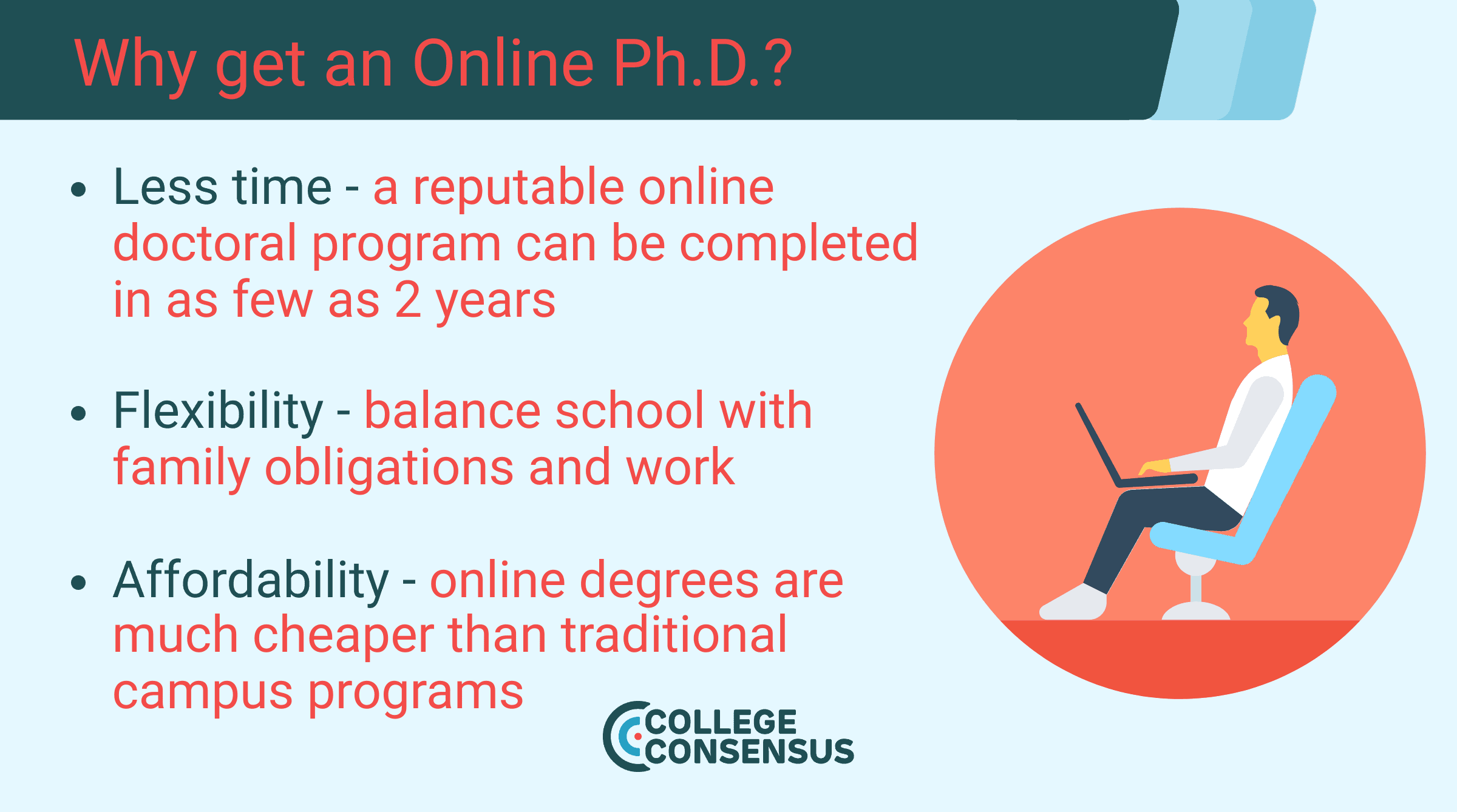
How long does it typically take to complete an online doctorate? Most programs take between three to six years. The duration depends heavily on whether the program is part-time or full-time and how quickly the student completes the dissertation phase.
Can I work full-time while pursuing my doctoral studies? Many online doctoral programs are specifically designed for working professionals. However, it requires significant discipline. It is recommended to speak with current students in the program to gauge how they balance their workload before enrolling.
What is the difference between a dissertation and a capstone project? A dissertation is typically a purely academic document that tests original theory. A capstone project, often found in EdD and DBA programs, focuses on solving a specific, real-world problem within a professional organization. Both are rigorous and require original research.
Will my degree transcript state that it was an "online" program? In almost all cases, no. Your diploma and official transcript will show the degree name and the institution, without distinguishing between the online or in-person delivery method.
Recommended Next Steps
Before applying, create a shortlist of three to five institutions that are regionally accredited. Visit the "Faculty" page of each department to confirm that at least two professors are currently researching topics related to your specific area of interest. Once identified, reach out to the program’s admissions office to ask if you can be put in contact with a current doctoral candidate; this is the most reliable way to understand the program’s culture, the intensity of the workload, and the level of support provided during the dissertation process.
Image Gallery