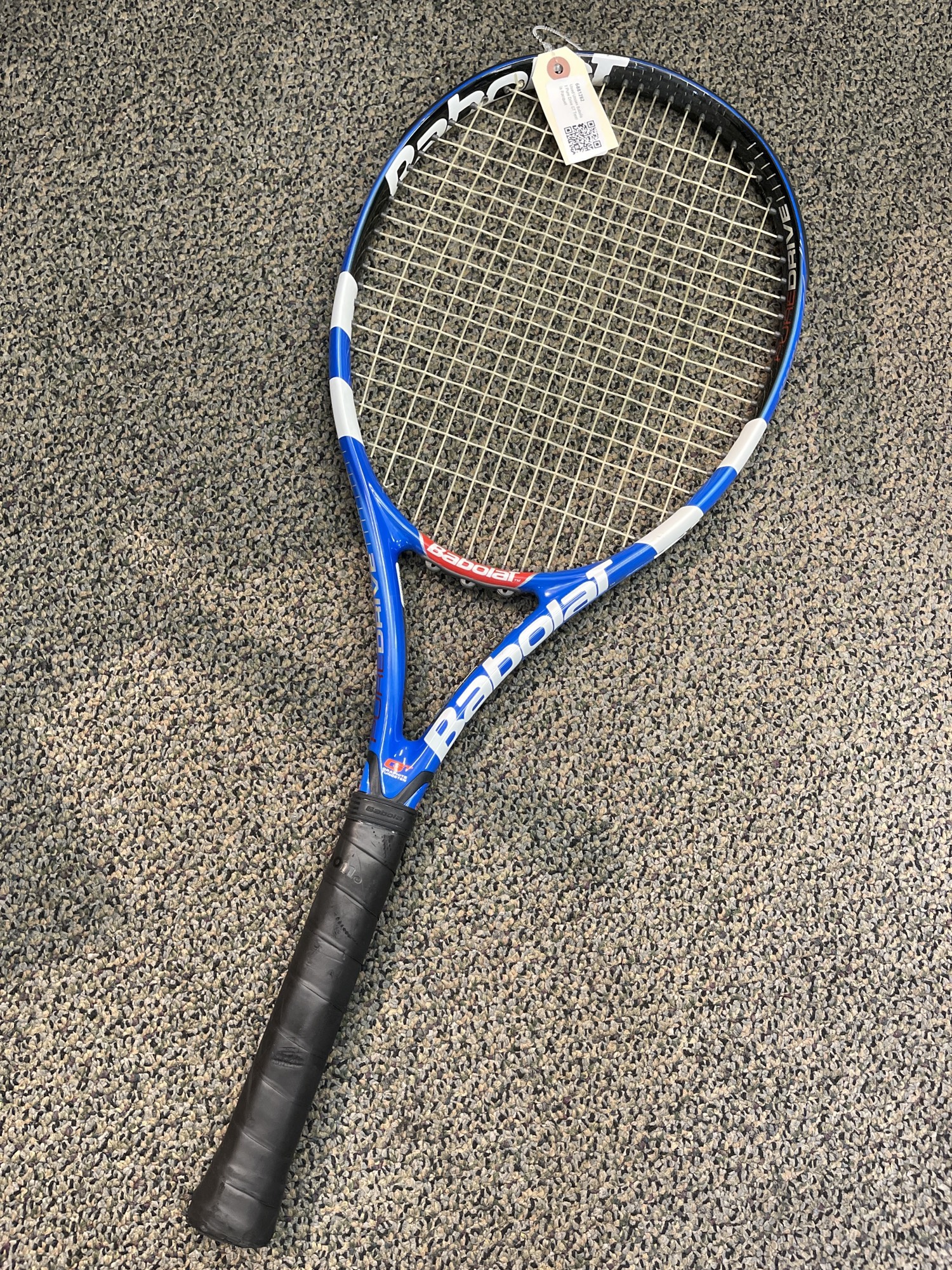
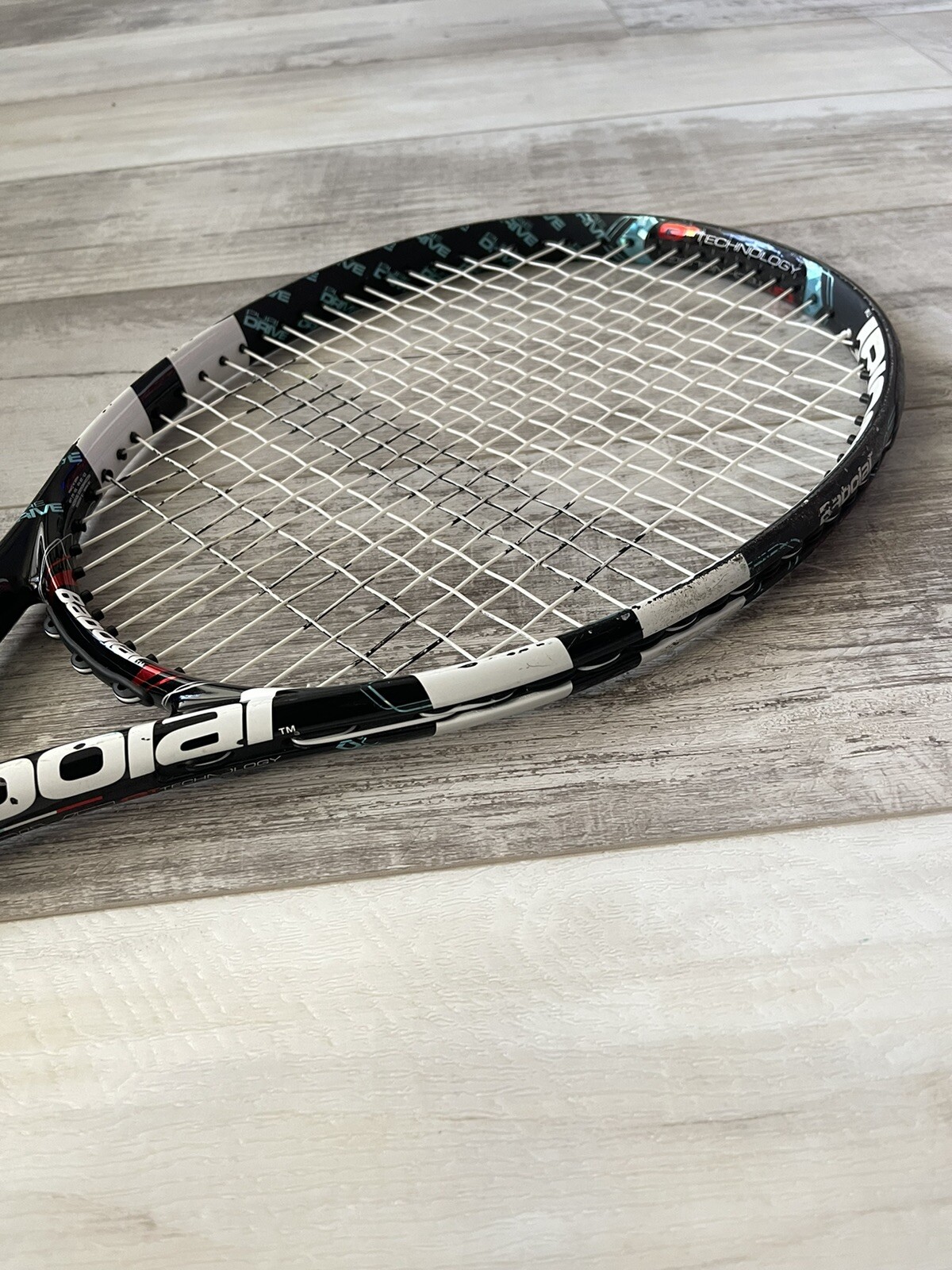
Babolat Pure Drive GT Technology: Structural Engineering and On-Court Performance Analysis
Babolat Pure Drive GT technology incorporates a hybrid material blend of braided carbon fibers and tungsten filaments woven into key zones of the racquet frame. Introduced to bolster torsional stability and energy transfer, GT (Graphit...
Babolat Pure Drive GT technology incorporates a hybrid material blend of braided carbon fibers and tungsten filaments woven into key zones of the racquet frame. Introduced to bolster torsional stability and energy transfer, GT (Graphite Tungsten) technology mitigates frame twisting at ball impact, maximizing power output and directional control for modern aggressive baseline players.
Contents
Understanding GT Technology: Metallurgical and Composite Engineering
To appreciate why Babolat introduced Graphite Tungsten (GT) technology to its flag-bearing Pure Drive series, one must analyze the physical demands of high-velocity tennis impact. When a tennis ball strikes a racquet hoop—frequently off-center during heavy topspin rallies—it exerts immense rotational force around the racquet's longitudinal axis. Standard carbon fiber composites, while exceptionally light and strong along their axial fibers, can experience localized twisting (torsion) under high impact loads.
GT technology addresses this deformation through strategic composite hybridization:
- Tungsten Filament Integration: Tungsten is a high-density transition metal with exceptional tensile strength and modulus of elasticity. Babolat engineers wove microscopic tungsten threads directly into the unidirectional carbon fiber sheets during the lay-up process.
- Targeted Reinforcement: Rather than coating the entire frame uniformly, which would unbalance static weight distribution, Babolat concentrated the GT weave at critical stress points—primarily around the 3 o'clock and 9 o'clock locations of the head perimeter, as well as extending into the racquet throat.
- Torsional Rigidity Enhancement: By placing high-density tungsten filaments at the maximum distance from the central axis of the frame, the moment of inertia against twisting increases exponentially. This structural stiffness minimizes frame flutter on off-center hits.
The primary mechanical result is a localized increase in frame rigidity without requiring excessive added weight. The hybrid construction yields a frame that resists structural ovalization during impact, returning more kinetic energy directly back to the tennis ball rather than dissipating it through frame deflection.
Engineering Note on Fiber Density The integration of tungsten fibers increases localized density by concentrating mass at high-stress perimeter zones. This strategic weighting raises the frame's resistance to torque without altering the overall head-light swing dynamic required for high head speed generation.
Structural Dynamics: How GT Technology Altered the Pure Drive Signature
The Babolat Pure Drive built its reputation on effortless power, but earlier generations occasionally suffered from dynamic distortion when hitting outside the sweet spot. The incorporation of GT technology marked a pivotal evolution in how the racquet stores and releases energy during the millisecond-long impact window.
DO NOT USE ASCII ART - THIS SECTION IS WRITTEN IN PURE MARKDOWN TEXT
(Self-Correction: Absolutely NO ASCII drawings or diagrams. Expressing frame mechanics using structured analytical prose and clean tables.)
Impact Impulse Transfer
During impact, ball contact lasts roughly 3 to 5 milliseconds. In non-GT frames, off-center contact induces structural flexing across the hoop's lateral axis. This flexing absorbs a portion of the ball's incoming kinetic energy, resulting in reduced shot depth and inconsistent directional accuracy.
GT technology stabilizes the perimeter of the hoop. By locking the lateral flex points via high-modulus tungsten cross-weaving, the frame retains its geometry under heavy torsional stress. This mechanical stability ensures that energy transfer remains uniform across a wider surface area of the string bed, effectively expanding the functional sweet spot.
Stiffness Profile and RA Rating Dynamics
The Pure Drive series has traditionally featured a firm Flex Rating (RA). GT era racquets achieved stiffness ratings ranging between 70 and 74 RA. While extremely firm frame profiles can traditionally transfer unwanted high-frequency vibrations to the player's arm, GT technology worked in tandem with dampening systems to isolate harsh shock while maintaining structural stiffness.
| Mechanical Feature | Standard Carbon Fiber Frame | GT Reinforced Composite Frame | Performance Benefit |
|---|---|---|---|
| Torsional Resistance | Moderate lateral flex under off-center load | High resistance to axial twisting | Greater directional control on off-center hits |
| Energy Return | Moderate power absorption via frame flex | Minimal structural deformation | Maximum exit velocity and ball speed |
| Perimeter Mass Distribution | Uniform composite density | High-density tungsten at 3/9 o'clock | Higher torsional moment of inertia |
| Frame Response | Plush, flexible feel with lower dampening | Firm, crisp, explosive feedback | Instantaneous ball pocketing and pop |
Technical Specifications Across the Pure Drive GT Generation
During the era of GT technology, Babolat expanded the Pure Drive lineup to accommodate various player profiles, ranging from heavy-hitting professionals like Andy Roddick to junior players transitioning to performance frames.
The table below outlines the core technical specifications across the primary models utilizing GT technology.
| Model Variant | Head Size | Unstrung Weight | Static Balance Point | Swingweight (Strung) | Flex Rating (RA) | Beam Width |
|---|---|---|---|---|---|---|
| Pure Drive GT (Standard) | 100 sq in (645 cm²) | 300 g (10.6 oz) | 320 mm (7 pts HL) | 318 kg·cm² | 72 RA | 23/26/23 mm |
| Pure Drive GT Roddick | 100 sq in (645 cm²) | 315 g (11.1 oz) | 315 mm (9 pts HL) | 330 kg·cm² | 74 RA | 23/26/23 mm |
| Pure Drive GT Roddick Plus | 100 sq in (645 cm²) | 315 g (11.1 oz) | 325 mm (6 pts HL) | 338 kg·cm² | 74 RA | 23/26/23 mm |
| Pure Drive GT Lite | 100 sq in (645 cm²) | 275 g (9.7 oz) | 320 mm (7 pts HL) | 302 kg·cm² | 70 RA | 23/26/23 mm |
| Pure Drive 107 GT | 107 sq in (690 cm²) | 280 g (9.9 oz) | 330 mm (4 pts HL) | 310 kg·cm² | 71 RA | 23/26/23 mm |
Analysis of Spec Architecture
The flagship Pure Drive GT Standard struck a balance between swing speed and mass, providing an unstrung weight of 300 grams paired with a 318 swingweight. This combination allowed intermediate to advanced players to generate high head speeds while relying on the GT tungsten reinforcement to keep the frame stable against heavy incoming pace.
Conversely, the Pure Drive GT Roddick variants leveraged increased static mass (315g) alongside the GT construction. This boosted the swingweight to 330+ kg·cm², creating a hammer-like effect ideal for massive flat serves and heavy plough-through from the baseline.
Structural Synergy: Integrating GT with Cortex and Woofer Systems
GT technology did not operate in isolation; its true efficiency was realized through integration with Babolat's complementary frame technologies: the Cortex System and Woofer Technology.
System Integration Overview While GT Technology focused entirely on structural rigidity and torsional stability in the upper frame, Woofer Grommets managed string friction dynamics, and the Cortex System filtered high-frequency mechanical shock in the handle.
The Woofer Grommet Interface
Standard racquet grommets hold strings flush against the outer rim, locking individual strings in place. Babolat’s Woofer System introduced a spherical grommet bed that allows strings to move freely upon impact. When combined with GT technology:
- Ball contact depresses both the strings and the flexible grommet frame.
- The GT-reinforced frame maintains its outer circumference without bending inward.
- The strings deform smoothly across a larger contact area, increasing trampoline effect by up to 25% compared to static grommet setups.
- Dwell time increases slightly, giving players enhanced spin potential before the frame snaps back.
The Cortex Dampening System
Because GT technology elevated the frame's firm RA rating (often reaching 72–74 RA), unfiltered energy transmission could lead to forearm fatigue or tennis elbow (lateral epicondylitis). Babolat inserted the Cortex dampening bridge between the racquet throat and the handle.
The Cortex interface acted as a physical shock filter:
- Low-Frequency Signal Retention: Preserved essential sensory feedback (ball feel, touch, depth feedback) necessary for precision play.
- High-Frequency Harmonic Dampening: Absorbed harsh micro-vibrations generated by hard off-center impacts against the stiff GT composite frame.
Evolutionary Context: GT Technology vs. Subsequent Babolat Innovations
Tennis equipment design evolves continuously. To evaluate GT technology from a modern performance perspective in 2026, it is useful to compare how Babolat’s engineering priorities transitioned across generations.
ABSOLUTELY NO ASCII FLOWCHARTS OR CODE BLOCKS PER MANDATORY INSTRUCTIONS
Evolution Timeline of Babolat Pure Drive Technologies
- Woofer Technology (Early 2000s): Focused entirely on string-frame interaction and expanding dwell time via dynamic grommet pods.
- GT Technology (2009–2014): Introduced metallic alloy weaving (Graphite Tungsten) into the composite lay-up to solve torsional twisting and increase plow-through power.
- FSI (Frame String Interaction) Power (2015–2017): Re-engineered string bed spacing, widening diamond-shaped grommets to maximize topspin generation.
- HTR System (High Torsional Rigidity) & NF² Tech (2020–2026): Transitioned away from metallic weaves toward structural carbon fiber lay-ups and natural flax fiber inserts (NF² Tech) for enhanced acoustic dampening and controlled flex.
GT Technology vs. Modern HTR System
In current 2026 iterations of Babolat frames, the HTR (High Torsional Rigidity) System serves a function similar to historical GT technology. However, while GT relied on dense metal filaments (tungsten) woven into carbon fiber, HTR utilizes high-modulus carbon composition arranged at optimized angles within the frame's hoop.
Players comparing GT frames with modern HTR/NF² frames will notice that GT frames present a distinctly solid, heavy, and metallic firmness upon ball contact. Modern frames tend to deliver a more muted impact sound due to integrated flax materials, though both achieve comparable levels of torsional torque resistance.
Player Profiling: Identifying the Ideal Player for GT Frames
Although GT technology frames represent classic generations of the Pure Drive line, they remain highly sought after by competitive players, customizers, and collegiate athletes. The structural characteristics of a Pure Drive GT favor specific playstyles:
1. Aggressive Baseline Counter-Punchers
Players who stand on or near the baseline and take the ball early benefit from the rigidity of GT technology. When redirecting pace against heavy hitters, the frame's high resistance to twisting ensures that incoming velocity is converted back into target depth with minimal hand twist.
2. Flat and Heavy-Slice Servers
The high RA rating and weight distribution of the Pure Drive GT (especially the Roddick editions) provide exceptional energy conversion on flat serves. The stiffness of the upper hoop prevents energy loss during high-velocity wrist snap at full arm extension.
3. Modern Topsin Players Using Polyester Strings
GT technology frames provide a firm canvas that complements stiff, shaped co-poly strings (such as Babolat RPM Blast or Luxilon ALU Power). The rigid frame handles the string tension without bowing inward, allowing the string bed to snap back aggressively for massive topspin RPMs.
Cautionary Advice for Players with Arm Sensitivity Due to the high flex rating (70–74 RA) associated with GT era Pure Drives, players suffering from existing wrist, elbow, or shoulder ailments should avoid pairing these frames with full beds of stiff poly strings at high tensions. Consider hybrid string setups or multifilament strings to mitigate impact stress.
Customization, Stringing, and Setup Guidelines for Pure Drive GT Racquets
Optimizing a Babolat Pure Drive GT requires careful selection of string type, tension, and weight balance to match modern performance demands.
Recommended String Setups and Tension Ranges
- Full Co-Polyester (Advanced Performance Setup):
- String: Babolat RPM Blast 16 (1.30mm) or Solinco Hyper-G 16 (1.30mm)
- Tension: 48 lbs to 53 lbs (21.7 kg to 24 kg)
- Rationale: Lower tensions allow the ball to pocket deeper into the stiff GT frame, softening impact while enhancing snapback spin.
- Hybrid Setup (Balanced Power & Comfort):
- Main Strings: Babolat VS Touch Natural Gut 16 (Tension: 54 lbs / 24.5 kg)
- Cross Strings: Luxilon ALU Power 125 (Tension: 51 lbs / 23.1 kg)
- Rationale: Natural gut mains restore classic feel, arm comfort, and depth, while poly crosses control launch angle and stabilize the string bed.
- Multifilament Setup (Arm Comfort & Power Setup):
- String: Tecnifibre X-One Biphase 16 or Wilson NRG2 16
- Tension: 53 lbs to 57 lbs (24 kg to 25.8 kg)
- Rationale: Softens the rigid frame feedback completely, providing effortless depth for players with slower swing speeds.
Frame Weight Customization Strategy
If you are playing with a stock Pure Drive GT Standard (300g unstrung) and require additional stability to match heavy modern ball speeds, targeted lead or tungsten tape placement can further enhance performance:
- Tail-Weighting (Handle Base): Adding 5 grams of silicone or lead tape to the handle lowers the balance point, making the head-light balance more pronounced (moving from 7 pts HL to 9 pts HL) for faster maneuverability at net.
- Mass Reinforcement at 12 O'Clock: Adding 2 to 3 grams of tungsten tape at the top of the hoop raises the swingweight significantly, complementing the lateral stability of the GT technology at 3 and 9 o'clock to produce explosive baseline drives.
Frequently Asked Questions
What does "GT" stand for in Babolat Pure Drive GT technology?
GT stands for Graphite Tungsten. It refers to a hybrid material weave combining braided carbon fibers with high-density tungsten filaments to reinforce frame stability.
The incorporation of tungsten filaments into the carbon structure increases localized density and rigidity, reducing frame twist during off-center impacts.
How does GT technology impact arm comfort during play?
GT technology increases the overall stiffness (RA flex rating) of the frame, which improves energy transfer but can increase shock transmission to the arm.
To offset this rigidity, Babolat integrated the Cortex System at the throat to filter out high-frequency vibrations. Players sensitive to arm discomfort should string GT frames at lower tensions using multifilament or natural gut strings.
What is the difference between a standard Pure Drive GT and a Pure Drive GT Roddick?
The Pure Drive GT Roddick features a heavier static weight (315g unstrung versus 300g) and a higher swingweight (approx. 330 kg·cm² versus 318 kg·cm²).
The Roddick version offers greater plow-through power and stability against high-velocity shots, whereas the standard GT version is easier to maneuver and generate high head speed with across long matches.
Is Babolat GT technology still used in modern Babolat racquets?
GT technology was the primary composite feature of Babolat frames during the late 2000s and early 2010s before being succeeded by newer systems such as HTR and NF² Tech.
While GT technology itself is no longer used in production frames, its underlying engineering goal—maximizing torsional rigidity at key flex zones—remains a fundamental design element in modern Babolat performance racquets.
What string tension works best with a Pure Drive GT frame?
For players using modern co-polyester strings, a tension range of 48 to 52 lbs is ideal to balance the extreme stiffness of the GT frame with ball pocketing and arm comfort.
If using synthetic gut or multifilament strings, higher tensions between 53 and 57 lbs are recommended to maintain launch angle control and prevent the ball from flying long.
Final Summary and Equipment Selection Guidance
Babolat Pure Drive GT technology remains a hallmark milestone in tennis equipment design. By weaving high-density tungsten filaments into targeted locations of the composite graphite matrix, Babolat created a generation of racquets defined by exceptional torsional stability, broad sweet spot forgiveness, and explosive power output.
For tennis players evaluating GT era frames against modern equipment, the Pure Drive GT offers a uniquely firm, direct, and authoritative ball strike. When paired with modern low-tension polyester strings or high-performance hybrid setups, GT frames deliver baseline performance and service power that remain fully competitive on modern tennis courts.
Image Gallery