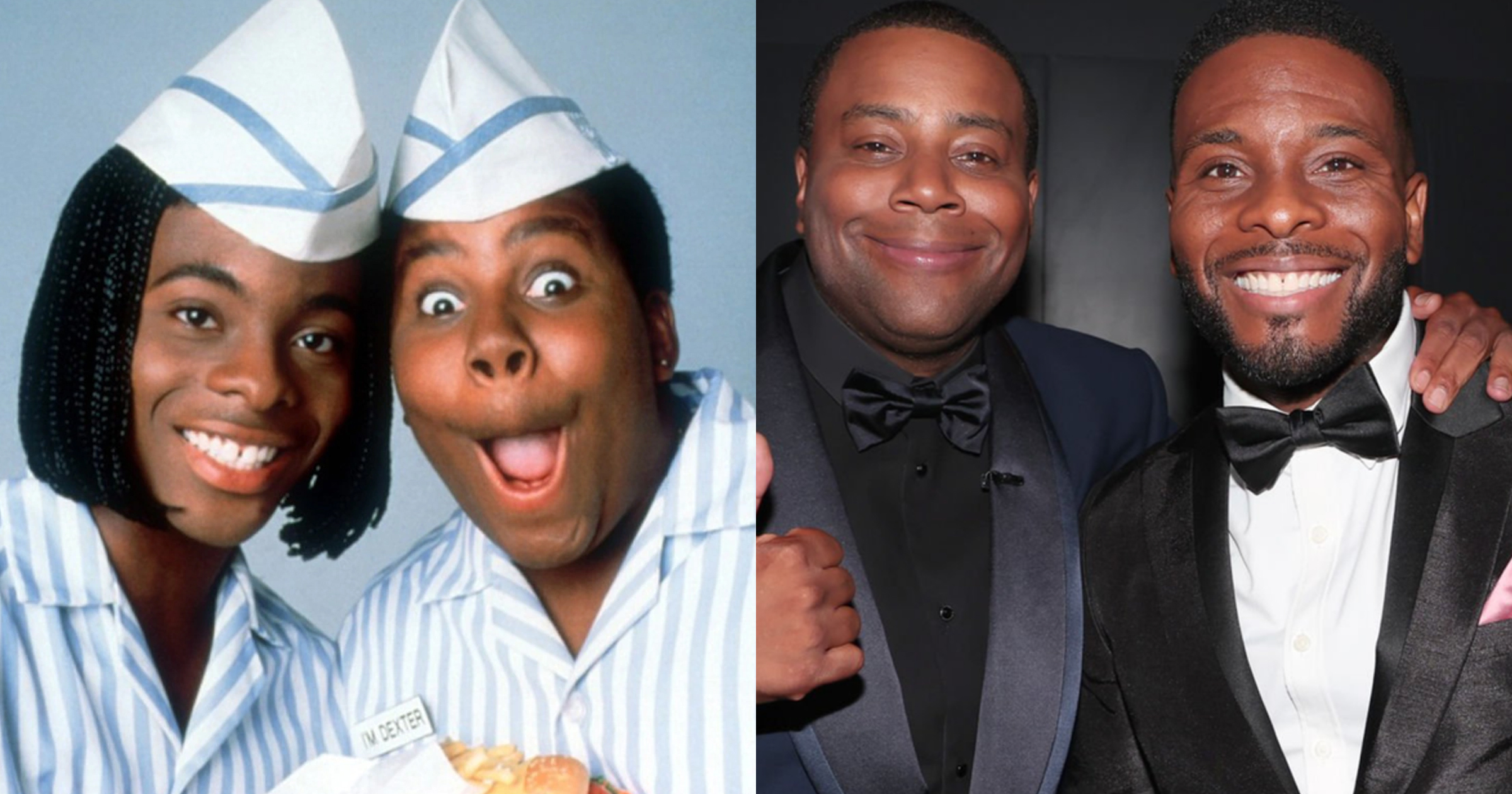
The Good Burger Main Character Explained: Analyzing Ed and Dexter’s Legacy
The main character of the Good Burger franchise is Ed, the eccentric, hyper-literal, and eternally optimistic cashier played by Kel Mitchell. He is typically paired with Dexter Reed, played by Kenan Thompson, who serves as the "straigh...
The main character of the Good Burger franchise is Ed, the eccentric, hyper-literal, and eternally optimistic cashier played by Kel Mitchell. He is typically paired with Dexter Reed, played by Kenan Thompson, who serves as the "straight man" and secondary protagonist, balancing Ed’s absurdist behavior with grounded, often scheme-oriented motivations.
Contents
Across the original Nickelodeon sketches, the 1997 cult classic film, and the 2023 sequel, these two characters have defined a specific era of American comedy. While Ed remains the face of the brand, the narrative engine is fueled by the chemistry between him and Dexter. Understanding these characters requires looking at their origins, their psychological archetypes, and their evolution into the year 2026.
The Anatomy of Ed: The "Holy Fool" of Fast Food
Ed is more than just a quirky fast-food worker; he is a comedic archetype known as the "Holy Fool." In literature and film, this character is someone who lacks traditional intelligence or social awareness but possesses a pure heart and a unique wisdom that allows them to triumph over sophisticated villains.
Personality and Mannerisms
Ed is characterized by his extreme literalism. If a customer asks for a "burger with everything on it," Ed might literally attempt to place every object in the restaurant on the bun. This trait is not portrayed as a disability but rather as a fundamental difference in how he perceives reality. He lives entirely in the present moment, unburdened by the anxieties of the past or the pressures of the future.
His signature greeting, "Welcome to Good Burger, home of the Good Burger, can I take your order?" has become a cultural touchstone. It represents his unwavering commitment to his job. For Ed, Good Burger is not just a place of employment; it is his identity and his sanctuary.
The Role of Physical Comedy
Kel Mitchell’s portrayal of Ed relies heavily on physical comedy. His distinctive "surfer-dude" cadence, coupled with his wide-eyed expressions and loose-limbed movements, makes him a visual standout. In the 1997 film, Ed’s physical capabilities—such as his surprising agility and his ability to "talk" to burgers—add a surrealist layer to the character that distinguishes him from standard sitcom protagonists.
Dexter Reed: The Catalyst for Conflict
While Ed provides the heart and the humor, Dexter Reed provides the plot. Introduced in the 1997 movie, Dexter is a teenager who is forced to take a summer job at Good Burger to pay for car damages he caused while driving without a license.
From Cynic to Friend
Initially, Dexter is a cynical character. He views his job at Good Burger as a prison sentence and initially tries to exploit Ed’s secret sauce to make money. However, the "straight man" dynamic is crucial because it allows the audience to see Ed through a more relatable lens. Dexter’s journey is one of moral growth; he moves from seeing Ed as an annoyance to viewing him as his best friend and a person of profound integrity.
The Entrepreneurial Spirit
In both the original film and the 2023 sequel, Dexter represents the "hustle" culture of the modern world. He is always looking for a way to improve his standing, which often leads to the primary conflict of the stories. By 2026, looking back at his arc in Good Burger 2, we see a Dexter who has faced several business failures, making his eventual return to the simplicity of Good Burger a poignant commentary on the value of friendship over corporate success.
Character Dynamics and the Power of the Duo
The reason the "main character" of Good Burger is often discussed as a singular unit (Ed and Dexter) is that their traits are complementary. One cannot exist effectively in the narrative without the other.
- Logic vs. Absurdism: Dexter brings the logic (even if it’s flawed), and Ed brings the absurdism. This creates a friction that drives the comedy.
- Motivation vs. Contentment: Dexter is driven by external goals (money, status, fixing mistakes), while Ed is driven by internal satisfaction (making a good burger, helping a friend).
- The Shield and the Sword: Ed often accidentally solves problems that Dexter’s planning cannot fix. For example, Ed’s oblivious nature allows him to infiltrate Mondo Burger or Mega Good Burger without the fear that would paralyze a more "rational" person.
Key Character Comparisons
To better understand the differences between the two leads and the primary antagonists they face, the following table breaks down their core attributes as established in the franchise.
| Feature | Ed (The Protagonist) | Dexter Reed (The Co-Lead) | Kurt Bozwell/Cecil McNevin (Antagonists) |
|---|---|---|---|
| Primary Motivation | Serving customers and friendship | Financial stability and success | Corporate dominance and greed |
| Comedic Style | Absurdist, literalist, physical | Sarcastic, reactive, "Straight Man" | High-stakes villainy, arrogance |
| Key Skill | Creating the "Secret Sauce" | Strategic planning and persuasion | Corporate manipulation |
| Weakness | Lack of social awareness | Tendency to cut corners | Overconfidence and underestimating Ed |
| Actor | Kel Mitchell | Kenan Thompson | Jan Schweiterman / Lil Rel Howery |
The Evolution in the Sequel: Good Burger 2
As of 2026, the 2023 sequel Good Burger 2 is recognized for how it updated these characters for a new generation while preserving their core identities. In the sequel, Ed has become the owner of Good Burger, but he hasn't changed a bit. This is a critical character choice: while the world around him evolved with automation and "Mega Good Burger" corporate takeovers, Ed remained a constant.
Dexter, conversely, returns as a "failed" entrepreneur. This inversion of their roles—where the "simple" character is the successful one and the "smart" character is the failure—serves as the primary emotional hook of the later story. It reinforces the theme that Ed’s brand of kindness and consistency is more sustainable than Dexter’s frantic search for the next big thing.
Secondary Characters That Define the Leads
To fully explain the main characters, one must acknowledge the figures they interact with, as these relationships define Ed and Dexter’s boundaries.
- The Villain (Kurt Bozwell/Cecil McNevin): These characters represent the antithesis of Ed. They represent "Big Burger"—the idea that food is just a commodity and employees are replaceable. By fighting these villains, Ed and Dexter become champions of the "mom-and-pop" spirit.
- The Love Interests: While romantic subplots are secondary, they serve to humanize the characters. In the original, Ed’s date with Roxanne is a masterclass in character consistency, showing that he cannot "turn off" his literal-mindedness even for a romantic encounter.
- The Mentor/Manager Figures: Characters like Mr. Baily provide the structure that Ed needs to function. They represent the "parents" of the Good Burger family, allowing Ed to be the "child" who creates the magic.
Why the Characters Resonate in 2026
The longevity of Ed and Dexter is rooted in their sincerity. In a media landscape that often relies on "edgy" or cynical humor, the Good Burger characters remain earnest. Ed doesn't have a hidden agenda, and Dexter’s flaws are deeply human.
Their relationship is a model of platonic male friendship. They forgive each other’s mistakes—Dexter forgives Ed’s destructive clumsiness, and Ed forgives Dexter’s occasional selfishness. This bond is the "secret sauce" of the franchise, arguably more important than the actual sauce mentioned in the plot.
Frequently Asked Questions
Is Ed from Good Burger supposed to have a specific condition?
No, the creators and Kel Mitchell have consistently described Ed as a character of pure innocence and literalism rather than assigning him a specific medical or psychological diagnosis. He is a comedic creation intended to represent a unique, joyful way of looking at the world.
Who is considered the "smarter" character between Ed and Dexter?
Conventionally, Dexter is "smarter" in terms of business, social navigation, and planning. However, Ed is often portrayed as "wiser" or more capable in high-pressure situations because his lack of fear and ego allows him to see solutions that Dexter’s anxiety-prone mind misses.
Why did Dexter Reed not appear in the original All That sketches?
The All That sketches focused primarily on Ed at the counter, with various guest stars playing the customers. Dexter Reed was created specifically for the 1997 feature film to provide a narrative arc and a protagonist that the audience could follow through a 90-minute story.
Does Ed ever get promoted in the series?
In Good Burger 2, it is revealed that Ed has become the owner of the restaurant. Despite this promotion, his character remains largely unchanged; he still works the counter and wears the same uniform, demonstrating that for Ed, "status" is irrelevant compared to the joy of service.
What happened to the actors Kenan and Kel?
By 2026, Kenan Thompson is recognized as the longest-running cast member in Saturday Night Live history, while Kel Mitchell has continued a successful career in acting, directing, and youth ministry. Their real-life friendship is often cited as the reason for their enduring on-screen chemistry.
Practical Recommendation for Fans
If you are looking to revisit these characters, start with the original All That sketches to see the "purest" form of Ed. Move to the 1997 film for the definitive introduction of the Ed and Dexter partnership. Finally, watch Good Burger 2 to see how the characters have aged into their roles. For the best experience, pay close attention to the background gags in the restaurant; many of Ed’s funniest character moments happen in the periphery while other characters are talking.
Image Gallery