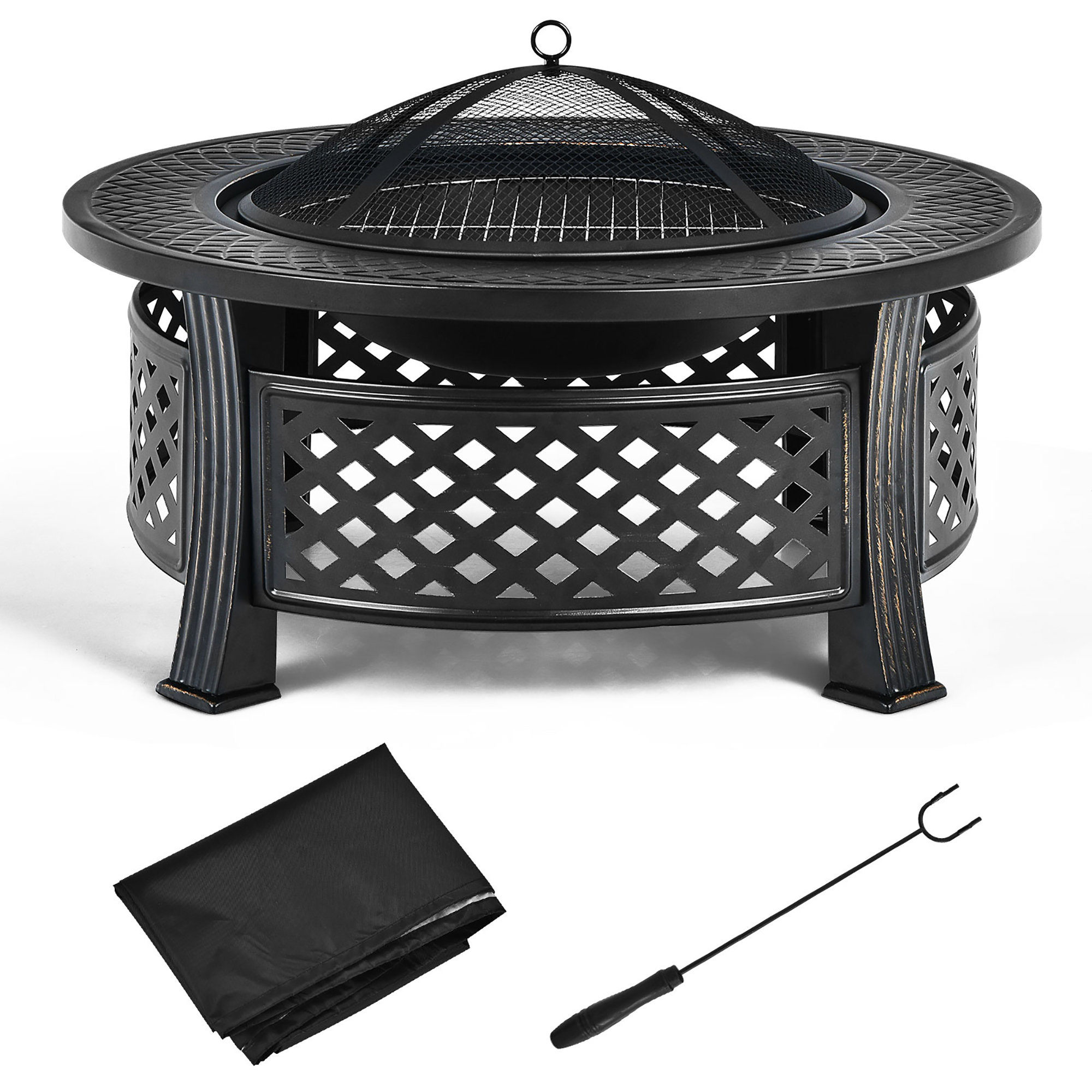
Why a Wayfair Fire Pit Cover Is Often Unnecessary: Rethinking Outdoor Protection in 2026
While purchasing a protective cover is often presented as an essential "add-on" during a Wayfair checkout, it is frequently unnecessary due to the inherent durability of modern fire pit materials like 304 stainless steel and GFRC. In m...
While purchasing a protective cover is often presented as an essential "add-on" during a Wayfair checkout, it is frequently unnecessary due to the inherent durability of modern fire pit materials like 304 stainless steel and GFRC. In many climates, soft vinyl covers actually trap moisture and accelerate corrosion through condensation, making a simple snuffer lid or proper drainage far more effective for long-term maintenance.
Contents
The Upsell Engine: Why Wayfair Recommends Covers
When navigating the Wayfair interface in 2026, the "Frequently Bought Together" algorithm is designed to maximize the average order value by suggesting accessories that seem logical. A fire pit cover is the quintessential "safety" purchase. Psychologically, consumers feel they are protecting an investment of several hundred dollars with a nominal $30 to $60 accessory. However, these recommendations are rarely tailored to the specific metallurgy or construction of the fire pit being purchased.
Most fire pits sold under Wayfair’s house brands—such as Sol 72 Outdoor, Mercury Row, or Freeport Park—are manufactured using materials specifically chosen for their outdoor resilience. The automated suggestion of a polyester or vinyl cover ignores the specific engineering of the unit. For instance, if you are purchasing a Corten steel burner or a high-grade stone-composite pit, the addition of a soft cover may not only be redundant but could actively interfere with the material’s intended aging process.
Material Science and the Myth of Universal Protection
The primary argument for a fire pit cover is the prevention of rust and debris accumulation. While valid for low-end, powder-coated sheet metal units, the landscape of outdoor heating has shifted significantly by 2026. Understanding the material of your specific Wayfair purchase is the first step in realizing why a cover might be an unnecessary expense.
Stainless Steel (Grade 304 vs. 430)
Many premium fire pits on Wayfair now utilize 304-grade stainless steel for the burner and the pan. This alloy contains high levels of chromium and nickel, providing exceptional resistance to oxidation. Unlike 430-grade steel, which is magnetic and more prone to surface pitting, 304 stainless steel is designed to withstand rain and snow without structural degradation. For these units, a cover offers little more than protection from dust, which can be easily rinsed away with a hose.
Corten Steel and the Patina Process
Corten steel (or weathering steel) is a popular aesthetic choice for modern landscape designs. The unique property of Corten is that it is meant to rust. This initial layer of oxidation forms a protective barrier that prevents deeper corrosion. By using a cover, you may trap uneven levels of moisture, leading to a "splotchy" patina rather than the uniform, architectural rust finish that makes these pieces desirable. In this case, a cover is actually detrimental to the product’s intended lifecycle.
GFRC and Cast Stone
Glass Fiber Reinforced Concrete (GFRC) is common in the heavy, stone-look fire pits found on Wayfair. These materials are essentially stone; they do not rot, and they do not rust. While they can be porous, most are factory-sealed with high-performance silane/siloxane water repellents. A soft cover on a GFRC unit is often purely cosmetic and can lead to the growth of calcium efflorescence (white powdery spots) if moisture is trapped against the surface for extended periods.
The "Greenhouse Effect" and Accelerated Corrosion
The most compelling technical reason why a Wayfair fire pit cover is often unnecessary involves the unintended consequence of trapping moisture. Outdoor covers are rarely 100% breathable. Even those with integrated vents can suffer from a phenomenon known as the "greenhouse effect."
When the ground is damp, moisture evaporates and rises. If a fire pit is tightly covered with a vinyl or heavy-duty polyester shroud, that moisture becomes trapped underneath. During the day, the sun heats the cover, creating a warm, humid environment inside. This condensation settles on the metal components of the fire pit. Because there is no airflow to dry this moisture, it stays in contact with the metal far longer than it would have if the unit were left uncovered and allowed to dry naturally in the wind and sun.
This trapped humidity is the leading cause of "flash rust" on burner components and ignition systems. Many owners find that their fire pits look worse after a winter under a cover than those left exposed to the elements.
Drainage vs. Covering: The Superior Solution
For most fire pits, water management is a more critical factor than water exclusion. Quality fire pits are designed with "weep holes" or drainage systems in the bottom of the pan to allow rainwater to exit. If these holes remain clear, rain is a non-issue.
The real danger to a fire pit isn't the rain itself, but standing water. If you use a cover that isn't perfectly tensioned, it can sag and collect "pools" of water. The weight of these pools can eventually cause the cover to leak or tear, dumping a concentrated amount of water into the burner area where it cannot easily evaporate. Instead of a soft cover, many experts in 2026 recommend ensuring the fire pit is installed on a level surface with adequate drainage, or using a "hard cover" (a metal lid or snuffer) that allows for airflow while preventing the bulk of the rain from entering the pan.
Comparison of Protection Methods for Wayfair Fire Pits
| Protection Method | Primary Benefit | Main Drawback | Best For |
|---|---|---|---|
| Soft Vinyl Cover | Total debris exclusion | Traps moisture; prone to tearing | Low-cost powder-coated steel |
| Stainless Steel Snuffer | Instant flame extinguishing | Does not protect the base | 304 Stainless Steel units |
| Hard Stone/Concrete Lid | Matches aesthetics; highly durable | Very heavy; expensive | GFRC or Cast Stone pits |
| No Cover (Natural) | Maximum airflow; prevents mold | Debris (leaves/ash) accumulation | Corten Steel or Premium Alloys |
| Fabric Weather Guard | Some breathability | Still traps humidity in high-dew areas | Occasional use in dry climates |
When Is a Cover Actually Necessary?
Despite the many reasons to skip the cover, there are specific scenarios where a Wayfair fire pit cover remains a functional necessity.
- High-Debris Environments: If your fire pit is located directly under a deciduous tree (like an Oak or Maple), the accumulation of leaves and twigs can clog the burner ports. In this case, a cover is more about keeping the pit clean than protecting it from the weather.
- Coastal Salt Air: If you live within five miles of the ocean, the salt content in the air is highly corrosive. Even 304 stainless steel will eventually show signs of "tea staining" or surface rust. In maritime environments, a heavy-duty, high-quality cover (often higher quality than the base models sold on Wayfair) is essential to provide a physical barrier against salt spray.
- Electronic Ignition Systems: If your Wayfair fire pit features a sophisticated electronic ignition (powered by a battery or a 110V line), the sensitive control box and spark igniter are more vulnerable to moisture than the burner itself. Protecting these specific electronic components is the one instance where a cover's risk of trapped moisture is outweighed by the need to prevent direct rain ingress.
Better Alternatives to the Standard Wayfair Cover
If you decide that the standard "Frequently Bought Together" cover isn't right for your setup, consider these more effective maintenance strategies:
- Metal Snuffer Lids: These are flat or slightly domed metal discs that sit over the burner area. They provide the most significant benefit—keeping out the majority of rain and snow—while allowing the sides and bottom of the unit to breathe.
- The 2-Inch Gap Method: If you must use a soft cover, do not pull it all the way to the ground. Leave a 2-to-3-inch gap at the bottom to allow for air circulation. This drastically reduces the condensation buildup.
- Periodic Cleaning: Instead of covering, simply commit to a five-minute cleaning routine once a month. Removing ash (which becomes acidic when wet) and clearing debris from the drainage holes will do more for the longevity of a 2026-era fire pit than any $40 vinyl sheet.
Frequently Asked Questions
Does a cover prevent the fire pit from fading in the sun?
While a cover will prevent UV rays from hitting the fire pit surface, most modern outdoor finishes used on Wayfair products (like powder coating or acid-washed concrete) are already UV-stabilized. Any fading that occurs over a 5-to-10-year period is usually minimal and does not affect the structural integrity of the unit.
Can I leave my fire pit uncovered in the winter?
Yes, provided it is a gas-burning unit and you have disconnected the propane tank or shut off the gas line. For wood-burning pits, the primary concern in winter is the freeze-thaw cycle of wet ash, which can expand and crack firebricks. Simply cleaning out the ash before the first snow is often more effective than using a cover.
Will not using a cover void my Wayfair warranty?
Generally, no. Most manufacturer warranties cover defects in materials and workmanship. Unless the manual explicitly states that a cover must be used at all times to maintain the warranty, "normal outdoor use" includes exposure to the elements. Always check the specific warranty PDF on the Wayfair product page to be certain.
What is the best way to prevent rust without a cover?
The most effective way to prevent rust is to keep the fire pit clean and dry. After it rains, check that the drainage holes are clear. For stainless steel components, an occasional wipe-down with a dedicated stainless steel cleaner/protectant will provide a microscopic barrier that is far more effective than a humid vinyl cover.
Should I cover a wood-burning fire pit?
Wood-burning pits are more susceptible to rust because the high heat of the fire can bake off protective paint. However, instead of a soft cover, a heavy metal lid is much more practical. It allows you to "walk away" from a dying fire safely while preventing rain from turning the leftover ash into a corrosive paste.
Practical Recommendation
Before clicking "Add to Cart" on that recommended fire pit cover, check the product specifications on Wayfair. If the fire pit is made of 304 Stainless Steel, GFRC, or Corten Steel, skip the soft cover. Instead, invest that money into a high-quality metal snuffer lid or a bottle of stainless steel protectant. Only opt for the cover if you live in a coastal area or have a heavy canopy of trees directly above your patio. In 2026, the best protection for your outdoor investment is often simply allowing it to breathe.
Image Gallery