The President on the 100 Dollar Bill: Understanding Benjamin Franklin’s Legacy and Security Features
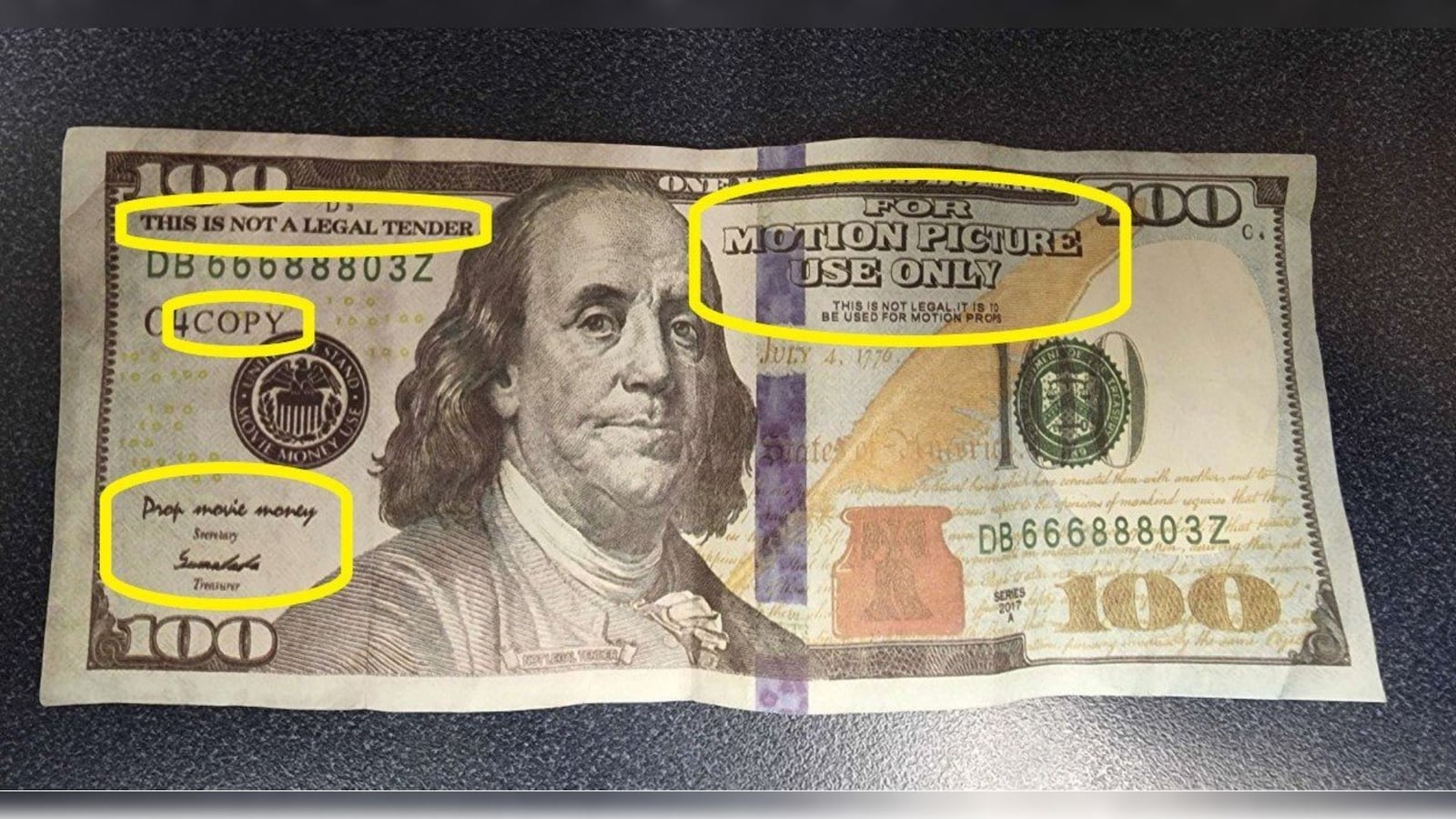
Benjamin Franklin is the historical figure featured on the front of the United States 100 dollar bill. Although frequently mistaken for a U.S. President, Franklin was a Founding Father, scientist, and diplomat who never held the presid...
Benjamin Franklin is the historical figure featured on the front of the United States 100 dollar bill. Although frequently mistaken for a U.S. President, Franklin was a Founding Father, scientist, and diplomat who never held the presidency. He was chosen for his foundational role in American history and his contributions to the nation's independence.
Contents
While the faces of George Washington, Abraham Lincoln, and Andrew Jackson grace other denominations, the $100 bill remains unique because it features a non-president. Alongside Alexander Hamilton on the $10 bill, Franklin represents the exceptional group of individuals whose influence on the American republic was so profound that they earned a place on the nation’s currency despite never serving as Commander-in-Chief. As of 2026, the $100 bill remains the highest denomination in general circulation, serving as a global standard for value and a primary target for advanced anti-counterfeiting technology.
Why Benjamin Franklin is the Face of the $100 Bill
The decision to place Benjamin Franklin on the $100 bill was made in 1914, when the Federal Reserve began issuing new currency. The selection process for currency portraits is handled by the Secretary of the Treasury, often with advice from the Bureau of Engraving and Printing (BEP) officials. Franklin was an obvious choice for several reasons that transcend the title of "President."
First, Franklin was a polymath whose contributions to the American identity were unparalleled. He was a primary drafter and signer of the Declaration of Independence and the U.S. Constitution. His diplomatic efforts in France were essential in securing the military and financial support necessary for the colonies to win the Revolutionary War.
Second, Franklin’s association with thrift, industry, and financial wisdom—famously captured in his publication, "Poor Richard's Almanack"—made him a symbolic fit for the nation’s most valuable circulating banknote. His face serves as a reminder of the scientific and civic ingenuity that built the United States.
The Evolution of the $100 Bill Design Through 2026
The $100 bill has undergone several major architectural shifts since its inception. In 2026, the most common version in circulation is the Series 2013 NexGen note, which introduced the most sophisticated security features in the history of paper money.
- The Small Portrait Era (Pre-1996): For decades, the $100 bill featured a relatively small portrait of Franklin centered in an oval frame. Security was primarily dependent on the quality of the intaglio printing and the specific cotton-linen paper blend.
- The Large Portrait Series (1996–2013): In 1996, the portrait was enlarged and shifted to the left to make room for a watermark. This series also introduced color-shifting ink, which was a revolutionary step in deterring color photocopiers.
- The NexGen Redesign (2013–Present): The current design, which remains the standard in 2026, removed the oval border around Franklin. It added high-tech features like the 3D Security Ribbon and the Bell in the Inkwell, specifically designed to be easy for consumers to verify but difficult for counterfeiters to replicate.
Advanced Security Features of the 2026 Hundred Dollar Note
To maintain the integrity of the U.S. dollar, the Treasury Department employs layers of security that are physical, chemical, and digital. When handling a $100 bill in 2026, there are three primary methods of verification: Feel, Tilt, and Look.
The 3D Security Ribbon
Woven into the paper—not printed on it—is a blue ribbon located to the right of Franklin’s portrait. This ribbon contains images of bells and the number 100. When you tilt the bill, the bells change to 100s as they move. Crucially, if you tilt the bill back and forth, the images move up and down. If you tilt it side to side, the images move back and forth. This is an optical feat that remains nearly impossible for counterfeiters to simulate with standard printing equipment.
The Bell in the Inkwell
Located to the right of the blue ribbon is a copper-colored inkwell. Inside the inkwell is a green bell. Because of the color-shifting ink technology, the bell appears to disappear and reappear as you tilt the note. This "color-shift" effect changes the bell from copper to green, an effect caused by microscopic flakes within the ink that reflect light differently at various angles.
Intaglio Printing and Paper Texture
Genuine U.S. currency uses a unique blend of 75% cotton and 25% linen. In 2026, this physical texture is still the first line of defense. Because the bill is printed using the intaglio process—where ink is pulled from recessed plates under enormous pressure—the ink feels raised to the touch. You should feel a distinct roughness on Franklin's shoulder and the "The United States of America" text.
Embedded Features for Visual Inspection
The Portrait Watermark
Hold the note to a light source and look for a faint image of Benjamin Franklin in the blank space to the right of the portrait. The watermark is visible from both sides of the note because it is actually a variation in the thickness of the paper fibers created during the manufacturing process.
The Security Thread
A vertical thread is embedded in the paper to the left of the portrait. It is imprinted with the letters "USA" and the number 100 in an alternating pattern. Under ultraviolet (UV) light, this thread glows a distinct pink or bright red.
Technical Specifications and Material Composition
The production of the $100 bill is an industrial marvel. In 2026, the Bureau of Engraving and Printing operates facilities in Washington, D.C., and Fort Worth, Texas, to meet global demand.
| Specification | Detail |
|---|---|
| Dimensions | 6.14 inches by 2.61 inches |
| Thickness | 0.0043 inches |
| Weight | Approximately 1 gram |
| Paper Composition | 75% Cotton, 25% Linen |
| Security Fibers | Red and blue synthetic fibers embedded throughout |
| Primary Printing Method | Intaglio (raised ink) and Offset |
| Current Series in 2026 | Series 2013, 2013A, 2017, 2017A, and 2021 |
| Expected Lifespan | 22.9 years (Highest of all circulating denominations) |
Comparison of the $100 Bill with Other Large Denominations
While the $100 bill is the highest denomination currently printed, the U.S. has a history of larger notes. It is helpful to compare the modern $100 note with other high-value currency to understand its unique position.
| Denomination | Portrait | Status in 2026 | Key Identifier |
|---|---|---|---|
| $20 Bill | Andrew Jackson | Active Circulation | Green/Peach hues, Harriet Tubman redesign pending |
| $50 Bill | Ulysses S. Grant | Active Circulation | Blue and red background colors |
| $100 Bill | Benjamin Franklin | Active Circulation | 3D Blue Security Ribbon |
| $500 Bill | William McKinley | Discontinued (1969) | Rare collector's item; still legal tender |
| $1,000 Bill | Grover Cleveland | Discontinued (1969) | High-value banking note; no longer printed |
| $10,000 Bill | Salmon P. Chase | Discontinued (1969) | Highest denomination ever in public circulation |
How to Verify a $100 Bill: A Step-by-Step Guide
In a 2026 retail or financial environment, verifying large bills is a standard procedure. Follow these steps to ensure the bill in your hand is genuine:
- Feel the Paper: Run your fingernail across Franklin’s shoulder. It should feel rough and raised. If the paper feels smooth or "waxy," it is likely a counterfeit.
- Check the 3D Ribbon: Tilt the bill. Ensure the bells and 100s move in the opposite direction of your tilt.
- Observe the Color-Shifting Ink: Look at the large "100" in the bottom right corner and the Bell in the Inkwell. They should shift from copper to green.
- Hold it to the Light: Verify that the Franklin watermark and the vertical security thread are present and aligned correctly.
- Inspect Microprinting: Use a magnifying glass to look for "THE UNITED STATES OF AMERICA" on Franklin’s jacket collar and "USA 100" around the blank watermark space.
The Cultural and Economic Significance of "The Benjamin"
In 2026, the $100 bill remains the most exported piece of American "technology." More than half of all $100 bills circulate outside of the United States. It serves as a "store of value" in countries with unstable local currencies. In pop culture, the term "Benjamin" has become synonymous with money itself, appearing in music, film, and literature as a symbol of success and liquidity.
Despite the rise of digital currencies and contactless payments, the demand for physical $100 bills has actually increased over the last decade. This is attributed to its role as a safe-haven asset during global economic fluctuations. The Bureau of Engraving and Printing continues to produce billions of dollars in $100 notes annually to replace worn currency and meet the rising international demand.
Frequently Asked Questions
Is Benjamin Franklin the only person on the $100 bill?
Yes, Benjamin Franklin is the only individual featured on the front of the current $100 bill. The back of the bill features a detailed vignette of Independence Hall in Philadelphia, which was the site where the Declaration of Independence and the Constitution were signed.
Why is the 100 dollar bill blue now?
The blue color was introduced with the 2013 NexGen redesign. While the paper still contains the classic green and black inks, the addition of the blue 3D Security Ribbon and subtle background colors (including light blue) was implemented to make the bill more difficult to counterfeit using standard digital printers and scanners.
How can I tell if a $100 bill is real without a UV light?
The most reliable way to check without a UV light is to use the "Tilt" method. Look at the 3D Security Ribbon and the color-shifting "100" in the bottom right corner. If these move and change color respectively, the bill is highly likely to be genuine. Additionally, the watermark and the raised texture of the intaglio printing are excellent indicators.
Are older $100 bills with small portraits still legal tender in 2026?
Yes, all designs of Federal Reserve notes remain legal tender, regardless of when they were issued. While the "small head" bills from before 1996 are rare in everyday circulation in 2026, they are still worth $100 and must be accepted by banks. However, many retailers may use extra caution when verifying them due to their lack of modern security features.
Is there a $100 bill with a different president on it?
No. While there were various types of currency in the 19th century (such as Gold Certificates and Silver Certificates), the Federal Reserve Note, which is the standard today, has only ever featured Benjamin Franklin on the $100 denomination.
What time is shown on the clock of Independence Hall on the back?
On the NexGen $100 bill (Series 2013 and later), the clock on the rear of Independence Hall shows approximately 4:10. There is no official "secret" meaning behind this time; it was simply the time chosen by the engraver for the updated design to provide a clear, aesthetically pleasing visual.
If you suspect you have received a counterfeit $100 bill, do not return it to the passer. Instead, take note of the person's description and contact local law enforcement or the U.S. Secret Service immediately. Handling counterfeit currency is a serious matter, and protecting the integrity of the "Benjamin" ensures the continued stability of the global economy in 2026.
Image Gallery