Understanding Union Scale Pay: How Wage Rates, CBAs, and Benefits Work
Union scale pay is the minimum contractually guaranteed wage rate established through a Collective Bargaining Agreement (CBA) between a labor union and employers. It sets standard wage floors, mandatory fringe benefits, and structured...
Union scale pay is the minimum contractually guaranteed wage rate established through a Collective Bargaining Agreement (CBA) between a labor union and employers. It sets standard wage floors, mandatory fringe benefits, and structured pay raises based on job classification, experience level, and geographic jurisdiction, ensuring uniform baseline compensation across represented workplaces.
Contents
Union scale pay functions as a legally binding floor rather than a maximum ceiling. Employers subject to a collective agreement cannot pay covered employees below the scale rate for their designated classification, though individual workers may negotiate above-scale compensation based on specialized expertise, market demand, or merit.
What Is Union Scale Pay? Core Definitions and Mechanisms
Union scale pay—often referred to simply as "scale"—is the foundational wage structure negotiated by a recognized labor organization on behalf of bargaining unit members. Governed nationally under frameworks like the National Labor Relations Act (NLRA) enforced by the National Labor Relations Board, these wage rates remove individual salary haggling in favor of collective bargaining power.
Unlike standard corporate compensation models that rely on discretionary merit reviews or individual negotiation, union scale establishes clear, predictable compensation tiers. Every job role within a bargaining unit is assigned a specific classification, experience grade, and hourly or salaried rate.
The Breakdown of Total Package vs. Take-Home Scale
A critical distinction in union compensation is the difference between the cash scale rate (take-home base pay) and the total compensation package:
- Base Cash Scale Rate: The actual hourly rate listed on an employee’s paycheck before standard tax withholdings. Overtime multipliers (such as 1.5x or 2.0x) apply directly to this cash base.
- Fringe Benefit Package: Additional hourly contributions made by the employer into union trust funds. These typically cover multi-employer health insurance plans, defined-benefit pensions, 401(k) or annuity contributions, apprenticeship training funds, and legal defense programs.
- Total Package Rate: The sum of the cash scale rate plus mandatory fringe benefit contributions. In industries such as heavy construction or commercial electrical work, the total package can exceed the base cash wage by 40% to 70%.
How Collective Bargaining Agreements (CBAs) Structure Pay Scales
Collective Bargaining Agreements define the precise rules governing pay progression, shift premiums, and job roles. Instead of flat wage rates, CBAs establish structured matrices that reflect technical competency, tenure, and working conditions.
- Level 1: Apprentice (50% - 85% of Journeyman Scale + Benefits)
- Level 2: Journeyman (100% Full Base Scale Rate)
- Level 3: Foreman / Supervisor (110% - 125% Scale Multiplier)
- Level 4: General Foreman / Master Tier (125%+ Scale Multiplier)
Classification Hierarchies and Tiered Scales
Most union pay scales divide roles into distinct skill categories:
- Apprenticeship Tiers: Entry-level workers enter multi-year apprenticeship programs administered jointly by unions and employer associations. Pay starts at a fixed percentage of the full "Journeyman" rate (often 50% to 60%) and increases incrementally (e.g., 5% every 1,000 hours of on-the-job training) until full qualification is reached.
- Journeyman Scale: The standard benchmark wage for fully qualified, certified trade or professional workers. This represents 100% of the baseline scale rate.
- Foreman and General Foreman Rates: Leadership roles within the bargaining unit receive contractually defined premiums, typically set between 10% and 25% above the Journeyman base rate.
Special Premiums and Differential Pay
CBAs include specific clauses to compensate workers for undesirable hours, hazardous conditions, or specialized equipment operation:
- Shift Differentials: Additional hourly pay (e.g., +15% for second shift, +20% for night/graveyard shift).
- Hazard and High-Time Pay: Supplemental pay when performing dangerous work, such as working at extreme heights, in confined spaces, or with toxic materials.
- Overtime and Double-Time Rules: While federal law under the Fair Labor Standards Act requires overtime after 40 hours per week, union CBAs often mandate double-time (2.0x) for working past 10 hours in a day, on Saturdays, or on official contractual holidays.
Union Scale vs. Prevailing Wage vs. Non-Union Compensation
Understanding how union scale compares to broader labor market structures requires examining non-union private compensation and statutory prevailing wage mandates. The U.S. Bureau of Labor Statistics frequently highlights the overall compensation advantage maintained by union-represented workers across diverse occupational sectors.
| Feature / Metric | Union Scale Pay | Prevailing Wage (Davis-Bacon) | Non-Union Market Pay |
|---|---|---|---|
| Determination Method | Bilateral negotiation (Union & Employer CBA) | Government survey of local prevailing labor rates | Discretionary employer offer / Individual negotiation |
| Enforcement Mechanism | Binding contract, grievance process, arbitration | Federal / State Labor Department compliance audits | Internal HR policies, standard labor statutes |
| Wage Consistency | Identical baseline for all workers in a classification | Mandated floor for public works project contracts | Variable based on individual negotiation and discretion |
| Fringe Benefits | Mandatory employer contribution to union trust funds | Mandatory cash-equivalent or direct benefit contribution | Discretionary company perks, 401(k) matching, health plans |
| Wage Adjustments | Scheduled contract raises and cost-of-living adjustments | Periodically updated by government wage determinations | Performance reviews, market adjustments, merit raises |
| Cost-of-Living Protection | Frequent COLA clauses tied to Consumer Price Index (CPI) | Indirectly reflected in updated regional wage decisions | Rare; subject to corporate budget constraints |
Prevailing Wage Laws and Public Works
Under federal statutes like the Davis-Bacon Act and state-level "Little Davis-Bacon" laws, contractors performing work on publicly funded construction projects must pay prevailing wages. In areas with high union density, state and federal labor departments routinely determine that the local union scale rate is the local prevailing wage. This forces non-union contractors on public projects to match union total compensation packages for the duration of the contract.
Industry-Specific Implementations of Union Scale
Union scale pay operates across numerous sectors, each adapting the framework to suit specific operational realities.
- Building Trades (IBEW, UA, Carpenters): Hourly scale + Trust Fund Benefits
- Entertainment (SAG-AFTRA, IATSE): Daily/Weekly minimums + Residuals
- Logistics & Auto (Teamsters, UAW): Hourly progression steps + Pension
- Healthcare (SEIU, NNU): Experience step-and-grade wage grids
Construction and Building Trades
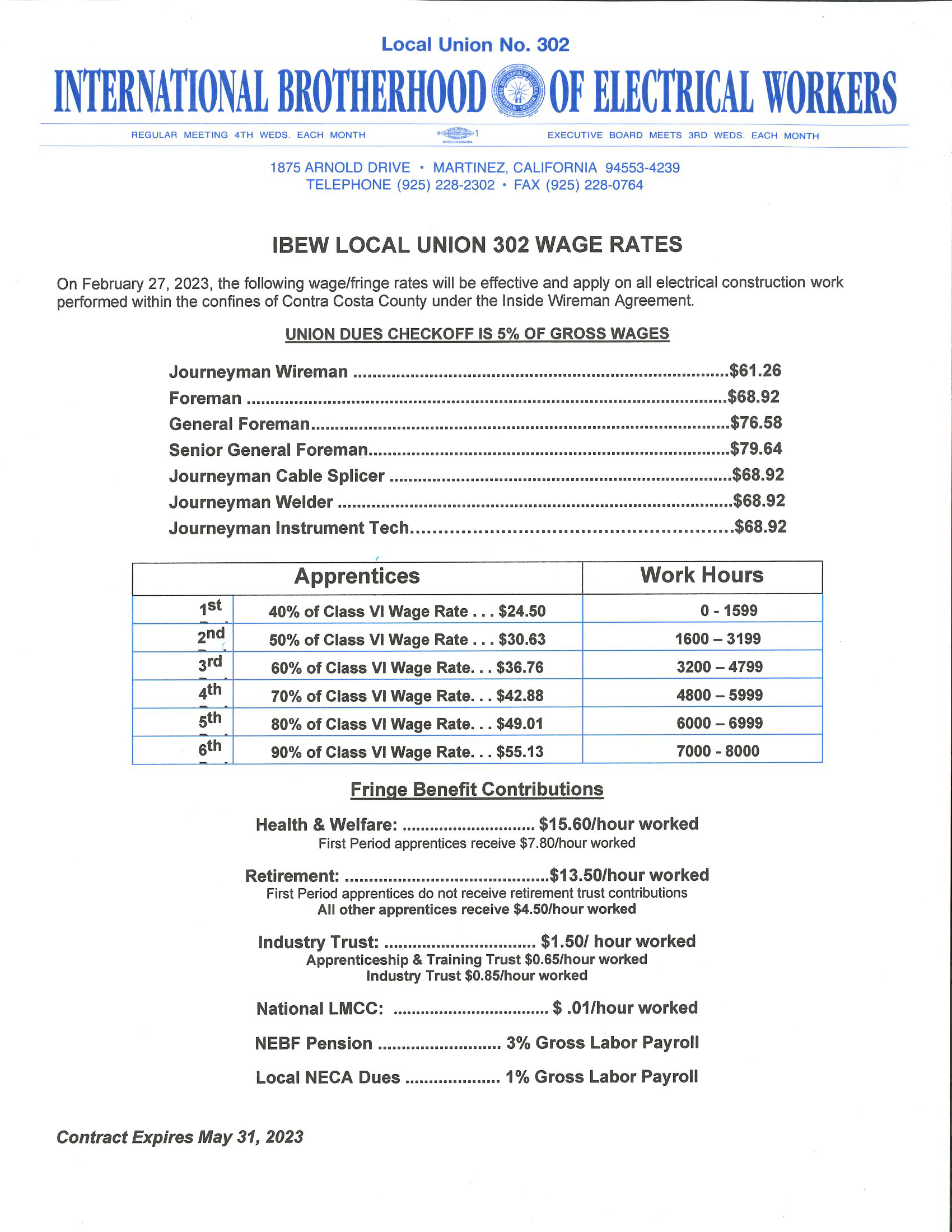
In construction unions—such as the International Brotherhood of Electrical Workers (IBEW) or the United Association of Plumbers and Pipefitters (UA)—wage scales are defined locally. Local unions publish annual "Wage and Benefit Schedules" detailing exact cash rates, pension allocations, and welfare fund contributions down to the penny.
Film, Television, and Performing Arts
In media unions like SAG-AFTRA or IATSE, scale pay is structured around day rates, weekly minimums, budget tiers, and residual payments. A background actor or camera operator receives a standard minimum rate based on production scale (e.g., high-budget theatrical feature vs. low-budget streaming series), with additional payments generated when content is rerun or syndicated.
Transportation, Logistics, and Manufacturing
Unions like the International Brotherhood of Teamsters and the United Auto Workers (UAW) utilize wage progression steps. New hires might start at 70% of top scale, reaching full top-rate scale over a defined timeframe (such as 3 to 4 years of continuous service).
Healthcare and Nursing
Healthcare unions, including National Nurses United (NNU) and the Service Employees International Union (SEIU), frequently use "step-and-grade" salary grids. Grades reflect technical roles (e.g., CNA, LPN, RN, Nurse Practitioner), while steps reward years of clinical experience, ensuring objective salary progression without managerial bias.
How Union Scale Increases and COLA Protections Work
Union contracts are negotiated for fixed durations, usually ranging from three to five years. During these agreement periods, wage increases follow predictable tracks.
- Union Membership votes to approve multi-year CBA contract
- Total annual allocation negotiated (e.g., +$3.50/hour per year)
- Membership allocates funds: Cash wage vs. Health & Pension funds
- Updated Wage Sheet published and distributed to employers
Contractual Annual Allocations
Rather than relying on individual performance reviews, union members receive pre-negotiated annual pay raises. In many trade unions, the bargaining unit votes on how to divide annual economic increases between direct cash wages and benefit fund preservation. For example, if a union negotiates a $3.00 per hour total package increase for the year, members may vote to allocate $2.00 to the hourly cash paycheck and $1.00 to the health and welfare fund to offset rising medical costs.
Cost-of-Living Adjustments (COLA)
To protect purchasing power during inflationary periods, many CBAs incorporate Cost-of-Living Adjustment (COLA) clauses. These mechanisms tie wage updates directly to changes in the Consumer Price Index (CPI) published by the federal government.
A standard COLA clause stipulates that if CPI inflation exceeds a specified baseline percentage over a 12-month period, union scale pay rates automatically increase by a corresponding percentage or cent-per-hour calculation to prevent real wage degradation.
Wage Enforcement and Grievance Procedures
If an employer fails to pay scale wages, misclassifies a worker into a lower pay tier, or underpays overtime, the contract provides a legally binding remedy:
- Shop Steward Informal Resolution: The union workplace representative reviews pay stubs against the CBA wage sheet.
- Formal Grievance Filing: The union files a formal written grievance demanding back pay and interest for affected workers.
- Binding Arbitration: If the employer refuses to rectify the underpayment, an impartial third-party arbitrator hears the case. Arbitrator rulings are legally enforceable in court under federal labor laws overseen by the U.S. Department of Labor.
Strategic Considerations for Workers and Employers
While union scale pay guarantees equitable baseline compensation, both employees and management navigate specific operational trade-offs under scale structures.
Advantages and Nuances for Workers
- Transparency: Eliminates wage opacity and gender or racial pay disparities by enforcing equal pay for equal job classifications.
- Guaranteed Compensation: Prevents wage stagnation during economic downturns; rates cannot be unilaterally slashed during a active contract term.
- Negotiating Above Scale: High-performing or exceptionally skilled workers retain the right to negotiate "over-scale" rates. A contract scale rate is a floor, not a ceiling.
- Compression Considerations: Highly productive workers receive the same baseline pay as average workers within the same tier unless over-scale pay is secured.
Employer Operational Dynamics
- Predictable Labor Expenses: Employers gain clear financial predictability for bidding multi-year contracts, knowing precise labor costs years in advance.
- Access to Skilled Labor Pools: Offering union scale pay and union-administered benefit funds helps unionized firms attract highly trained, certified journey-level talent.
- Reduced Administrative Friction: Standardized wage grids eliminate the administrative burden of individual salary negotiations and performance-based raise disputes.
- Rigid Base Costs: Employers cannot arbitrarily reduce wage rates to undercut competitor pricing, requiring them to compete on operational efficiency and management quality rather than wage suppression.
Frequently Asked Questions
Can an employee be paid more than union scale?
Yes. Union scale represents the legally binding minimum wage floor for a given job classification. Employers are free to pay individual workers "over-scale" rates to reward specialized skills, high productivity, or to attract talent in tight labor markets, provided the CBA does not explicitly prohibit individual merit pay.
What is the difference between scale pay and total package rate?
Scale pay (or base cash scale) refers to the direct hourly wage appearing on an employee's regular paycheck. The total package rate includes base scale pay plus the hourly financial contributions the employer must pay into health insurance, pension funds, annuity accounts, and apprenticeship training trust funds on the worker's behalf.
How do union scale wages work for apprentices?
Apprentices earn a contractually mandated percentage of the full Journeyman scale rate. As they complete mandatory hours of classroom instruction and on-the-job training, their pay rate increases in pre-defined steps (e.g., starting at 50% of scale and increasing by 5% to 10% every six months or 1,000 work hours) until reaching full Journeyman status.
Does union scale pay increase automatically every year?
In most cases, yes. Collective Bargaining Agreements typically include pre-negotiated annual economic increases over the life of the contract (usually 3 to 5 years). Additionally, many contracts feature Cost-of-Living Adjustment (COLA) clauses that adjust scale rates based on inflation metrics.
Does a non-union contractor have to pay union scale on prevailing wage projects?
A non-union contractor working on a public project governed by federal or state prevailing wage laws must match the local prevailing wage determination. If the government department of labor determines that union scale represents the prevailing rate in that locality, non-union workers must receive equivalent total compensation (cash wages plus benefits or cash-in-lieu of benefits).
Image Gallery