Sherwin Williams Natural Tan Paint: Color Review, Undertones, and Coordination Guide
Sherwin Williams Natural Tan (SW 7567) is a warm, balanced neutral paint color with an Light Reflectance Value (LRV) of 65. It sits comfortably between beige and cream, featuring subtle green and warm gray undertones that prevent it fr...
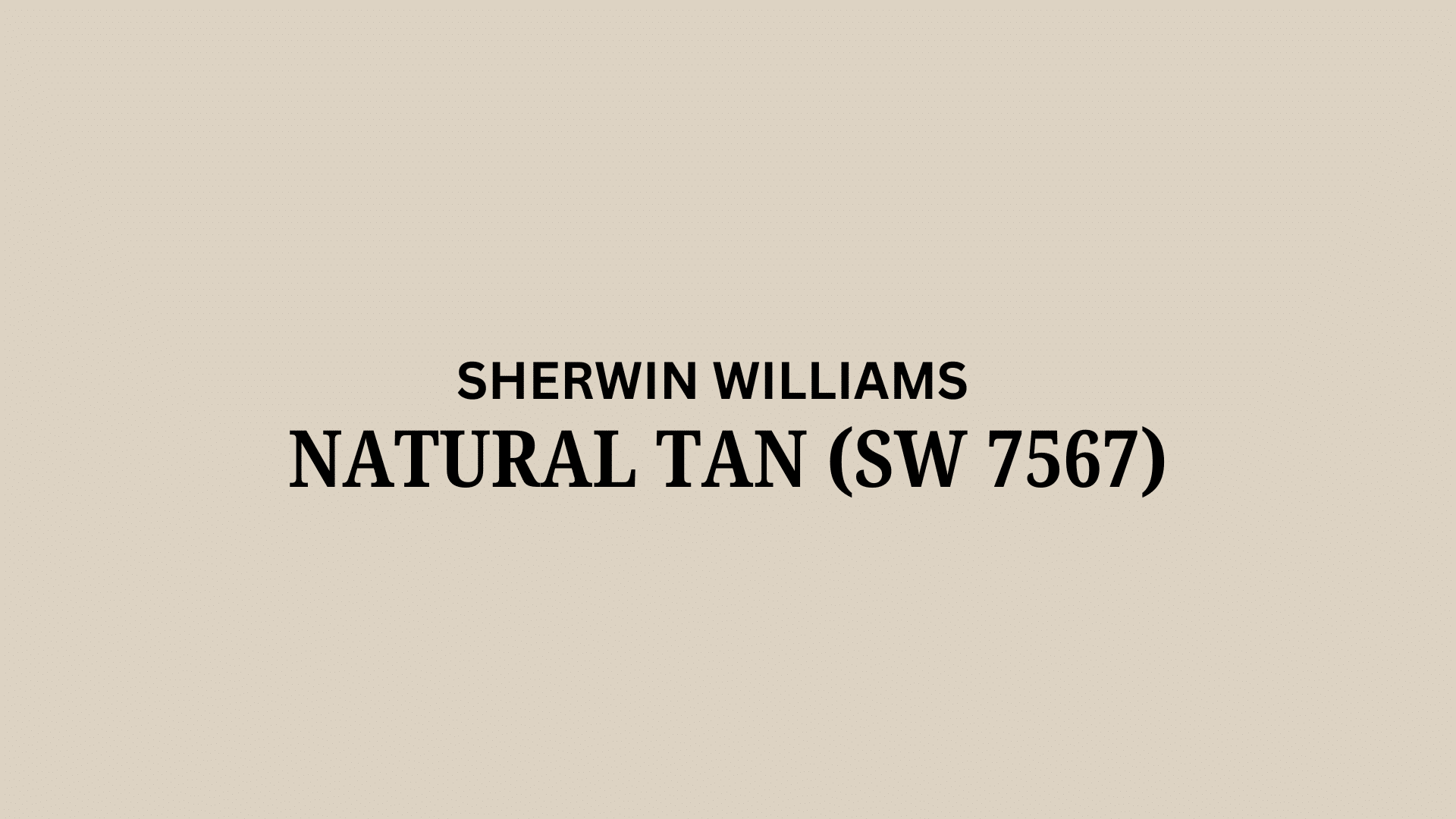
Sherwin Williams Natural Tan (SW 7567) is a warm, balanced neutral paint color with an Light Reflectance Value (LRV) of 65. It sits comfortably between beige and cream, featuring subtle green and warm gray undertones that prevent it from appearing yellow or orange under balanced lighting conditions.
Contents
Understanding Sherwin Williams Natural Tan (SW 7567)
Selecting the right neutral paint color often presents a significant challenge for interior designers and homeowners. A shade that appears warm and inviting on a sample chip can quickly shift into an unappealing yellow or fleshy pink on a broad expanse of drywall. Sherwin Williams Natural Tan (SW 7567) has remained a cornerstone neutral because it addresses this exact dilemma through a balanced, muted formulation.
Natural Tan is classified as a warm neutral or light tan. It belongs to the Sherwin-Williams Warm Neutrals palette and bridges the gap between traditional golden beiges and contemporary greige shades. Unlike cool grays that can leave spaces feeling stark, SW 7567 brings warmth and organic texture to interior and exterior surfaces without dominating the architecture.
Understanding how this color operates across different design environments requires examining its technical specifications, color science metrics, and physical behavior under dynamic lighting.
Technical Specifications: LRV, RGB, and HEX Data
Paint performance is deeply tied to colorimetry. Evaluating the precise technical measurements of Natural Tan SW 7567 provides an objective foundation for how the paint reflects light and interplays with surrounding materials.
- Light Reflectance Value (LRV): 65
- Color Code / Formula ID: SW 7567
- HEX Code: #DDD2C1
- RGB Values: Red: 221, Green: 210, Blue: 193
- Hue Angle: Approximately 36.4° (falling within the Yellow-Orange to Yellow hue family)
- Chroma / Saturation: Low to Moderate (muted)
Light Reflectance Value (LRV) Analysis
The Light Reflectance Value (LRV) measures the percentage of light a paint color reflects from a surface on a scale from 0 (absolute black, absorbing all light) to 100 (pure titanium dioxide white, reflecting all light).
With an LRV of 65, Natural Tan sits on the upper edge of mid-tone neutrals, edging into off-white territory while retaining enough pigment density to maintain its identity. This 65 rating means Natural Tan will not wash out completely in brightly lit environments, yet it possesses sufficient lightness to bounce illumination around dim hallways, staircases, and north-facing rooms. When paired against a crisp white trim with an LRV around 82 to 92, Natural Tan creates a clear, sophisticated visual contrast without creating harsh, jarring lines.
Deconstructing the Undertones: Green, Gray, and Warmth
The most critical factor when specifying Natural Tan is identifying its undertone structure. While some beiges rely on heavy red or yellow bases, Natural Tan relies on an organic profile balanced by green and warm gray pigments.
The Organic Green Base
The most notable characteristic of SW 7567 is its soft green undertone. Rather than looking olive or sage, this green component acts as a neutralizing agent. It counteracts the yellow and orange pigments that frequently cause warm neutrals to feel dated or brassy. In practical terms, this green base grounds the color, giving it a natural, stone-like warmth akin to limestone, linen, or raw jute fiber.
The Muting Gray Agent
Alongside the green, Natural Tan contains a measured amount of gray pigment. This gray lowers the chroma (saturation) of the color. Because it is muted, Natural Tan functions as a true architectural canvas, receding visually rather than pulling attention toward the walls.
Potential Undertone Risks
While Natural Tan is remarkably stable, specific conditions can pull its secondary undertones forward:
- Overcast or Cool Light: In cold, flat lighting, the green-gray cast becomes slightly more pronounced, occasionally taking on a light khaki appearance.
- Warm Artificial Illumination: Under incandescent lighting (2700K or lower), the base warms up significantly, resembling a cozy, light oat beige.
- Proximity to Competing Undertones: If placed next to materials with strong pink or violet-red undertones (such as certain travertine tiles or cherry cabinets), the subtle green in Natural Tan will stand out via complementary color contrast.
Lighting Dynamics: How SW Natural Tan Becomes Dynamic Across Exposures
Light temperature directly controls how the human eye perceives pigment. Because Natural Tan sits near the center of the warm neutral spectrum, its appearance shifts distinctly based on window orientation and exterior foliage.
North-Facing Rooms
North-facing windows deliver a cool, bluish light that remains relatively consistent throughout the day. This type of light tends to mute warm colors and enhance gray or blue tones.
- The Result: Natural Tan performs exceptionally well in northern exposure because its innate warmth offsets the blue wash without looking artificial. The color softens into a balanced greige-beige, mitigating the chill of the space without skewing overly yellow.
South-Facing Rooms
Southern exposure floods interiors with intense, golden light throughout morning and afternoon hours.
- The Result: The warm sun elevates the beige characteristics of SW 7567. The color opens up, reading closer to its full 65 LRV, resembling a pale, sun-bleached sand. The neutralizing green and gray elements prevent the color from flaring into neon yellow under intense midday sun.
East-Facing Rooms
East-facing spaces experience bright, warm light at dawn, followed by cooler, shadow-heavy conditions in the afternoon.
- The Result: Natural Tan will feel bright, light, and golden in the morning, then gradually transition to a calm, grounded taupe-tan as natural daylight shifts away from the room.
West-Facing Rooms
West-facing windows introduce cool, muted morning light followed by intense, amber light in late afternoon.
- The Result: Natural Tan can appear quiet and understated early in the day, taking on deep, golden-amber qualities during golden hour. The richness of the paint shows its strongest saturation during this evening period.
Comparative Color Analysis: Natural Tan vs. Similar Neutrals
Selecting an interior paint often comes down to choosing between close alternatives. The following analysis evaluates how Natural Tan compares against closely aligned neutrals from Sherwin-Williams and Benjamin Moore.
| Paint Color | LRV | Primary Undertones | Saturation Level | Best Use Case |
|---|---|---|---|---|
| Sherwin Williams Natural Tan (SW 7567) | 65 | Green, Warm Gray | Muted / Medium-Low | Whole-home neutral, transitional spaces, open floor plans |
| Sherwin Williams Accessible Beige (SW 7036) | 58 | Gray, Muted Yellow | Muted / Medium | Spaces requiring slightly deeper contrast with white trim |
| Sherwin Williams Wool Skein (SW 6148) | 63 | Stronger Green, Golden Cream | Medium | Traditional interiors, cottage styles, wood-heavy rooms |
| Sherwin Williams Balanced Beige (SW 7037) | 46 | Taupe, Warm Gray | Medium-High | Feature walls, moody primary bedrooms, formal studies |
| Sherwin Williams Shoji White (SW 7042) | 74 | Cream, Subtle Green | Very Low / Light | Soft walls, modern minimalist backgrounds, subtle trim |
| Benjamin Moore Manchester Tan (HC-81) | 63.2 | Khaki, Gold, Soft Gray | Medium | Historic spaces, classic millwork, warm traditional palettes |
Natural Tan vs. Accessible Beige (SW 7036)
Accessible Beige is one of Sherwin-Williams' most popular colors, but it functions differently than Natural Tan. Accessible Beige has an LRV of 58, making it noticeably darker and more saturated. It contains more gray and taupe, making it lean closer to greige. By contrast, Natural Tan (LRV 65) is brighter, lighter, and carries a clearer green undertone rather than taupe. If your room lacks abundant natural light, Natural Tan will keep the space feeling airier than Accessible Beige.
Natural Tan vs. Wool Skein (SW 6148)
Wool Skein shares a similar green-based warm profile, but it has a lower LRV (63) and a more pronounced yellow-green lean. Natural Tan contains slightly more gray neutralizing agent, rendering it more flexible and modern, whereas Wool Skein reads more traditionally khaki or golden under indoor lighting.
Natural Tan vs. Shoji White (SW 7042)
Shoji White is a transitional off-white/greige with an LRV of 74. While both share soft cream and green undertones, Shoji White reads as an off-white on the wall, whereas Natural Tan reads clearly as a distinct neutral paint color. If you want subtle depth without true white, choose Shoji White; if you want defined wall-to-trim contrast, Natural Tan is the superior choice.
Best Trim, Ceiling, and Cabinet Pairings
Pairing Natural Tan with the correct trim and accent colors ensures that its undertones remain stable and intentional. The following pairings across whites, woods, and accent colors maximize visual balance.
Trim and Ceiling Whites
- Sherwin Williams Pure White (SW 7005): With an LRV of 84, Pure White contains a minute drop of black and yellow, creating a soft, versatile white that provides a clean border for Natural Tan without looking sterile or creating excessive contrast.
- Sherwin Williams Alabaster (SW 7008): With an LRV of 82, Alabaster is a beloved warm off-white. When paired with Natural Tan, it creates a subtle, tone-on-tone aesthetic with minimal contrast, ideal for organic modern or modern farmhouse styles.
- Sherwin Williams High Reflective White (SW 7757): For modern spaces desiring clean separation, this ultra-pure white (LRV 89) accentuates the muted undertones of Natural Tan, making the walls look crisp, tailored, and clearly defined.
Coordinating Accent Colors
Because Natural Tan is grounded by green and warm gray, it pairs naturally with organic, nature-inspired palettes:
- Deep Charcoal and Black: Sherwin Williams Iron Ore (SW 7069) or Tricorn Black (SW 6258) create dramatic focal points on interior doors, window sashes, or kitchen islands.
- Earthy Greens: Deep olive and sage tones—such as Sherwin Williams Rosemary (SW 6187) or Evergreen Fog (SW 9130)—draw out the subtle earthy nature of Natural Tan, establishing an organic flow.
- Warm Navy Blues: Sherwin Williams Naval (SW 6244) or Indigo Batik (SW 7602) provide complementary warmth through deep, contrasting color.
- Soft Terracotta and Clay: Earthy rust colors like Sherwin Williams Cavern Clay (SW 7701) contrast with the green-gray undertones of Natural Tan.
Wood Tones and Hardware Finishes
- Hardwoods: Natural Tan pairs seamlessly with white oak, natural walnut, and medium-stained brown oak. Avoid overly orange-toned golden oak or high-gloss red mahogany, which can clash with the muted undertones of the wall.
- Hardware: Unlacquered brass, aged bronze, and matte black hardware complement the warm, stone-like aesthetic of SW 7567. Polished chrome can occasionally feel overly sterile against this warm paint, whereas brushed nickel offers a softer, modern alternative.
Whole-House Palette Architecture
Natural Tan functions exceptionally well as a central unifying neutral within a whole-home color strategy. Its mid-tone lightness provides continuity through hallways, great rooms, and transition zones.
The Organic Modern Whole-Home Scheme
- Main Living Spaces, Hallways, and Foyer: Sherwin Williams Natural Tan (SW 7567)
- Trim, Baseboards, and Ceilings: Sherwin Williams Pure White (SW 7005)
- Kitchen Cabinets or Island: Sherwin Williams Rosemary (SW 6187)
- Primary Bedroom Suite: Sherwin Williams Shoji White (SW 7042)
- Dining Room or Study Accent: Sherwin Williams Iron Ore (SW 7069)
- Bathroom Vanities or Secondary Bedrooms: Sherwin Williams Sea Salt (SW 6204)
This architectural flow anchors the home in cohesive, low-chroma tones while using saturation shifts to designate private versus communal areas.
Exterior Applications: Siding, Trim, and Stucco
The utility of Natural Tan extends beyond interior spaces. In exterior applications, sunlight dilutes paint colors, making them appear anywhere from 5 to 10 points lighter than their physical LRV rating suggests.
Exterior Siding and Stucco Performance
On an exterior facade, Natural Tan transforms from a light tan into a luminous, warm off-white. The bright outdoor UV exposure bleaches out the deeper gray pigments, leaving a refined cream appearance that avoids the stark, reflective glare of pure white exterior paints. It provides exceptional results on:
- Stucco Finishes: Mimics natural Mediterranean or Southwestern limestone.
- Lap and Board-and-Batten Siding: Acts as a balanced body color paired with dark bronze or black window frames.
- Exterior Trim and Accents: When applied to fascias and soffits alongside dark brick, stone masonry, or cedar accents.
Recommended Exterior Sheens
- Stucco and Brick: Flat or Low-Sheen / Velvet finish to minimize surface imperfections.
- Lap Siding: Satin finish to resist weather wear, shed dirt, and allow for easier washing.
- Exterior Trim and Doors: Semi-Gloss or Gloss finish for enhanced durability and contrast against matte siding.
Practical Application: Primer, Sheen Selection, and Testing Protocol
A successful paint application relies on proper preparation, precise sheen selection, and accurate sampling.
Recommended Interior Sheens
- Flat / Matte: Ideal for ceilings, formal dining rooms, and adult bedrooms. Completely eliminates glare and hides minor drywall flaws, though it offers reduced wipeability in high-traffic spaces.
- Eg-Shel / Low-Lustre: The preferred sheen for Natural Tan in living rooms, bedrooms, and family rooms. It preserves the organic, stone-like look of the color while offering moderate durability.
- Satin: Ideal for high-humidity or high-wear zones such as bathrooms, laundry rooms, and kitchens. This finish adds a slight sheen, which will bounce more ambient light and make Natural Tan appear slightly lighter.
- Semi-Gloss: Best reserved strictly for baseboards, crown molding, door frames, and cabinetry.
How to Test Natural Tan SW 7567 in Your Space
Never commit to a paint color based solely on digital screens, paint cards, or store swatches. Environmental variables, artificial lighting, and nearby reflective surfaces will alter how your eyes register the color.
- Sample Large Format Sheets: Apply two coats of SW 7567 onto a 12x12 inch or larger white peel-and-stick backing sheet or heavy watercolor board. Keep a thin white margin around the edge to prevent the existing wall color from skewing your perception.
- Observe in Different Locations: Move the sample across multiple walls—placing it directly beside window frames, in dimly lit corners, and against existing trim.
- Evaluate Across a Full 24-Hour Cycle: Check the color at 8:00 AM, 1:00 PM, and 8:00 PM under both natural daylight and artificial fixtures.
- Audit Color Temperature (Kelvins): Ensure your interior bulbs use a consistent color temperature. Natural Tan performs best under bulbs rated between 2700K (Warm White) and 3000K (Soft White). Cooler bulbs (4000K to 5000K daylight bulbs) will emphasize the gray and green pigments, cooling the paint considerably.
Troubleshooting Common Issues
Even with an adaptable neutral like Natural Tan, unexpected results can arise due to existing architectural elements.
The Paint Looks Too Khaki or Muddy
- Root Cause: The space is likely dominated by north-facing light or has heavy tree canopy cover right outside the window bouncing green foliage light into the room.
- Solution: Switch artificial lighting to 3000K LED bulbs to warm the room without adding harsh yellow hues. Alternatively, select a color with slightly more red/orange warmth, such as Sherwin Williams Wool Skein or Canvas Tan.
The Paint Looks Blown Out and Too White
- Root Cause: High-volume south- or west-facing light combined with wide-open windows can wash out colors with an LRV of 65.
- Solution: Drop down one shade on the color strip to a lower LRV neutral, such as Sherwin Williams Accessible Beige (LRV 58) or Balanced Beige (LRV 46), which will retain body and depth despite intense illumination.
The Paint Clashes with Flooring or Tile
- Root Cause: Flooring with pink, orange, or violet undertones conflicts directly with the green undertones of Natural Tan.
- Solution: If using Natural Tan alongside stone surfaces, choose stone materials containing warm gray, taupe, or soft gold veining. If pairing with warm wood, lean toward neutral brown or white oak stains rather than red cherry or yellow birch.
Frequently Asked Questions
What is the difference between Sherwin Williams Natural Tan and Accessible Beige?
Natural Tan (SW 7567) has an LRV of 65, making it lighter and softer than Accessible Beige (SW 7036), which has an LRV of 58. While Accessible Beige leans heavily into gray-taupe, Natural Tan contains subtle green-gray undertones that give it an airier, more organic feel.
Does Natural Tan paint look yellow on the wall?
No, Natural Tan does not typically read as a yellow paint. Its formulation contains subtle green and gray undertones that temper the yellow-orange hue family base, preventing the color from flashing yellow or gold under standard 3000K lighting.
What is the LRV of Sherwin Williams Natural Tan?
The Light Reflectance Value (LRV) of Sherwin Williams Natural Tan is 65. This places it in the upper-mid range of light neutrals, making it light enough to illuminate dim spaces while retaining noticeable contrast against clean white trim.
Which white trim color pairs best with Natural Tan?
Sherwin Williams Pure White (SW 7005) is the most balanced trim companion for Natural Tan, offering clean definition without stark contrast. For a softer, cohesive, tone-on-tone appearance, Sherwin Williams Alabaster (SW 7008) is an exceptional warm option.
Can Sherwin Williams Natural Tan be used on home exteriors?
Yes, Natural Tan is an exceptional exterior color for siding, stucco, and trim. Because natural outdoor sunlight makes paint appear several shades lighter, Natural Tan reads outdoors as a soft, warm limestone off-white that avoids the blinding glare of high-LRV whites.
Selecting paint requires verifying performance within your home's unique layout and lighting profile. Order large paint samples of Sherwin Williams Natural Tan (SW 7567) along with coordinating trim options, and view them on multiple walls throughout the day to confirm it delivers the ideal warmth and depth for your space.
Image Gallery