How Pipe Bursting Works in Utah: A Comprehensive Guide to Trenchless Sewer Replacement
Pipe bursting in Utah is a trenchless rehabilitation method used to replace buried pipelines, such as sewer, water, or gas lines, without the need for traditional, destructive "open-cut" trenching. The process involves pulling a high-s...
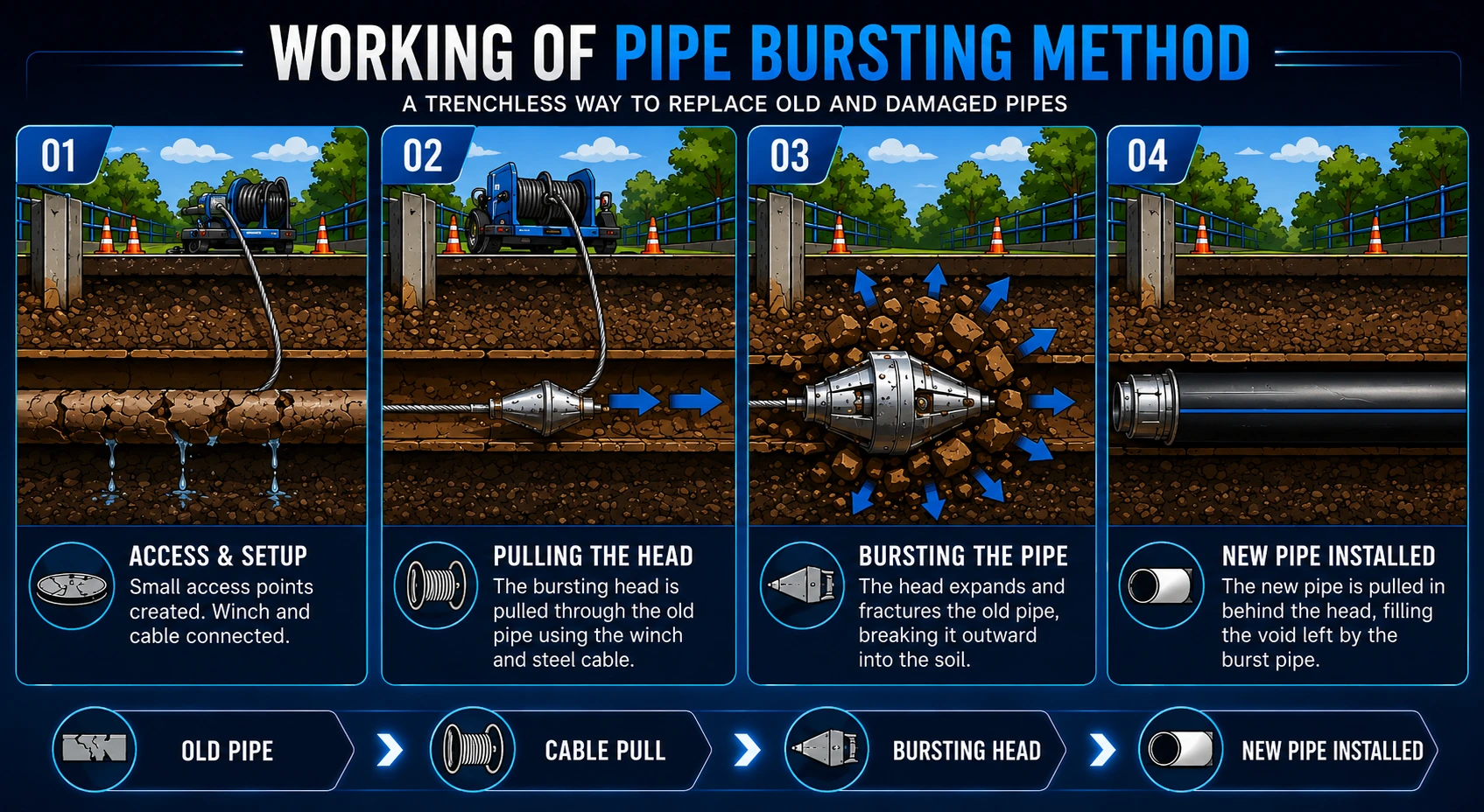
Pipe bursting in Utah is a trenchless rehabilitation method used to replace buried pipelines, such as sewer, water, or gas lines, without the need for traditional, destructive "open-cut" trenching. The process involves pulling a high-strength bursting head through an existing, damaged pipe, which fractures the old material and pushes it into the surrounding soil while simultaneously pulling a new, high-density polyethylene (HDPE) pipe into place.
Contents
In 2026, Utah homeowners and municipal managers increasingly turn to pipe bursting to navigate the unique challenges of the Wasatch Front, including rocky soil conditions and the desire to preserve expensive landscaping and infrastructure. Understanding the technical mechanics, localized costs, and regulatory requirements is essential for anyone facing a major mainline failure.
The Technical Mechanics of Pipe Bursting
Pipe bursting relies on the application of massive force—either hydraulic or pneumatic—to break apart an existing pipe from the inside out. Unlike pipe lining (CIPP), which places a coating inside the old pipe and slightly reduces its diameter, pipe bursting allows for a "size-on-size" replacement or even an upgrade to a larger diameter pipe.
The Bursting Head and Expansion
The core component of the system is the bursting head. This is a heavy-duty, cone-shaped tool made of hardened steel. As the head is pulled through the host pipe, the "nose" or leading edge is smaller than the host pipe, while the "base" is larger. This geometry creates a wedge effect that focuses pressure on the walls of the old pipe (usually made of clay, cast iron, or concrete), causing it to shatter.
Behind the bursting head is an expander device. This component ensures that the fragments of the old pipe are pushed far enough into the surrounding soil to create a clear path for the new pipe. Because Utah’s soil can range from loose Great Salt Lake sand to heavy, compacted clay in the valleys, the choice of expander size is critical to prevent "soil heave" or surface displacement.
Static vs. Pneumatic Bursting
In 2026, two primary methods dominate the Utah market:
- Static Pipe Bursting: This is the most common residential method in Utah. It uses a hydraulic pulling machine that exerts a steady, high-tonnage pull on a steel cable or high-tensile chain. It is preferred in dense residential areas like Sugar House or downtown Provo because it creates no vibration, protecting the foundations of older, historic homes.
- Pneumatic Pipe Bursting: This method uses a reciprocating hammer inside the bursting head, powered by compressed air. The rapid-fire impacts help "punch" through tougher materials. While highly effective, the vibrations can be a concern in certain Utah municipalities with strict seismic or structural codes.
The Step-by-Step Process in Utah Applications
Replacing a sewer line via pipe bursting follows a specific sequence designed to minimize the footprint of the construction site. In a typical Utah residential setting, the entire process can often be completed in a single day.
1. Initial Inspection and Utility Locating
Before any work begins, a technician performs a sewer camera inspection to identify the location of the break, the material of the pipe, and any "bellies" or structural collapses. In Utah, contractors must also coordinate with Blue Stakes of Utah to locate underground power, gas, and fiber optic lines, which are frequently buried in the same utility corridors as sewer lines.
2. Excavation of Access Points
While pipe bursting is "trenchless," it is not "hole-less." Two small access pits are excavated:
- The Insertion Pit: Where the new HDPE pipe enters the ground.
- The Pulling/Receiving Pit: Where the hydraulic pulling machine is positioned. In most Utah homes, one pit is located near the house foundation (where the sewer exits the structure), and the other is near the property line or the "parkway" strip where it connects to the municipal main.
3. The "Pull" and Installation
The high-tensile cable is fed through the old pipe from the pulling pit to the insertion pit. It is then attached to the bursting head, which is fused to the new HDPE pipe. The hydraulic machine then pulls the assembly through. HDPE is used because it is flexible enough to follow the path of the old pipe and has fused joints that are leak-proof and resistant to the root intrusions common in older Utah neighborhoods with mature trees.
4. Reconnection and Backfilling
Once the new pipe is in place, the technicians disconnect the bursting equipment and reconnect the home’s interior plumbing to the new line. They also reconnect the new line to the city’s sewer main. The access pits are then backfilled and compacted to prevent future sinking.
Why Utah’s Geography Affects Pipe Bursting
Utah’s unique environmental factors play a significant role in how pipe bursting is executed. Contractors must account for soil composition and the state's significant temperature fluctuations.
Soil Composition: The Wasatch Front Challenge
The soil along the Wasatch Front is highly variable. In areas like Davis County or parts of Salt Lake County, you may encounter "hot" soils with high mineral content that accelerate the corrosion of old cast iron pipes, making them prime candidates for bursting.
However, in bench areas (like the East Bench or near the mountains in Utah County), the soil often contains large river rocks or "cobble." When pipe bursting in rocky soil, the fragments of the old pipe have nowhere to go if they hit a large rock. This requires the use of higher-tonnage pulling machines—often 30 to 50 tons of pulling force—to ensure the new pipe doesn't get stuck.
The Utah Frost Line
Utah's frost line typically ranges from 30 to 36 inches deep, though it can vary. Sewer lines are usually buried deeper (6 to 10 feet), but the access pits must be managed carefully during winter months to prevent the surrounding soil from freezing and becoming unworkable. Pipe bursting is a year-round service in Utah, as the HDPE pipe remains flexible and durable even in sub-zero temperatures, unlike traditional PVC which can become brittle.
Comparing Methods: Trenchless vs. Traditional in 2026
To understand the value of pipe bursting, it is helpful to compare it against the two other primary options available to Utah property owners.
| Feature | Pipe Bursting (Trenchless) | CIPP Lining (Trenchless) | Traditional Trenching |
|---|---|---|---|
| Material | New HDPE Pipe | Epoxy-resin liner | New PVC Pipe |
| Diameter Change | Can maintain or increase | Slightly reduces | Maintains or increases |
| Longevity | 50–100 years | 50 years | 50+ years |
| Excavation | Two small pits | Minimal (often zero) | Entire length of pipe |
| Utah Cost (Avg) | $120 – $250 per foot | $150 – $280 per foot | $80 – $150 per foot* |
| Landscape Impact | Minimal | None | Total destruction |
*Note: While the per-foot cost of trenching is lower, the total cost often exceeds trenchless methods once you factor in the $3,000–$10,000 required to restore Utah driveways, sod, and landscaping.
Cost Factors and Regulations in Utah
As of 2026, several factors influence the final price of a pipe bursting project in the Beehive State.
Municipal Permitting
Each Utah city has its own requirements. For example, Salt Lake City Public Utilities may require specific inspections that differ from those in West Jordan or St. George. Permit fees usually range from $150 to $500, depending on whether the work extends into the public right-of-way (the street). If the "tap" or connection to the city main is damaged, the cost increases significantly because it often requires a "street cut" and expensive asphalt restoration fees mandated by the Utah Department of Transportation (UDOT) or local municipalities.
Depth and Distance
The deeper the pipe, the more dangerous and expensive the excavation of the access pits becomes. In older Utah neighborhoods, sewer lines can be 10–12 feet deep. Furthermore, if the distance from the house to the street is more than 100 feet—common in more rural or sprawling Utah properties—additional intermediate pits may be required to maintain the necessary pulling tension.
Contractor Licensing
In Utah, pipe bursting should only be performed by contractors holding a S210 (Pipeline and Conduit Contractor) or S211 (Sewer and Water Contractor) license. This ensures they are bonded and insured to work on critical infrastructure.
Common Challenges and Troubleshooting
Despite its efficiency, pipe bursting is not a "magic bullet" for every sewer problem. Certain conditions can complicate or even prevent the use of this technology.
- Collapsed Pipes: If the host pipe has completely collapsed, the cable cannot be fed through. In these cases, a small portion of the pipe must be excavated to clear the blockage before bursting can proceed.
- Significant Offsets: If a pipe has shifted significantly (an "offset" joint) due to Utah’s seismic activity, the bursting head may get stuck. Expert operators use cameras to map these offsets precisely.
- Utility Crossings: In older Utah cities, water lines or gas lines were sometimes laid directly on top of sewer lines. The expansion of the soil during the bursting process could potentially damage these nearby lines.
- Bends and Elbows: Pipe bursting works best on straight runs. While HDPE is flexible, the bursting head itself is rigid. If a sewer line has 90-degree turns, additional access pits are required at the site of each turn.
FAQs
How long does the new pipe last in Utah's climate?
The HDPE pipe used in pipe bursting is rated for a 50-to-100-year lifespan. It is highly resistant to the extreme temperature shifts common in Utah, as well as the chemical composition of the alkaline soils found throughout the Great Salt Lake Basin.
Is pipe bursting louder than traditional excavation?
Static pipe bursting is significantly quieter than traditional excavation because there is no constant jackhammering or backhoe operation. You will hear the sound of a diesel engine (the hydraulic power unit), but the actual "bursting" happens silently underground.
Will pipe bursting damage my basement floor?
No, as long as the contractor stops the burst before the head reaches the interior plumbing. Most Utah professionals start the burst 2–3 feet away from the foundation wall and use a specialized transition fitting to connect the new HDPE to the home's existing interior cast iron or ABS pipe.
Can pipe bursting be used for water lines in Utah?
Yes. While it is most famous for sewer lines, "pre-chlorinated" HDPE can be used for water main replacement. This is increasingly popular in Utah as old galvanized or lead water service lines reach the end of their functional lives.
Practical Recommendation
If you are experiencing recurring sewer backups or have been told your line is failing, your first step should be to request a high-definition sewer camera inspection from a licensed Utah trenchless specialist. Ensure the contractor provides you with a digital copy of the footage. If your landscaping, driveway, or mature trees are valuable, pipe bursting is almost always the more cost-effective choice when "total restoration costs" are included in the budget. Always verify that your chosen contractor is registered with the Utah Division of Occupational and Professional Licensing (DOPL) before signing a contract.
Image Gallery