Effective Personalized Service Examples: Frameworks and Industry Implementations
A personalized service example refers to any customer interaction customized using historical preference data, behavioral insights, or real-time context to address an individual's specific requirements. From dedicated financial advisor...
A personalized service example refers to any customer interaction customized using historical preference data, behavioral insights, or real-time context to address an individual's specific requirements. From dedicated financial advisory workflows to predictive hospitality check-ins, personalized service replaces generic interactions with targeted human or digital touchpoints designed to enhance resolution speed, customer retention, and long-term satisfaction.
Contents
Understanding Personalized Service in Modern Operations
Personalized service transforms traditional, transactional customer support into an adaptive experience centered on individual client histories and expectations. Rather than routing every inquiry through standardized scripts, organizations leveraging personalized service deploy data architectures and trained staff to adjust communication style, recommendations, and resolution paths.
Modern personalization operates on a spectrum ranging from basic identity recognition—such as addressing a client by name—to complex predictive intervention. High-value personalization leverages consolidated data, operational autonomy, and contextual awareness to solve problems before the customer explicitly articulates them.
- Standardized Service:
- Single Script
- Generic Response
- Delayed Resolution
- Personalized Service:
- Unified History + Real-Time Context
- Custom Response
- Instant Value
Core Pillars of Service Personalization
To deliver tailored service consistently across channels, organizations rely on three operational pillars:
- Unified Data Infrastructure: A central Customer Data Platform (CDP) or integrated Customer Relationship Management (CRM) system that consolidates purchase history, previous support tickets, browsing activity, and communication preferences.
- Contextual Intelligence: The capacity to interpret why a customer is reaching out at a specific moment based on recent account activity, transaction changes, or external events.
- Frontline Operational Autonomy: Policies that grant customer service representatives, account managers, and frontline staff the financial and operational authority to solve client problems without requiring multi-tiered management approvals.
Real-World Personalized Service Examples by Industry
Personalization varies across industries depending on service delivery models, data access, and regulatory frameworks. The following real-world scenarios demonstrate how leading sectors execute tailored service strategies.
1. Hospitality and Luxury Services
In the hospitality sector, personalization centers on guest history, explicit preferences, and anticipatory service delivery.
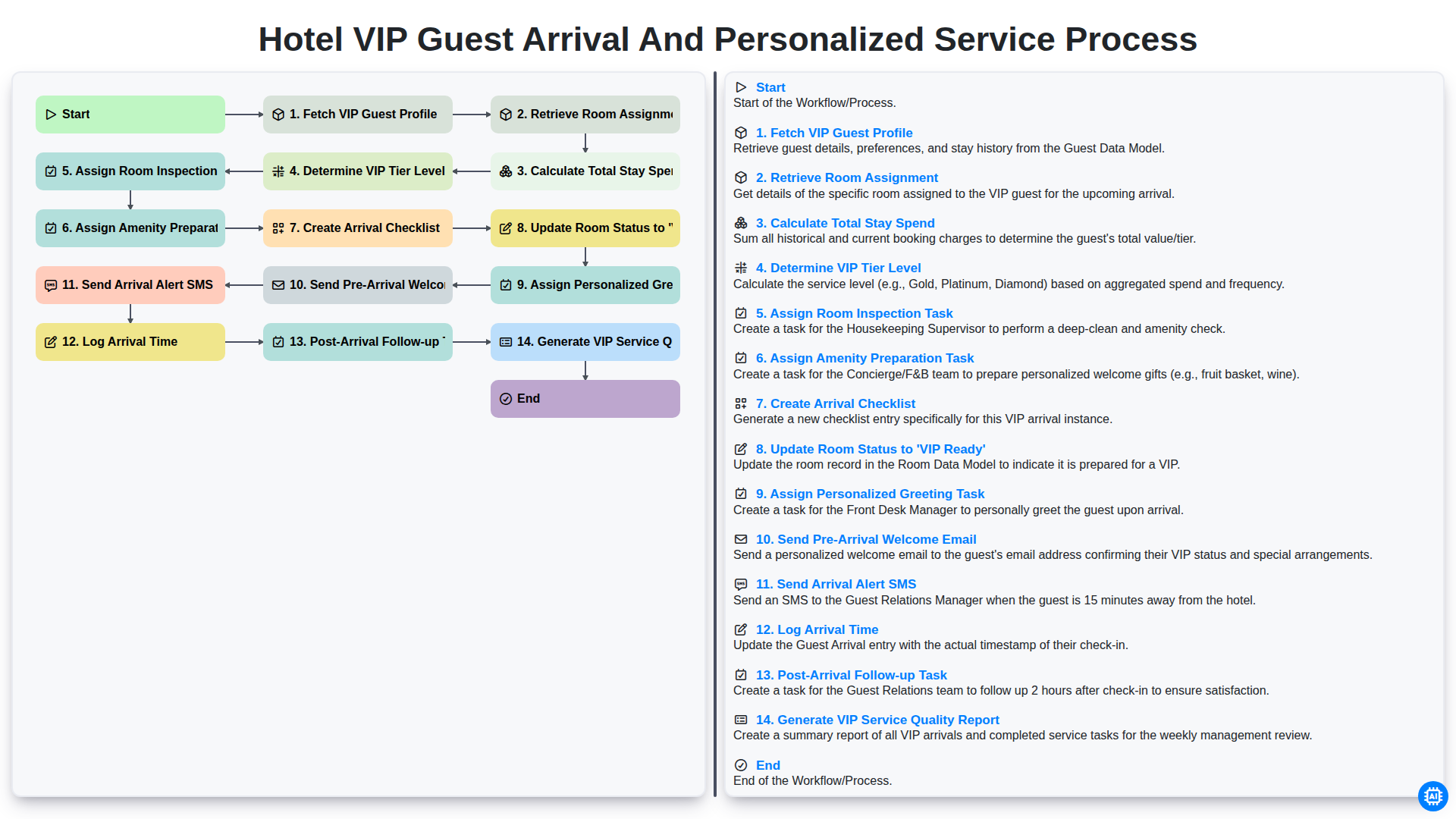
- Pre-Arrival Customization: A boutique hotel chain captures guest preferences during booking (e.g., room temperature, pillow firmness, dietary restrictions). Prior to check-in, the housekeeping staff sets the room parameters accordingly.
- Contextual Issue Resolution: If a returning guest experienced a minor maintenance issue during a prior stay, the front desk team automatically flags the account, greets the guest upon arrival, confirms that their current room has undergone extra inspection, and provides a complimentary service credit.
- Omnichannel Loyalty Tracking: Concierge teams use shared notes inside a central platform to log local dining preferences, ensuring that recommendations across partner properties align with the guest's profile.
2. Financial Services and Wealth Management
Banking and financial advisory institutions rely on contextual metrics and regulatory compliance to personalize account management and communication.
- Targeted Risk and Account Alerts: Rather than sending broadcast promotional emails, a retail bank identifies when an account holder’s recurring direct deposit pattern changes or when international travel is detected. The institution delivers targeted security verifications or tailored travel insurance notices via their preferred messaging channel.
- Dedicated Relationship Managers: In private wealth management, advisors configure customized reporting dashboards tailored to a client’s specific tax bracket, risk tolerance, and philanthropic targets, bypassing generic asset allocations.
- Dynamic IVR Routing: When a client calls a bank’s main support hotline with a pending mortgage application, the Interactive Voice Response (IVR) system bypasses general account inquiries and directly connects the caller to their assigned loan originator.
3. E-Commerce and Digital Retail
E-commerce organizations combine machine learning models with human support agents to deliver real-time assistance.
- Predictive Replenishment Support: An online pet supply retailer monitors usage cycles for consumable products. Before a customer runs out of supplies, customer support delivers an automated reminder with a one-click reorder link, while offering live support for adjusting delivery frequency.
- Proactive Cart Interventions: When a user stalls on a high-value checkout screen for an extended period, a specialized support chat opens with an agent who has visibility into the specific items in the cart, allowing them to address sizing, compatibility, or shipping queries immediately.
- Tailored Returns and Exchanges: A fashion retailer offers targeted return options based on customer location and return frequency, such as doorstep courier pickup for VIP loyalty members or instant exchanges before the original item arrives back at the warehouse.
4. B2B and Software-as-a-Service (SaaS)
In enterprise software environments, personalized service focuses on onboarding velocity, system integration, and account health.
- Role-Based Onboarding Sequences: When a new enterprise software customer signs on, the Customer Success Manager (CSM) builds distinct onboarding tracks for administrative users, executive stakeholders, and end-users, rather than offering uniform product documentation.
- Usage-Triggered Health Checks: If an enterprise client’s active seat utilization drops by a specific percentage over 30 days, the platform alerts the account team. The CSM reaches out directly with a customized training plan and technical audit tailored to the client's recorded workflows.
- Tailored Technical Support SLAs: Enterprise clients receive dedicated desk routes to senior technical support engineers who specialize in their specific database stack, avoiding introductory tier-one troubleshooting scripts.
Comparing Standardized vs. Personalized Service Delivery
The table below outlines key differences between standard customer support practices and personalized service workflows:
| Operational Dimension | Standardized Service Model | Personalized Service Model |
|---|---|---|
| Data Usage | Limited to basic contact details and current ticket text | Historical context, preference data, and real-time interaction logs |
| Routing Protocol | First-in, first-out or general skill queues | Dynamic routing based on customer tier, history, or active account status |
| Agent Empowerment | Strict adherence to pre-scripted guidelines and escalation trees | Operational discretion to grant refunds, credits, or custom resolutions |
| Primary Metric | Average Handle Time (AHT) | Customer Effort Score (CES), Resolution Rate, Net Promoter Score (NPS) |
| Communication Style | Formal, script-driven, standardized templates | Adaptive, context-aware, and aligned with client preferences |
| Problem Prevention | Reactive (responds only after contact is initiated) | Proactive (identifies anomalies and acts prior to customer escalation) |
Operational Roadmap: Implementing Personalized Service Workflows
Transitioning from generic support models to tailored service requires structural, technological, and cultural adjustments. Business leaders should execute the implementation through four strategic steps.
- Step 1: Unify Data (CRM / CDP Integration)
- Step 2: Define Triggers (Rules & Behavioral Segmentations)
- Step 3: Empower Frontline Staff (Discretionary Budgets & Authority)
- Step 4: Establish Privacy Governance (GDPR / CCPA Standards)
Step 1: Centralize Customer Data
Personalization is impossible when customer information is trapped in disconnected systems. Organizations must integrate point-of-sale systems, e-commerce platforms, help desk software, and marketing platforms into a single source of truth.
- Audit existing software to identify data silos between sales, billing, and support teams.
- Deploy API integrations or a centralized data repository to surface real-time account data to frontline representatives.
- Ensure agent dashboards display relevant summary data—such as lifetime value, open issues, and personal preferences—within a single screen.
Step 2: Establish Contextual Triggers and Segmentation
Rather than treating every customer interaction identically, create rules that dictate when and how personalization should occur.
- Define customer segments based on criteria such as account lifecycle stage, annual spend, product usage patterns, or historical ticket complexity.
- Build automated alerts for critical customer events, such as pending renewals, recent service outages, or unfulfilled orders.
- Set up rules that automatically route high-priority accounts to dedicated account managers or specialized support units.
Step 3: Empower Frontline Teams with Operational Autonomy
Technology provides context, but employees execute the service experience. Guidelines must allow support representatives to act on available data without unnecessary bureaucracy.
- Provide frontline agents with discretionary budgets (e.g., up to $100 per incident) to resolve customer issues without supervisory sign-off.
- Train staff in empathetic, adaptive communication styles rather than forcing compliance with rigid, word-for-word scripts.
- Realign performance metrics to reward first-contact resolution and customer effort reduction over handle time speed.
Step 4: Balance Automation with Authenticity and Data Privacy
Personalization must build trust rather than create privacy concerns. Organizations operating globally must adhere to strict regulatory guidelines, including the EU General Data Protection Regulation (GDPR) and the California Consumer Privacy Act (CCPA).
- Collect customer data transparently, giving consumers clear options to manage their communication preferences.
- Avoid using sensitive personal data in ways that could feel intrusive to the customer.
- Use automated tools for initial contextual identification, but transition smoothly to human representatives when emotional intelligence or complex decision-making is required.
Measuring the Return on Investment (ROI) of Service Personalization
To validate investments in personalization technologies and operational training, leadership must track key customer experience and financial metrics:
1. Customer Effort Score (CES)
Personalization significantly reduces the effort required for a customer to resolve an issue. By measuring CES via post-interaction surveys (e.g., "How easy was it to handle your request today?"), organizations can evaluate whether personalized routing and context reduce operational friction.
2. Net Promoter Score (NPS) and Customer Satisfaction (CSAT)
Segmenting NPS and CSAT scores by personalized touchpoints versus standard touchpoints provides clear empirical evidence of customer sentiment improvements. Customers who receive tailored experiences consistently report higher loyalty scores.
3. Customer Retention and Lifetime Value (CLV)
Personalized experiences directly impact retention rates. Tracking the churn rates of clients engaged in personalized onboarding or dedicated account management models demonstrates the long-term enterprise value of custom service workflows.
Navigating Data Privacy and Over-Personalization Risks
While personalized service drives retention, poorly executed personalization can damage client relationships or violate legal compliance standards.
- The "Creepiness" Factor: Over-indexing on background data collection without clear context can unsettle consumers. Using unverified third-party data to make assumptions about personal preferences often leads to awkward interactions. Stick to first-party data explicitly shared by the client or generated through direct brand interactions.
- Data Accuracy Risks: Inaccurate CRM data can lead to improper assumptions, such as sending promotional materials for products a customer recently returned due to a defect. Regular data cleaning routines and automated sync verification are essential to maintain data integrity.
- Regulatory Non-Compliance: Unsecure handling of personal data creates significant liability risks under privacy statutes. Organizations must ensure that systems storing customer details use robust encryption and strict access controls.
Frequently Asked Questions
What is the difference between personal service and personalized service?
Personal service typically refers to direct, polite, human-to-human interaction, such as a helpful store associate assisting a customer. Personalized service goes further by using historic data, individual preferences, and context to customize the service delivery process to match a specific client's distinct profile and history.
How can small businesses implement personalized service without enterprise budgets?
Small businesses can achieve effective personalization by maintaining detailed notes within an affordable CRM platform, training staff to review client transaction histories before interactions, and implementing simple automated rules for milestone communications (e.g., anniversary check-ins or customized follow-ups).
Can automated AI tools deliver genuine personalized service?
Yes, automated AI tools can deliver effective personalization provided they access unified first-party data systems. Natural Language Processing (NLP) engines can analyze customer history and sentiment in real time to provide contextual answers, process tailored account changes, or seamlessly route complex issues to the correct human specialist.
What is the biggest operational risk associated with service personalization?
The largest risk is relying on outdated, incorrect, or fragmented customer data. Delivering service based on inaccurate assumptions damages trust faster than providing a standard, generic service experience. Organizations must establish strict data hygiene standards to keep client records accurate.
Operational Next Steps for Service Leaders
To modernize customer service frameworks and transition toward a personalized model, service leaders should take immediate tactical steps:
- Conduct a Data Access Audit: Evaluate whether frontline service staff have immediate, unified access to purchase histories, previous support tickets, and communication preferences inside their primary workspace.
- Identify Top Customer Friction Points: Analyze customer support logs to identify where standard scripts fail to solve recurring, multi-step customer issues efficiently.
- Draft Frontline Empowerment Guidelines: Establish clear financial and operational boundaries that grant customer support representatives the authority to make tailored adjustments for clients without requiring administrative sign-off.
- Select a Target Segment for Implementation: Launch a pilot personalization program targeting a single customer group—such as recurring subscribers or top-tier account holders—before scaling custom workflows across the entire enterprise.
Image Gallery