How the CRM Army Changes Customer Management
The CRM army—the strategic deployment of autonomous AI agents, automated workflows, and integrated digital workforces within customer relationship management platforms—redefines how businesses engage clients. By shifting customer manag...
The CRM army—the strategic deployment of autonomous AI agents, automated workflows, and integrated digital workforces within customer relationship management platforms—redefines how businesses engage clients. By shifting customer management from manual, reactive record-keeping to proactive, real-time engagement across every touchpoint, organizations accelerate response times, eliminate operational friction, and scale personalized customer interactions effortlessly.
Contents
Defining the CRM Army: Evolution of Customer Management
Customer Relationship Management (CRM) has evolved through distinct technological waves. Traditionally, CRMs functioned as centralized databases—digital filing cabinets where sales, marketing, and support representatives manually recorded interactions, updated deal stages, and stored contact details. While these systems provided visibility, they relied entirely on human data entry and human-driven initiation.
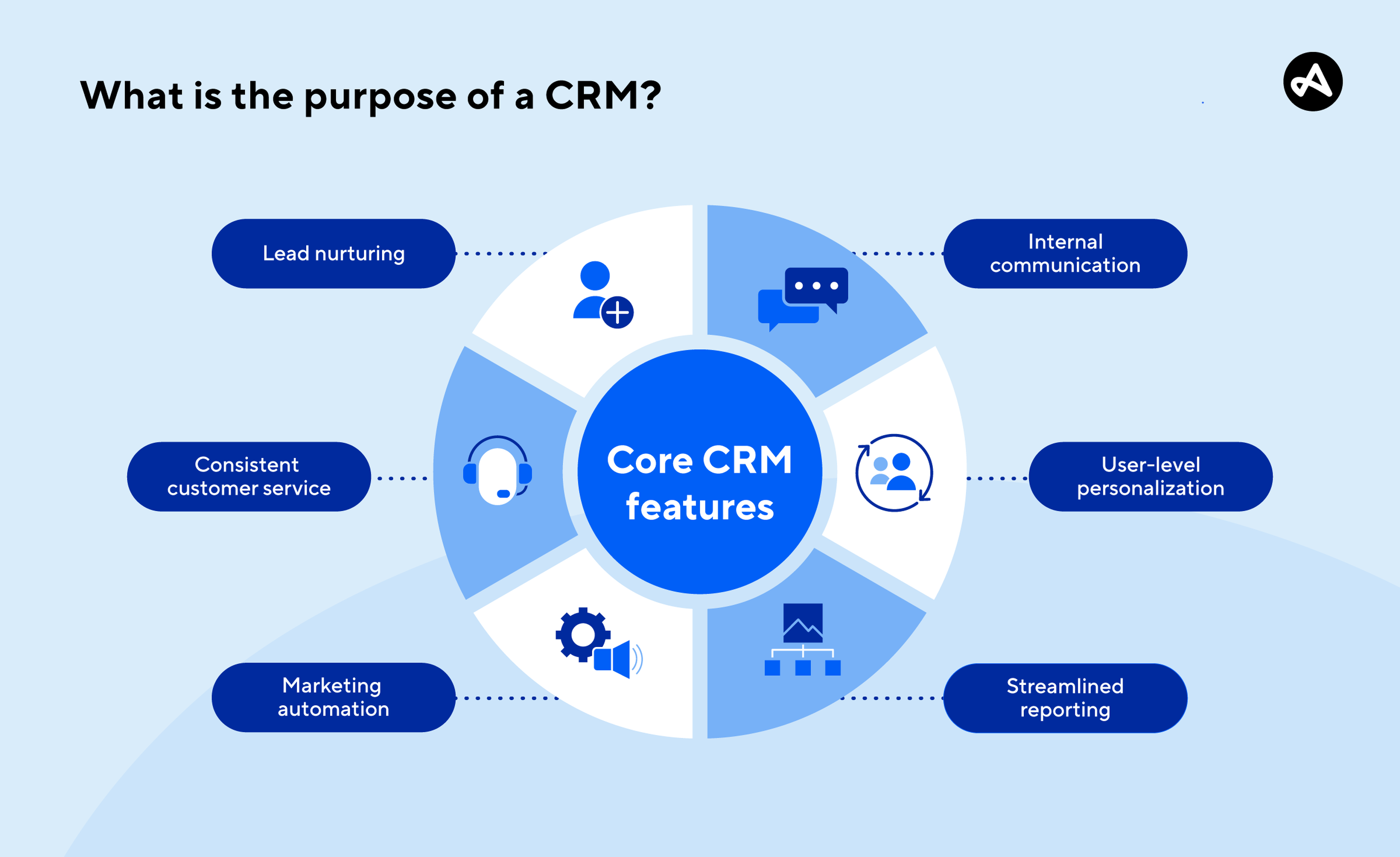
The emergence of the CRM army marks a structural shift toward an active, distributed, and intelligent customer management architecture. Rather than relying on a single employee to log notes, update fields, and trigger follow-up emails, modern enterprise platforms deploy networks of specialized digital agents, automated triggers, and predictive analytics engines. This multi-agent digital workforce operates continuously in the background, performing complex tasks such as intent recognition, automated lead scoring, dynamic case routing, and proactive retention messaging.
- Static Database (1990s-2000s): Manual data entry, basic contact logs
- Cloud & Automation (2010s): Cloud access, rules-based email drip
- Autonomous CRM Army (Current): AI agent networks, predictive analytics
This evolution changes the fundamental economic model of customer management. Human teams are no longer burdened with routine administrative oversight; instead, they supervise, refine, and collaborate with autonomous digital systems. As a result, organizations achieve high-volume scaling without proportional increases in operational overhead or headcount.
Key Drivers of the Autonomous Customer Management Shift
Several converging operational imperatives drive adoption of autonomous, agentic CRM architectures across enterprise environments:
Exponential Escalation of Data Volumes
Modern customer journeys span dozens of digital channels, including website analytics, mobile applications, social platforms, live chats, purchase histories, and email threads. Human account managers cannot aggregate, evaluate, and act upon this stream of data in real time. Autonomous CRM tools continuously ingest unstructured data across channels, translating raw touchpoints into actionable customer profiles instantly.
Expectations for Instantaneous Resolution
Customer tolerance for delayed responses has drastically declined. Modern service standards require instant, context-aware responses across technical support, billing queries, and product inquiries. Distributed CRM workflows allow systems to interpret incoming inquiries, access historical account data, generate solutions, and execute resolutions within seconds.
The Operational Cost of Administrative Overhead
Studies consistently show that enterprise sales representatives spend less than a third of their working hours on active selling, with the remainder consumed by manual record updates, quote generation, schedule coordination, and internal administrative reporting. Automating data capture and administrative tasks directly reallocates human labor toward revenue-generating operations.
Core Capabilities Changing Customer Operations
Deploying a CRM army introduces functional capabilities that surpass traditional, rules-based CRM software. These capabilities operate across four primary operational areas:
- Core CRM Army Operational Capabilities:
- Predictive Orchestration
- Automated Data Synchronization
- Hyper-Personal Customization
- Autonomous Case Routing
1. Predictive Workflow Orchestration
Unlike traditional automation that depends on static "if-this-then-that" rules, intelligent CRM agents evaluate behavioral patterns to predict future customer actions. For instance, if an existing subscriber exhibits reduced platform login frequency while visiting help center documentation regarding account cancellation, the CRM system flags the churn risk instantly. It can automatically issue a tailored retention offer or assign a high-priority intervention task to an account manager.
2. Autonomous Lead Enrichment and Qualification
Instead of requiring sales representatives to research leads manually, digital agents independently cross-reference incoming web inquiries against public databases, firmographic datasets, and engagement logs. The system scores the prospect based on real-time qualification criteria, enriches the contact record, and routes high-value accounts directly to specialized account executives along with suggested discussion points.
3. Hyper-Personalization at Enterprise Scale
Managing tailored communications for millions of contacts was previously impossible without broad segmentation. Autonomous CRM engines synthesize purchase history, browsing habits, service history, and communication preferences to craft individual recommendations and messaging dynamically. Every touchpoint reflects up-to-second account context.
4. Cross-Channel Service Resolution
Autonomous service agents handle tiered support tickets natively without human intervention. By integrating directly with enterprise back-office applications (such as ERP software, billing portals, and inventory databases), digital agents process returns, adjust subscriptions, update billing profiles, and troubleshoot common technical issues directly within the customer interface.
Comparing Traditional CRM Operations vs. CRM Army Deployment
To understand the practical impact on organization structure and efficiency, consider how operational parameters shift when transitioning from manual CRM systems to an autonomous CRM network:
| Operational Metric | Traditional CRM Architecture | Autonomous CRM Army Architecture | Operational Impact |
|---|---|---|---|
| Data Entry & Logging | Manual entry by human reps after calls or emails. | Automated background ingestion across all channels. | Eliminates human data latency; reduces administrative labor by 60–80%. |
| Response & Escalation Time | Hours to days based on queue volume and rep availability. | Near-instantaneous (seconds) for automated paths; instant routing for reps. | Drastically increases first-contact resolution rates and customer satisfaction. |
| Lead Qualification | Manual research, phone outreach, and static forms. | Continuous intent monitoring and autonomous firmographic enrichment. | Shortens sales cycles and increases conversion rates on high-value accounts. |
| System Scalability | Requires linear hiring of support and sales personnel to scale. | Elastic digital workforce scales infinitely to handle traffic spikes. | Maintains operational stability during demand surges without increasing labor costs. |
| Customer Journey Tracking | Fragmented across isolated departments (Sales, Marketing, Support). | Unified, persistent account context accessible by human and digital agents. | Eliminates customer repetition across departmental handoffs. |
| Proactive Engagement | Reactive follow-ups or scheduled mass email blasts. | Event-driven, predictive interventions based on real-time behavior. | Prevents churn proactive outreach before issues escalate. |
Step-by-Step Implementation Framework
Transitioning to an autonomous CRM strategy requires structured execution to avoid operational disruption, data corruption, or poor user adoption. Enterprise organizations should follow a four-stage deployment model.
- Stage 1: Audit Data Architecture & Establish Governance
- Stage 2: Define Agent Scope & Interaction Boundaries
- Stage 3: Deploy Hybrid Human-in-the-Loop Workflows
- Stage 4: Establish Continuous Monitoring & Optimization
Stage 1: Audit Data Architecture and Establish Governance
Autonomous agents rely on clean underlying data. Siloed, duplicate, or outdated records lead to incorrect customer messaging and faulty predictive modeling.
- Standardize data formats across sales, marketing, and service databases.
- Clean duplicate contact entries and establish automated validation rules.
- Define strict permission boundaries governing which data attributes digital agents can access or modify.
Stage 2: Define Agent Scope and Interaction Boundaries
Attempting to automate all customer interactions simultaneously creates organizational risk. Clearly demarcate automated tasks from human-led responsibilities.
- Map low-complexity, high-volume tasks (e.g., password resets, order tracking, meeting scheduling) for complete digital handling.
- Define explicit trigger thresholds for human escalation (e.g., high-value renewal negotiations, severe customer dissatisfaction metrics).
- Establish fallback protocols when an agent encounters unexpected user inputs.
Stage 3: Deploy Hybrid Human-in-the-Loop Workflows
Before granting full operational autonomy to digital agents, implement supervisory workflows where human employees review and approve agent actions.
- Configure digital agents to draft communication responses or action plans for human verification.
- Monitor agent execution accuracy against defined baseline performance indicators.
- Gradually remove approval gates as agent decision accuracy meets performance benchmarks.
Stage 4: Establish Continuous Monitoring and Optimization Metrics
Continuous refinement ensures that automated operations remain aligned with company goals and customer expectations.
- Track core operational metrics: First Contact Resolution (FCR), Average Handling Time (AHT), Customer Acquisition Cost (CAC), and Net Promoter Score (NPS).
- Periodically audit automated conversation logs to spot drift, misinterpretations, or compliance gaps.
- Refine prompt structures, dynamic data mappings, and workflow triggers based on empirical performance data.
Overcoming Bottlenecks, Data Silos, and Security Risks
Deploying autonomous CRM agents introduces distinct operational challenges that enterprise leaders must proactively manage.
| Challenge | Primary Risk | Mitigation Strategy |
|---|---|---|
| Legacy Data Silos | Fragmented Context | Universal APIs / ETL |
| Hallucination / Misaction | Regulatory/Brand Damage | Strict Guardrails |
| Change Management Failure | Employee Resistance | Focus on Augmentation |
| Compliance Breaches | Data Leakage / Privacy | RBAC & Audit Trails |
Eliminating Legacy Data Silos
Many organizations operate legacy ERP, billing, and support systems that do not communicate natively with modern CRM platforms. If digital agents lack access to complete historical account records, their effectiveness drops significantly. Deploying API middleware or robust enterprise data pipelines ensures that the CRM agent workforce reads from a single, unified source of truth.
Prevent Agent Hallucinations and Unauthorized Actions
Autonomous software agents executing transactions or providing compliance-regulated advice present potential liability risks if unmonitored.
- Enforce strict operational guardrails restricting digital agents from making contractual commitments or non-standard financial adjustments without supervisor authorization.
- Implement role-based access control (RBAC) to ensure digital agents only query data necessary for their designated role.
- Maintain complete audit trails logging every automated action, decision path, and systemic modification for regulatory compliance review.
Managing Change and Internal Workforce Adoption
Frontline staff may perceive autonomous CRM deployments as a threat to job security or as an overly complex technical hurdle. Organizational leadership must position automated tools as strategic partners designed to eliminate tedious work, allowing employees to focus on high-value client relationships, complex problem solving, and strategic growth. Clear training programs and updated compensation models linked to system-assisted outcomes accelerate internal alignment.
Frequently Asked Questions
What does "the CRM army" refer to in enterprise software?
The term describes the network of autonomous AI agents, automated workflow engines, and integrated digital tools working alongside human teams inside modern CRM systems. Rather than operating purely as a manual database, this integrated workforce performs data enrichment, client communication, task routing, and predictive management automatically.
How does autonomous customer management differ from traditional marketing automation?
Traditional marketing automation relies on static, predetermined schedules and basic branching logic (such as sending a follow-up email three days after a form download). Autonomous customer management utilizes dynamic processing to analyze live user intent, persistent context, and cross-channel behaviors, generating customized, real-time actions without requiring pre-written rules for every scenario.
Will automated CRM workforces replace human sales and support teams?
No. While automated workflows handle low-complexity, repetitive administrative tasks and basic tier-one support inquiries, human expertise remains vital for strategic deal negotiations, complex technical support, empathetic client relationship management, and creative problem-solving. Autonomous systems free human professionals from routine data maintenance, increasing overall team productivity.
What technical prerequisites are needed to implement an autonomous CRM strategy?
Organizations require a cloud-based CRM platform with robust API integration capabilities, clean and consolidated customer data, defined operational permission structures, and enterprise application integration across existing ERP, financial, and communications systems.
How do organizations maintain data privacy when deploying automated CRM agents?
Data privacy is maintained by enforcing strict Role-Based Access Controls (RBAC), implementing data masking for sensitive personal identifiable information (PII), ensuring compliance with regional data regulations (such as GDPR or CCPA), and choosing enterprise software solutions that guarantee customer data is not used to train shared public models.
Strategic Next Actions for Business Leaders
Organizations seeking to modernize customer operations using an autonomous CRM framework should take immediate, practical steps:
- Conduct a Data Health Audit: Assess the quality, completeness, and accessibility of current CRM databases. Resolve duplicate records, missing fields, and broken API connections across existing business applications.
- Identify Automation Candidates: Map existing customer journeys to pinpoint high-volume, repetitive touchpoints—such as lead assignment, initial inquiry response, or basic ticket resolution—that can be transitioned to digital agents immediately.
- Establish a Phased Rollout Schedule: Begin with supervisory workflows, requiring human approval for agent recommendations before granting full operational autonomy to critical workflows.
- Develop Employee Upskilling Frameworks: Transition frontline sales and service professionals from routine data loggers into strategic supervisors of the automated platform, measuring success on higher-level outcomes like client retention and relationship growth.
Image Gallery