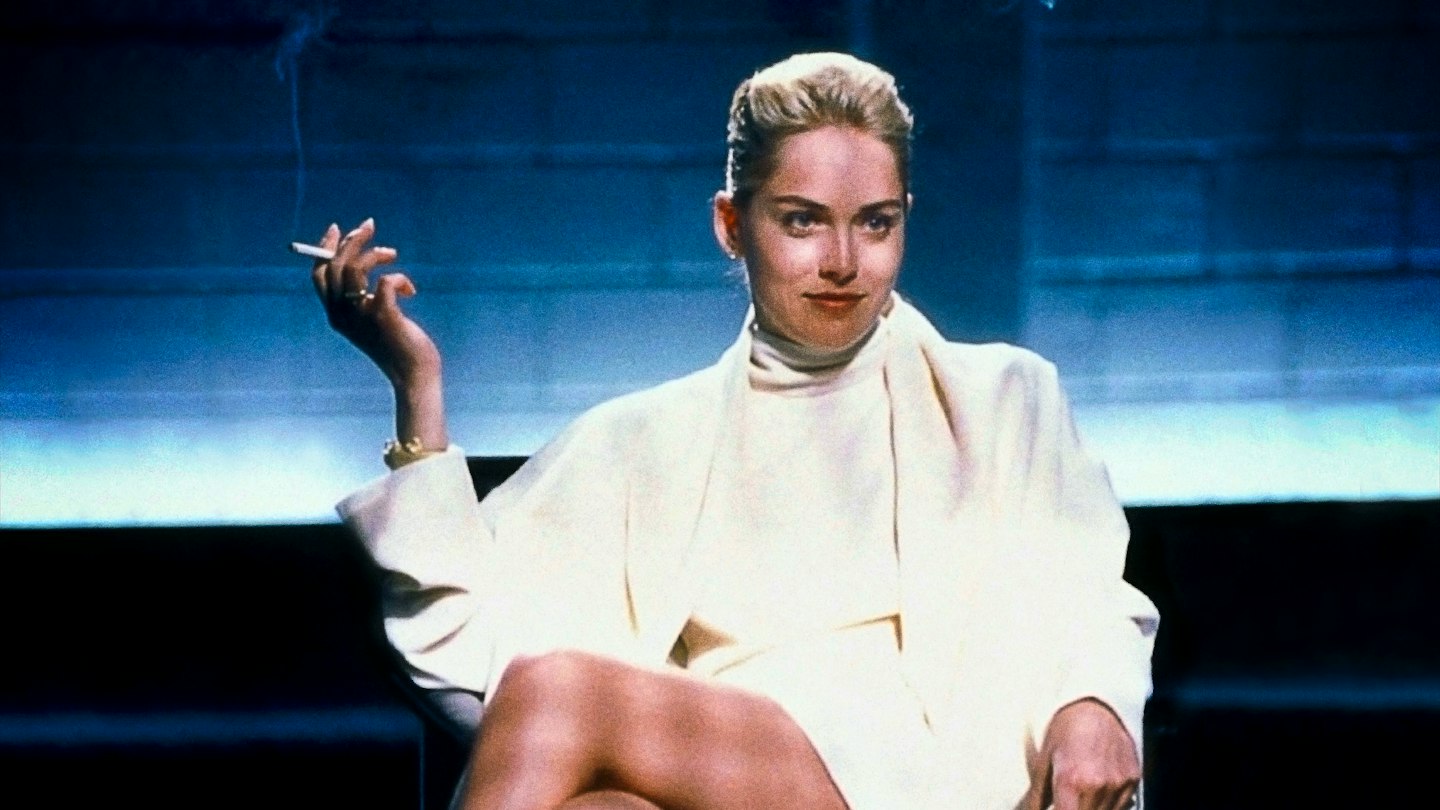
The Interrogation Scene in Basic Instinct: A Definitive Analysis of Sharon Stone’s Iconic Moment
The interrogation scene in the 1992 thriller Basic Instinct features Sharon Stone as Catherine Tramell, a brilliant novelist and murder suspect who disarms a room of detectives through psychological manipulation and a notorious leg cro...
The interrogation scene in the 1992 thriller Basic Instinct features Sharon Stone as Catherine Tramell, a brilliant novelist and murder suspect who disarms a room of detectives through psychological manipulation and a notorious leg cross. It remains one of the most studied and debated sequences in cinematic history for its subversion of power dynamics.
Contents
The scene serves as the pivot point for the entire film, directed by Paul Verhoeven and written by Joe Eszterhas. In 2026, looking back across three decades of film theory and cultural evolution, the scene is no longer viewed merely as a provocative moment of "erotic thriller" excess, but as a masterclass in blocking, costume design, and the psychological "femme fatale" trope. This analysis explores the production history, the technical execution, and the long-standing controversy surrounding its filming.
The Narrative and Psychological Context
To understand the weight of the interrogation scene, one must first look at the narrative stakes. Catherine Tramell is under investigation for the murder of rock star Johnny Boz, who was killed with an ice pick in a manner identical to a murder described in one of her novels.
When Tramell is brought into the police precinct, she is expected to be the prey. Instead, she enters the room with a level of composure that immediately unnerves the five male detectives—including Nick Curran (Michael Douglas). The scene is structured to show that while the detectives hold the legal authority, Tramell holds the psychological and sexual power. She does not answer their questions so much as she critiques their performance, turning a standard police procedure into a high-stakes game of "truth or dare."
The "Leg Cross" Controversy: A Conflict of Perspectives
The most discussed element of the scene is the brief flash of nudity during Stone’s leg cross. For years, the narrative surrounding this moment was divided between the director’s vision and the actor’s experience.
Sharon Stone’s Account
In her 2021 memoir, The Beauty of Living Twice, Stone detailed her version of the events. She claimed she was asked to remove her white underwear because the fabric was reflecting the studio lights and "giving away the scene." She stated she was assured that nothing would be visible on film. It was only later, while viewing the final cut in a room full of agents and lawyers, that she realized the extent of the exposure. Stone famously described slapping Verhoeven and calling her lawyer, though she ultimately allowed the scene to remain, recognizing that it suited the character of Catherine Tramell.
Paul Verhoeven’s Response
Director Paul Verhoeven has consistently maintained a different perspective. In various interviews, including retrospectives for the film's 30th anniversary, he argued that Stone was fully aware of what was being filmed. He contended that the scene was a collaborative effort to push the boundaries of the R-rating and that the "betrayal" narrative was a later development.
Regardless of which version is true, the tension between the two creators mirrors the tension within the scene itself: a battle over visibility, consent, and who truly controls the image.
Technical Execution and Cinematography
The scene’s effectiveness relies heavily on the technical prowess of cinematographer Jan de Bont. The lighting is cold and sterile, typical of a police interrogation room, yet Stone is lit with a soft, almost angelic glow that contrasts with the harsh, sweaty close-ups of the men.
Camera Blocking and Framing
The blocking of the scene is essential for establishing the power shift.
- The Perimeter: The detectives are positioned in a semi-circle, attempting to hem Tramell in.
- The Center: Stone sits in a chair in the middle of the room, yet she occupies more "psychological space" than the men surrounding her.
- The Eye Contact: Tramell maintains steady, unblinking eye contact with Nick Curran. She ignores the other detectives, signaling that he is the only one worthy of her attention—and her manipulation.
Pacing and Editing
The editing by Frank J. Urioste is rhythmic. It builds a crescendo as the detectives become increasingly flustered. The camera cuts between the men’s faces—showing their discomfort, their perspiration, and their distracted glances—and Tramell’s calm, mocking smile. By the time the leg cross occurs, the audience is already primed for a disruption of the "normal" interrogation flow.
Costume Design: The Power of the White Dress
Costume designer Ellen Mirojnick played a crucial role in making this scene iconic. The choice of a sleeveless, white wool crepe dress was a deliberate departure from traditional "femme fatale" attire, which usually favored dark, slinky silhouettes.
- Color Symbolism: White typically symbolizes innocence or purity. In this context, it acts as a camouflage. Tramell uses the color to mock the detectives' search for "the truth."
- The "Killer Blonde" Aesthetic: The dress, combined with Stone’s sleek, pulled-back hair, created a "Hitchcockian blonde" look that suggested cold, calculated intelligence.
- Functionality: The dress was short and form-fitting, designed specifically to facilitate the leg-cross movement while remaining elegant.
| Technical Aspect | Detail | Impact on Scene |
|---|---|---|
| Director | Paul Verhoeven | Focused on provocative, boundary-pushing imagery. |
| Cinematographer | Jan de Bont | Used contrast between cold surroundings and soft-lit subject. |
| Costume | White Wool Crepe Dress | Subverted "femme fatale" tropes; provided visual focus. |
| Lead Actress | Sharon Stone | Delivered a performance of calm, predatory intelligence. |
| Key Prop | Cigarette | Used as a tool of defiance against precinct rules. |
Cultural Impact and Legacy in 2026
By 2026, the interrogation scene has been parodied and referenced hundreds of times in media ranging from The Simpsons to high-fashion editorials. However, its lasting legacy is its role in the evolution of the "Female Gaze" and the discussion of actor agency.
Subverting the Victim Role
In the early 90s, female characters in thrillers were often victims or secondary supporters. Catherine Tramell, particularly in this scene, broke that mold. She was a predator who used the men’s own biology and social expectations against them. She turned her "objectification" into a weapon, proving that she was the smartest person in the room.
Post-#MeToo Re-evaluation
In the current era, the scene is often used as a case study in film schools to discuss the ethics of directing. The controversy over Stone's consent has become a permanent part of the scene’s "text." Viewers in 2026 often watch the scene with a dual perspective: admiring the cinematic brilliance of the performance while remaining critical of the potentially exploitative conditions under which it was produced.
Frequently Asked Questions
Was the leg cross scripted in the original screenplay?
The general action of Catherine Tramell teasing the detectives was present in Joe Eszterhas’s script, but the specific "leg cross" revelation was a collaborative (and controversial) addition during production. Verhoeven claimed the idea came from a real-life experience he had in his youth, while Stone has maintained that the full extent of the exposure was not discussed.
Who designed the white dress Sharon Stone wore?
The dress was designed by Ellen Mirojnick. It was a custom-made, high-neck, sleeveless white dress made of wool crepe. Mirojnick’s goal was to create a look that was "timeless, expensive, and intimidating." The dress sold at auction years later and remains one of the most recognizable costumes in film history.
How did the scene affect Sharon Stone’s career?
Prior to Basic Instinct, Sharon Stone was a working actress who had appeared in several films (such as Total Recall) but was not yet a superstar. The interrogation scene catapulted her to international fame overnight. She became the definitive "sex symbol" of the 1990s, though she later spoke about how difficult it was to be taken seriously as a dramatic actress following such a hyper-sexualized role.
Why is the scene considered "Neo-Noir"?
"Neo-Noir" updates the themes of 1940s Film Noir—cynicism, sexual tension, and moral ambiguity—for a modern audience. The interrogation scene is a classic Neo-Noir moment because it features the "femme fatale" (Tramell) leading the "hard-boiled detective" (Curran) into a psychological trap through the use of shadows, light, and forbidden desire.
Practical Recommendation for Film Students
For those studying film production or gender studies, it is recommended to watch the interrogation scene twice. The first time, focus on the blocking of the male detectives; notice how their physical stature diminishes as Tramell speaks. The second time, watch it with the sound turned off. Observe how much of the story is told purely through the movement of Stone’s eyes and the rhythm of the editing. This dual-viewing approach highlights why the scene remains a technical masterpiece regardless of the controversy surrounding its creation.
For further reading on the production of the film, the official archives of the American Film Institute provide detailed records on the casting and reception of Basic Instinct. Additionally, Sharon Stone's memoir, The Beauty of Living Twice, offers essential context on the power dynamics behind the scenes.
Image Gallery