The History of the Tangalooma Wrecks in Queensland: An Underwater Landmark
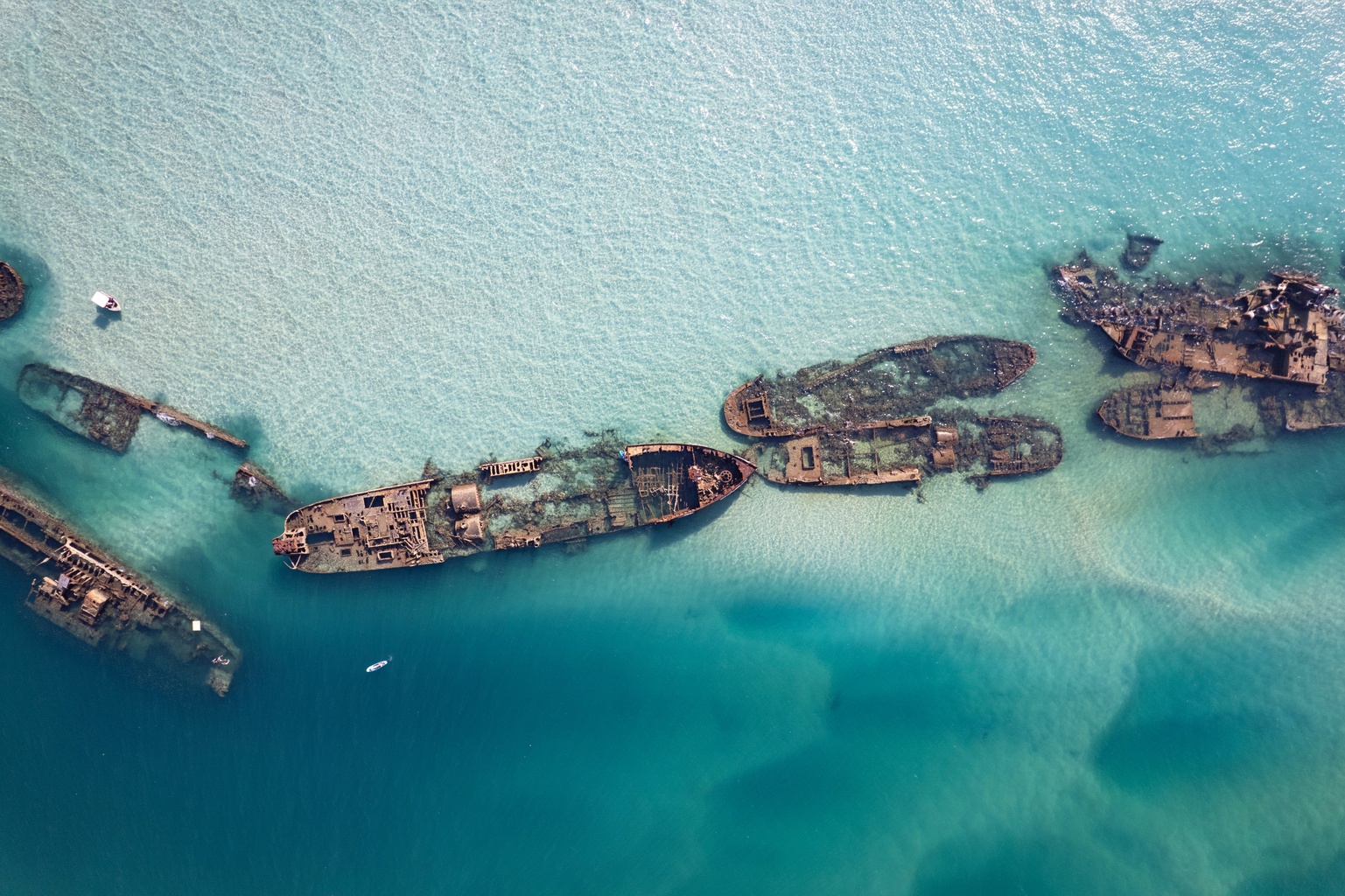
The Tangalooma Wrecks consist of 15 purposely scuttled vessels located off the western coast of Moreton Island in Queensland. Originally sunk between 1963 and 1984 to create a safe anchorage for small craft, the site has evolved into a...
The Tangalooma Wrecks consist of 15 purposely scuttled vessels located off the western coast of Moreton Island in Queensland. Originally sunk between 1963 and 1984 to create a safe anchorage for small craft, the site has evolved into a premier destination for snorkeling, diving, and marine photography, providing an artificial reef habitat for over 100 species of fish and various marine life.
Contents
Origins and Purpose of the Wrecks
The history of the Tangalooma Wrecks is intrinsically linked to the geographical and economic development of Moreton Island. Throughout the mid-20th century, the island served as a base for various industries, most notably the Tangalooma Whaling Station, which operated from 1952 to 1962. As recreational boating grew in popularity in the Moreton Bay region during the early 1960s, local residents and boat owners identified a significant lack of sheltered anchorage on the eastern side of the bay.
To address this, the decision was made to create an artificial harbor. The concept relied on scuttling decommissioned vessels in a line parallel to the shore. By creating this physical barrier, the organizers intended to break the energy of incoming waves, thereby providing a calmer, safer environment for small recreational vessels to moor, especially during adverse weather conditions. The project commenced in 1963, utilizing ships that had reached the end of their commercial or naval operational lives.
The Selection and Scuttling of the Vessels
The vessels chosen for the Tangalooma project were largely older, retired steel-hulled ships, including barges, steam-driven vessels, and dredgers. The choice of steel hulls was deliberate; they provided the structural integrity necessary to withstand the corrosive effects of saltwater and the constant battering of wave action over decades.
The sinking process was a significant logistical operation. Each vessel was towed to the designated shallow waters off the coast, positioned according to a calculated layout, and then flooded in a controlled manner to ensure they rested securely on the sandy bottom. Among the fleet are notable vessels such as the Maryborough, a dredge that once served the Queensland ports, and the Coalish, a smaller barge. The last of the fifteen vessels was added to the site in 1984. Since that time, the site has remained undisturbed by further additions, allowing the ecosystem to stabilize and mature around the rusting iron skeletons.
Notable Vessels in the Formation
While many of the ships have deteriorated significantly due to oxidation, several remain identifiable to researchers and experienced divers.
| Vessel Name | Type of Craft | Estimated Arrival/Sinking Period |
|---|---|---|
| Maryborough | Dredge | Mid-1960s |
| Coalish | Barge | 1960s |
| Eastern | Unknown/Other | 1960s - 1980s |
| Various Barges | Transport/General | 1963–1984 |
Environmental Impact and Biological Succession
Over the past four decades, the Tangalooma Wrecks have transformed from a functional maritime structure into a thriving artificial reef. This phenomenon is known as biological succession, where the submerged steel provides a stable substrate for marine organisms to attach and colonize.
Initial colonization began with algae, barnacles, and mollusks, which quickly coated the steel surfaces. This primary layer attracted smaller grazing fish, which in turn brought in larger predatory species. By 2026, the wrecks are home to an extensive array of marine life, including wobbegong sharks, trevally, kingfish, yellowtail, and occasionally, sea turtles. The structural complexity of the wrecks—comprising hulls, open decks, and cargo holds—offers critical protection for juvenile fish, effectively turning the harbor site into a nursery for the wider Moreton Bay Marine Park.
Access and Recreational Use
The site is located just north of the Tangalooma Island Resort, making it highly accessible to tourists. As of 2026, the area is protected under the Moreton Bay Marine Park zoning regulations. Visitors are allowed to swim, snorkel, and dive around the wrecks, but strict environmental protections are in place to preserve the delicate balance of the artificial reef.
Practical Guidelines for Visitors
- Access: The site is accessible via a short swim from the beach, though many visitors opt for guided kayak tours or boat charters departing from Brisbane or the resort.
- Safety: The wrecks are considered industrial hazards. Sharp metal edges and unstable structures exist, and currents can shift between the hulls. Diving inside the hulls is strictly discouraged and often prohibited due to the risk of entanglement and structural collapse.
- Environmental Conduct: It is illegal to anchor directly onto the wrecks or remove any artifacts. Visitors must maintain buoyancy control to avoid contact with the fragile coral and crustacean growth on the hulls.
- Best Time to Visit: Mid-morning usually offers the best visibility as the sun angle penetrates the water, highlighting the silhouettes of the ships against the sandy floor.
Comparative Analysis: Artificial vs. Natural Reefs
The Tangalooma Wrecks serve as an interesting case study in marine conservation. Unlike natural coral reefs, which grow through biological calcification, artificial reefs like Tangalooma are static structures. While they lack the biodiversity of a complex coral reef system, they provide high-density biomass in regions where natural reefs may not be able to establish due to water turbidity or sand substrate.
| Feature | Tangalooma Wrecks | Natural Coral Reef |
|---|---|---|
| Structure | Man-made steel/iron | Biological calcium carbonate |
| Growth | Deterioration/Rusting | Constant regeneration |
| Stability | Decreasing over time | Self-maintaining (if healthy) |
| Habitat Type | Crevice-heavy/Sheltered | Diverse/Niche-specific |
Current Status and Long-term Preservation
As of 2026, the Tangalooma Wrecks are showing significant signs of age. The saline environment of Moreton Bay has accelerated the oxidation of the steel, leading to the gradual collapse of some upper decks and hulls. The Queensland Department of Environment and Science monitors the site to ensure that as the wrecks degrade, they do not pose an unmanaged navigation hazard to the increased boat traffic in the vicinity.
The loss of structural integrity is an expected part of the lifecycle of an artificial reef. While the wrecks may eventually disintegrate entirely into the sandy bottom of the bay, their legacy remains in the established marine ecosystem that has flourished in their shadow. They represent a unique convergence of mid-century maritime engineering and modern environmental conservation.
Frequently Asked Questions
Can you scuba dive inside the Tangalooma Wrecks? No. It is unsafe to enter the wrecks. The steel has corroded, creating jagged edges and unstable overhead environments. Diving inside poses a severe risk of entrapment and injury. All recreational activities should be restricted to the exterior of the vessels.
Do I need a permit to visit the wrecks? Individual swimmers and snorkelers do not need a specific permit to visit the wrecks, as they are located within the public access zone of the Moreton Bay Marine Park. However, commercial tour operators must hold appropriate permits to conduct business in the area.
Are there sharks at the Tangalooma Wrecks? Yes. Wobbegong sharks and occasionally other reef-dwelling species are common in the area. They are generally bottom-dwelling and non-aggressive, but as with all wildlife, visitors should maintain a respectful distance and avoid touching the animals.
How deep is the water around the wrecks? The water depth varies significantly depending on the tide and the proximity to the shore. Generally, it ranges from 2 to 5 meters. This shallow depth makes the site ideal for snorkeling, but it also necessitates caution regarding the proximity of the hulls to the surface during low tide.
What is the best way to protect the reef? To protect the site, do not touch or lean on the shipwrecks, use reef-safe sunscreen, and ensure that no plastic or waste enters the water. Maintaining neutral buoyancy while swimming is the most effective way to prevent damage to the marine life that has colonized the steel.
Final Recommendation
For those planning a visit to the Tangalooma Wrecks, the most rewarding experience involves visiting during a high tide when water clarity is at its peak. Prioritize booking with an eco-certified tour operator who can provide historical context and ensure adherence to local marine park regulations. By visiting with an appreciation for the site’s history as both a man-made harbor and a modern sanctuary, you contribute to the ongoing legacy of these submerged Queensland icons.
Image Gallery