Navigating a Kidney Transplant Program: Process, Eligibility, and Long-Term Success
A kidney transplant program is a specialized medical service within a hospital or academic center that facilitates the evaluation, surgical implantation, and post-operative management of patients with end-stage renal disease (ESRD). Th...
A kidney transplant program is a specialized medical service within a hospital or academic center that facilitates the evaluation, surgical implantation, and post-operative management of patients with end-stage renal disease (ESRD). These programs utilize multidisciplinary teams to manage waitlists, match donors with recipients, and provide lifelong clinical support to ensure organ longevity.
Contents
For many individuals facing chronic kidney disease (CKD), a transplant offers a significantly higher quality of life and better long-term survival rates compared to dialysis. However, entering a kidney transplant program involves a rigorous journey of medical testing, financial planning, and psychological preparation. As of 2026, the landscape of transplantation continues to evolve with improved matching algorithms and expanded donor criteria, making it essential for patients to understand how these programs operate from start to finish.
The Multidisciplinary Team: Who Manages the Program?
A kidney transplant program is not managed by a single doctor but by a diverse team of specialists. This collaborative approach ensures that every aspect of the patient’s health—physical, emotional, and financial—is addressed.
- Transplant Nephrologist: This physician specializes in kidney health and manages the patient’s medical care before and after the transplant. They focus on stabilizing the patient’s condition and managing immunosuppressant medications.
- Transplant Surgeon: The surgeon performs the actual procedure and oversees the immediate surgical recovery. They determine the technical feasibility of the transplant based on the patient’s anatomy.
- Transplant Coordinator: Usually a registered nurse, the coordinator is the primary point of contact. They schedule evaluations, maintain the patient’s status on the national waitlist, and educate the family.
- Social Worker: They assess the patient’s support system, coping mechanisms, and mental health. Transplantation is emotionally taxing, and the social worker ensures the patient has the stability required for recovery.
- Financial Coordinator: They navigate the complex world of insurance, Medicare, and out-of-pocket costs to ensure the patient can afford the surgery and the lifelong medication required afterward.
- Dietitian: Nutrition is critical for maintaining health while on the waitlist and for promoting healing after the surgery.
The Evaluation Phase: Determining Eligibility
The first major step in any kidney transplant program is the evaluation. This process can take several weeks or even months. The goal is to ensure that the patient is healthy enough to undergo major surgery and that a transplant is the best therapeutic option.
Medical and Diagnostic Testing
Patients undergo an extensive battery of tests, including:
- Blood Typing and Tissue Typing: To determine compatibility with potential donors (HLA matching).
- Cardiac Screening: Including EKGs, stress tests, or echocardiograms to ensure the heart can handle anesthesia and the increased circulatory demands of a new organ.
- Cancer Screenings: Such as colonoscopies, mammograms, and Pap smears. Active malignancy is generally a contraindication for transplant due to the immunosuppressive drugs required later.
- Infectious Disease Testing: Screening for HIV, Hepatitis, and CMV to prepare a post-transplant prophylactic plan.
- Imaging: CT scans or ultrasounds of the abdomen and pelvis to map the vascular structures where the new kidney will be attached.
Psychological and Social Readiness
The program’s selection committee reviews the patient’s history of "compliance" or adherence to medical advice. If a patient has a history of missing dialysis sessions or failing to take prescribed medications, they may be deemed a high-risk candidate. The committee also looks for a "support person"—a friend or family member committed to helping the patient during the first several weeks post-surgery.
Understanding the Waiting List and Allocation
Once a patient is "listed," their information is entered into the national database managed by the Organ Procurement and Transplantation Network (OPTN) and United Network for Organ Sharing (UNOS).
The allocation system is not a first-come, first-served line. Instead, it is a complex algorithm designed to maximize the utility of available organs. Key factors include:
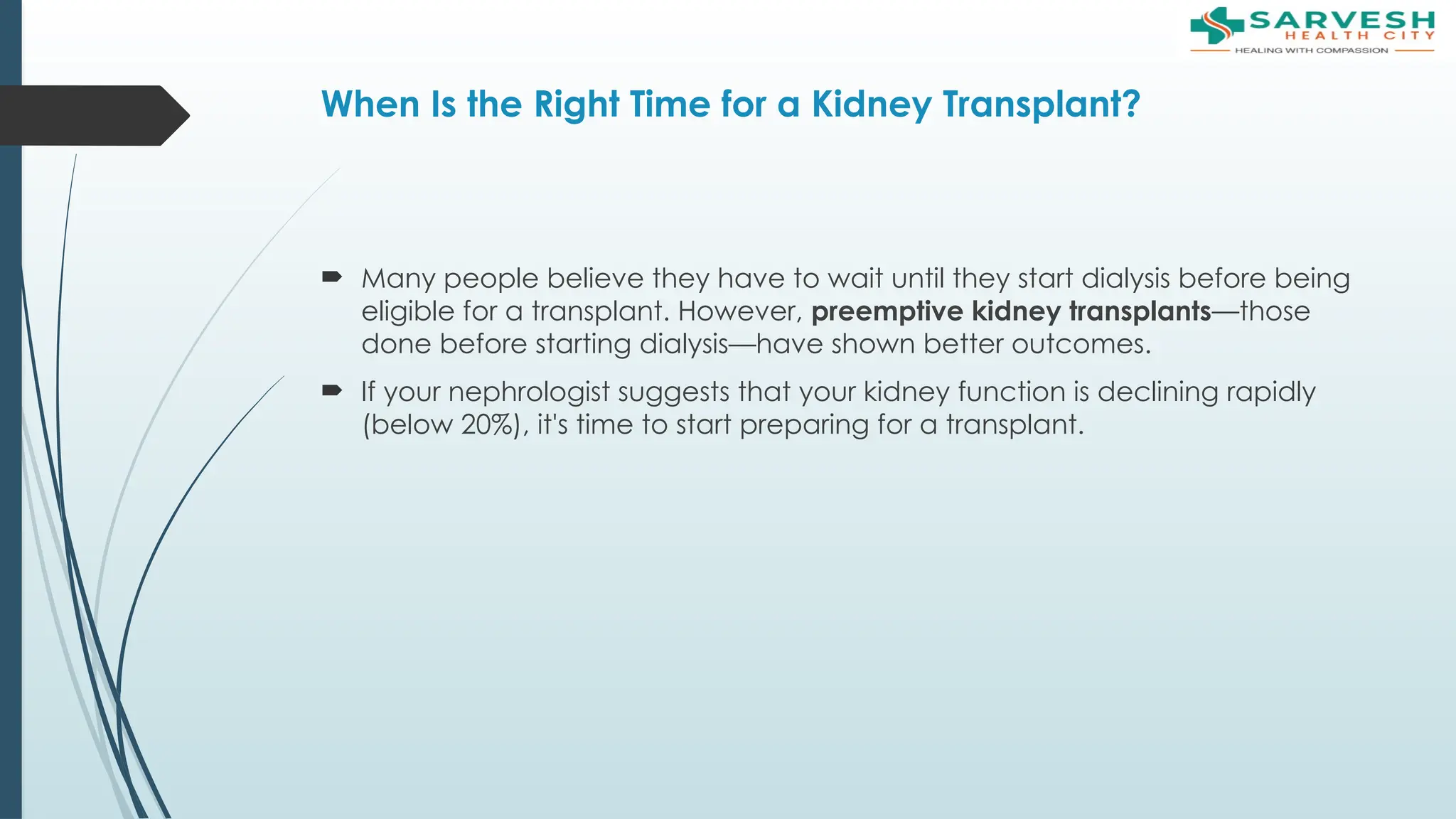
- Waiting Time: Time accumulated since the patient started dialysis or since they were added to the list (if their GFR was below 20).
- Biological Compatibility: Blood type and tissue matching (HLA).
- CPRA (Calculated Panel Reactive Antibody): A measure of how sensitized a patient’s immune system is. Highly sensitized patients get priority for matches they won't reject.
- Pediatric Status: Children are often prioritized to ensure they can grow and develop normally.
- Proximity: Organs are often offered locally first to minimize "cold ischemia time" (the time the organ is outside the body).
As of 2026, many programs also utilize the Kidney Donor Profile Index (KDPI) and the Estimated Post-Transplant Survival (EPTS) score to match the "longevity" of the organ with the "longevity" of the recipient, aiming to reduce the need for re-transplantation.
Living vs. Deceased Donation
A kidney transplant program facilitates two primary types of donation. Understanding the difference is vital for patient planning.
| Feature | Deceased Donor Transplant | Living Donor Transplant |
|---|---|---|
| Source | An individual who has recently passed away. | A healthy person (family, friend, or altruistic). |
| Wait Time | Average of 3 to 5 years (varies by region). | Can be scheduled as soon as evaluation is done. |
| Organ Longevity | Typically lasts 10–15 years. | Typically lasts 15–20+ years. |
| Surgery Timing | Emergency/Unscheduled; often at night. | Elective/Scheduled during the day. |
| Success Rate | Very high (95%+ 1-year graft survival). | Highest success rates (98%+ 1-year graft survival). |
| Delayed Function | Higher risk of "sleepy kidney" (temporary dialysis). | Immediate function is very common. |
Paired Kidney Exchange
If a patient has a willing living donor who is not a biological match (e.g., incompatible blood types), the program may enter them into a Paired Kidney Exchange. This "kidney swap" allows Donor A to give to Recipient B, while Donor B gives to Recipient A, effectively bypassing biological barriers.
The Surgical Procedure: What to Expect
When a kidney becomes available, the patient is called into the hospital immediately. The surgery itself typically takes 3 to 4 hours.
The surgeon usually does not remove the patient’s original, failing kidneys unless they are causing complications like severe infection or high blood pressure (common in Polycystic Kidney Disease). Instead, the new kidney is placed in the lower abdomen (iliac fossa). This location is chosen because it is close to the bladder and the major blood vessels (iliac artery and vein).
After the vascular connections are made, the ureter of the new kidney is attached to the patient’s bladder. A small tube called a stent is often placed in the ureter to keep it open during the initial healing phase; this is removed via a simple outpatient procedure a few weeks later.
Post-Transplant Care and Lifelong Maintenance
Recovery begins in the hospital, where the patient stays for 3 to 7 days. The primary focus is on monitoring kidney function and adjusting immunosuppressant medications.
The Role of Immunosuppressants
The immune system naturally recognizes the new kidney as a foreign object and tries to attack it. To prevent "rejection," patients must take anti-rejection medications for the rest of their lives. Common medications include:
- Calcineurin Inhibitors: Such as Tacrolimus or Cyclosporine.
- Antimetabolites: Such as Mycophenolate Mofetil.
- Corticosteroids: Such as Prednisone (though some programs use "steroid-avoidance" protocols).
Monitoring for Rejection
Rejection does not necessarily mean the transplant has failed. Most rejection episodes are "acute" and can be treated with high-dose intravenous medications if caught early. Programs monitor patients through frequent blood tests to check creatinine levels and, occasionally, through a kidney biopsy.
Financial Considerations and Insurance
The cost of a kidney transplant program can exceed $400,000, including the evaluation, procurement, surgery, and first year of care. In the United States, Medicare plays a central role.
Most ESRD patients are eligible for Medicare regardless of age. Historically, Medicare coverage for immunosuppressant drugs ended 36 months after the transplant. However, current regulations (including the Comprehensive Immunosuppressive Drug Coverage for Kidney Transplant Patients Act) have expanded coverage for these essential drugs for those who do not have other insurance. It is vital to work with the program’s financial coordinator to verify that both the surgery and the long-term medications are covered by your specific policy.
Frequently Asked Questions
What is the age limit for a kidney transplant program?
There is no universal age limit. Programs in 2026 focus more on "biological age" and overall health rather than chronological age. Many programs successfully transplant patients in their 70s and 80s if their heart and lung function are strong enough to withstand surgery and if their life expectancy justifies the use of a donor organ.
How long is the recovery period before I can return to work?
Most patients can return to sedentary desk work within 6 to 8 weeks. Jobs involving heavy lifting or strenuous physical activity may require 3 months or more of recovery to allow the abdominal incision to heal completely and to ensure the immune system is stabilized on medications.
Can I get a transplant if I have a history of heart disease?
Yes, but it requires a more intensive cardiac evaluation. You may need to undergo procedures like angioplasty or bypass surgery to clear any blockages before the transplant program will clear you for the waitlist. The goal is to ensure the heart can handle the increased workload once the new kidney is functioning.
What happens if the transplant fails?
If a transplant fails, the patient returns to dialysis. They may also be eligible to apply for a second or even third transplant. The program will evaluate why the first organ failed—whether it was due to chronic rejection, recurrence of the original disease, or non-compliance—to determine the feasibility of a subsequent procedure.
Is a transplant a cure for kidney disease?
Technically, a transplant is a treatment, not a cure. While it restores kidney function and removes the need for dialysis, the patient still has a chronic condition that requires daily medication and regular monitoring by a nephrologist.
Practical Recommendation for Patients
If you or a loved one are considering a kidney transplant, your first action should be to ask your current nephrologist for a referral to a transplant center. Because wait times are often tied to when you start dialysis or when you are first listed, early referral is the most significant factor in reducing your time on the waitlist.
Furthermore, begin the conversation about living donation with your family and social circle early. Many programs offer "Living Donor Advocates" who can speak to your potential donors independently to ensure they are making a fully informed, pressure-free decision. Taking a proactive approach to finding a living donor can often bypass the years-long national waiting list entirely.
Image Gallery