Matthew McConaughey Civil War Movies: Complete Guide to His Historical Roles
Matthew McConaughey’s primary Civil War film is the 2016 historical drama Free State of Jones, in which he stars as the real-life Southern unionist and armed rebellion leader Newton Knight. While Free State of Jones represents his only...
Matthew McConaughey’s primary Civil War film is the 2016 historical drama Free State of Jones, in which he stars as the real-life Southern unionist and armed rebellion leader Newton Knight. While Free State of Jones represents his only direct Civil War movie, audiences frequently pair it with his other 19th-century period projects, including the 1839 antebellum legal drama Amistad (1997) and the action-adventure Sahara (2005), which revolves around a lost Civil War ironclad ship.
Contents
Understanding Matthew McConaughey’s work in Civil War and 19th-century American history requires examining how these films approach historical reality, Southern identity, and period drama storytelling.
Free State of Jones (2016): McConaughey’s Definitive Civil War Epic
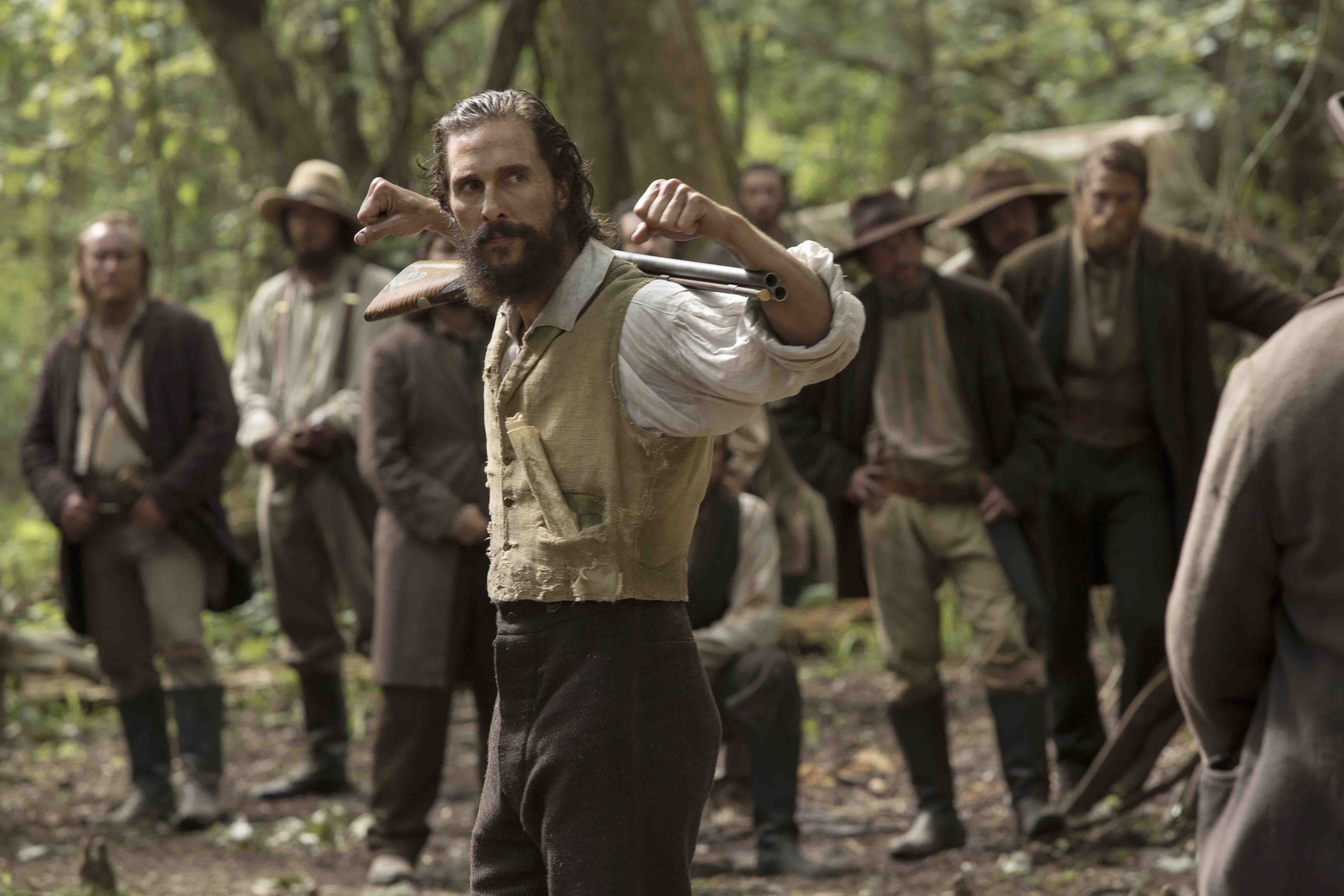
Directed by Gary Ross (The Hunger Games, Seabiscuit), Free State of Jones stands as Matthew McConaughey's main contribution to the American Civil War film genre. Set against the backdrop of the bloody conflict and its agonizing aftermath, the movie shifts the traditional cinematic lens away from high-ranking military commanders and sweeping battlefield maneuvers to focus on internal Southern dissent, class division, and racial resistance.
Plot Summary and Character Breakdown: Newton Knight
McConaughey portrays Newton Knight, a historical figure from Jones County, Mississippi. Knight served initially as a battlefield nurse for the Confederate States Army during the Battle of Corinth. Disillusioned by the Twenty Negro Law—a Confederate statute exempting wealthy plantation owners who held 20 or more slaves from military service—Knight deserted the army to return home to protect his family and small farming community.
Upon returning to Mississippi, Knight discovered that Confederate tax collectors were systematically seizing livestock, crops, and meager household supplies from impoverished farm families under the guise of the "tax-in-kind" policy. Knight rallied a coalition of local farmers, deserters, and escaped African American slaves to launch an armed insurrection against the Confederacy.
This alliance formed the Knight Company, a guerrilla rebellion force that declared Jones County a self-governing enclave aligned with the Union, famously declaring it the "Free State of Jones." McConaughey delivers an intense, grounded performance, capturing Knight’s transition from a tired battlefield medic into a defiant populist leader fighting for basic human dignity.
Historical Context and Post-War Narrative Arc
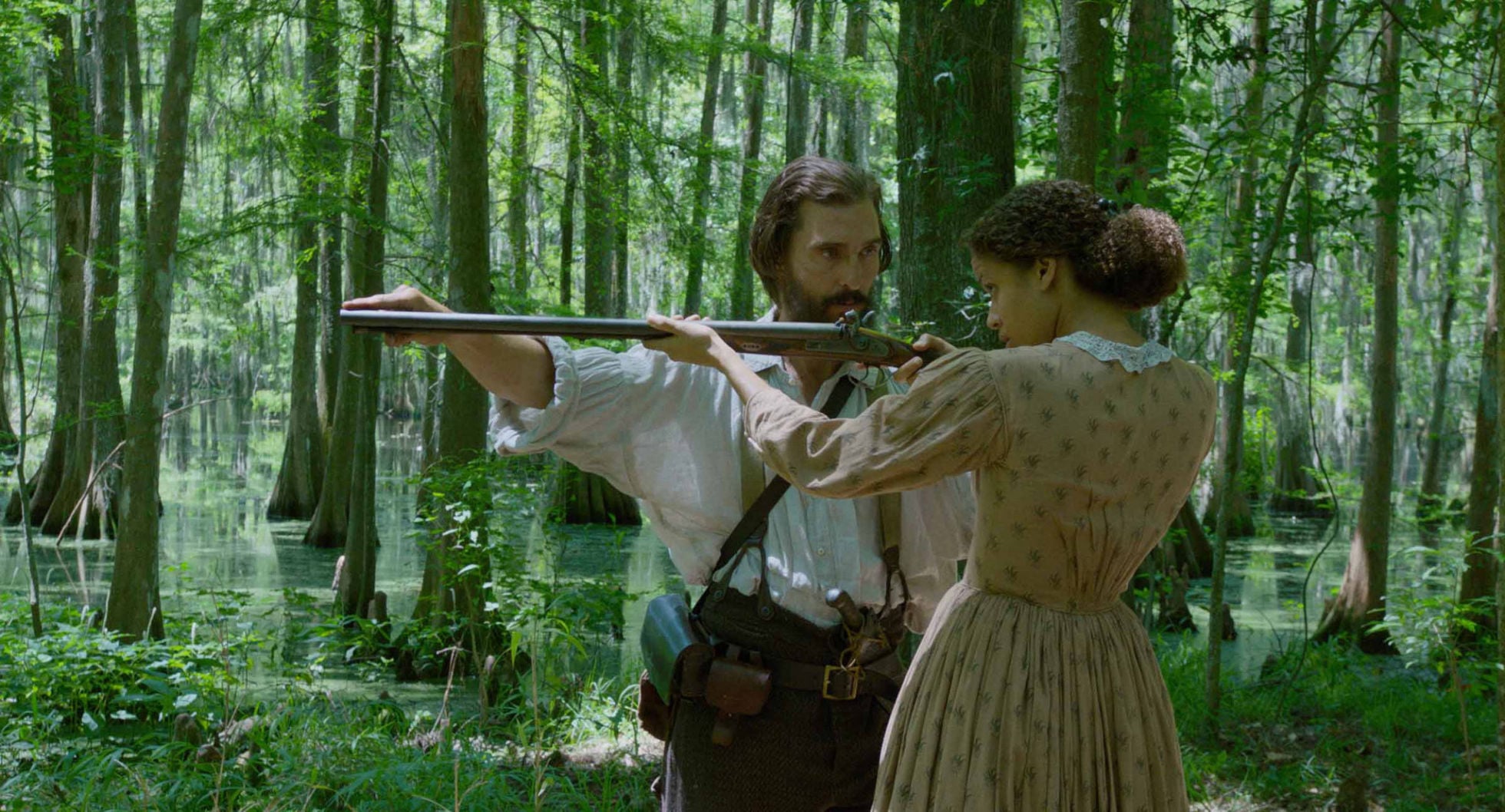
Unlike typical Civil War feature films that end abruptly with the surrender at Appomattox Court House in 1865, Free State of Jones devotes a substantial portion of its runtime to the Reconstruction Era (1865–1877). The narrative follows Knight and his long-time companion Rachel (played by Gugu Mbatha-Raw), a formerly enslaved woman, as they navigate the violent rise of the Ku Klux Klan, voter suppression against newly freed Black citizens, and the economic oppression of the sharecropping system.
The film also incorporates a secondary, flash-forward courtroom storyline set in 1948. This narrative track follows Newton Knight’s great-grandson, Davis Knight, who was prosecuted under Mississippi’s anti-miscegenation laws for marrying a white woman because state prosecutors argued he was legally defined as Black due to his mixed ancestry. This structural framework connects the legacy of Civil War-era racial dynamics directly to 20th-century Jim Crow policies.
Related Historical and Period Films in McConaughey’s Career
While Free State of Jones remains McConaughey’s sole direct Civil War narrative, two other prominent titles in his filmography share thematic, historical, or narrative ties to 19th-century American conflict.
1. Amistad (1997): Antebellum Legal Epic
Directed by Steven Spielberg, Amistad is set in 1839, two decades prior to the outbreak of the American Civil War. The film details the true story of the slave ship La Amistad, where captured Mende captives led a revolt off the coast of Cuba, eventually landing in United States territorial waters near Long Island.
In Amistad, Matthew McConaughey plays Roger Sherman Baldwin, a young, pragmatic real estate attorney hired by abolitionist leaders Lewis Tappan and Theodore Joadson to defend the Mende captives in federal court. Baldwin initially approaches the case strictly as a property law issue, arguing that because the captives were kidnapped illegally from West Africa in violation of international slave trade treaties, they were free individuals legally defending their own lives.
Though Amistad takes place in the antebellum era, its core narrative centers on the legal, political, and moral debates surrounding slavery that ultimately precipitated the American Civil War. McConaughey's legal arguments in the film directly foreshadow the constitutional crises over state sovereignty and human rights that erupted into military conflict in 1861.
2. Sahara (2005): Modern Adventure Driven by a Civil War Legend
Sahara, directed by Breck Eisner and based on Clive Cussler’s best-selling novel, is a modern action-adventure movie set in Africa. However, its overarching plot is propelled entirely by a famous American Civil War urban legend.
McConaughey stars as Dirk Pitt, an underwater explorer working for the National Underwater and Marine Agency (NUMA). Pitt becomes obsessed with locating the CSS Texas, a mythical Confederate ironclad warship that vanished in the final days of the Civil War. According to the film’s lore, the CSS Texas broke through the Union blockade carrying a secret cargo of gold coins from the Confederate treasury before sailing across the Atlantic Ocean and becoming stranded deep in the waterways of West Africa.
While Sahara is primarily a contemporary popcorn adventure rather than a period drama, its opening sequence features a dramatic historical recreation of the fall of Richmond, Virginia, in 1865 and the launching of the ironclad ship into the night.
Comparative Overview of McConaughey’s Historical Roles
The following table provides a breakdown of Matthew McConaughey's major films connected to the Civil War, the antebellum era, and Civil War historical lore.
| Film Title | Release Year | Historical Setting / Era | McConaughey's Role | Primary Historical Focus |
|---|---|---|---|---|
| Free State of Jones | 2016 | 1862–1876 (with 1948 flash-forwards) | Newton Knight | Southern Unionism, guerrilla warfare in Mississippi, Reconstruction, and anti-racist resistance. |
| Amistad | 1997 | 1839 (Antebellum Period) | Roger Sherman Baldwin | Antebellum international slave trade legal battle and property rights constitutional argument. |
| Sahara | 2005 | 2005 (with an 1865 historical prologue) | Dirk Pitt | Modern search for a lost Civil War Confederate ironclad warship (CSS Texas). |
Critical Reception and Historical Accuracy of Free State of Jones
Evaluating Free State of Jones requires assessing both its technical cinematic achievements and its commitment to factual historical records.
Real-Life History vs. Hollywood Dramatization
Director Gary Ross spent over a decade conducting archival research to ensure Free State of Jones adhered as closely as possible to historical primary sources. The film relies heavily on historical scholarship, including Victoria E. Bynum’s seminal academic book The Free State of Jones: Mississippi's Longest Civil War.
Key elements of historical accuracy in the film include:
- The Twenty Negro Law: The movie accurately portrays how wealthy Southern slaveholders were exempt from military service, creating deep resentment among non-slaveholding white yeoman farmers who felt they were fighting a "rich man's war and a poor man's fight."
- Interracial Solidarity: The film documents the genuine cooperation between deserters of the Knight Company and local escaped slaves living in the swamps, highlighting an unusual and authentic coalition of anti-Confederate resistance in deep-South Mississippi.
- Post-War Political Activism: Newton Knight’s actual work during Reconstruction included serving as a deputy U.S. Marshal and assisting black citizens in registering to vote, details that the film includes to reflect his lifelong commitment to local political equality.
Some critics noted that the film occasionally centers Knight’s heroism at the expense of Black figures within the resistance movement, a common critique of historical Hollywood narratives. However, film historians routinely commend Free State of Jones for refusing to soften the realities of post-war Southern violence, lynching, and economic disenfranchisement.
Box Office Performance and Critical Assessment
Despite strong production values and McConaughey’s critically praised performance, Free State of Jones struggled commercially upon its release in June 2016. Against an estimated production budget of approximately $50 million, the film grossed roughly $25 million worldwide.
Critical reception was divided:
- Positive Reviews: Critics applauded the film's refusal to romanticize the Confederacy, praising McConaughey’s committed lead performance and the film's unflinching examination of Reconstruction and voting rights.
- Mixed/Negative Reviews: Some reviewers argued that the movie felt overly educational or academic, stating that the lengthy timeline felt episodic rather than dramatic.
In the years following its theatrical release, Free State of Jones has developed a quiet reputation among historians, educators, and cinephiles as one of the most historically grounded Civil War feature films produced in modern cinema.
Historical Context: Understanding Southern Unionism
To fully appreciate McConaughey’s performance in Free State of Jones, viewers must understand the broader historical concept of Southern Unionism. Popular media often portrays the Civil War as a strictly regional divide between a unified Northern Union state and a homogenous Southern Confederacy. In reality, significant pockets of anti-secession sentiment existed across the South.
Areas with low slave-ownership populations—such as the Appalachian Mountains of East Tennessee, Western North Carolina, Northern Alabama, and the pine forests of Jones County, Mississippi—produced thousands of white Southerners who actively opposed the Confederacy. Some joined Union regiments directly, while others formed local insurgent groups like Newton Knight's forces to defend their home counties against Confederate impressment officers.
Free State of Jones stands out in American cinema because it directly addresses this complex political dynamic, challenging the Lost Cause myth by showing that not all white Southerners supported the Confederate cause.
How to Watch Matthew McConaughey's Civil War and Historical Films
For film enthusiasts and history buffs looking to stream or purchase these titles, availability across major digital platforms remains steady.
- Free State of Jones (2016): Available for digital rental and purchase across major services including Amazon Prime Video, Apple TV, Google Play, and Vudu. Physical media editions (Blu-ray and DVD) feature behind-the-scenes featurettes detailing the research of the Knight family historical records.
- Amistad (1997): Frequently included in subscription streaming catalogs such as Paramount+ or available for digital rental/purchase on all major platforms. Paramount offers high-definition and 4K digital remasters.
- Sahara (2005): Widely available on digital video-on-demand platforms, as well as physical media formats.
Frequently Asked Questions
Did Matthew McConaughey win an Oscar for Free State of Jones?
No, Matthew McConaughey was not nominated for an Academy Award for his role as Newton Knight in Free State of Jones. His Academy Award win occurred earlier in 2014 for his role as Ron Woodroof in Dallas Buyers Club (2013).
Is Newton Knight in Free State of Jones a real historical figure?
Yes, Newton Knight was a real historical figure born in Mississippi in 1829. He led the Knight Company rebellion against Confederate military authorities in Jones County during the American Civil War and lived as an outcast in Mississippi until his death in 1922.
Are there any other Civil War movies starring Matthew McConaughey?
No. Free State of Jones (2016) is the only full-length Civil War movie featuring Matthew McConaughey as the primary protagonist. Amistad (1997) takes place in the antebellum era prior to the war, while Sahara (2005) uses a Civil War ship as a modern plot point.
What is the age rating for Free State of Jones?
Free State of Jones is rated R by the Motion Picture Association (MPA) due to intense depictions of wartime violence, graphic battle injuries, historical racial slurs, and realistic depictions of post-war violence.
Did Newton Knight really marry an enslaved woman?
Newton Knight formed a lifelong relationship with Rachel, a formerly enslaved woman who assisted his rebellion during the war. While state laws in Mississippi strictly prohibited interracial marriage, they lived together on shared land, raised children, and Knight insisted on being buried next to her upon his death, defying state law even in burial.
Practical Viewing Guidance
If you are seeking a detailed, authentic cinematic look at the American Civil War through Matthew McConaughey's film catalog, start directly with Free State of Jones. To maximize your understanding of the history behind the film, pair your viewing with secondary historical literature on Southern Unionism or official educational resources from institutions like the National Archives or the Library of Congress.
For viewers conducting broader filmography research into McConaughey's dramatic historical work, watch Amistad immediately following Free State of Jones to see how the legal and moral debates of the 1830s evolved into the military and political conflicts of the 1860s.
Image Gallery