Carlos Zambrano Stats: A Comprehensive Look at Big Z’s MLB Career
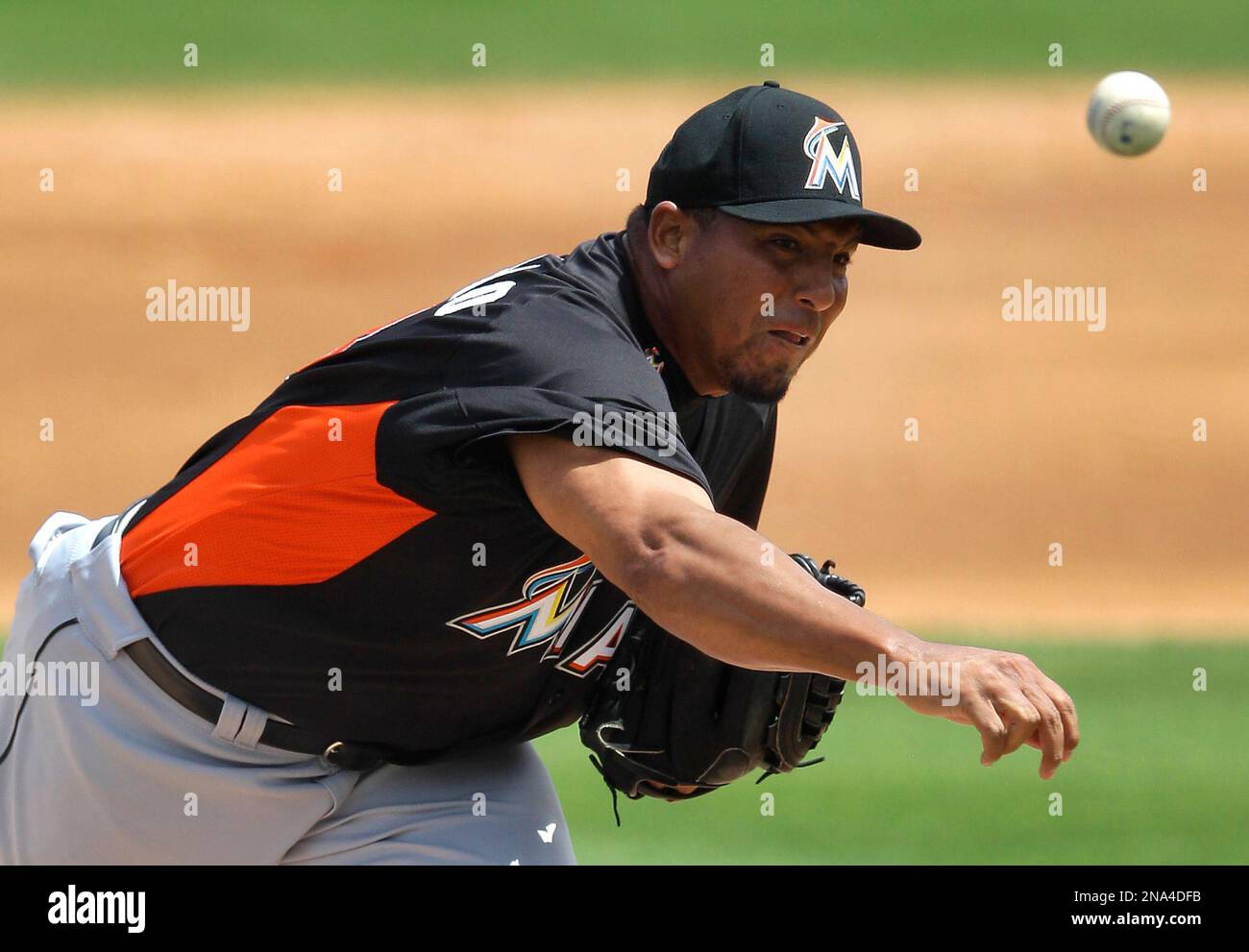
Carlos Zambrano finished his Major League Baseball career with a 132-91 record, a 3.66 ERA, and 1,637 strikeouts over 12 seasons. Primarily known for his tenure with the Chicago Cubs, he was a three-time All-Star and remains one of the...
Carlos Zambrano finished his Major League Baseball career with a 132-91 record, a 3.66 ERA, and 1,637 strikeouts over 12 seasons. Primarily known for his tenure with the Chicago Cubs, he was a three-time All-Star and remains one of the greatest hitting pitchers in modern baseball history, finishing with 24 career home runs and three Silver Slugger Awards.
Contents
Carlos Zambrano, affectionately known as "Big Z," remains one of the most enigmatic and talented figures in the history of the Chicago Cubs. His career, which spanned from 2001 to 2012, was defined by a rare combination of power pitching, exceptional hitting for a pitcher, and a high-intensity emotional engine that made every start an event. As we look back from 2026, Zambrano’s statistical footprint serves as a bridge between the traditional workhorse era of the early 2000s and the modern era of specialized pitching.
The Pitching Foundation: Power and Durability
The core of Carlos Zambrano's value lay in his ability to consume innings while maintaining a high strikeout rate. Standing 6'4" and weighing over 270 pounds during his prime, Zambrano utilized a heavy sinker, a biting slider, and a split-finger fastball to dominate hitters. Between 2003 and 2008, he was the undisputed ace of the Cubs' staff, a period during which he reached at least 200 innings pitched in six consecutive seasons.
His 2004 season is often cited by analysts as his statistical peak. During that campaign, Zambrano posted a 16-8 record with a 2.75 ERA. He finished fourth in the National League Cy Young voting, showcasing a durability that has become increasingly rare in the contemporary game. His ability to suppress home runs was particularly notable; in an era where power hitting was resurgent, Zambrano’s sinker kept the ball on the ground, allowing him to maintain a career HR/9 rate of just 0.8.
However, Zambrano’s pitching style was also characterized by a struggle with control. He led the National League in walks twice (2006 and 2007) and hit 10 or more batters in five different seasons. This volatility often led to high pitch counts early in games, yet his sheer physical strength usually allowed him to push through into the seventh or eighth inning.
The Silver Slugger: A Dual-Threat Phenomenon
While his pitching statistics earned him All-Star nods, Zambrano’s hitting statistics turned him into a cult hero and a statistical outlier. In the history of the National League, few pitchers have ever been as dangerous at the plate as Big Z. He finished his career with a .238 batting average, which is remarkable for a pitcher, but his power numbers are what truly stand out.
Zambrano hit 24 home runs during his MLB career. To put this in perspective, he holds the Cubs' franchise record for home runs by a pitcher, surpassing Hall of Famer Ferguson Jenkins. His offensive prowess was not merely a novelty; he was frequently used as a pinch-hitter in high-leverage situations. His three Silver Slugger Awards (2006, 2008, 2009) serve as a testament to his status as the premier hitting pitcher of his generation.
His 2008 offensive season was particularly impressive, as he batted .337 with four home runs and an OPS of .954. For a pitcher to maintain a near-1.000 OPS over a full season (even with limited plate appearances) remains one of the most significant statistical anomalies of the 21st-century Chicago Cubs.
Career Statistical Milestones and Achievements
Zambrano’s career is punctuated by several high-water marks that define his legacy in Chicago and Miami. Beyond the standard wins and losses, his ability to perform in the spotlight was evidenced by his 2008 no-hitter.
The 2008 No-Hitter
On September 14, 2008, Zambrano threw a no-hitter against the Houston Astros. Due to Hurricane Ike, the game was moved from Houston to Miller Park in Milwaukee. Zambrano struck out 10 batters and walked only one, throwing 110 pitches. This remains the only no-hitter in MLB history to be thrown at a neutral site. It was a masterpiece that combined his power pitching with uncharacteristic precision.
Postseason Performance
Zambrano appeared in the postseason three times with the Cubs (2003, 2007, and 2008). While his overall postseason ERA of 5.29 is higher than his career average, he provided one of the most memorable performances in Cubs playoff history during the 2003 NLCS against the Florida Marlins. His intensity in those high-stakes games solidified his reputation as a "big game" pitcher, even when the box scores didn't fully reflect his dominance.
Comparative Career Statistics Table
The following table summarizes the primary statistical categories for Carlos Zambrano’s Major League career, providing a snapshot of his consistency and impact.
| Category | Career Total / Average | League Rank (Peak Years) |
|---|---|---|
| Wins - Losses | 132 - 91 | Top 10 in NL (2003-2007) |
| Earned Run Average (ERA) | 3.66 | 2.75 (Career Best, 2004) |
| Strikeouts (SO) | 1,637 | 210 (Career Best, 2006) |
| Innings Pitched (IP) | 1,959.0 | 200+ IP (6 Consecutive Years) |
| Batting Average (AVG) | .238 | Led all Pitchers (Multiple) |
| Home Runs (HR) Hit | 24 | Cubs Franchise Record (Pitcher) |
| Silver Slugger Awards | 3 | 2006, 2008, 2009 |
| All-Star Selections | 3 | 2004, 2006, 2008 |
The "Big Z" Persona: Impact Beyond the Numbers
To analyze Carlos Zambrano’s stats without mentioning his temperament would be to tell only half the story. His emotional outbursts—ranging from pointed dugout confrontations to the infamous destruction of a Gatorade machine—often overshadowed his statistical output. However, many teammates and coaches argued that this fire was exactly what fueled his performance.
Zambrano’s statistics often fluctuated based on his emotional state. When he channeled his energy, he was nearly unhittable. When he lost focus, his walk rate spiked. This human element makes his 132 career wins even more impressive, as he often had to battle his own internal intensity as much as the opposing lineup. By the time he transitioned to the Miami Marlins in 2012, the physical toll of his high-effort delivery and the mental toll of a decade in the Chicago spotlight began to show in his declining strikeout-to-walk ratios.
Life After the Majors: The Extended Career
Although Zambrano’s MLB career ended in 2012, his statistical journey continued in various independent and international leagues. He played in the Venezuelan Winter League, the Mexican League, and even made a comeback attempt with the Chicago Dogs of the American Association in 2019.
While these statistics aren't counted toward his MLB totals, they reflect a player who simply could not walk away from the game. In these later years, he transitioned more toward a relief role, showing a surprising ability to adapt his power-sinker repertoire to shorter stints. His dedication to the sport post-retirement has contributed to his enduring popularity among baseball purists who value the "workhorse" mentality.
Frequently Asked Questions
How many home runs did Carlos Zambrano hit in his career?
Carlos Zambrano hit 24 home runs during his Major League career. This is the most by any Chicago Cubs pitcher in franchise history and puts him among the top hitting pitchers in the history of the game. He won three Silver Slugger Awards as a result of his offensive contributions.
Was Carlos Zambrano ever a Cy Young winner?
No, Carlos Zambrano never won the Cy Young Award, but he was a frequent contender. His highest finish was 4th place in 2004. He also finished 5th in 2006 and 2007, and received votes in 2003 and 2005. His peak dominance occurred during a period of incredible pitching talent in the National League, often competing with the likes of Randy Johnson and Roy Halladay.
What was Carlos Zambrano's fastest pitch?
In his prime, Zambrano consistently touched 97-99 mph with his four-seam fastball. However, his most effective pitch was his heavy sinker, which usually sat between 92-95 mph with significant late downward movement. This velocity, combined with the movement, made him one of the most difficult pitchers to hit for power.
Why did Carlos Zambrano retire?
Zambrano’s retirement was a gradual process rather than a single event. After a decline in performance and several disciplinary issues with the Cubs, he was traded to the Marlins in 2012. Following that season, he struggled to find a permanent spot on an MLB roster. While he continued to play in independent and international leagues until 2019, his MLB career effectively ended due to a combination of declining physical health and the league's shift away from high-volatility veterans.
What is Carlos Zambrano doing now in 2026?
As of 2026, Carlos Zambrano has remained active in the baseball community, often appearing at Cubs alumni events and working with youth baseball initiatives in Venezuela and the United States. He has also been vocal about his faith and involvement in Christian ministry, a path he began exploring during the latter half of his playing career.
Practical Recommendation for Researchers
For those looking to dive deeper into the granular data of Carlos Zambrano's career, it is recommended to consult Baseball-Reference for a pitch-by-pitch breakdown or the SABR Biography Project for historical context on his most significant games. If you are analyzing his impact on the "hitting pitcher" era, comparing his Silver Slugger seasons to those of Madison Bumgarner or Mike Hampton provides a fascinating look at how National League strategies evolved before the universal DH was implemented.
Image Gallery