What Critical Illness Life Insurance Actually Covers: Full Protection & Exclusion Guide
Critical illness life insurance provides a tax-free lump-sum payout if you are diagnosed with a specified, major health condition covered under your policy. While coverage varies by insurer, it primarily covers life-altering events lik...
Critical illness life insurance provides a tax-free lump-sum payout if you are diagnosed with a specified, major health condition covered under your policy. While coverage varies by insurer, it primarily covers life-altering events like invasive cancer, heart attack, stroke, major organ failure, and bypass surgery, provided the diagnosis meets strict medical severity criteria.
Contents
Disclaimer: This guide is for informational purposes only and does not constitute formal legal, financial, or tax advice. Insurance policy terms, definitions, and regulatory guidelines vary by country, state, and provider. Always review your specific policy contract and consult a licensed insurance professional or financial advisor before purchasing or modifying coverage.
Understanding Critical Illness Coverage: Riders vs. Standalone Policies
When evaluating critical illness insurance, it is essential to distinguish between a critical illness rider attached to a traditional life insurance policy and a standalone critical illness policy. While both aim to mitigate the financial shock of a severe medical diagnosis, they function differently in terms of pricing, benefit structures, and payouts.
Accelerated Death Benefit Riders
Many life insurance contracts incorporate critical illness protection as an Accelerated Death Benefit (ADB) rider. If you suffer a qualifying critical health event, the insurer allows you to access a portion of your policy’s face value—such as 25%, 50%, or up to 80%—while you are still alive.
However, accelerating your death benefit directly reduces the remaining payout left to your beneficiaries upon your death. For example, if you hold a $500,000 term life policy and accelerate $200,000 to pay for cancer treatments and living expenses, your beneficiaries will receive $300,000 upon your eventual passing (minus any administrative processing adjustments).
Standalone Living Benefit Policies
A standalone critical illness policy operates independently of your life insurance policy. If you meet the policy’s diagnostic criteria, the insurer pays out a separate indemnity benefit—for instance, a flat $50,000 or $100,000 lump sum—without reducing or altering your primary life insurance death benefit.
Standalone policies often feature a broader list of covered conditions and allow you to purchase higher individual limit options, though they carry their own separate premium payments.
- Living Benefit Options
- Accelerated ADB Rider
- Advances Death Benefit
- Reduces Beneficiary Payout
- Standalone CI Policy
- Separate Lump Sum
- Death Benefit Untouched
- Accelerated ADB Rider
The Core Conditions Covered by Critical Illness Insurance
While policy language differs across insurance carriers, standard critical illness contracts built around industry benchmarks—such as those published by the National Association of Insurance Commissioners (NAIC)—focus heavily on catastrophic, high-cost health events.
- Core Covered Categories
- Cancer (Invasive Malignancy)
- Cardiovascular (Heart Attack, Stroke)
- Neurological (MS, Parkinson's)
- Organ Failure & Surgeries (Transplants)
- Loss of Physical Capacity (Paralysis)
1. Invasive Cancer
Cancer accounts for the majority of critical illness claims worldwide. However, coverage generally requires a diagnosis of invasive malignancy, defined as the presence of a malignant tumor characterized by uncontrolled growth and expansion into surrounding tissue.
- What is covered: Leukemias, lymphomas, Hodgkin’s disease, malignant melanoma, and invasive solid tumors (e.g., lung, breast, colon, or prostate cancer that has invaded healthy tissue).
- What is typically excluded or restricted: Non-invasive cancers (carcinoma in situ), early-stage skin cancers such as basal cell or squamous cell carcinoma, pre-malignant lesions, and stage 1 prostate cancers without systemic involvement.
2. Major Cardiovascular Events
Heart disease remains a leading medical cause of disability and mortality. Insurance policies strictly define cardiovascular events using precise objective medical markers recognized by organizations like the American Heart Association.
- Heart Attack (Myocardial Infarction): To trigger a claim, a heart attack must typically present elevated cardiac enzymes (such as Troponin I or T) alongside classic diagnostic changes on an electrocardiogram (ECG) or imaging evidence showing a permanent loss of heart muscle tissue.
- Coronary Artery Bypass Graft (CABG): Payouts are triggered when a cardiothoracic surgeon performs open-chest surgery to correct narrowing or blockage of one or more coronary arteries. Angioplasty, stenting, and non-surgical catheter treatments are frequently excluded or compensated at a lower partial benefit rate.
- Stroke: Payouts require a cerebrovascular incident resulting from thrombosis, hemorrhage, or embolism, accompanied by objective, permanent neurological deficits (e.g., loss of speech, motor impairment, or paralysis).
3. Neurological Conditions
Severe neurological disorders that impair central nervous system function are widely covered, including:
- Multiple Sclerosis (MS): Must be definitively diagnosed by a board-certified neurologist, demonstrating persisting neurological deficits across multiple episodes.
- Parkinson’s Disease: Requires advanced clinical signs that cannot be controlled by medication, resulting in significant functional impairment.
- Major Head Trauma & Coma: Covers traumatic brain injury or medically induced/spontaneous comas lasting longer than a continuous specified threshold (typically 96 hours or more) requiring life-support assistance.
4. Major Organ Failure and Surgeries
End-stage organ failure requires complex medical interventions and long-term care, making it a central pillar of critical illness coverage.
- End-Stage Renal (Kidney) Failure: Chronic, irreversible failure of both kidneys requiring ongoing regular hemodialysis or peritoneal dialysis.
- Major Organ Transplant: Being placed on an official national organ transplant waiting list or undergoing human-to-human transplantation for a heart, lung, liver, kidney, pancreas, or bone marrow.
- Aortic Surgery: Surgical intervention to repair an aneurysm or dissection of the thoracic or abdominal aorta.
5. Physical Impairments and Functional Loss
Catastrophic functional loss resulting from disease or injury is often incorporated into comprehensive plans:
- Paralysis: Complete and permanent loss of use of two or more limbs due to spinal cord injury or disease.
- Blindness, Deafness, and Loss of Speech: Total, irreversible loss of sight, hearing, or vocal capability that cannot be restored through medical devices or corrective surgery.
Medical Severity Thresholds: Why Diagnosis Alone Is Not Enough
A common misconception among policyholders is that receiving a doctor's diagnosis for a named disease guarantees an immediate payout. In critical illness insurance, the severity of the illness matters as much as the diagnosis itself.
- Diagnosis
- Severity Check
- Meets threshold: Proceed to Waiting Period
- Does NOT meet threshold: Claim Denied
- Waiting Period
- Claim Approved
Insurers write strict clinical thresholds into policy language to ensure benefits are paid for life-altering events rather than manageable, mild conditions.
Diagnostic Criteria Requirements
- Troponin & ECG Elevation for Heart Attacks: Chest pain alone or an elevated heart rate will not satisfy claim conditions. The policy contract mandates documented elevated cardiac biomarkers alongside localized wall-motion abnormalities or specific diagnostic wave changes on an ECG.
- Exclusion of Transient Ischemic Attacks (TIAs): TIAs, often called "mini-strokes," involve temporary neurological disruption that resolves within 24 hours without leaving permanent brain damage. Because TIAs do not cause permanent neurological deficit, they are explicitly excluded under standard stroke clauses.
- Pathological Confirmation of Cancer: Claims for cancer must be backed by microscopic examination of fixed tissue or blood preparations performed by a licensed pathologist. Clinical suspicion or elevated tumor markers alone are insufficient.
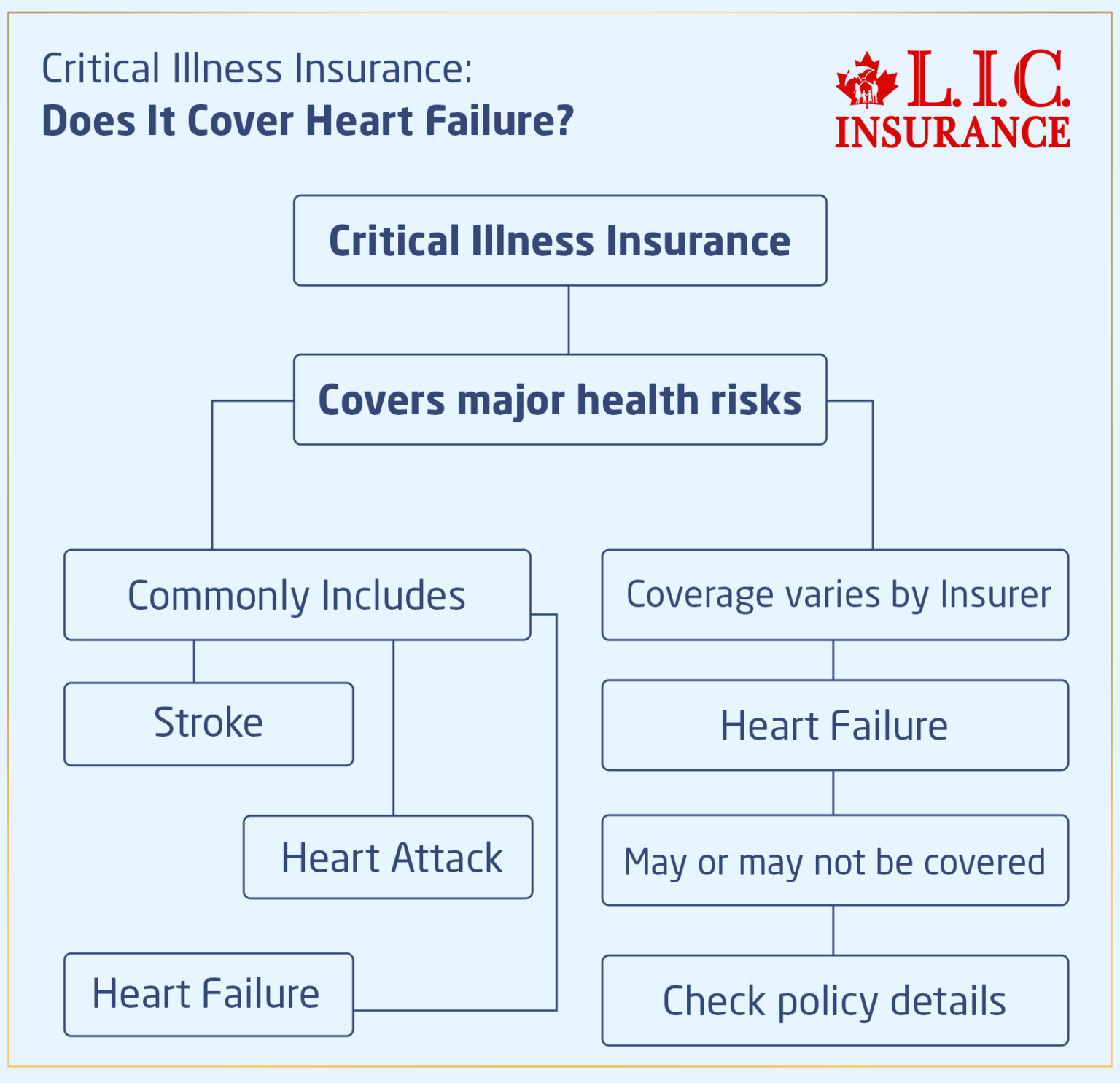
- Ejection Fraction Limits: Heart failure definitions often mandate that a patient's left ventricular ejection fraction (LVEF) drop below a specific threshold (e.g., 30% or 35%) to qualify for a payout under severe heart conditions.
What Critical Illness Policies Explicitly Exclude
Understanding what critical illness life insurance does not cover is crucial for establishing an accurate safety net. Standard exclusion lists generally include:
- Pre-Existing Conditions: Any illness, symptom, or medical issue for which you sought medical advice, diagnosis, or treatment prior to the policy's effective date is excluded, typically subject to a 12-to-24-month lookback clause.
- Early-Stage or Non-Invasive Cancers: Stage 0 cancers, carcinoma in situ of the cervix or breast, localized skin cancers (such as basal cell or squamous cell carcinomas), and early stage 1 prostate cancers are generally excluded or paid out at a reduced partial rate (e.g., 10% to 25% of the total benefit).
- Conditions Caused by Alcohol or Substance Abuse: Illnesses stemming directly or indirectly from chronic drug use, illegal substance consumption, or excessive alcohol intake are excluded.
- Self-Inflicted Injuries and Hazardous Acts: Conditions arising from intentional self-harm, attempted suicide, commission of a felony, or involvement in high-risk activities (such as military action or unapproved aviation) are denied.
- Elective or Non-Essential Surgeries: Surgeries performed electively or without medical necessity—such as cosmetic modifications—do not qualify, even if complications arise.
- Mental Health Conditions: Psychological illnesses like major depression, bipolar disorder, severe anxiety, or post-traumatic stress disorder (PTSD) are omitted from standard critical illness scope, as coverage focuses strictly on physical organic pathology.
Critical Illness vs. Chronic Illness vs. Terminal Illness Riders
Insurers offer several distinct living benefit riders. Misunderstanding the lines between critical, chronic, and terminal illness benefits can lead to surprises during a claim.
| Living Benefit Rider Types | Description |
|---|---|
| Critical Illness | Triggered by specific, acute medical diagnoses (e.g., Invasive Cancer, Stroke, Heart Attack). |
| Chronic Illness | Triggered by functional loss: Inability to perform 2 of 6 ADLs or severe cognitive impairment. |
| Terminal Illness | Triggered by certified life expectancy threshold (typically 12 to 24 months remaining). |
- Critical Illness: Triggered by a specific, acute medical diagnosis (e.g., stroke, heart attack, invasive cancer) meeting clear diagnostic thresholds, regardless of whether the illness prevents you from working or performing daily living activities.
- Chronic Illness: Triggered by the loss of functional capacity. To qualify, a licensed health care practitioner must certify that you cannot perform at least 2 out of 6 Activities of Daily Living (ADLs)—bathing, dressing, eating, toileting, transferring, and continence—or that you require substantial supervision due to severe cognitive impairment (such as Alzheimer's disease).
- Terminal Illness: Triggered solely by life expectancy. A medical physician must certify that your medical condition is reasonably expected to result in death within a designated timeframe, typically 12 to 24 months.
Summary Matrix: Coverage Criteria and Common Exclusions
The following table highlights how major health conditions are evaluated under standard critical illness terms:
| Condition Category | Commonly Covered Conditions | Standard Diagnostic Threshold Required | Typical Policy Exclusions |
|---|---|---|---|
| Oncology | Invasive cancer, leukemia, lymphoma, Hodgkin's disease | Pathological confirmation of malignant cells invading healthy surrounding tissue | Carcinoma in situ, basal/squamous cell skin cancer, Stage 1 prostate cancer |
| Cardiovascular | Acute myocardial infarction (heart attack), heart valve replacement | Elevation of Troponin/cardiac enzymes plus diagnostic ECG changes or imaging proof | Angina pectoris, dysrhythmias without cardiac muscle death, non-cardiac chest pain |
| Vascular / Surgical | Stroke, Coronary Artery Bypass Graft (CABG), Aortic Surgery | Permanent neurological deficit lasting over specified timeframe; open-chest surgical repair | Transient Ischemic Attacks (TIAs), non-surgical angioplasty, stenting, endovascular procedures |
| Neurological | Multiple Sclerosis, Parkinson's disease, major head trauma | Confirmed motor/sensory neurological deficits; prolonged loss of consciousness (coma > 96 hrs) | Mild concussions, psychiatric disorders, temporary neurological loss, drug-induced comas |
| Organ / System | Major organ transplant, end-stage renal failure, severe burns | Inclusion on national transplant list, continuous dialysis requirement, 3rd-degree burns > 20% body | Partial kidney impairment, cosmetic surgeries, tissue grafting without full organ failure |
Key Policy Mechanics: Waiting Periods and Survival Clauses
To manage adverse selection and prevent policy misuse, critical illness contracts include specific timing restrictions that affect when coverage takes effect and when benefits are distributed.
The Moratorium / Waiting Period
When you purchase a critical illness policy or rider, a mandatory waiting period—typically ranging from 30 to 90 days—begins immediately following the policy’s effective date.
If you are diagnosed with a critical condition or show diagnostic signs of an underlying condition during this initial waiting period, the insurer will generally deny the claim and refund premiums paid. This ensures that policies are not purchased to cover pre-existing or imminent medical diagnoses.
- Policy Issued
- 30-90 Day Waiting Period
- Diagnosis during period? Claim Denied / Premiums Refunded
- Policy Fully Active
The Survival Period Clause
In certain markets and under specific standalone contracts, a survival period clause applies. This clause requires the policyholder to survive for a specified duration—commonly 14 to 30 days—following the initial diagnosis of a critical illness before the claim payout is disbursed.
If the insured passes away during this survival window, the policy pays out under standard life insurance death benefit provisions rather than the critical illness living benefit provision.
Tax Implications and Use of Lump-Sum Payouts
One of the primary benefits of critical illness payouts is their flexibility and favorable tax treatment under federal law.
According to guidelines from the Internal Revenue Service (IRS), benefits received from a critical illness policy paid with personal, after-tax dollars are generally received tax-free. The proceeds do not count toward your gross income for income tax calculations.
(Note: If premiums are paid by an employer using pre-tax funds through a group plan, benefit payouts may be treated as taxable income. Consult a tax professional regarding your personal arrangements.)
How Payout Proceeds Can Be Used
Unlike health insurance, which pays medical providers directly for specific treatments, a critical illness payout is paid directly to you in a cash lump sum. You have full discretion over how the funds are used, including:
- Out-of-Pocket Medical Costs: Paying for deductibles, co-pays, experimental treatments, or specialized prescriptions not covered by traditional health insurance.
- Travel and Out-of-State Care: Funding travel, lodging, and living expenses to visit specialized centers or out-of-network facilities.
- Mortgage and Household Expenses: Covering monthly mortgage payments, property taxes, utilities, and daily living bills while taking time off work.
- Income Replacement: Replacing lost wages for yourself or a family caregiver who steps away from employment during treatment and recovery.
- Home and Vehicle Modifications: Installing ramps, widening doorways, or adjusting transportation for post-illness mobility needs.
Frequently Asked Questions
1. Does critical illness insurance cover pre-existing conditions?
No. Standard critical illness contracts exclude conditions for which you showed signs or symptoms, received medical advice, or underwent treatment prior to policy issuance. Insurers review full medical records during the claim underwriting process to confirm the onset timeline.
2. How does a critical illness claim affect my life insurance death benefit?
If your coverage is structured as an Accelerated Death Benefit rider, taking a living payout reduces your total life insurance death benefit by the amount accelerated. If your coverage is a standalone policy, the payout is paid separately and does not reduce your life insurance benefit.
3. Are critical illness insurance payouts taxable?
In most cases, if you pay the policy premiums using after-tax dollars, the lump-sum benefit is received free of federal and state income taxes. However, if your employer pays your premiums using pre-tax funds, benefits may be taxable.
4. What is the difference between a stroke and a TIA under critical illness coverage?
A stroke involves acute vascular disruption resulting in permanent brain tissue damage and persistent neurological deficits. A Transient Ischemic Attack (TIA) is a temporary block of blood flow that resolves without permanent brain tissue damage. TIAs are explicitly excluded from standard policy definitions.
5. Can I use the lump-sum payout for non-medical expenses?
Yes. Payouts are made directly to the policyholder in cash with no restrictions on how the funds are allocated. You can use the proceeds for mortgage payments, debt payoff, travel, child care, or personal living expenses.
6. Will my policy cancel after receiving a payout for one condition?
It depends on your policy structure. Many riders pay out a single 100% lump sum, after which the rider terminates. However, certain modern policies feature "multi-pay" or "recurrent illness" riders that allow claims for unrelated diagnoses (e.g., cancer, followed years later by a heart attack), provided a required separation period (usually 12 months) has elapsed.
Actionable Steps: How to Verify Your Living Benefit Coverage
To confirm your coverage details and ensure your protection matches your expectations, follow these practical steps:
- Request the Outline of Coverage: Review the "Definitions" section of your policy document rather than relying on marketing brochures. Pay close attention to how cancer, heart attack, and stroke are defined.
- Verify Rider Mechanics: Determine whether your policy uses an Accelerated Death Benefit (reducing your beneficiary payout) or operates as a separate standalone cash benefit.
- Confirm the Waiting Period: Note your policy's initial waiting period (typically 30 to 90 days) to ensure you understand when your coverage becomes fully active.
- Evaluate Severity Thresholds: Check whether partial payouts exist for early-stage conditions (such as carcinoma in situ or coronary angioplasty).
- Audit Pre-Existing Clauses: Review medical history disclosures to ensure full transparency during underwriting, preventing potential claim denials in the future.
Image Gallery