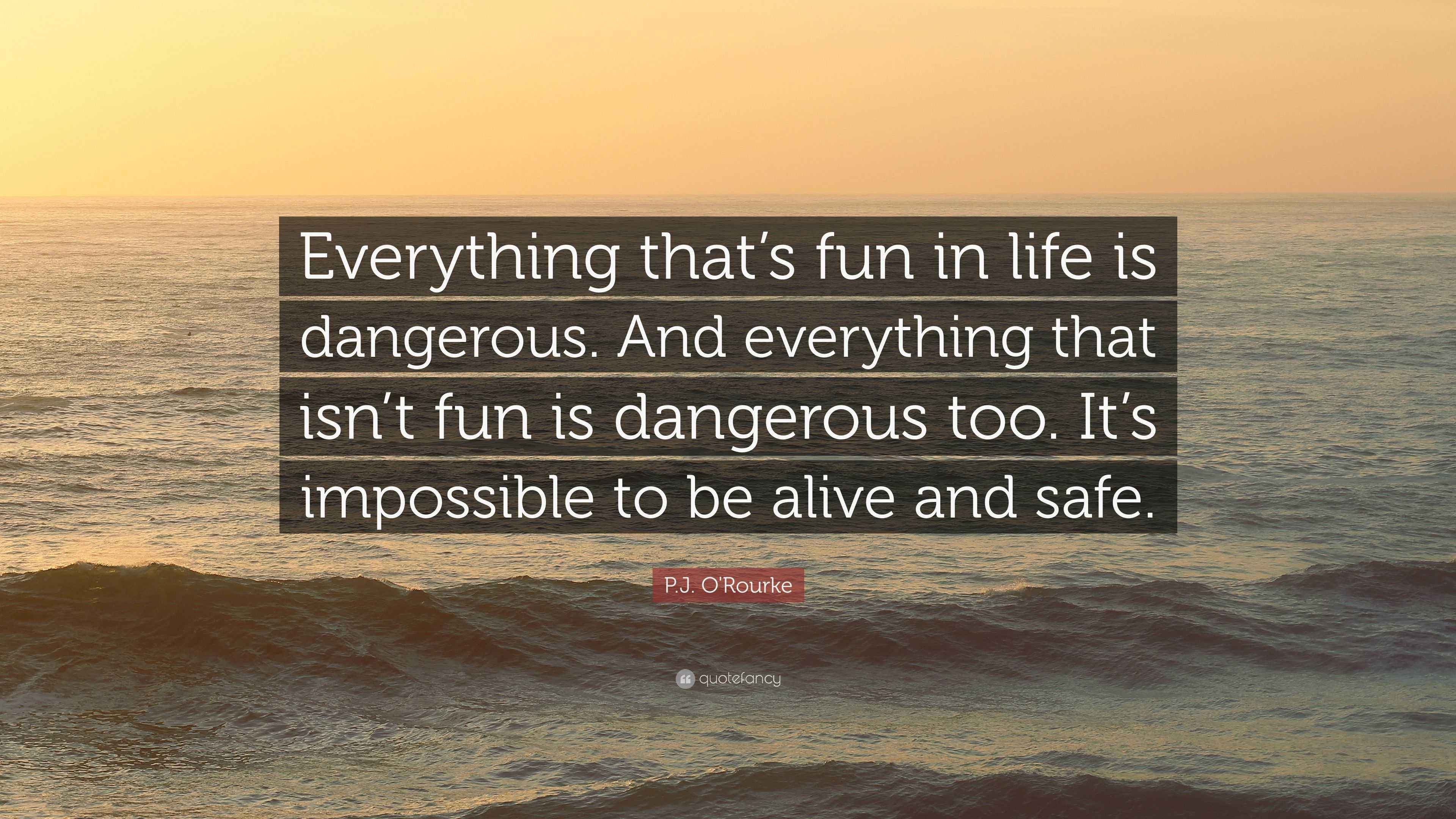
P. J. O'Rourke: Life and Legacy of America's Premier Satirist
P. J. O'Rourke established himself as one of the most prominent, sharp-witted, and widely read political satirists and journalists of the late 20th and early 21st centuries. Renowned for his conservative-leaning skepticism, deep libert...
P. J. O'Rourke established himself as one of the most prominent, sharp-witted, and widely read political satirists and journalists of the late 20th and early 21st centuries. Renowned for his conservative-leaning skepticism, deep libertarian streak, and relentless focus on human absurdity, his extensive body of work bridged underground counterculture writing with mainstream mainstream commentary, leaving a permanent mark on American letters.
Contents
The Formative Years: Counterculture Roots and Journalistic Beginnings
Patrick Jake O'Rourke was born on November 14, 1947, in Toledo, Ohio, growing up in a traditional Midwestern household that instilled in him an early appreciation for plain speech and working-class pragmatism. He pursued higher education at Miami University in Oxford, Ohio, where he earned a bachelor's degree in 1969, followed by a master's degree in English literature from Johns Hopkins University in 1970. These academic environments exposed him to the turbulent political climate of the Vietnam War era and the rising counterculture movements sweeping American campuses.
During the early 1970s, O'Rourke leaned heavily into the alternative press. He contributed to the underground newspaper The Baltimore Rag before eventually moving to New York City. In New York, he found his stride writing for The National Lampoon, an offshoot of Harvard Lampoon that redefined modern American humor. By the mid-1970s, O'Rourke had risen to become the editor-in-chief of National Lampoon, steering the publication through its creative peak.
During his tenure, he helped craft some of the magazine's most iconic satirical pieces, including the infamous National Lampoon 1964 High School Yearbook parody—a pitch-black sendup of American suburban innocence that demonstrated his knack for skewering institutional complacency.
Transition to Mainstream Journalism and Foreign Correspondence
After leaving National Lampoon at the end of the decade, O'Rourke transitioned from domestic satire to political commentary and international reporting. In 1981, he joined the staff of Rolling Stone magazine as a foreign affairs desk chief and contributing editor. This role placed an avowed conservative humorist inside the masthead of a countercultural rock-and-roll magazine, creating a uniquely productive tension that allowed him to travel the globe reporting on geopolitical crises.
O'Rourke traveled to global hotspots, conflict zones, and disaster areas, filing dispatches that rejected earnest ideological cant in favor of sharp, observational wit. Whether covering the civil war in Lebanon, the fall of the Berlin Wall, the uprising in the Philippines, or the Gulf War, his reports focused on the human capacity for folly, bureaucratic incompetence, and the everyday resilience of ordinary people caught in geopolitical machinery.
Unlike traditional war correspondents who maintained a solemn distance, O'Rourke combined rigorous reporting with unvarnished candor. He famously summarized his reporting philosophy through the lens of relentless curiosity and deep skepticism toward anyone wielding institutional power. His work for Rolling Stone and, later, publications like The Atlantic, The Weekly Standard, and The Wall Street Journal cemented his reputation as a master essayist capable of explaining complex international events through accessible, highly entertaining prose.
Literary Output: Major Works and Core Themes
O'Rourke published more than 20 books throughout his career, spanning political critique, travel writing, economic theory, and personal essays. His writing style relied on rapid-fire punchlines, historical analogies, and vivid descriptive language that dismantled political orthodoxies on both the left and the right.
Key Publications and Analysis
- Parliament of Whores (1991): This book stands as one of O'Rourke's most celebrated achievements. A #1 New York Times bestseller, it offered a scathing, hilarious breakdown of the United States federal government, explaining complex budget mechanics, lobbying, and electoral politics through the metaphor of a dysfunctional family.
- Give War a Chance (1992): Written largely during and after the Gulf War, this collection of foreign correspondence explored the realities of armed conflict, international diplomacy, and the naive assumptions of Western policymakers.
- All the Trouble in the World (1994): Tackling global overpopulation, environmental panic, and economic development, O'Rourke traveled across continents to investigate whether human catastrophe was truly imminent, concluding with a defense of free markets and personal liberty.
- Eat the Rich (1998): In an effort to understand global economics, O'Rourke traveled to nations with vastly different economic systems—ranging from communist Cuba to post-Soviet Russia and capitalist Hong Kong—to examine why some nations prosper while others fail.
| Book Title | Publication Year | Primary Subject / Theme | Notable Approach |
|---|---|---|---|
| Parliament of Whores | 1991 | US Federal Government & Politics | Combines investigative reporting with cynical humor to expose bureaucratic waste. |
| Give War a Chance | 1992 | Foreign Conflicts & Diplomacy | Uses firsthand reporting from war zones to mock ideological certainty. |
| All the Trouble in the World | 1994 | Global Crises & Demographics | Investigates modern anxieties regarding population, resources, and governance. |
| Eat the Rich | 1998 | Global Economics & Wealth | Explores why capitalism succeeds or fails across different international markets. |
Ideological Stance and Political Philosophy
While O'Rourke was frequently labeled a conservative, his political philosophy defied easy categorization. He was a fiscal conservative, a staunch defender of capitalism, and a believer in free markets, yet his social views and libertarian instincts frequently put him at odds with the religious right and institutional authority.
He championed individual liberty, free speech, and limited government intervention, arguing that centralized state planning invariably bred inefficiency and tyranny. At the same time, he held a deep distrust of utopian thinking, regardless of whether it originated from socialist intellectuals or conservative moral crusaders.
His political evolution mirrored a broader generational shift among certain 1960s counterculture participants who retained their skepticism of authority while shedding collectivist economic theories in favor of classical liberalism. Consequently, his writing appealed to readers across the political spectrum who appreciated his bipartisan contempt for pompous politicians and bad ideas.
Later Years, Personal Life, and Final Contributions
In his later decades, O'Rourke remained a prolific writer, serving as a fellow at the Cato Institute and writing regular commentary for various journals and digital platforms. He maintained his distinct voice through changing media landscapes, commenting on modern political polarization with the same sharp eye that defined his early work.
O'Rourke married twice, eventually settling in New Hampshire with his second wife, Tina Gaudoin, and raising three children. Despite facing health challenges later in life, including a diagnosis of stage 4 lung cancer in 2020, he continued writing and commenting on public affairs. P. J. O'Rourke passed away on February 15, 2022, at the age of 74.
Enduring Legacy in American Satire
The legacy of P. J. O'Rourke endures in the tradition of American political humor, bridging the gap between high-minded policy debate and street-level journalistic skepticism. He demonstrated that serious political issues do not require solemn, dry prose to be understood; rather, humor can serve as a potent tool for exposing hypocrisy and cutting through official rhetoric.
Writers and journalists across the political spectrum frequently cite him as an influence, noting his ability to balance reporting rigor with comedic timing. As modern political discourse continues to navigate intense polarization, O'Rourke's body of work remains a benchmark for independent thinking, intellectual honesty, and the power of well-crafted satire.
Frequently Asked Questions
What was P. J. O'Rourke's political ideology?
P. J. O'Rourke identified primarily as a libertarian and a conservative-leaning classical liberal. He championed free markets, individual liberty, and limited government, while maintaining a deeply cynical view of authority, bureaucracy, and utopian political schemes from both the left and the right.
Which book by P. J. O'Rourke is considered his best?
Parliament of Whores (1991) is widely regarded as his masterpiece and most commercially successful work. It combined deep investigative reporting with sharp humor to explain how the American federal government operates.
What publications did P. J. O'Rourke write for?
Throughout his career, O'Rourke wrote for numerous prominent publications, most notably serving as editor-in-chief of National Lampoon and as a foreign affairs correspondent and contributing editor for Rolling Stone. He also contributed regularly to The Atlantic, The Weekly Standard, and The Wall Street Journal.
How did P. J. O'Rourke approach foreign correspondence?
Unlike traditional war correspondents, O'Rourke approached international conflicts and global crises through a satirical, observational lens. He sought to expose human folly and bureaucratic incompetence on the ground, grounding geopolitical analysis in everyday human realities.
What is P. J. O'Rourke's lasting impact on journalism?
He helped redefine political journalism by proving that rigorous reporting and sharp humor could coexist. His work influenced generations of essayists and commentators by demonstrating how skepticism and wit can pierce through political spin and institutional pretense.
Image Gallery