How to Secure HITRUST Cloud Environments: A Comprehensive Implementation Guide for 2026
Securing a HITRUST cloud environment involves aligning your infrastructure with the HITRUST Common Security Framework (CSF) by implementing a combination of technical, administrative, and physical controls. Organizations must leverage...
Securing a HITRUST cloud environment involves aligning your infrastructure with the HITRUST Common Security Framework (CSF) by implementing a combination of technical, administrative, and physical controls. Organizations must leverage cloud service provider (CSP) inheritance programs, enforce strict identity management, automate continuous monitoring, and undergo a rigorous third-party assessment to achieve and maintain certification.
Contents
The Health Information Trust Alliance (HITRUST) Common Security Framework (CSF) remains the gold standard for data protection in 2026, particularly for organizations handling Protected Health Information (PHI). As cloud architectures evolve toward serverless models and AI-driven automation, securing these environments requires a shift from static perimeter defense to dynamic, policy-based governance. Achieving HITRUST certification is not merely a "check-the-box" exercise; it is a comprehensive risk management strategy that demonstrates a commitment to the highest security standards.
Establishing the Scope of Your Cloud Environment
Before implementing a single security group or encryption key, you must define the boundaries of your HITRUST environment. Scoping is the most critical phase of the certification process. In a cloud context, the scope includes every system, person, and process that touches sensitive data or supports the systems that do.
In 2026, HITRUST utilizes a risk-based approach where the number of required controls is determined by the size of the organization, the volume of records processed, and the specific regulatory factors (such as HIPAA, GDPR, or NIST) you wish to include. You must identify all cloud accounts, VPCs (Virtual Private Clouds), and third-party SaaS integrations that interact with your data. A failure to accurately scope the environment often leads to "scope creep" during the audit, which can result in failed controls or significant delays.
When scoping, utilize the HITRUST MyCSF tool to input your organizational factors. This tool generates a tailored set of controls. In a cloud-native environment, ensure you are accounting for transient resources like containers and ephemeral functions, which must adhere to the same security standards as persistent virtual machines.
Leveraging the Shared Responsibility Model and Inheritance
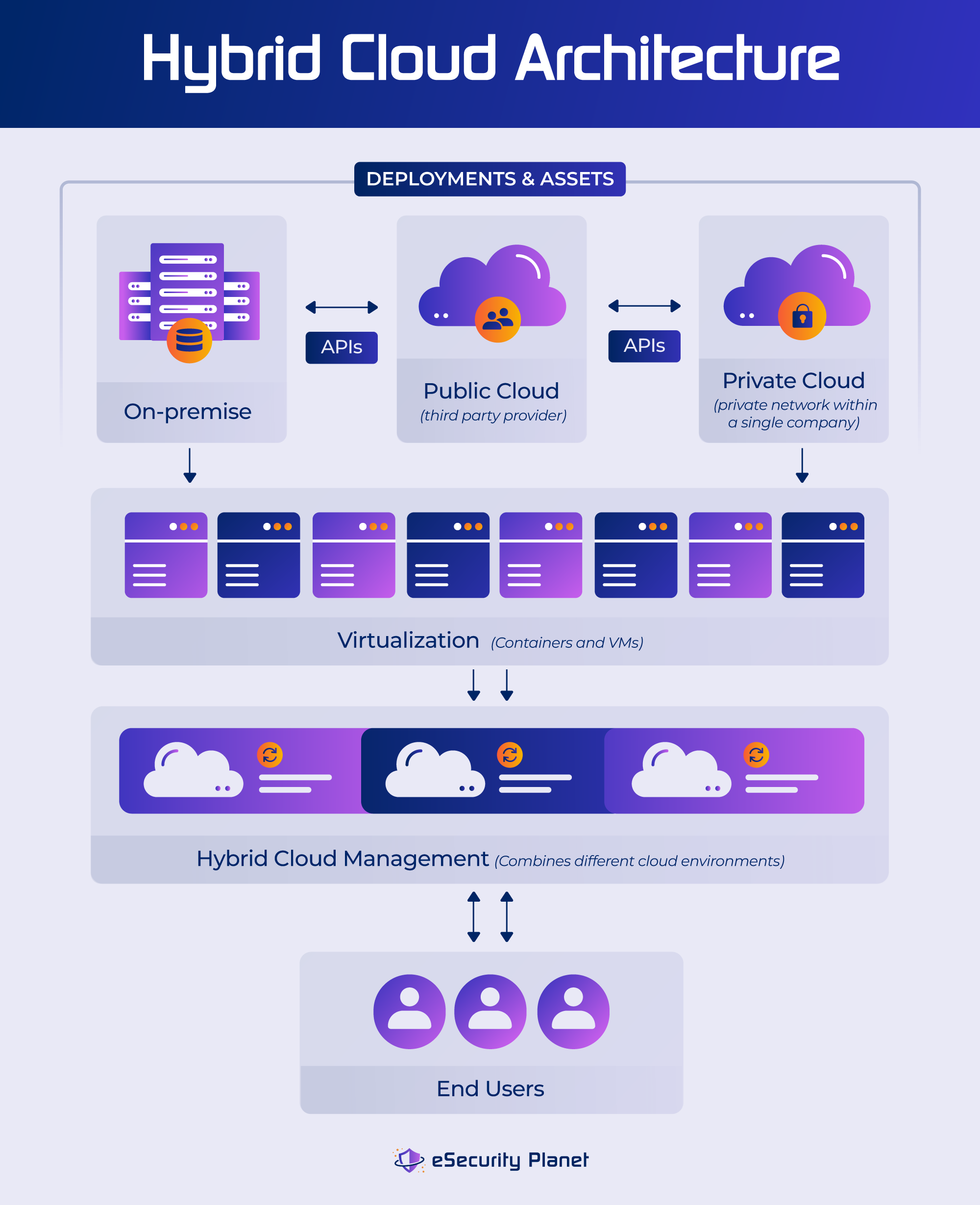
The primary advantage of securing a HITRUST environment in the cloud is the ability to "inherit" controls from your Cloud Service Provider (CSP). Under the Shared Responsibility Model, the CSP (such as AWS, Azure, or GCP) is responsible for the security of the cloud—including physical data center security, hardware maintenance, and the virtualization layer. You are responsible for security in the cloud—including data encryption, identity management, and network configuration.
The HITRUST Inheritance Program
HITRUST provides a formal inheritance program that allows customers to link their assessment to the CSP’s already-validated HITRUST assessment. This can significantly reduce the number of controls you need to manually document and test. For example, if your CSP is HITRUST certified, you can inherit their physical security controls (Area 08.0) and environmental security controls (Area 09.0).
To use inheritance effectively:
- Verify the CSP's Certification: Ensure the specific cloud services you are using are within the scope of the CSP’s current HITRUST letter of certifications.
- Request Inheritance in MyCSF: During your assessment, use the MyCSF portal to request inheritance from your provider for specific control requirements.
- Address "Shared" Controls: Many controls are "shared," meaning the CSP provides the underlying tool, but you must configure it correctly. For example, the CSP provides the encryption service, but you are responsible for key rotation and access policies.
Core Technical Security Controls in the Cloud
Securing the technical layer requires a "Zero Trust" posture. In 2026, this means assuming that the network is always hostile and that every request must be authenticated and authorized regardless of its origin.
Identity and Access Management (IAM)
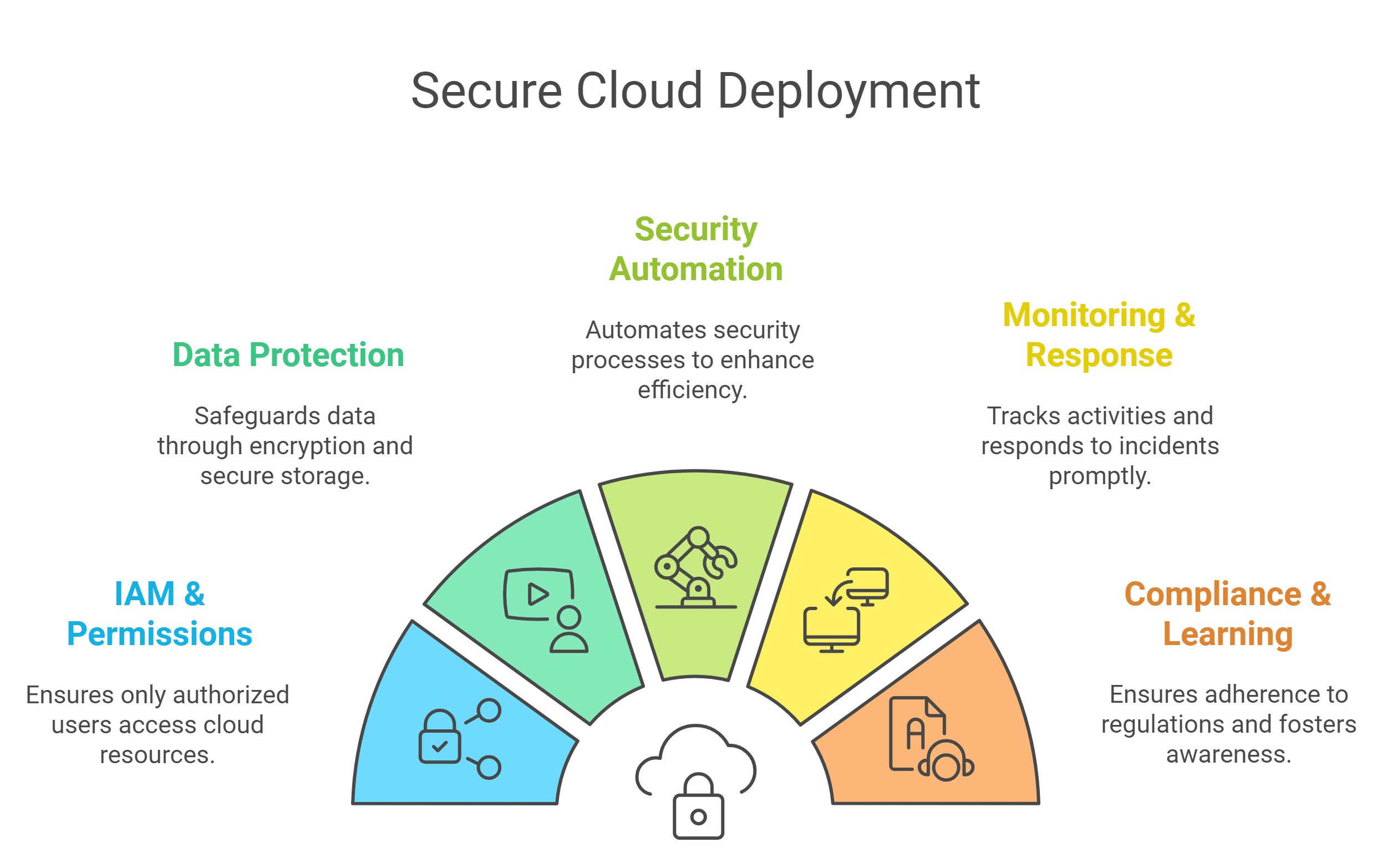
IAM is the new perimeter. To meet HITRUST requirements, you must implement the principle of least privilege.
- Multi-Factor Authentication (MFA): Mandatory for all users, including administrative and standard accounts.
- Role-Based Access Control (RBAC): Define permissions based on job functions rather than individual users.
- Just-In-Time (JIT) Access: Use temporary credentials for administrative tasks to minimize the window of vulnerability.
- Automated Offboarding: Ensure that when an employee leaves, their cloud access is revoked instantly via integration with your central identity provider.
Data Protection and Encryption
HITRUST is uncompromising regarding data at rest and in transit.
- Encryption at Rest: Use provider-managed keys (like AWS KMS or Azure Key Vault) to encrypt all storage volumes, databases, and object storage. Ensure that "Encryption by Default" is enabled for all new resources.
- Encryption in Transit: Enforce TLS 1.3 for all data moving between the client and the cloud, as well as data moving between internal cloud services.
- Key Management: Maintain strict policies for key rotation and access. In 2026, automated key rotation is the expected standard for compliance.
Network Security and Monitoring
While the cloud lacks physical cables, virtual networking must be segmented to prevent lateral movement.
- Micro-segmentation: Use security groups and network ACLs to isolate database tiers from web tiers.
- Web Application Firewalls (WAF): Deploy a WAF to protect against common exploits like SQL injection and cross-site scripting (XSS).
- Logging and Auditing: Enable comprehensive logging (e.g., CloudTrail, Azure Monitor) for every action taken in the environment. These logs must be exported to a separate, immutable storage location to prevent tampering.
Administrative and Operational Requirements
Technical controls are only half the battle. HITRUST requires robust documentation and operational processes to prove that security is an ongoing practice, not a one-time setup.
Policy Development
You must maintain a set of formally documented policies and procedures that cover all 19 HITRUST domains. These documents must be reviewed annually and updated to reflect changes in the cloud environment. A common mistake is using generic templates that do not address cloud-specific nuances like auto-scaling or serverless security.
Risk Management and Vulnerability Scanning
HITRUST requires a formal risk assessment process. In the cloud, this involves:
- Continuous Vulnerability Scanning: Use automated tools to scan virtual machine images and containers for known vulnerabilities before deployment.
- Patch Management: Implement an automated patching schedule. In 2026, many organizations use "immutable infrastructure," where instead of patching a running server, they deploy a new, pre-patched image and decommission the old one.
- Incident Response: Develop a cloud-specific incident response plan that includes procedures for isolating compromised cloud accounts and performing forensic analysis on virtual disks.
Comparison of Cloud Security Features for HITRUST Compliance
| Control Category | Amazon Web Services (AWS) | Microsoft Azure | Google Cloud Platform (GCP) |
|---|---|---|---|
| Identity Management | AWS IAM / Identity Center | Azure Active Directory (Entra ID) | Cloud Identity / IAM |
| Encryption Keys | AWS Key Management Service (KMS) | Azure Key Vault | Cloud Key Management Service |
| Compliance Tools | AWS Artifact / Security Hub | Azure Compliance Manager | Risk Manager / Security Command Center |
| Logging & Auditing | AWS CloudTrail / CloudWatch | Azure Monitor / Sentinel | Cloud Audit Logs / Chronicle |
| Network Security | AWS WAF / Shield / VPC | Azure WAF / Firewall / VNet | Cloud Armor / VPC Service Controls |
The Journey to Validated Certification
Achieving a HITRUST Validated Assessment (the most common being the r2 or i1 assessments) involves several stages.
- Readiness Assessment (Gap Analysis): Perform a self-assessment or hire a consultant to identify where your cloud environment fails to meet CSF requirements. This is where you identify missing encryption, weak IAM policies, or lack of documentation.
- Remediation: Fix the gaps identified. This often involves re-architecting certain cloud components or formalizing undocumented processes.
- Validated Assessment: A HITRUST-authorized external assessor reviews your environment. They look for "Illustrative Procedures," which are pieces of evidence (screenshots, logs, policy documents) that prove you are meeting the controls.
- HITRUST Quality Assurance (QA): The assessor submits their findings to HITRUST. HITRUST reviews the submission for accuracy and consistency before issuing the final certification.
In 2026, the transition to HITRUST CSF v11.x and beyond has streamlined this process by reducing the number of required controls for smaller organizations through the "e1" (essential) and "i1" (implemented) assessment tiers, while maintaining the "r2" (risk-based) as the gold standard for high-risk environments.
Frequently Asked Questions
How long does it take to secure a cloud environment for HITRUST?
The timeline typically ranges from six to eighteen months. The duration depends heavily on the organization's existing security maturity. Cloud-native startups may move faster by leveraging automation, while established enterprises migrating legacy systems often require more time for remediation and documentation.
Can I be HITRUST certified if my CSP is not?
It is technically possible but practically prohibitive. If your CSP is not HITRUST certified, you cannot inherit their physical or environmental controls. This means you would need to personally audit their data centers, which most major providers will not allow. Always choose a HITRUST-certified cloud provider to simplify the process.
What is the difference between HIPAA and HITRUST in the cloud?
HIPAA is a federal law providing high-level requirements for data privacy and security. HITRUST is a certifiable framework that "maps" to HIPAA. Being HITRUST certified is a widely accepted way to demonstrate HIPAA compliance to auditors, partners, and customers, as HIPAA itself does not have an official certification.
Do I need to use third-party tools, or are native cloud tools enough?
Native cloud tools (like AWS Security Hub or Azure Security Center) are increasingly powerful and often sufficient for HITRUST compliance. However, many organizations use third-party Cloud Security Posture Management (CSPM) tools to provide a "single pane of glass" view across multi-cloud environments and to automate the collection of evidence for the HITRUST assessor.
Is HITRUST certification permanent?
No. Depending on the assessment type, you must undergo a bridge assessment or a full recertification every one to two years. The r2 certification requires an interim assessment at the one-year mark to ensure that controls are still being followed and have not "drifted" from the certified state.
Final Recommendation
To successfully secure a HITRUST cloud environment in 2026, prioritize automation and inheritance. Start by selecting a cloud provider with a mature HITRUST inheritance program and use their native compliance tools to map your configurations directly to CSF controls. Focus heavily on identity as your primary security boundary and treat documentation as a living part of your engineering workflow rather than an afterthought. Engaging a HITRUST-authorized assessor early in the process—before you begin remediation—can save hundreds of hours by ensuring your technical architecture aligns with auditor expectations from day one.
Image Gallery