Probability Statistics and Information Theory for Scientists and Engineers: 2026 Guide to Online Resources
To read "Probability, Statistics, and Information Theory for Scientists and Engineers" online in 2026, you should utilize academic repositories like IEEE Xplore, SpringerLink, or Open Access platforms such as arXiv and Project Euclid....
To read "Probability, Statistics, and Information Theory for Scientists and Engineers" online in 2026, you should utilize academic repositories like IEEE Xplore, SpringerLink, or Open Access platforms such as arXiv and Project Euclid. These disciplines provide the mathematical framework for data-driven decision-making, signal processing, and machine learning, accessible through institutional subscriptions or legitimate open-text initiatives.
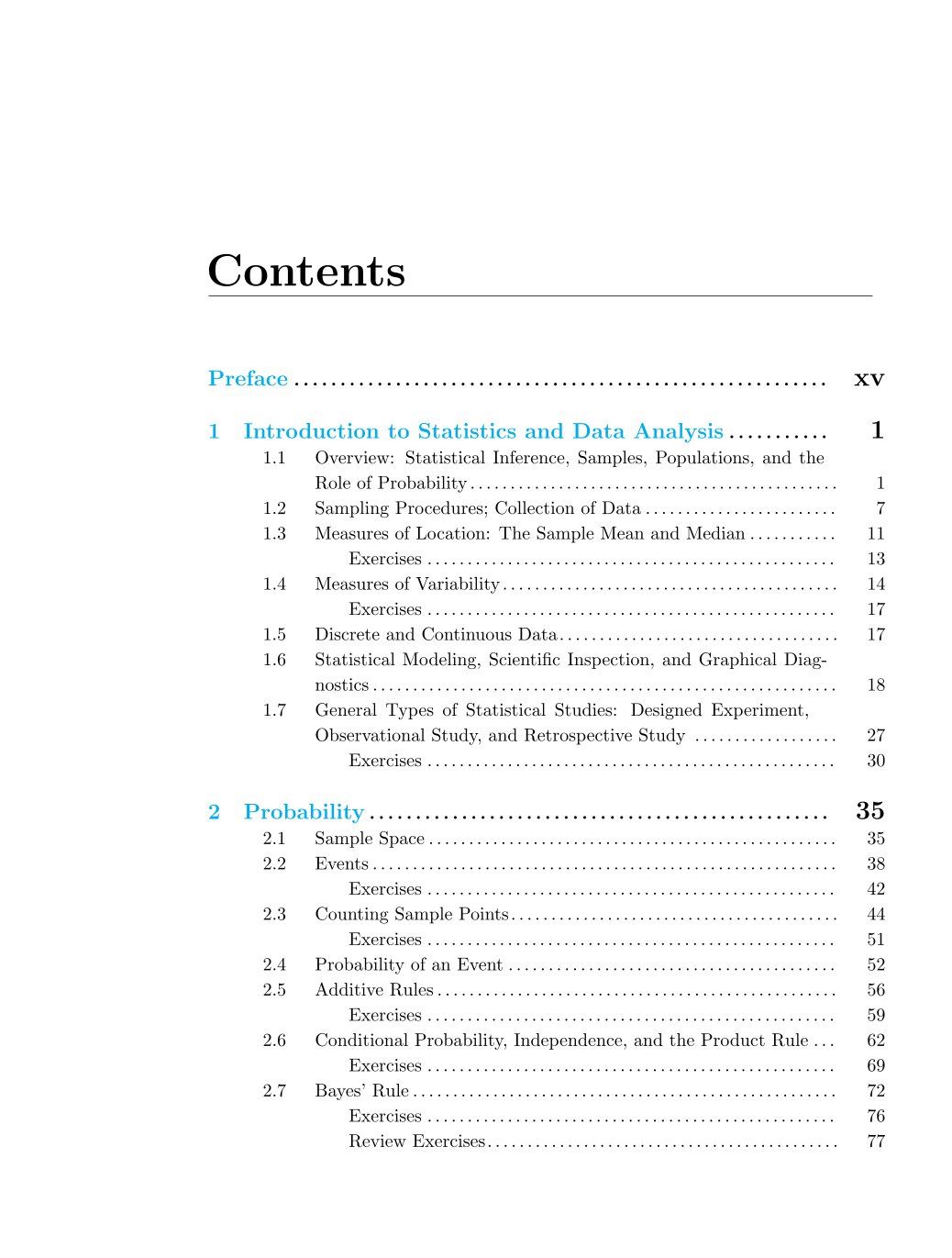
Contents
The convergence of probability, statistics, and information theory represents the "holy trinity" of modern computational science. For engineers and scientists working in 2026, these are no longer isolated academic subjects but an integrated toolkit essential for navigating the complexities of high-dimensional data, quantum information, and advanced artificial intelligence. Whether you are seeking a specific classic textbook or a modernized digital curriculum, understanding the landscape of online academic publishing is critical for effective professional development.
The Mathematical Synergy of Probability, Statistics, and Information Theory
In the professional landscape of 2026, the boundaries between these three fields have largely evaporated. A scientist or engineer cannot effectively deploy a neural network or design a communication protocol without a deep grasp of how these elements interact.
- Probability as the Foundation: This provides the formal language for uncertainty. For engineers, this involves modeling stochastic processes, sensor noise, and reliability. In 2026, the focus has shifted heavily toward Bayesian frameworks, which allow for the continuous updating of beliefs based on new evidence.
- Statistics as the Tool for Inference: While probability moves from parameters to data, statistics moves from data to parameters. Scientists use statistical inference to validate experimental results, perform regression analysis, and conduct hypothesis testing. Modern online modules now emphasize "Computational Statistics," focusing on MCMC (Markov Chain Monte Carlo) methods and bootstrap sampling.
- Information Theory as the Limit of Communication: Originally developed by Claude Shannon, information theory quantifies how much "information" is present in a signal. It introduces concepts like Entropy (the measure of uncertainty) and Mutual Information (the reduction in uncertainty about one variable given knowledge of another). For 2026 engineers, this is the key to optimizing data compression and ensuring robust transmission over noisy channels.
Expert Strategic Insight
When reading these subjects online, do not treat them as linear histories. Instead, look for resources that emphasize "Statistical Mechanics" and "Bayesian Inference" simultaneously. The most effective 2026 curricula integrate Python or Julia-based simulations directly into the text, allowing you to visualize entropy and distribution shifts in real-time.
Authoritative Textbooks and Digital Repositories in 2026
Accessing high-quality technical literature requires navigating various digital ecosystems. Depending on your specific role—whether in aerospace engineering, bioinformatics, or deep learning—different texts will serve as your primary reference.
1. Classic Texts with Enhanced Digital Access
Many of the foundational texts used by scientists and engineers have been updated for 2026 digital standards, featuring interactive equations and linked citations.
- Probability and Statistics for Engineers and Scientists (Walpole, Myers, et al.): Now in its latest digital-first edition, this remains the gold standard for undergraduate and early graduate engineering programs.
- Information Theory, Inference, and Learning Algorithms (David MacKay): This remains one of the most significant open-access texts. Its integrated approach is perfect for those moving into machine learning.
- Elements of Information Theory (Cover & Thomas): Essential for those focusing on communication theory and theoretical physics.
2. Digital Libraries and Institutional Portals
- IEEE Xplore Digital Library: The primary source for electrical and electronics engineers. It hosts thousands of peer-reviewed papers and specialized monographs on information theory.
- SpringerLink: Offers comprehensive access to the "Graduate Texts in Mathematics" series, which covers advanced probability and statistical theory with high rigor.
- Project Euclid: A specialized platform for mathematics and statistics that provides access to high-impact journals and books, often with "Open Access" components for older volumes.
Technical Specifications: Comparison of Online Resource Categories
The following table compares the primary types of online platforms where scientists and engineers can access these materials in 2026.
| Resource Type | Primary Content Focus | Access Model | Ideal User |
|---|---|---|---|
| Publisher Portals (e.g., Wiley, Elsevier) | Peer-reviewed textbooks, latest editions | Institutional/Pay-per-view | Professionals seeking the most recent academic updates |
| Open Access Repositories (e.g., arXiv, OpenStax) | Pre-prints, open textbooks, community-vetted papers | Free / Creative Commons | Students and self-taught researchers |
| Interactive Coding Platforms (e.g., Colab, Kaggle) | Applied statistics, data theory in practice | Free / Freemium | Engineers needing to implement algorithms immediately |
| Professional Societies (e.g., IEEE, ACM) | Industry standards, technical reports | Membership-based access | Practicing engineers in specialized sectors |
Step-by-Step Guide to Mastering These Subjects Online
Mastering the intersection of probability, statistics, and information theory requires a structured approach. Reading online is only effective if you engage with the material systematically.
- Establish Mathematical Prerequisites: Before diving into information theory, ensure your multivariable calculus and linear algebra are robust. Most 2026 online textbooks include "Prerequisite Refreshers" in their first few chapters.
- Start with Axiomatic Probability: Understand Kolmogorov’s axioms. This provides the logical structure needed to avoid common fallacies in statistical reasoning.
- Bridge into Information Entropy: Once you understand probability distributions, introduce the concept of Shannon Entropy. Recognize that entropy is essentially the "average surprise" of a random variable.
- Implement via Simulation: Use modern digital environments to simulate the Law of Large Numbers and the Central Limit Theorem. Seeing these theories "in action" via online code cells is far more effective than reading static proofs.
- Study Statistical Inference: Learn how to use probability and information theory (specifically Kullback-Leibler divergence) to perform maximum likelihood estimation and Bayesian parameter estimation.
- Apply to Specific Engineering Problems: Look for "Application Chapters" in online resources that focus on your specific field, such as signal processing, structural reliability, or genomic sequencing.
Practical Applications for Engineers and Scientists in 2026
The utility of these subjects has expanded significantly as we move deeper into the decade. In 2026, the application of these theories is found in nearly every high-tech sector.
- Artificial Intelligence and Machine Learning: Information theory provides the loss functions (like cross-entropy) used to train neural networks, while statistics provides the tools for cross-validation and model selection.
- Quantum Engineering: With the rise of commercial quantum computing in 2026, "Quantum Information Theory" has become a vital field. It extends classical information theory to handle qubits and quantum entanglement.
- Telecommunications (6G and Beyond): Engineers use these principles to push toward the Shannon Limit, ensuring maximum data throughput with minimal error in increasingly crowded electromagnetic spectrums.
- Environmental and Climate Science: Scientists use Bayesian hierarchical models to predict climate shifts, integrating vast amounts of probabilistic data from satellite sensors.
Operational Note on Accessing 2026 Content
Many modern academic libraries now use "SeamlessAccess" or "LibKey" technologies. When searching for these textbooks online, ensure your browser is configured with your institution's proxy to automatically unlock PDF and ePub versions of the texts without needing to re-authenticate on every publisher's site.
Troubleshooting Common Obstacles in Online Research
While the availability of information is at an all-time high in 2026, finding specific, high-quality texts can still be challenging.
- Paywalls and Access Barriers: If you encounter a paywall, check for the book on the author's official university homepage. Many professors in these fields maintain "Draft" or "Pre-publication" versions of their textbooks for free public use.
- Outdated Information: Ensure the resource you are reading has been updated within the last 5-10 years. While the core math of probability hasn't changed, the computational methods (like Variational Inference) have evolved rapidly.
- Topical Dilution: Avoid "general" data science blogs that simplify these topics to the point of inaccuracy. Stick to university-press publications or recognized technical organizations.
Frequently Asked Questions (FAQ)
What is the most recommended "all-in-one" textbook for these subjects?
"Information Theory, Inference, and Learning Algorithms" by David MacKay is widely considered the most comprehensive text that bridges all three fields. It is specifically designed for scientists and engineers and is legally available for free reading online through various academic mirrors.
Can I learn probability and statistics for engineering without a strong calculus background?
While basic concepts can be understood intuitively, professional-grade engineering and scientific analysis require a firm grasp of calculus. This is because continuous random variables and their density functions are defined through integration and differentiation.
How does information theory relate to modern data science?
Information theory provides the mathematical metrics for measuring "feature importance" and "redundancy" in datasets. In 2026, it is used extensively in deep learning to optimize network architectures and understand the "information bottleneck" during training.
Are there interactive online platforms for these subjects in 2026?
Yes, platforms like MIT OpenCourseWare, Coursera, and specialized university-hosted "Interactive Notebooks" provide environments where you can read the theory and execute the math in Python or Julia simultaneously.
Why is Bayesian statistics more prominent in 2026 than Frequentist statistics?
Bayesian statistics allows for the incorporation of "Prior Knowledge," which is essential in fields like robotics and medicine where data might be sparse but expert knowledge is abundant. Modern computational power has made complex Bayesian calculations, previously impossible, now routine.
Is "Probability and Statistics for Engineers" the same as "Data Science"?
No, but it is the prerequisite. Data science is a broad field that includes data engineering, visualization, and software development. Probability and statistics provide the rigorous mathematical core that makes data science valid and predictive.
For engineers and scientists in 2026, the mastery of probability, statistics, and information theory is the definitive barrier between being a user of technology and being a creator of it. By leveraging institutional access and high-quality open-access digital libraries, you can build a foundational understanding that will remain relevant throughout the evolution of AI and quantum technologies. Focus on resources that bridge theory with computational implementation to maximize your professional efficacy.
Image Gallery