Developing a Robust Cloud Computing Security Policy
A cloud computing security policy is a formal document that outlines the standards, procedures, and responsibilities for protecting data and assets stored in cloud environments. It serves as the primary governance framework, ensuring t...
A cloud computing security policy is a formal document that outlines the standards, procedures, and responsibilities for protecting data and assets stored in cloud environments. It serves as the primary governance framework, ensuring that organizational security requirements are met while leveraging the scalability and flexibility of cloud service providers.
Contents
The Role of Governance in Cloud Security
In the current digital landscape of 2026, organizations frequently operate in multi-cloud or hybrid-cloud environments. Without a centralized policy, security posture becomes fragmented, leading to configuration drift, unauthorized access, and compliance violations. A well-structured policy clarifies the Shared Responsibility Model, which is the foundational concept in cloud security. While providers like Amazon Web Services (AWS), Microsoft Azure, and Google Cloud Platform (GCP) secure the "security of the cloud" (infrastructure, hardware, and facilities), the client is responsible for the "security in the cloud"—including data encryption, identity and access management (IAM), and endpoint protection.
A robust policy must reconcile these responsibilities. It provides employees, contractors, and third-party vendors with clear guidelines on how to manage, store, and access corporate data. By formalizing these expectations, an organization reduces the likelihood of human error, which remains a leading cause of cloud-related security incidents.
Essential Components of a Cloud Security Policy
To be effective, your policy must be actionable. It should move beyond generic security goals and address the specific technical realities of your cloud architecture.
1. Identity and Access Management (IAM)
The identity layer is the new perimeter in cloud computing. Your policy should mandate the use of Multi-Factor Authentication (MFA) for all users, especially those with administrative privileges. Define the Principle of Least Privilege (PoLP), which dictates that users are granted only the minimum level of access required to perform their specific job functions.
2. Data Classification and Encryption
Not all data requires the same level of protection. Your policy must define categories—such as public, internal, confidential, and restricted—and specify the handling requirements for each. Encryption should be mandatory for both data at rest (stored on cloud disks or databases) and data in transit (information moving between the user and the cloud provider or between cloud services).
3. Configuration Management and Monitoring
Misconfigurations are the most frequent source of cloud data breaches. The policy should require regular audits of cloud resource configurations. Establish a baseline for security settings and implement automated tools to detect and remediate deviations from this baseline in real-time.
4. Incident Response and Reporting
If a breach occurs, the time to detect and respond is critical. Your policy must outline the specific steps for reporting suspected security incidents. It should detail the roles of the security response team, the criteria for notifying regulatory bodies, and the procedures for preserving evidence for forensic investigation.
Comparing Security Policy Focus Areas
| Feature | Infrastructure as a Service (IaaS) | Platform as a Service (PaaS) | Software as a Service (SaaS) |
|---|---|---|---|
| User Control | High (Full OS/Network control) | Medium (Application/Data focus) | Low (Config/Access focus) |
| Main Responsibility | OS patching, Firewall setup | Application security | User account/Access mgmt |
| Policy Emphasis | Network segmentation, IAM | Secure coding, API security | Data governance, SaaS apps |
Implementation and Compliance Requirements
Implementing a security policy is an ongoing process that requires integration with your existing regulatory obligations. If your organization is subject to frameworks such as ISO/IEC 27017 (Cloud Security), SOC 2, or industry-specific regulations like HIPAA (for healthcare) or PCI DSS (for payments), your cloud policy must reflect these standards.
Prerequisites for Success
Before deploying a cloud security policy, ensure you have:
- Executive Buy-in: Security policies require budget for tools and resources.
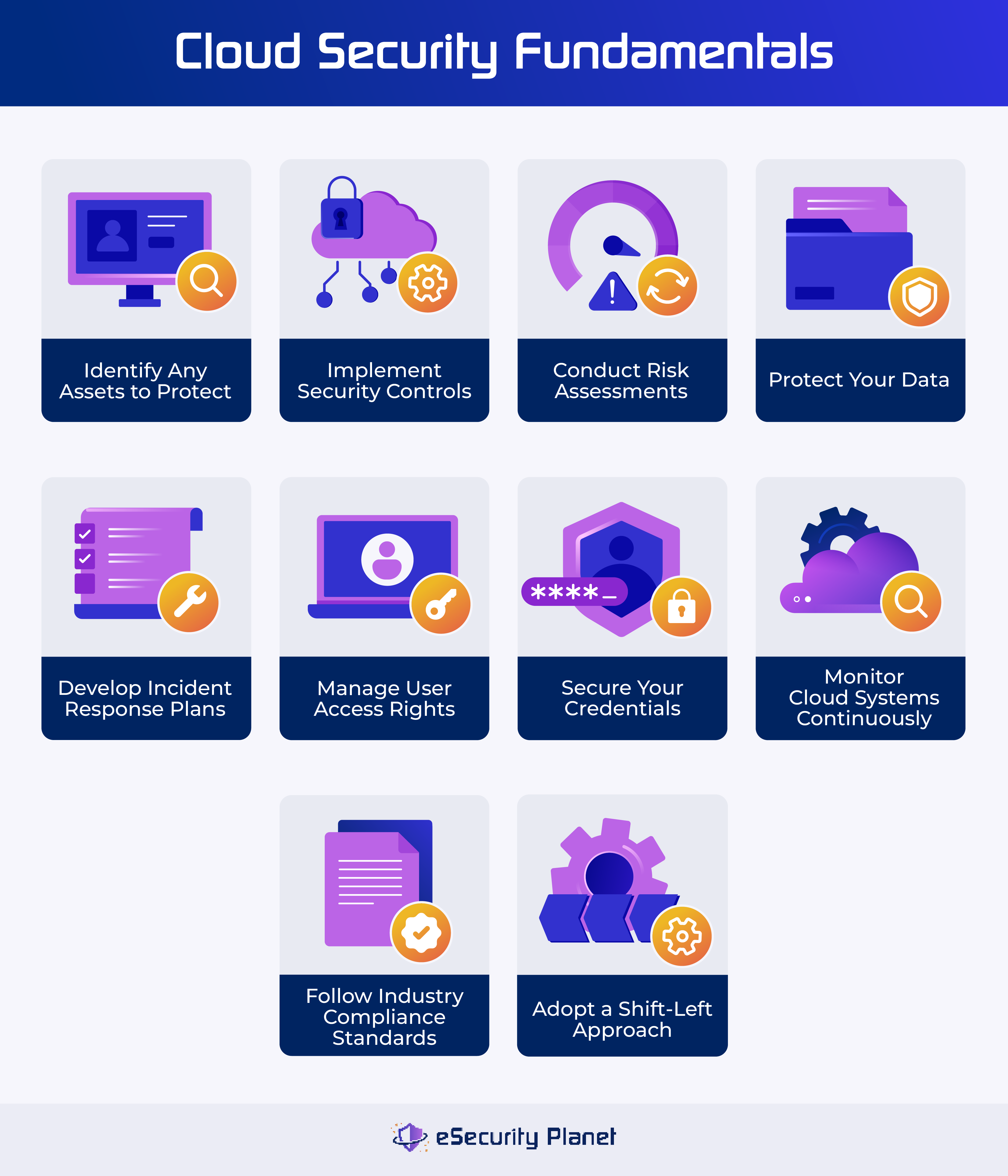
- Asset Inventory: You cannot protect what you have not identified. Maintain an accurate, up-to-date registry of all cloud workloads and data stores.
- Automation Strategy: Manual compliance checks are insufficient in dynamic cloud environments. Prioritize Infrastructure-as-Code (IaC) scanning and cloud-native security orchestration.
Ongoing Monitoring
A policy is not a static document. It must be reviewed at least annually, or whenever significant changes are made to your cloud infrastructure. Conduct regular penetration testing and vulnerability assessments to verify that your technical controls align with the written policy.
Common Pitfalls and How to Avoid Them
- Overly Restrictive Policies: If a policy makes it impossible for developers to be productive, they will find "shadow IT" workarounds. Balance security with usability by providing self-service security tools.
- Ignoring Third-Party Risk: Your policy should explicitly address how to manage security for third-party vendors or Managed Service Providers (MSPs) who have access to your cloud environment.
- Lack of Training: A policy is ineffective if employees do not understand it. Conduct regular training sessions that explain not just the rules, but the "why" behind them, emphasizing the risks of phishing and credential theft.
Frequently Asked Questions
1. How does a cloud security policy differ from a traditional IT security policy? A traditional policy often focuses on physical perimeters and on-premises firewalls. A cloud security policy centers on API security, identity-based access, and the Shared Responsibility Model, focusing on dynamic environments where the physical location of hardware is abstracted.
2. Should we implement a "Cloud-First" policy? A "Cloud-First" approach is a strategic decision that prioritizes cloud solutions for new projects. This allows for standardized security governance from the inception of a project, though it requires specialized skills and updated security policies to match the cloud service model.
3. How do we verify compliance with our cloud policy? Compliance is best verified through automated tools such as Cloud Security Posture Management (CSPM) solutions. These tools continuously monitor your environment against your predefined policy rules and alert administrators to non-compliant resources.
4. Does the policy need to account for private cloud? Yes. If your organization maintains a private cloud, you retain responsibility for both the underlying infrastructure and the software layers. Your policy must bridge the gap between internal hardware management and cloud-based service delivery.
5. What is the impact of AI-driven tools on policy? AI tools in 2026 are increasingly used for automated threat detection and policy enforcement. Your policy should clarify the use of AI in security, specifically addressing data privacy concerns if your cloud provider uses your logs to train their models.
Recommended Next Steps
Start by performing a gap analysis of your current cloud environment against industry benchmarks like the Center for Internet Security (CIS) Benchmarks for your specific cloud provider. Use this analysis to draft your policy, ensuring it covers the key areas of IAM, encryption, and logging. Once drafted, circulate the policy among stakeholders for feedback, then finalize and mandate its adoption through clear communication and employee training.
Image Gallery