The Shane Battier NBA Journey: A Legacy of Intelligence and Impact
Shane Battier’s NBA journey is a masterclass in the "glue guy" archetype, spanning 13 seasons from 2001 to 2014. Known for his elite perimeter defense and high basketball IQ, he won two championships with the Miami Heat and became the...
Shane Battier’s NBA journey is a masterclass in the "glue guy" archetype, spanning 13 seasons from 2001 to 2014. Known for his elite perimeter defense and high basketball IQ, he won two championships with the Miami Heat and became the face of the NBA's analytical revolution as the "No-Stats All-Star."
Contents
The trajectory of Shane Battier’s professional career offers a unique perspective on the evolution of professional basketball. Unlike many of his contemporaries who relied on explosive athleticism or high-volume scoring, Battier thrived through preparation, positional awareness, and a relentless commitment to the "marginal gains" that win championships. As we look back from 2026, his career remains a blueprint for how high-IQ players can extend their longevity and maximize their value in a data-driven league.
The Foundation: From Duke to the Memphis Grizzlies (2001–2006)
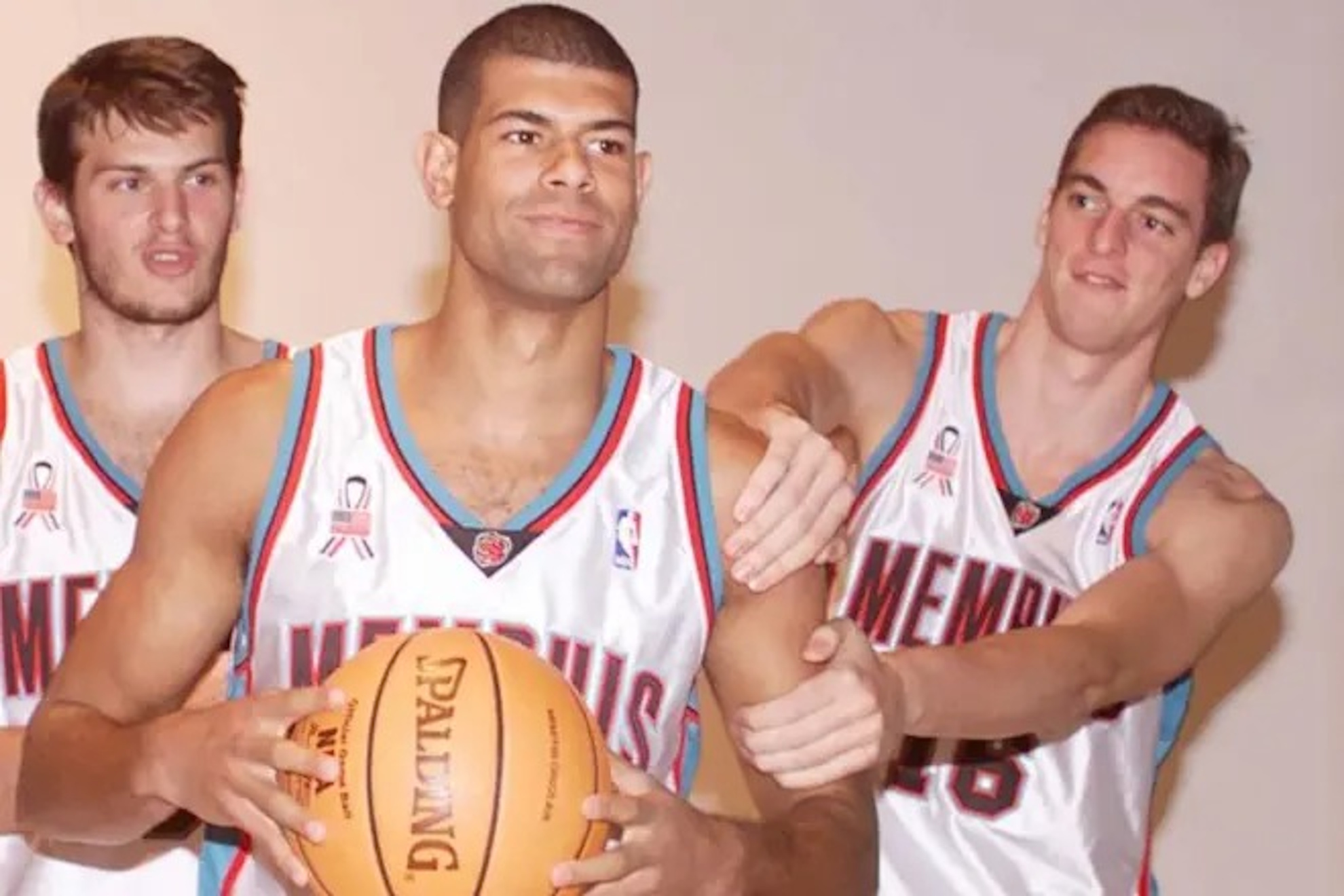
Shane Battier entered the NBA in 2001 with one of the most decorated resumes in college basketball history. After leading the Duke Blue Devils to a National Championship and earning National Player of the Year honors, he was selected 6th overall by the Vancouver Grizzlies (who moved to Memphis before his rookie season).
In Memphis, Battier faced the immediate challenge of transitioning from a primary offensive option in college to a complementary piece in the pros. While many high draft picks struggle with a reduced role, Battier embraced it. During his early years with the Grizzlies, he established himself as a reliable perimeter shooter and a versatile defender capable of guarding multiple positions.
His impact was immediate but subtle. During his rookie season (2001-2002), he averaged 14.4 points per game—his career high—but his real value was seen in the Grizzlies' defensive rating, which improved significantly when he was on the floor. By the mid-2000s, Battier was the heartbeat of a Memphis team that made three consecutive playoff appearances from 2004 to 2006. Though they never advanced past the first round during this stretch, the foundation of Battier’s reputation as a "winning player" was firmly established.
The Analytical Revolution: The Houston Rockets Era (2006–2011)
In 2006, Battier was traded to the Houston Rockets in exchange for the draft rights to Rudy Gay. At the time, the trade was criticized by many who preferred Gay’s high-flying potential. However, the Rockets, led by GM Daryl Morey, were pioneers in the burgeoning field of basketball analytics. They saw what traditional box scores missed: Shane Battier made everyone else on the court better.
It was during his time in Houston that the term "The No-Stats All-Star" was coined by writer Michael Lewis in a seminal New York Times Magazine article. The Rockets’ data showed that while Battier didn't grab many rebounds, block many shots, or score many points, the opposing team’s star players consistently shot lower percentages when guarded by him.
Defending the Indefensible
Battier’s defensive philosophy was based on "limiting the high-value shot." He famously carried scouting reports that detailed exactly where stars like Kobe Bryant or Manu Ginobili preferred to shoot. If a player was 5% less effective when driving left, Battier would spend 48 minutes ensuring they never went right.
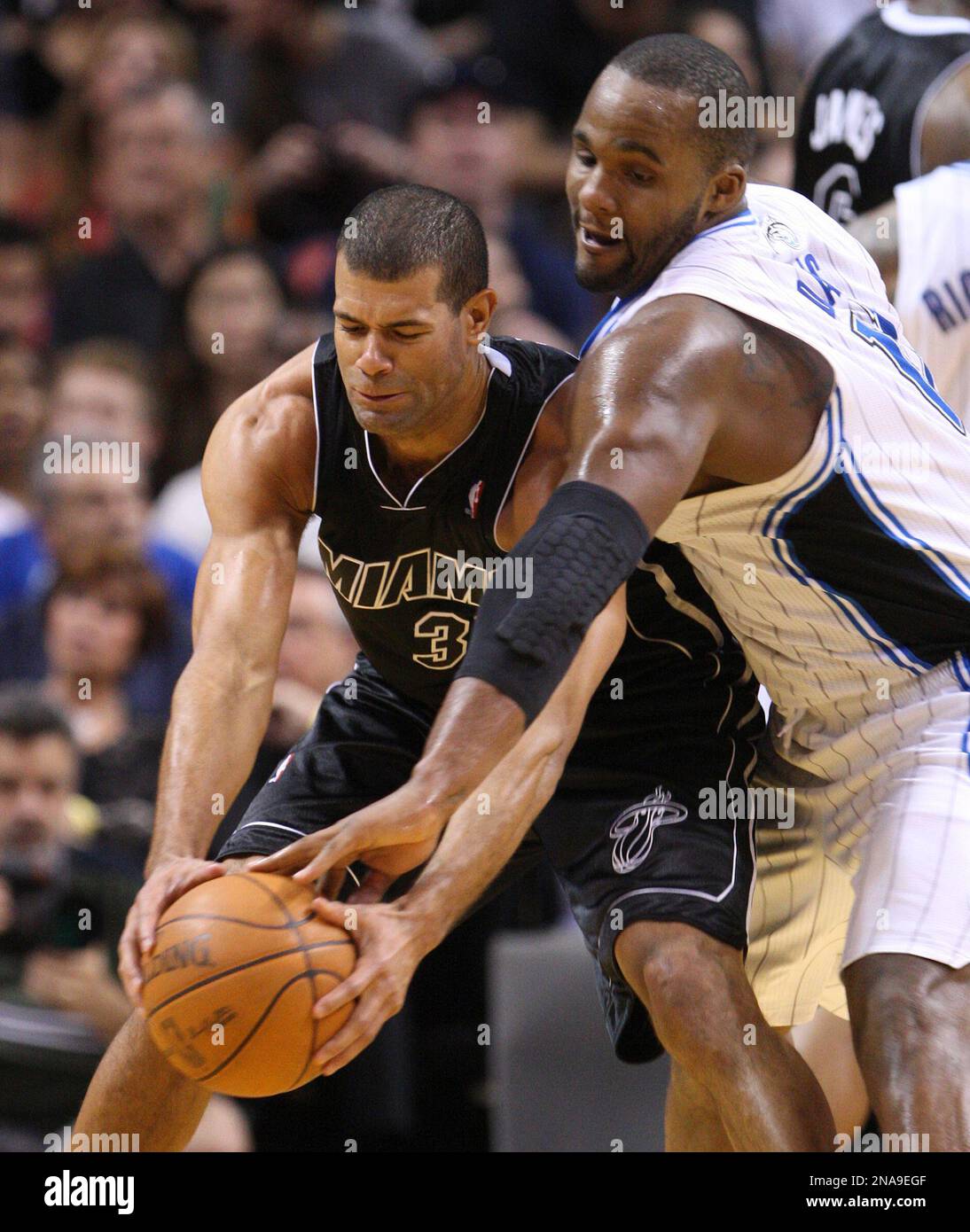
One of his most recognizable tactics was the "hand-in-the-face" contest. Rather than trying to block the ball, Battier would place his hand directly over the shooter's eyes. He understood that at the NBA level, rhythm is everything; by disrupting a shooter's visual cues, he could lower their field goal percentage by a few critical points. This disciplined approach was a major factor in the Rockets' historic 22-game winning streak during the 2007-2008 season.
The Championship Pursuit: Miami Heat and the Big Three (2011–2014)
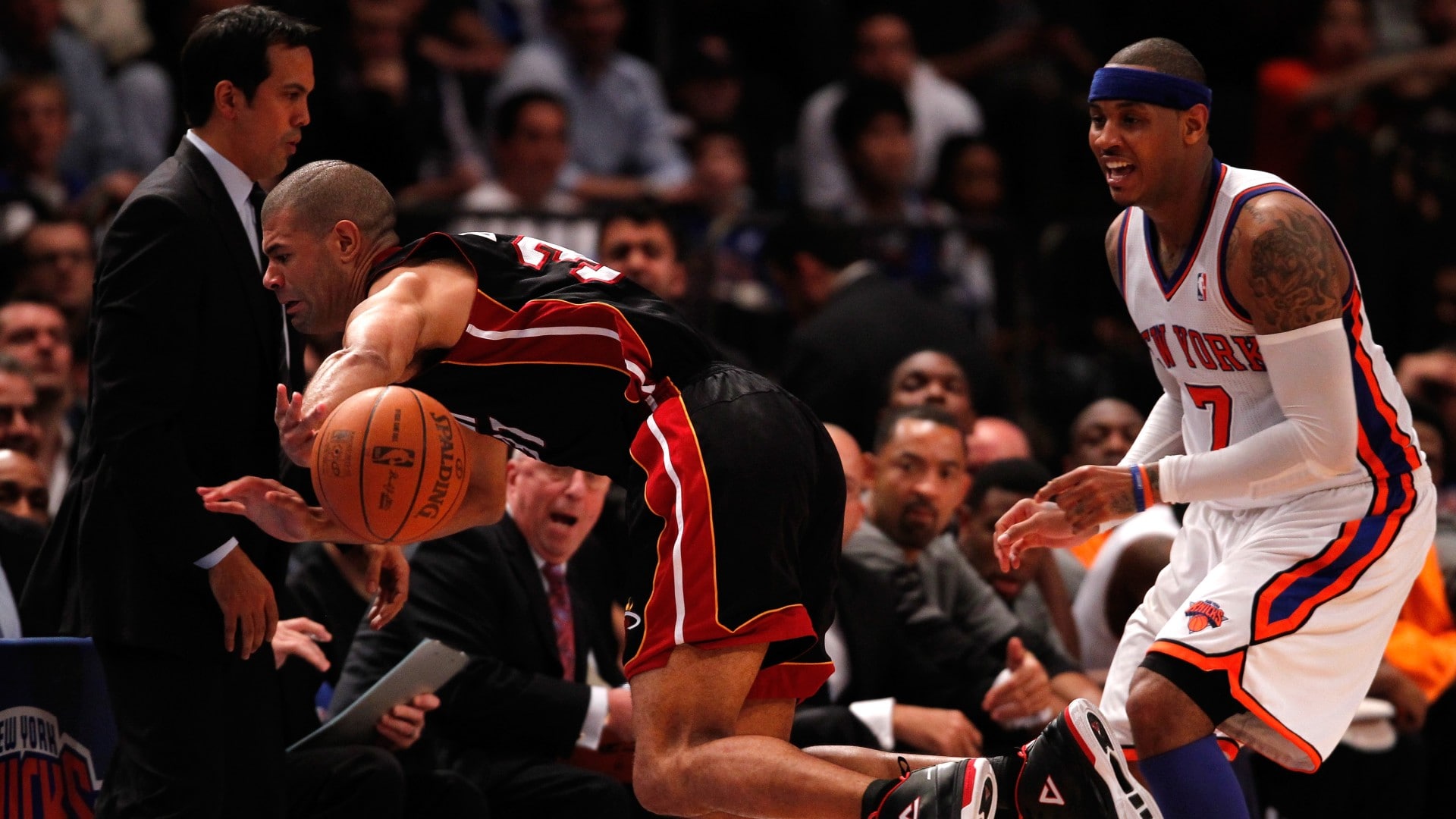
In 2011, after a brief return to Memphis via trade, Battier signed with the Miami Heat. The Heat were coming off a disappointing loss in the 2011 Finals and were looking for the final pieces to surround LeBron James, Dwyane Wade, and Chris Bosh. Battier was the perfect fit.
His arrival in Miami coincided with the league’s shift toward "small-ball." Although naturally a small forward, Battier’s strength and intelligence allowed him to play as a "stretch four" (a power forward who can shoot three-pointers). This tactical shift cleared the lane for LeBron James to attack the rim, fundamentally changing the Heat's offensive ceiling.
The 2012 and 2013 Titles
Battier’s contribution to Miami’s "Heatles" era cannot be overstated. In the 2012 NBA Finals against the Oklahoma City Thunder, he shot a staggering 57.7% from three-point range. His ability to punish the Thunder for doubling-teamed stars was a primary reason Miami secured the championship in five games.
In 2013, he played a vital role in the Heat’s 27-game winning streak, the second-longest in NBA history. However, his most iconic moment came in Game 7 of the 2013 NBA Finals against the San Antonio Spurs. After struggling with his shot for much of the series, Battier erupted for 18 points, hitting 6-of-8 three-pointers. In the post-game interview, he famously remarked, "It's better to be timely than good," a quote that perfectly encapsulated his career.
Technical Analysis of the "Battier Effect"
To understand Battier’s NBA journey, one must look at the advanced metrics that validated his playing style. While traditional stats like Points Per Game (PPG) were modest, his "Adjusted Plus-Minus" (APM) often ranked among the league's elite.
| Metric/Era | Memphis Grizzlies (Early) | Houston Rockets (Peak) | Miami Heat (Late) |
|---|---|---|---|
| Primary Role | Two-way Wing | Defensive Specialist | Small-ball Power Forward |
| Defensive Impact | Individual perimeter stopper | System-wide floor general | Rotational "Glue" & Help |
| Offensive Value | Slash and Shoot | Corner 3-Point Specialist | Floor Spacer / Playmaker |
| Key Achievement | First Playoff Appearances | 22-Game Winning Streak | 2x NBA Champion |
Battier’s value was often found in the "clutter" of a basketball game—the deflections, the charges taken, and the hockey assists. He led the league in charges taken multiple times, a testament to his willingness to sacrifice his body for the team's defensive structure. According to Basketball-Reference, Battier maintained a positive Defensive Box Plus-Minus (DBPM) for nearly every season of his career, a rarity for a perimeter player.
Retirement and Legacy
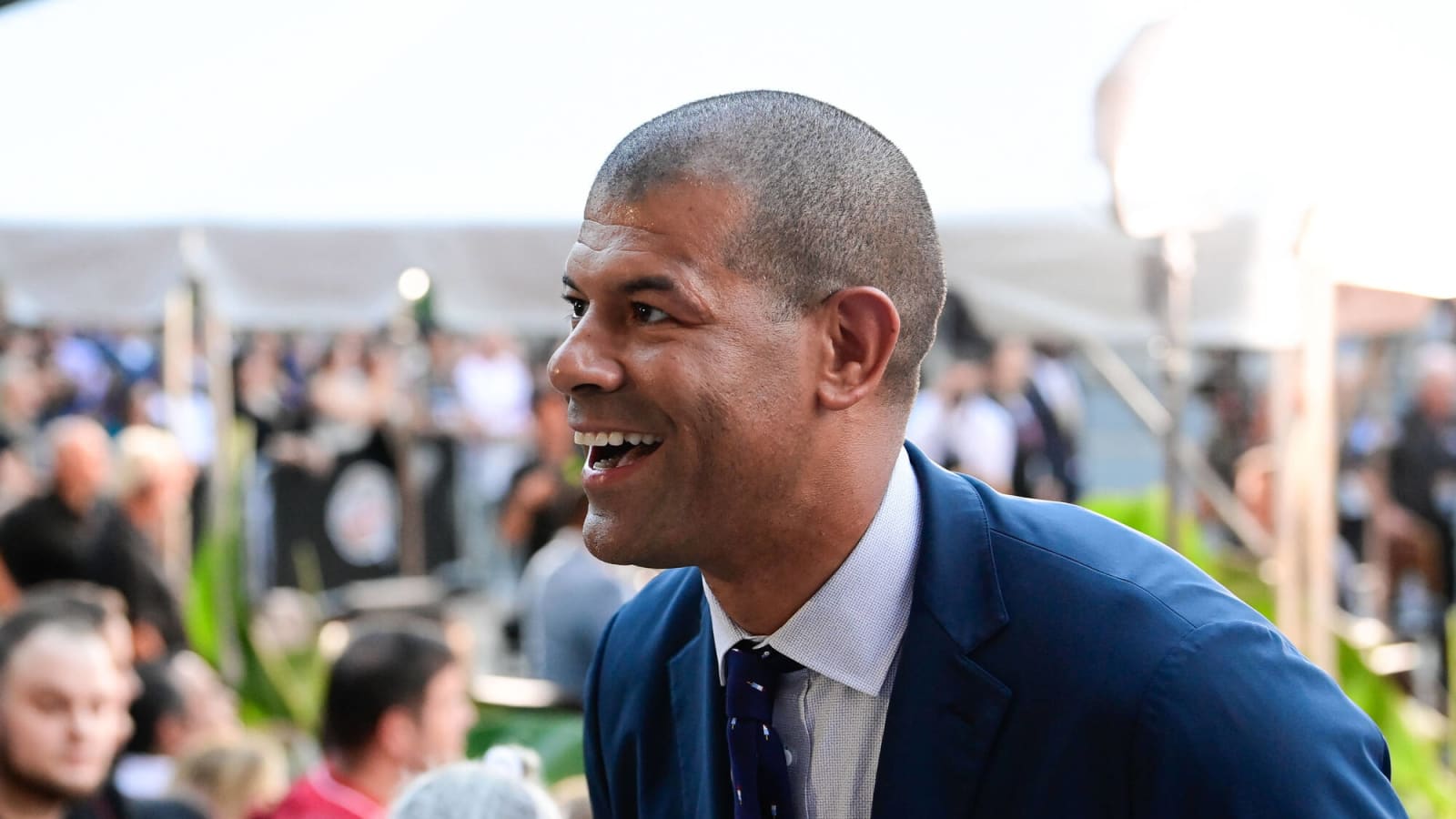
Shane Battier retired following the 2014 NBA Finals. Unlike many former players who move into coaching or broadcasting immediately, Battier initially explored the world of tech and corporate leadership, eventually returning to the Heat organization as the Vice President of Basketball Development and Analytics.
His journey from a high-profile college star to a "stat-less" NBA legend changed the way front offices evaluate talent. Today, in 2026, the "3-and-D" archetype (players who specialize in three-point shooting and defense) is the most sought-after role player in the league. Shane Battier was the prototype for this evolution. He proved that you didn't need to be the leading scorer to be the most important player on the court during winning time.
Frequently Asked Questions
Why was Shane Battier called the "No-Stats All-Star"?
The nickname originated from a 2009 article by Michael Lewis. It referred to the fact that Battier’s traditional statistics (points, rebounds, assists) were average, but advanced data showed that his presence on the court significantly increased his team’s chances of winning and decreased the efficiency of the opponent's best players.
How many NBA championships did Shane Battier win?
Shane Battier won two NBA championships, both with the Miami Heat in 2012 and 2013. He played a critical role as a starter and a defensive anchor during the "Big Three" era alongside LeBron James, Dwyane Wade, and Chris Bosh.
Did Shane Battier ever win Defensive Player of the Year?
While Battier was widely considered one of the best defenders of his era, he never won the Defensive Player of the Year (DPOY) award. He was, however, named to the NBA All-Defensive Second Team twice (2007, 2008). His lack of DPOY trophies is often cited as an example of how traditional voting previously favored high-block and high-rebound totals over positional and tactical defense.
What was Shane Battier’s career high in points?
Shane Battier’s career high in a single game was 33 points, which he achieved early in his career with the Memphis Grizzlies in 2002 against the Orlando Magic. As his career progressed, he intentionally shifted his focus away from scoring to emphasize defense and floor spacing.
Which college did Shane Battier attend?
Battier attended Duke University, where he had one of the most successful four-year careers in NCAA history. He won the 2001 NCAA Championship and swept the major National Player of the Year awards before entering the NBA Draft.
Practical Recommendation for Fans and Students of the Game
For those looking to understand the "hidden" side of basketball, studying Shane Battier's film is highly recommended. Pay attention not to the player with the ball, but to how Battier positions his body on defense and how he communicates with teammates during transitions.
If you are a young player or coach, prioritize the "Battier fundamentals":
- Master the Scouting Report: Know your opponent's tendencies better than they know themselves.
- Value the Corner Three: It is the most efficient shot in basketball, and Battier made a career out of mastering it.
- Prioritize the Team's Net Rating: Focus on actions that make the team better (like taking charges or forcing tough shots) rather than padding individual stats.
Image Gallery