Understanding Workers Compensation Attorney Fees in Putnam County
In Putnam County, workers compensation attorney fees are strictly regulated by the New York State Workers’ Compensation Board and are contingent upon the successful recovery of benefits. Attorneys generally do not charge upfront fees;...
In Putnam County, workers compensation attorney fees are strictly regulated by the New York State Workers’ Compensation Board and are contingent upon the successful recovery of benefits. Attorneys generally do not charge upfront fees; instead, they receive a court-approved percentage of the specific indemnity benefits awarded to the claimant, ensuring that legal representation remains accessible regardless of a worker's financial situation.
Contents
The Regulatory Framework of Legal Fees
When navigating a workers compensation claim in New York, it is crucial to understand that the attorney-client relationship is governed by administrative law rather than standard hourly billing models. In Putnam County, as in the rest of New York State, the Workers’ Compensation Board retains oversight of all fee applications.
An attorney cannot unilaterally set their own fee. Instead, every fee must be formally requested through a specific application process and approved by a Workers’ Compensation Law Judge (WCLJ). This structure serves as a protection for the injured worker, preventing exorbitant charges and ensuring that the legal costs remain proportional to the financial benefit obtained through the claim. Because the system is designed to provide medical care and lost wage replacement, the regulations are written to prioritize the claimant’s financial stability.
The "Contingency" Nature of Representation
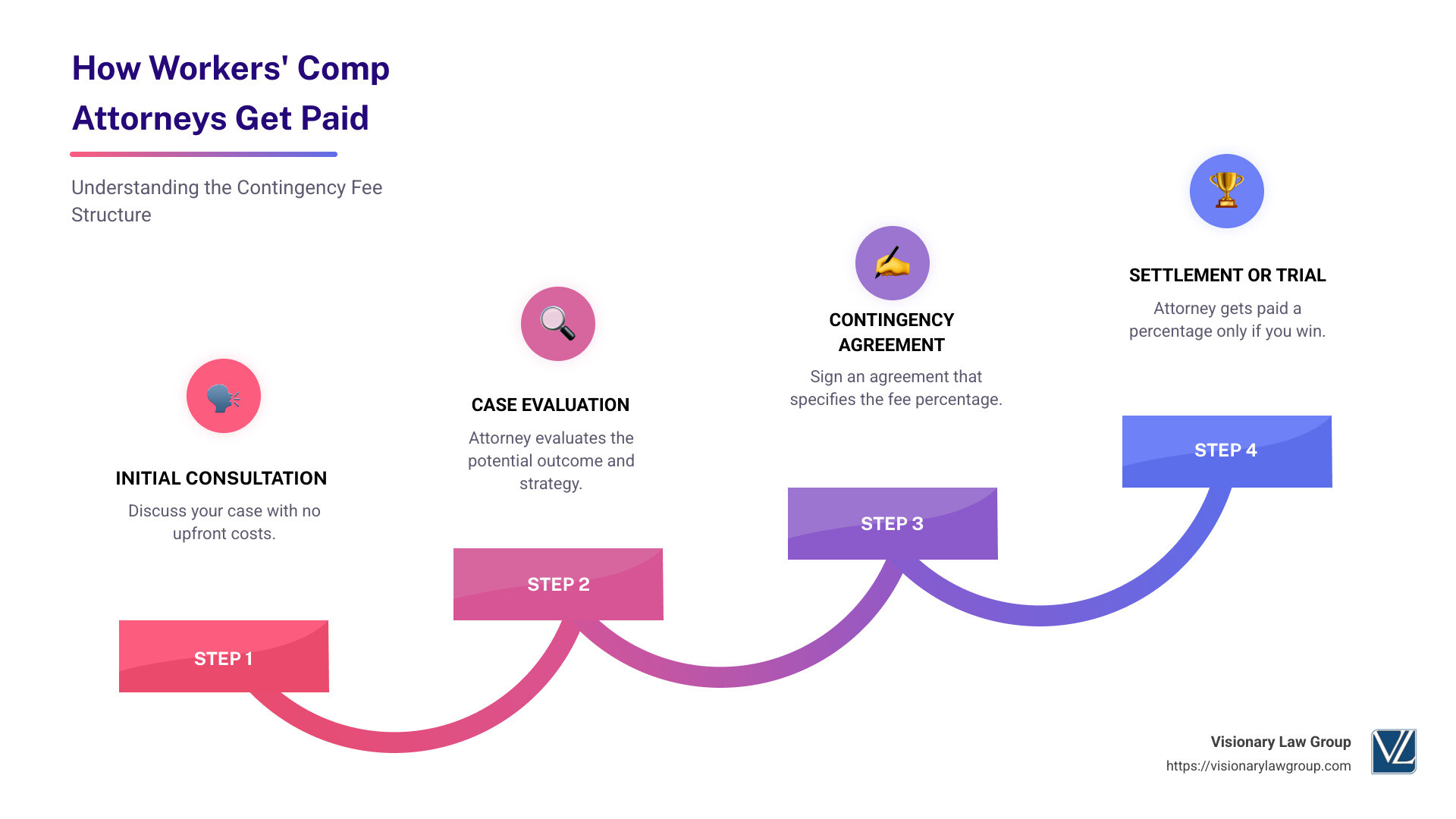
The primary reason workers compensation legal services are accessible is that they operate on a contingency basis. This means the attorney’s payment is contingent upon their success in securing an award for the claimant. If the attorney is unable to secure a monetary award—such as lost wage benefits—they generally do not receive a legal fee.
This model aligns the incentives of the attorney with those of the injured worker. Since the attorney only gets paid when the client wins, they are motivated to pursue the claim aggressively and navigate the complex procedural hurdles required by the Board. It is important to clarify that this applies to indemnity (cash) benefits; attorneys typically do not take a portion of an injured worker’s medical benefits, which are paid directly by the insurance carrier to the healthcare providers.
How Fee Calculations Are Determined
While every case is unique, the New York State Workers’ Compensation Board maintains guidelines for what constitutes a "reasonable" fee. The judge considers several factors when reviewing an attorney’s fee application, including:
- Complexity of the case: Was the case contested by the insurance carrier? Did it involve complex issues like loss of wage-earning capacity or permanent impairment ratings?
- Time and effort expended: The attorney must submit documentation detailing the work performed, such as attendance at hearings, preparation of medical evidence, and communication with the insurance carrier.
- Results achieved: The total amount of the monetary award serves as the baseline for the fee.
- Efficiency: The judge ensures that the fee is not excessive relative to the nature of the claim.
In practice, fees are often a modest percentage of the retroactive indemnity award. Because these fees are "awarded" by the judge, they are typically deducted from the client's settlement or back-pay award, meaning the client rarely receives a separate bill from their law firm.
Comparison of Financial Responsibilities
Understanding who pays what is vital for managing your expectations during the litigation process. The following table illustrates the standard breakdown of costs associated with workers compensation claims in New York.
| Expense Category | Who Pays | Basis of Calculation |
|---|---|---|
| Attorney Fees | Client (from Award) | Judge-approved % of indemnity award |
| Medical Expenses | Insurance Carrier | Official NYS Medical Fee Schedule |
| Court Filing Fees | None | Not applicable in NYS Workers Comp |
| Expert Testimony | Insurance Carrier | Determined by WCLJ at hearings |
| Consultation Fees | Attorney | Usually free (No-obligation) |
Procedural Steps: From Consultation to Approval
If you are injured on the job in Putnam County, the process begins with an initial consultation. Most reputable firms offer this without cost to evaluate the merits of your claim. Once retained, the attorney files a notice of appearance with the Board.
During the life of the claim, the attorney handles all correspondence with the employer’s insurance carrier, monitors medical reports, and prepares for scheduled hearings. If a dispute arises regarding your benefit rate or the extent of your disability, the attorney presents evidence to a WCLJ.
Only after an award is made does the attorney submit the "Fee Application" form. You, as the claimant, have the right to review this application. If you believe the requested fee is unreasonable, you are entitled to voice your objections to the judge before the fee is finalized. This transparency ensures that the legal costs are vetted in a public, recorded setting.
Common Misconceptions About Legal Costs
A frequent error claimants make is assuming that hiring an attorney will "eat up" their entire settlement. In reality, because the Board regulates these fees, they are generally kept at a level that preserves the majority of the compensation for the worker. Furthermore, without legal representation, claimants often struggle to maximize their benefits, potentially resulting in a smaller overall settlement than if they had been guided by counsel.
Another misconception is that the insurance company will pay your legal fees. While an insurance company might be responsible for paying your medical bills and lost wages, they are not responsible for your private attorney's fees. Those must come from the funds awarded to you, as established by the Board.
When to Seek Legal Advice in Putnam County
You should consider consulting with an attorney if your claim is controverted (denied), if you are nearing a settlement, or if there is a disagreement regarding your average weekly wage. Insurance carriers often have vast resources dedicated to minimizing claims; having an attorney who understands the local nuances of the Putnam County hearing locations and the specific judges overseeing the region can be an significant advantage.
When selecting an attorney, ask about their experience specifically with the New York State Workers’ Compensation system. General practice attorneys may not be as familiar with the specific, technical forms—such as the C-3 (Employee Claim Form) or the C-8.1/8.6 (Notice of Intent to Suspend/Reduce Benefits)—that are critical to your case.
Frequently Asked Questions
1. Do I have to pay my attorney if I lose my case? No. Because fees are contingent on securing a monetary award, if the judge denies your claim and no compensation is awarded, the attorney does not receive a fee for their services.
2. Is there a maximum percentage an attorney can charge? There is no fixed statutory percentage written into law, but the Board uses established guidelines. Fees are rarely exorbitant and are subject to judicial approval to ensure they are reasonable relative to the work performed and the outcome achieved.
3. Can I negotiate the fee with my attorney? While you can discuss fees at the start of your relationship, the final authority remains with the Workers’ Compensation Law Judge. An attorney cannot charge more than what the judge approves, regardless of any private agreement.
4. Are medical bills included in the attorney's fee calculation? No. Attorney fees are strictly calculated based on the indemnity (cash) benefits awarded to the claimant. Medical expenses are separate and are paid by the carrier to your doctors and hospitals.
5. How do I know if my attorney's fee request is fair? You will receive a copy of the fee application submitted by your attorney. If you feel the amount is too high, you have the right to submit a written objection to the Workers’ Compensation Board judge presiding over your case.
Next Steps for Claimants
If you have an active workers compensation case in Putnam County, the most important next step is to maintain organized records of all correspondence from the Workers’ Compensation Board. Ensure that you attend every scheduled hearing and that your medical providers are submitting timely documentation. If you do not yet have representation, schedule a consultation with a qualified attorney to review the status of your claim. By understanding the fee structure early, you can focus on your recovery with the confidence that your legal representation is being handled professionally and transparently under the oversight of the New York State system.
Image Gallery