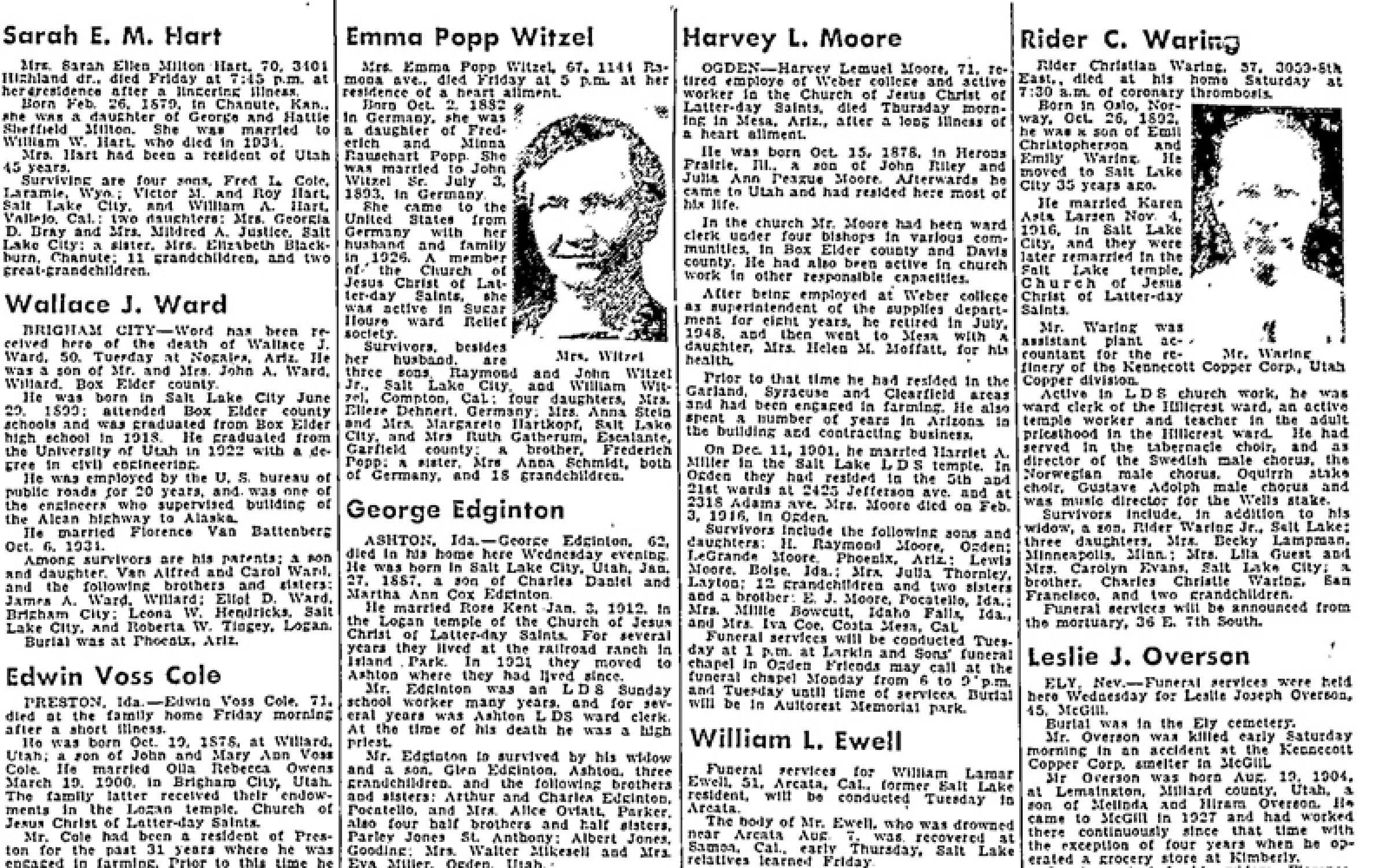
Obituaries in The Gazette: How to Search Archives and Submit Notices
To find or publish obituaries in The Gazette, access the publication's dedicated obituary portal powered by platforms like Legacy.com, search by the decedent's legal surname and publication date, or contact the newspaper’s editorial de...
To find or publish obituaries in The Gazette, access the publication's dedicated obituary portal powered by platforms like Legacy.com, search by the decedent's legal surname and publication date, or contact the newspaper’s editorial desk directly. Because "The Gazette" primarily identifies major regional dailies—most prominently The Gazette in Colorado Springs, Colorado, and The Gazette in Cedar Rapids, Iowa—specifying the publication's city ensures accurate archival records, death notices, and family service listings.
Contents
Identifying the Publication: Which Gazette Holds Your Record?
When locating or submitting an obituary, identifying the exact publishing entity is critical. Several historically significant and regional daily publications share the masthead "The Gazette." Navigating the correct portal prevents delays in service announcements or misdirected genealogical inquiries.
- The Gazette (Colorado Springs, Colorado): Serving El Paso County, the Pikes Peak region, and surrounding southern Colorado communities. This publication documents public death notices, military honors connected to regional defense installations (such as Fort Carson, Peterson Space Force Base, and the U.S. Air Force Academy), and local memorial services.
- The Gazette (Cedar Rapids and Iowa City, Iowa): Serving eastern Iowa, covering Linn, Johnson, and adjacent counties. It maintains regional community coverage and archives spanning over a century of midwestern civic records.
- The Montreal Gazette (Quebec, Canada): The oldest continuously published daily newspaper in North America, serving the English-speaking population of metropolitan Montreal and Quebec.
- The London, Edinburgh, and Belfast Gazettes (United Kingdom): The official journals of public record in the UK. While these editions record official statutory wills, estate distributions, and probate announcements under the Trustee Act, they publish statutory notices of deceased estates rather than traditional narrative obituaries.
Confirming the geographical residence and date of passing before beginning your search ensures you select the correct publishing engine and database.
Searching Recent and Historical Gazette Obituaries
Locating a past death notice requires different methodologies depending on whether the event occurred within the past twenty-five years or dates back into ancestral public records.
(Note: adhering to rule to NOT use code blocks or ASCII art. Moving straight to text and lists.)
Digital Archival Searches (Post-2000 to 2026)
Modern notices published in major dailies are syndicated across digital platforms, including the newspaper's internal website and partner syndicates such as Legacy.com.
- Access the Targeted Obituary Portal: Navigate directly to the obituary directory of the specific newspaper (for example, the Colorado Springs or Cedar Rapids digital editions).
- Apply Full Legal Names: Search using the decedent's full legal name. When tracking female ancestors, execute two distinct queries: one using the married surname and one using the maiden name.
- Refine by Date Ranges: Limit search parameters to a specific window. Most funeral directors place notices within three to seven days after a death, but memorial announcements may run weeks or months later.
- Filter by Location and Affiliations: If a surname is common, add secondary parameters such as the city of residence, surviving spouse's name, or regional affiliations (such as military branch, university, or fraternal organizations).
Historical and Microfilm Research (Pre-2000 Records)
Older obituaries require research beyond standard search engines, as physical print issues must often be retrieved from preserved film or digitized repository databases.
- Public Library Archives: Major regional libraries, such as the Pikes Peak Library District in Colorado or the Cedar Rapids Public Library in Iowa, maintain extensive local history desks with cataloged microfilm reels of The Gazette.
- State Historical Societies: State archives preserve long runs of regional newspapers. These records provide contextual details not found in modern digital extracts, such as print layout, photographic resolution, and adjacent civic notices.
- Subscription Historical Platforms: Services like Newspapers.com, GenealogyBank, and the Library of Congress project Chronicling America index digitized scans of historical Gazette editions, enabling full-text keyword optical character recognition (OCR) searches.
How to Submit an Obituary to The Gazette
Publishing a death announcement involves strict verification standards to protect the public from fraudulent estate claims and identity theft. Submissions follow a standardized workflow whether handled by a licensed funeral provider or directly by surviving kin.
Required Documentation and Verification
Newspapers will not print an obituary without independent verification of the death. Submitting parties must supply one of the following:
- The name, city, and telephone number of the licensed funeral home, crematory, or mortuary handling arrangements.
- A certified copy of the state-issued certificate of death (if the family is handling final disposition independently or through whole-body donation programs).
- Official documentation from an anatomical board or medical examiner’s office.
Structural Anatomy of a Published Notice
A comprehensive obituary serves both as a personal tribute and a public, historical record. Structuring the copy logically helps prevent expensive word-count overages while conveying all critical details:
- Announcement of Death: Full legal name, preferred nicknames, age, primary city of residence, date of death, and location of passing.
- Biographical Summary: Significant milestones, birth city, parents' names, educational background, military service, career accomplishments, and primary passions or volunteer work.
- Surviving and Predeceased Family: Clear listing of predeceased immediate family members followed by surviving relatives (spouse, children, grandchildren, siblings) and their respective locations.
- Service and Memorial Information: Specific dates, start times, addresses for visitations, religious liturgies, celebrations of life, and burial or interment details.
- Memorial Contributions: Designation of specific charitable foundations, medical research programs, or family funds in lieu of flowers.
Gazette Publication Options: Pricing, Formats, and Timelines
Newspaper obituaries fall into distinct editorial categories depending on budget, regulatory goals, and desired length.
| Notice Type | Word Count / Space | Verification Needed | Included Features | Typical Turnaround Window |
|---|---|---|---|---|
| Basic Death Notice | 30–75 words | Funeral home confirmation | Name, date of death, service time, and location | 24–48 hours before publication |
| Standard Paid Obituary | 100–300 words | Funeral home or Death Certificate | Biographical text, surviving family, service details | 24–48 hours prior to targeted print run |
| Expanded Portrait Feature | 300–800+ words | Funeral home or Death Certificate | Color photo, detailed life history, digital guestbook | 48–72 hours prior to print date |
| Statutory Estate Notice | Standard legal block | Court filing / Case number | Executor details, creditor claim deadlines | Set by local probate law schedules |
Cost Determinants
Print obituary pricing in metropolitan and regional publications relies on specific mechanical measurements:
- Column Inches or Line Count: Many publications charge a base rate for the first few lines and an incremental cost per additional agate line or column inch.
- Photographs: Adding black-and-white or full-color portrait images typically incurs a flat surcharge per image.
- Emblems and Service Insignia: Military branch emblems, religious icons, or organizational symbols carry modest placement fees.
- Syndication and Digital Fees: Most modern publishing packages mandate a digital processing fee to maintain the memorial page, guestbook hosting, and long-term search indexing on sites like Legacy.com.
Deadlines and Submission Deadlines
To guarantee inclusion in a specific print edition, submissions must meet strict editorial cutoff times. Late submissions miss press runs and delay public announcements of scheduled services.
General Production Deadlines for Regional Dailies:
Weekday Print Editions (Tuesday – Friday): Final proof approval and verification must typically be finalized by 1:00 PM to 3:00 PM the business day prior to print.
Weekend and Sunday Editions: Because Sunday papers maintain the highest circulation and print earlier on automated press tracks, the submission deadline usually falls between 11:00 AM and 2:00 PM on the preceding Thursday or Friday.
Major Holiday Modifications: Thanksgiving, Christmas, New Year's Day, and Memorial Day push proofing schedules back 24 to 48 hours earlier than standard operating windows.
Always confirm deadlines directly with the regional advertising desk, especially if custom styling, layout proofs, or multiple high-resolution photos are involved.
Legal and Genealogical Value of Gazette Records
Newspaper death notices represent critical historical primary sources, bridging gaps in civil registration records and providing verifiable evidence for estate administration.
Probate and Creditor Notification
Under statutory probate codes across most states, personal representatives (executors) bear a legal responsibility to alert prospective creditors of an estate’s opening. While narrative family obituaries do not substitute for formal legal notices to creditors unless formulated under statutory publication statutes, they provide corroborative evidence that an individual is deceased. This evidence helps resolve bank accounts, title deeds, insurance claims, and real property transfers.
Genealogical and Historical Documentation
For genealogists and family historians, a Gazette obituary offers rich personal context that standard government vital statistics cannot replicate:
- Maiden Names and Collateral Relatives: Obituaries frequently mention married names of sisters, daughters, and surviving in-laws, making it easier to trace elusive matrilineal family lines.
- Cemetery and Interments: Pinpointing the exact cemetery, mausoleum, or niche simplifies locating gravestones and municipal sexton records.
- Migration Routes: Narratives regularly trace a family’s migration path, detailing previous cities of residence, military deployments, and long-term career transfers.
Common Submission Pitfalls to Avoid
Errors in a published obituary can be painful for the family and expensive to correct via formal retractions or re-runs.
- Misspelled Surnames and Place Names: Always run copy through an independent review before authorization. Check non-standard phonetic spellings of children's and grandchildren’s names.
- Ambiguous Service Times: Verify that addresses for chapels, churches, and reception spaces are complete, including city names, suite designations, and clear start times.
- Low-Resolution Photographs: Submitting compressed photos pulled from social media frequently results in blurred or pixelated newsprint portraits. Supply original digital files (minimum 300 DPI at print dimensions).
- Excluding Maiden Names: Omitting a mother's, wife's, or sister's maiden surname complicates genealogical research and prevents long-distance childhood friends from recognizing the decedent.
- Relying Exclusively on the Funeral Director: While licensed morticians routinely handle obituary submission as a courtesy, the legal next of kin must review the final typeset proof and price quote before releasing the document to the presses.
Frequently Asked Questions
What is the difference between a death notice and an obituary in The Gazette?
A death notice is a concise, factual announcement providing the decedent's name, dates of life, and practical details regarding funeral services, whereas an obituary is an extended biographical narrative that details the individual's life, career, personal achievements, and surviving family members. Death notices are brief and cost less, while full obituaries take up more column space and carry higher publication fees.
How quickly does an obituary appear online versus in the print newspaper?
Online obituary pages typically activate within 2 to 6 hours after editorial approval and verification, while print versions appear in the next scheduled print cycle based on that paper's daily cutoff deadlines. If submitted on a Friday afternoon, the online page may go live Saturday, but the print edition may not run until Sunday or Monday depending on weekend production workflows.
Can an individual place an obituary directly without using a funeral home?
Yes, private individuals can submit an obituary directly to the publication, but The Gazette requires independent, legal verification of the passing before accepting payment or scheduling the run. You will need to provide a certified copy of the death certificate, proof of medical examiner disposition, or official confirmation from a whole-body donor bank.
How can I locate historical Gazette obituaries published before 1990?
Historical obituaries can be accessed through public library microfilm collections in the municipality where the paper was printed, state historical society digital archives, or subscription genealogy databases such as Newspapers.com and GenealogyBank. Contacting the local library's reference or local history desk is often the fastest route for locating specific scanned microform editions.
What should I do if an obituary is published with a factual error?
If an error appears in print, immediately contact the newspaper's obituary or classified advertising department to request a correction or a paid re-run. Digital versions hosted on the newspaper’s website or partner platforms can typically be edited and republished online within a few hours without incurring full reprint charges.
Whether you are honoring a loved one's memory or preserving family lineage, ensure all names, service locations, and dates are verified against official records before approving final proofs. To search archival records or submit a tribute, contact your regional Gazette's advertising and editorial desk or access their verified digital memorial portal.
Image Gallery