Hybrid Cloud Security Architecture: Frameworks for 2026 Enterprise Resiliency
Hybrid cloud security architecture is a unified framework designed to protect data, applications, and infrastructure across combined on-premises, private cloud, and public cloud environments. In 2026, this architecture prioritizes Zero...
Hybrid cloud security architecture is a unified framework designed to protect data, applications, and infrastructure across combined on-premises, private cloud, and public cloud environments. In 2026, this architecture prioritizes Zero Trust principles, AI-native threat detection, and centralized visibility to mitigate risks associated with fragmented perimeters and complex global data sovereignty regulations.
Contents
Integrating disparate environments requires a shift from traditional perimeter-based security to a data-centric and identity-centric model. As enterprises in 2026 scale their footprint across providers like AWS, Microsoft Azure, and Google Cloud while maintaining legacy local stacks, the architecture must ensure that security policies remain consistent, automated, and enforceable regardless of where the workload resides.
The Core Pillars of Hybrid Cloud Security in 2026
The complexity of modern hybrid environments necessitates a structural approach built on four foundational pillars. These pillars ensure that security is not an afterthought but a native component of the infrastructure lifecycle.
Identity and Access Management (IAM) as the New Perimeter
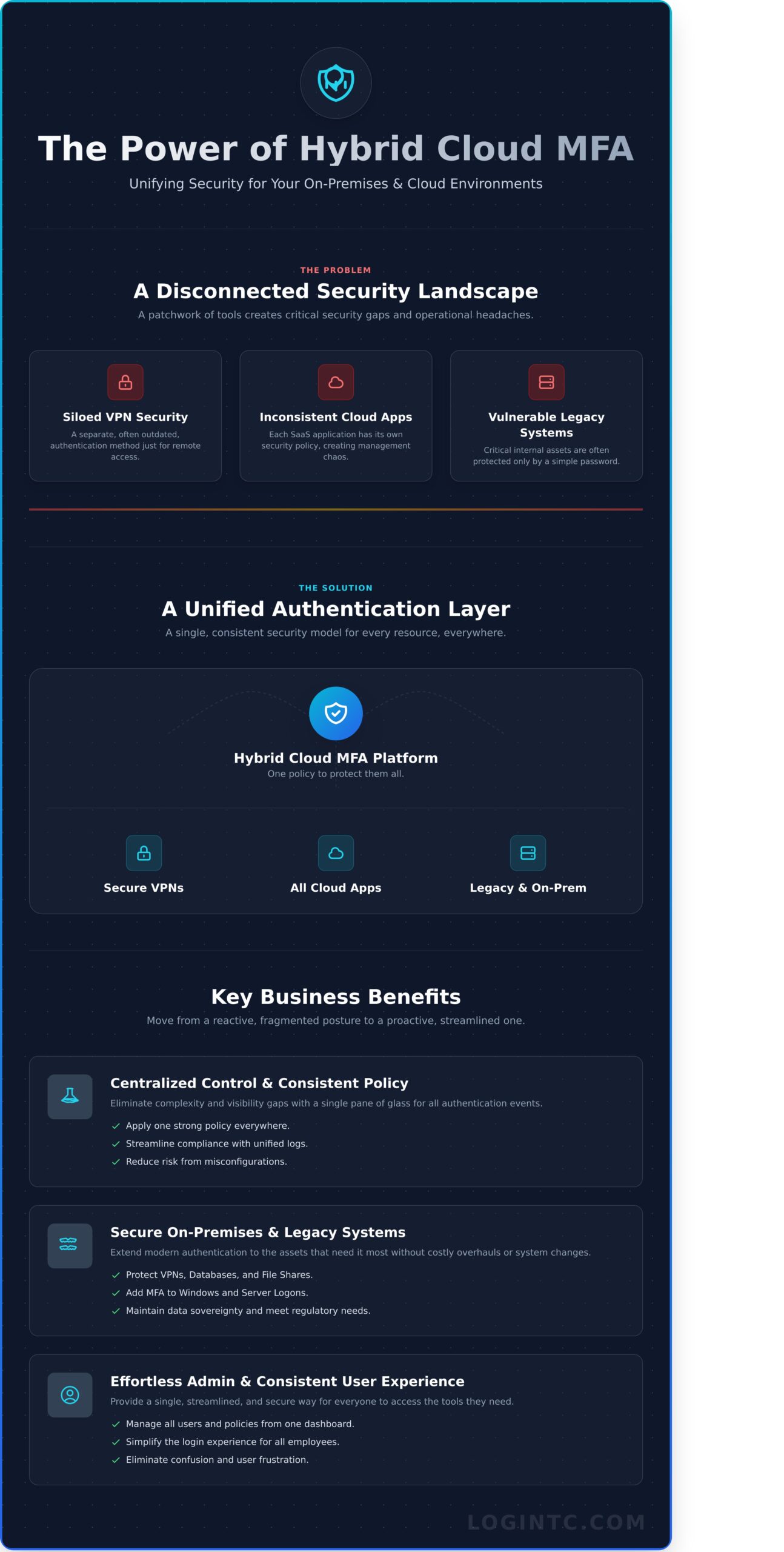
In a hybrid world, the physical network boundary has vanished. Identity is now the primary control plane. A robust 2026 architecture utilizes Federated Identity Management (FIM) and Single Sign-On (SSO) to provide seamless but highly secure access. Multi-Factor Authentication (MFA) has evolved into passwordless, biometric-based authentication that analyzes behavioral signals in real-time to detect anomalies.
Unified Visibility and Observability
You cannot protect what you cannot see. Hybrid security architecture must integrate telemetry from on-premises firewalls, cloud-native logs, and endpoint sensors into a centralized Security Operations Center (SOC). By 2026, this is typically achieved through AI-enhanced Security Information and Event Management (SIEM) and Security Orchestration, Automation, and Response (SOAR) platforms that can correlate events across different cloud providers.
Data Protection and Confidential Computing
Protecting data at rest and in transit is no longer sufficient. Modern architectures incorporate Confidential Computing to protect data in use by performing computations in hardware-based Trusted Execution Environments (TEEs). This is critical for industries like finance and healthcare that utilize hybrid models to process sensitive information while remaining compliant with stringent 2026 privacy laws.
Automated Compliance and Governance
Regulatory environments have become increasingly granular. A hybrid architecture must include automated compliance posture management (CPCM). This involves continuous scanning of configurations against benchmarks such as NIST SP 800-53, ISO/IEC 27001:2022, and the latest 2026 updates to the EU AI Act and GDPR.
Comparing Security Responsibilities in Hybrid Environments
Understanding the Shared Responsibility Model is the first step in architecting a secure hybrid system. While cloud providers secure the "infrastructure of the cloud," the enterprise remains responsible for "security in the cloud."
| Security Layer | On-Premises Responsibility | Public Cloud (IaaS/PaaS) Responsibility | Hybrid Integration Strategy |
|---|---|---|---|
| Physical Security | Enterprise Owned | Provider Managed | Audit provider SOC2 reports annually |
| Hardware/Firmware | Enterprise Managed | Provider Managed | Use Hardware Root of Trust (RoT) |
| Network Control | Manual/SDN Configuration | Virtual Private Cloud (VPC) | Implement SASE for unified tunneling |
| Identity & Access | Local Active Directory | Cloud IDP (Entra ID, IAM) | Federated Identity / Identity Bridge |
| Data Encryption | Client-Side Managed | Provider-Side / BYOK | Centralized Key Management System (KMS) |
| Workload Security | Physical Server Patches | Container/VM Security | Standardized Golden Images & CI/CD |
Implementing a Zero Trust Hybrid Architecture
Zero Trust is the gold standard for 2026 hybrid cloud security. It operates on the principle of "never trust, always verify." Every request for access, whether originating from inside the corporate network or from a remote cloud instance, must be authenticated, authorized, and encrypted.
Step 1: Micro-segmentation of Workloads
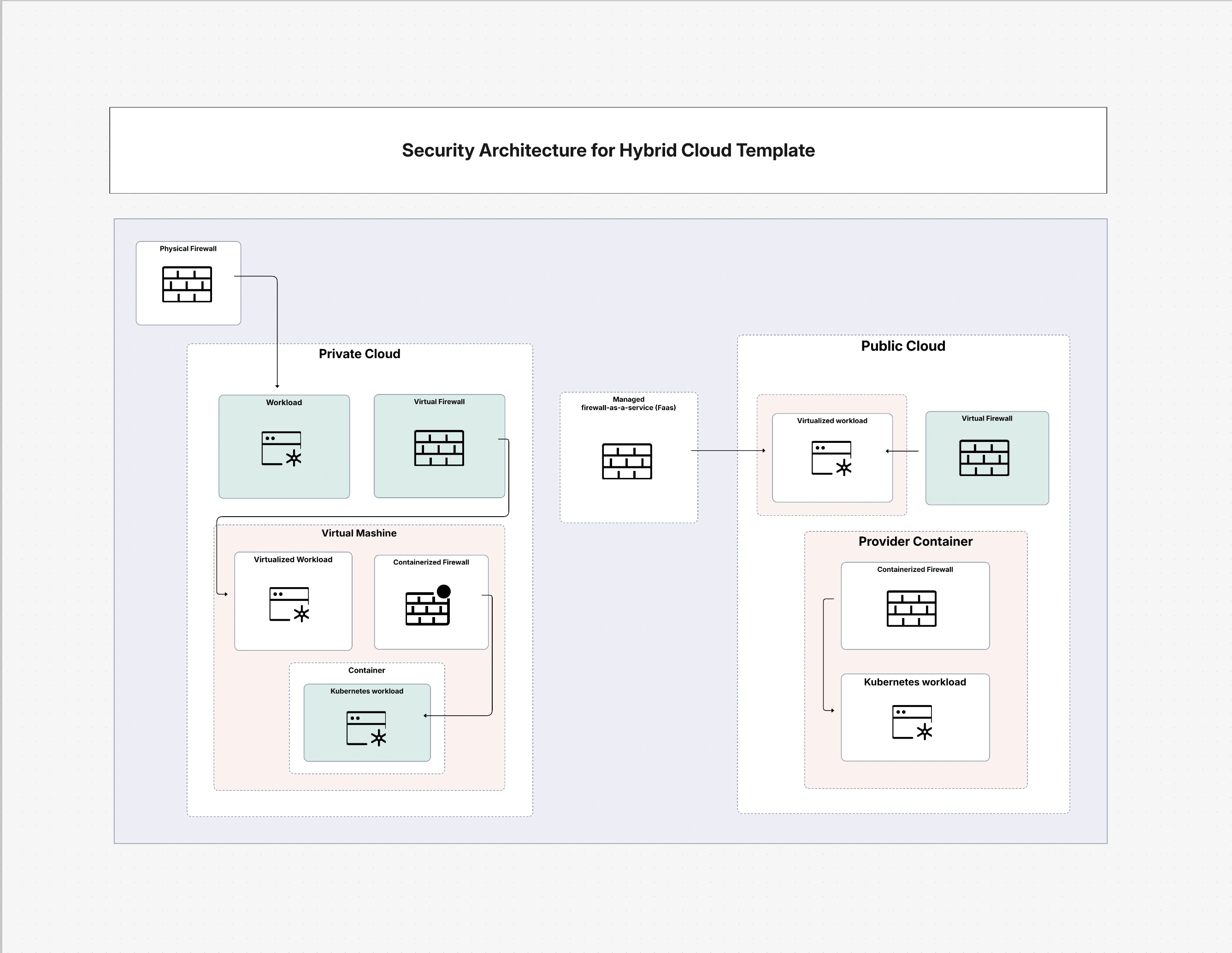
To prevent lateral movement by attackers, architects must divide the hybrid network into small, isolated segments. In 2026, this is largely software-defined. By isolating a legacy database on-premises from a front-end web app in the public cloud, you ensure that a breach in one does not automatically lead to the compromise of the other.
Step 2: Deploying Secure Access Service Edge (SASE)
SASE combines network security functions (like SWG, CASB, and FWaaS) with WAN capabilities to support the dynamic, secure access needs of 2026 organizations. SASE ensures that security policies are enforced at the edge, closer to the user and the data, reducing latency while maintaining a high security posture across the hybrid bridge.
Step 3: Establishing a Unified Policy Engine
Managing separate security policies for different environments leads to "policy drift" and security gaps. A mature hybrid architecture uses a unified policy engine—often driven by Infrastructure as Code (IaC)—to push consistent rules to all environments simultaneously. If a port is closed on an Azure instance, the same logic should automatically apply to the equivalent on-premises firewall.
Expert Insight: Navigating Policy Drift
The Risk of Fragmented Governance Policy drift occurs when the security configurations of your various cloud and on-premises environments diverge over time due to manual updates or platform-specific features. This creates "shadow IT" vulnerabilities that attackers exploit.
The 2026 Solution Adopt a GitOps workflow where all security configurations are stored in a version-controlled repository. Automated pipelines should continuously reconcile the "intended state" in the repository with the "actual state" in the hybrid environment, rolling back unauthorized changes instantly.
Advanced Threat Detection with AI and Machine Learning
By 2026, the volume of logs generated by hybrid environments has surpassed human capacity for analysis. Artificial Intelligence (AI) and Machine Learning (ML) are now integrated directly into the security architecture to provide predictive threat hunting.
- Behavioral Analytics: ML models establish a baseline of "normal" behavior for users and applications. If a service account that typically accesses 10MB of data suddenly attempts to download 10GB from a private cloud storage bucket, the system triggers an immediate lockdown.
- Automated Incident Response: When a threat is detected, the architecture doesn't just alert an analyst; it takes defensive action. This might include isolating a compromised container, revoking an identity token, or rerouting traffic through a deep packet inspection (DPI) scrub point.
- Proactive Threat Hunting: AI agents simulate thousands of attack scenarios against the hybrid architecture to identify weak points before malicious actors do. This "continuous red teaming" is a hallmark of high-maturity organizations in 2026.
Strategic Benefits and Operational Challenges
Transitioning to a robust hybrid cloud security architecture is a complex undertaking that yields significant business advantages but also presents distinct hurdles.
Advantages of a Well-Architected Hybrid System
- Flexibility and Scalability: Organizations can keep sensitive data on-premises for compliance while leveraging the public cloud's computational power for AI workloads.
- Redundancy and Reliability: A hybrid model allows for cross-cloud disaster recovery. If a public cloud region suffers an outage, critical services can failover to a private data center or a secondary provider.
- Optimized Compliance: Modern architectures allow for "geo-fencing" data, ensuring that personal information remains within specific legal jurisdictions (e.g., keeping EU citizen data within European borders).
Common Implementation Obstacles
- Skill Gaps: Finding security engineers proficient in AWS, Azure, and legacy on-premises systems simultaneously remains a challenge in 2026.
- Interoperability Issues: Despite improvements, proprietary security tools from different vendors do not always communicate effectively, leading to "blind spots."
- Cost Management: Egress fees and the cost of redundant security tooling can spiral if not monitored through a dedicated FinOps and SecOps collaboration.
Security Architecture Checklist for 2026
When auditing or building your hybrid security framework, ensure the following technical requirements are met to satisfy current industry standards:
- Mutual TLS (mTLS): Is encryption enforced for all service-to-service communication across the hybrid link?
- Hardware Security Modules (HSM): Are cryptographic keys stored in dedicated hardware rather than software-based storage?
- Ephemeral Credentials: Have you moved away from long-lived API keys in favor of short-lived tokens and managed identities?
- Continuous Posture Scanning: Does your system scan for misconfigured S3 buckets or open RDP ports across all environments every hour?
- Immutable Infrastructure: Are workloads replaced rather than patched? This minimizes the time an attacker can persist in a compromised system.
Frequently Asked Questions
What is the biggest security risk in a hybrid cloud environment?
The primary risk is a lack of visibility and fragmented management, which leads to misconfigurations. When security teams use different tools for on-premises and cloud environments, it is easy to miss a vulnerability or leave a "backdoor" open during the transition between the two. Centralized management is the only effective remedy.
How does Zero Trust apply to hybrid cloud security?
Zero Trust assumes that the network is always hostile. In a hybrid context, this means that even if a request comes from your own local data center to your cloud instance, it must be verified. This involves strict identity verification, device health checks, and granting only the "least privilege" necessary to complete a task.
Can I use the same security tools for my local data center and my public cloud?
While some traditional tools have cloud versions, the most effective approach in 2026 is using "cloud-native" security platforms that are designed for hybrid use. These platforms use APIs to connect to cloud providers while deploying lightweight agents or sidecars to your on-premises servers, providing a single pane of glass for management.
How do I maintain compliance across different cloud providers?
Maintaining compliance requires a "Compliance-as-Code" approach. You should define your regulatory requirements (like HIPAA or GDPR) as digital policies. Automated tools then scan your entire hybrid environment—on-premises and multiple clouds—to ensure every resource meets those specific standards, providing real-time reports for auditors.
What role does encryption play in hybrid cloud connectivity?
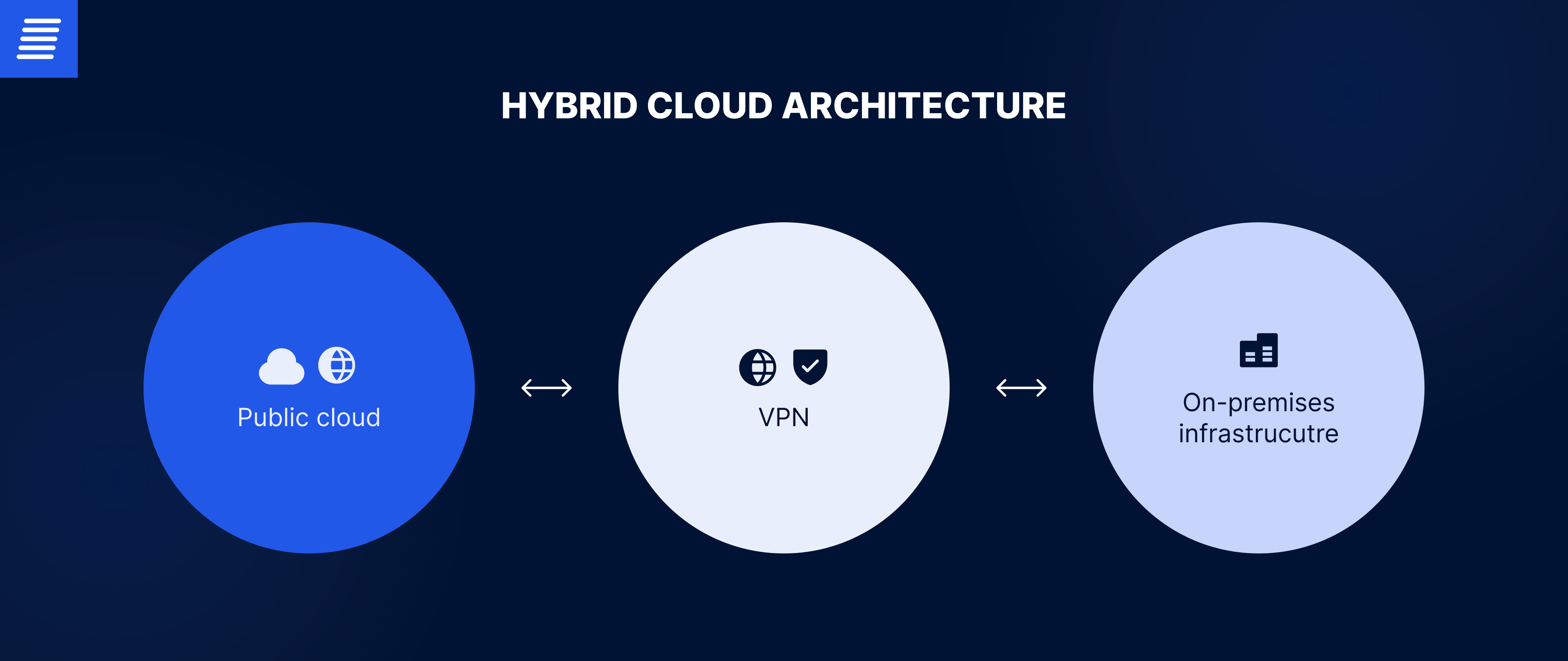
Encryption is the baseline for all hybrid communication. Typically, this is achieved through a Site-to-Site VPN or a dedicated connection like AWS Direct Connect or Azure ExpressRoute with MACsec encryption. Furthermore, application-level encryption ensures that even if the transport layer is compromised, the data remains unreadable.
Future-Proofing Your Hybrid Infrastructure
As we look toward 2027, the focus of hybrid cloud security is shifting toward quantum-resistant encryption and even deeper integration of AI-driven autonomous security. Organizations that have already established a solid Zero Trust foundation will be best positioned to adopt these technologies. The goal is to move toward a "self-healing" architecture where the system identifies, isolates, and repairs its own security flaws without human intervention.
To begin your transition, focus on consolidating your identity providers and establishing a unified visibility layer. By removing the silos between your local IT and your cloud operations, you create a resilient environment capable of withstanding the sophisticated threat landscape of 2026.
Image Gallery