Can I Invest in Solar? A Complete Guide to Renewable Energy Opportunities in 2026
Yes, you can invest in solar energy through three primary pathways: direct ownership of a residential or commercial system, purchasing shares in publicly traded solar companies and ETFs, or participating in community solar programs. Ea...
Yes, you can invest in solar energy through three primary pathways: direct ownership of a residential or commercial system, purchasing shares in publicly traded solar companies and ETFs, or participating in community solar programs. Each method offers different levels of capital requirement, liquidity, and long-term financial returns suited to various investor profiles.
Contents
In 2026, the solar industry has moved beyond its "emerging technology" phase into a cornerstone of the global energy infrastructure. Whether you are a homeowner looking to slash utility bills or a retail investor seeking exposure to the green transition, the mechanisms for investing in solar have become more standardized and accessible than ever before. This guide examines the financial technicalities, regulatory landscapes, and strategic approaches to solar investment today.
Direct Investment: Residential and Commercial Solar Systems
The most traditional way to invest in solar is through direct ownership. This involves installing photovoltaic (PV) panels on your property. In 2026, this remains one of the most effective ways to generate a non-taxable return on investment (ROI) through avoided costs and tax incentives.
The Financial Mechanics of Direct Ownership
When you purchase a solar system, you are essentially "pre-paying" for 25 to 30 years of electricity at a fixed rate. The primary financial metric here is the Levelized Cost of Energy (LCOE). This calculation takes the total cost of the system (installation, financing, and maintenance) and divides it by the total expected energy production over the system's life.
In the current market, residential systems typically achieve an LCOE significantly lower than the average grid price. The ROI is driven by two main factors:
- Avoided Utility Costs: Every kilowatt-hour (kWh) your system generates is one less kWh you buy from the utility. In states with high electricity prices, the "payback period" has shortened to between 5 and 8 years.
- Tax Incentives: Under the Inflation Reduction Act (IRA), which remains a vital driver in 2026, the federal Investment Tax Credit (ITC) allows homeowners to deduct 30% of the system's cost from their federal taxes. This credit is scheduled to remain at 30% through 2032, providing a massive upfront subsidy for direct investors.
Technical Considerations for 2026
Modern systems now predominantly use N-type TOPCon or Heterojunction (HJT) cells, which offer higher efficiency and lower degradation rates than the older PERC technology. When investing directly, ensure your hardware selection accounts for a degradation rate of no more than 0.25% to 0.4% per year to maximize long-term yields. Additionally, the integration of Battery Energy Storage Systems (BESS) is now standard. With the widespread adoption of "Net Billing" (similar to California’s NEM 3.0), the ability to store energy for use during peak evening hours is essential for maximizing the financial return of a solar investment.
Public Markets: Solar Stocks, ETFs, and Yieldcos
If you do not own property or prefer a liquid investment, the public markets offer diverse exposure to the solar value chain. Unlike physical panels, stocks can be sold instantly, providing flexibility that direct ownership lacks.
Categorizing the Solar Sector
To invest wisely, you must distinguish between the different segments of the industry:
- Manufacturers (Upstream): These companies produce polysilicon, wafers, cells, and modules. This segment is highly capital-intensive and sensitive to global supply chain fluctuations.
- Inverter and Component Makers: Companies that produce microinverters, string inverters, and power optimizers. These are often viewed as "technology plays" rather than pure energy plays.
- Installers and Developers (Downstream): Firms that manage the sales, financing, and installation of systems. Their profitability is often tied to interest rates and consumer lending environments.
- Yieldcos and Utilities: These entities own and operate large-scale solar farms and sell the power under long-term contracts. They are favored by income-seeking investors for their consistent dividends.
Solar ETFs: Diversified Exposure
For most individual investors, Exchange-Traded Funds (ETFs) are the safest entry point. Funds like the Invesco Solar ETF (TAN) or the iShares Global Clean Energy ETF (ICLN) provide exposure to a basket of companies, mitigating the risk of a single firm’s failure. In 2026, these funds have increasingly included grid-balancing software companies and battery manufacturers, reflecting the broader "solar + storage" ecosystem.
Community Solar: The Middle Ground
Community solar is a rapidly growing investment vehicle for renters or homeowners with shaded roofs. In this model, a large solar farm is built in a specific geographic area, and local residents can "subscribe" to a portion of the energy produced.
How it Works Financially
As a subscriber, you typically receive a credit on your utility bill for the power generated by your share of the community solar farm. Most programs are structured to provide a guaranteed discount (often 10% to 20%) on your electricity costs.
From an investment perspective, some community solar projects allow for "ownership" of panels rather than just a subscription. In these cases, you pay an upfront fee for a set number of panels in a remote field and receive the full value of the electricity produced. This offers the tax benefits of direct ownership without the need for a suitable roof. You can find more information on the U.S. Department of Energy's Community Solar resource page.
Comparing Solar Investment Pathways
The following table compares the three main methods of solar investment based on the 2026 market landscape.
| Feature | Direct Ownership | Public Stocks/ETFs | Community Solar |
|---|---|---|---|
| Upfront Capital | High ($15,000 - $35,000+) | Low (Price of one share) | Low to Moderate |
| Liquidity | Very Low (Tied to property) | Very High (Market hours) | Low (Contractual terms) |
| Primary Benefit | Avoided costs & Tax credits | Capital gains & Dividends | Utility bill discounts |
| Maintenance | Owner's responsibility | None | Managed by developer |
| Typical ROI | 10% - 20% annually | Market dependent | 5% - 15% (via savings) |
| Risk Level | Low (Physical asset) | High (Market volatility) | Low to Moderate |
Key Financial Metrics to Evaluate
Before committing capital to any solar investment, you must understand the technical metrics that determine success.
1. Internal Rate of Return (IRR)
For direct investments, the IRR represents the annual growth rate of the investment over its lifetime. A well-designed solar system in a high-cost electricity state can often achieve an IRR exceeding 15%, which outperforms many traditional asset classes.
2. Capacity Factor
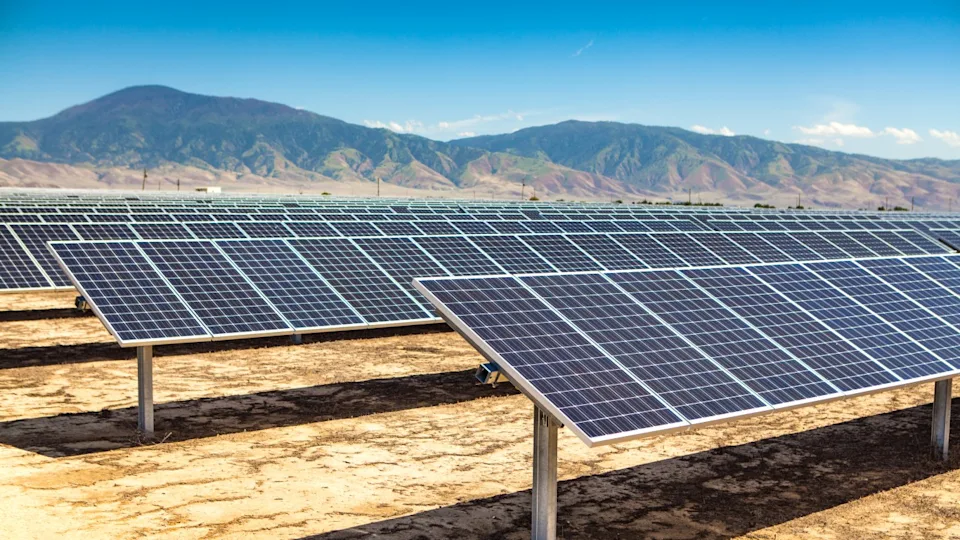
In the context of utility-scale solar or community solar, the capacity factor is the ratio of actual energy output over a period of time to the theoretical maximum output. In 2026, improvements in bifacial panels (which capture light on both sides) and single-axis trackers have pushed capacity factors higher, making large-scale projects more profitable.
3. Degradation Rate
All solar panels lose efficiency over time. When reviewing a solar investment—whether it’s a physical system or a company’s portfolio—check the degradation guarantees. High-quality N-type modules in 2026 should be guaranteed to produce at least 88-90% of their original power after 25 years.
Risks and Challenges in 2026
While solar is a mature investment, it is not without risks. Investors must be aware of the following:
- Policy Risk: While the federal ITC is stable through 2032, state-level "Net Metering" policies can change. If a state moves to a "Net Billing" structure, the value of exported energy drops, increasing the importance of battery storage.
- Interest Rate Sensitivity: The solar industry is capital-intensive. Higher interest rates increase the cost of financing for large projects and can depress the stock prices of residential installers who rely on consumer loans.
- Technological Obsolescence: While silicon-based panels are the standard, the emergence of perovskite tandem cells is a development to watch. While not yet dominant in 2026, a sudden breakthrough could shift the manufacturing landscape.
- Grid Congestion: In some regions, the electric grid is struggling to handle the influx of renewable energy. This can lead to "curtailment," where solar farms are told to stop producing power, affecting the revenue of solar stocks and REITs.
Frequently Asked Questions
Is it better to lease solar panels or buy them?
Buying (or financing to own) is almost always a better investment than leasing. When you own the system, you receive the 30% federal tax credit and the long-term increase in property value. In a lease, the third-party developer keeps the tax incentives, and you only receive a modest discount on your power bills. In 2026, with the availability of specialized "Solar Loans," ownership is accessible to most homeowners with a credit score above 650.
Can I invest in solar through my IRA or 401(k)?
Yes, you can invest in solar through a standard brokerage account within your IRA or 401(k) by purchasing solar-focused ETFs or stocks. For a more direct approach, some "Self-Directed IRAs" (SDIRAs) allow you to invest in private solar equity or debt, though these carry higher risks and require more due diligence.
How does the 30% tax credit work if I don't owe enough in taxes?
The ITC is a non-refundable credit, meaning it cannot reduce your tax liability below zero to give you a "refund" check for the excess. However, if you cannot use the entire 30% credit in one year, the IRS currently allows you to "carry forward" the remaining balance to the following tax year, for up to five years. This makes solar a viable investment even for those with moderate tax liabilities.
Are solar REITs a good way to invest?
Real Estate Investment Trusts (REITs) that focus on renewable energy are excellent for income-focused investors. These companies own the land and the hardware of solar farms and are legally required to distribute 90% of their taxable income to shareholders as dividends. They offer a "middle ground" between the volatility of technology stocks and the illiquidity of physical panels.
Practical Recommendation for 2026
If you are a homeowner with a suitable roof, your first priority should be direct ownership. The combination of the 30% ITC, high grid energy prices, and modern battery integration offers a risk-adjusted return that is difficult to beat in the traditional stock market. You can verify your home's solar potential using tools like Google Project Sunroof.
If you are not a homeowner, focus on diversified ETFs to capture the growth of the sector while minimizing the risk of individual company failures. As we move deeper into 2026, the convergence of electric vehicles (EVs) and solar energy means that companies specializing in "Home Energy Management Systems" (HEMS) are likely to be the next major growth area within the solar investment landscape. Always consult with a financial advisor to ensure any investment aligns with your overall portfolio strategy and risk tolerance.
Image Gallery