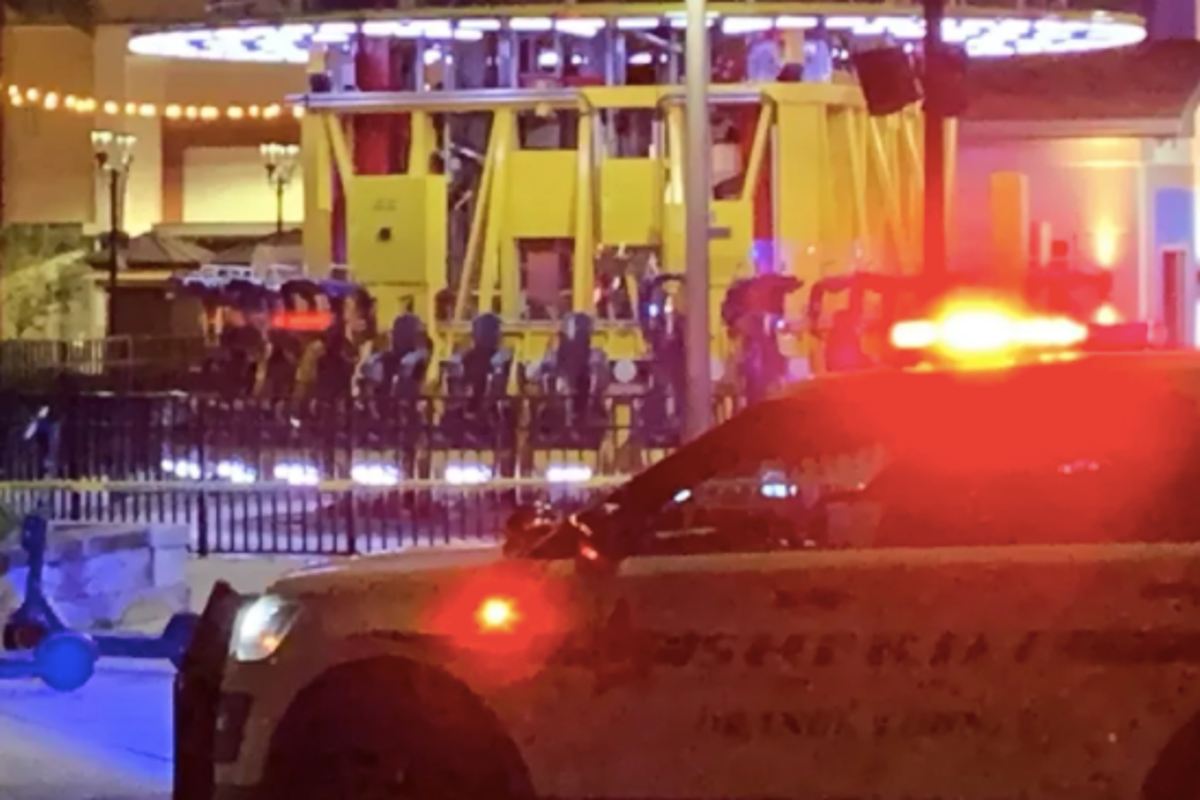
The Legacy of the Tyre Sampson Fall: Safety Reforms and Legal Accountability in 2026
Tyre Sampson was a 14-year-old who tragically fell to his death from the Orlando FreeFall ride at ICON Park on March 24, 2022. The incident occurred because safety sensors were manually adjusted to allow the ride to operate while his h...
Tyre Sampson was a 14-year-old who tragically fell to his death from the Orlando FreeFall ride at ICON Park on March 24, 2022. The incident occurred because safety sensors were manually adjusted to allow the ride to operate while his harness was insecure. This tragedy resulted in the ride’s permanent closure and the enactment of the Tyre Sampson Act.
Contents
The fall of Tyre Sampson remains one of the most significant turning points in the history of amusement park regulation in the United States. As we evaluate the landscape of ride safety in 2026, the technical failures and subsequent legislative responses provide a blueprint for preventing similar mechanical and operational catastrophes. The incident was not merely a freak accident but a documented failure of mechanical integrity, operator training, and regulatory oversight.
The Technical Mechanics of the Orlando FreeFall Failure
To understand the severity of the Tyre Sampson fall, one must analyze the specific engineering of the Orlando FreeFall, which was manufactured by Funtime Handels GmbH. The ride was a 430-foot drop tower designed to tilt riders 30 degrees forward before dropping them at speeds exceeding 75 mph.
The primary safety mechanism relied on a "close-limit" switch system. These sensors were designed to ensure that the over-the-shoulder restraint (harness) was lowered to a specific point before the ride’s PLC (Programmable Logic Controller) would allow the cycle to begin. In a standard configuration, the harness should be within a few inches of the seat base.
Manual Manipulation of Proximity Sensors
Forensic investigations conducted by Quest Engineering and the Florida Department of Agriculture and Consumer Services (FDACS) revealed that the sensors on seats 1 and 2 had been manually adjusted. This physical alteration allowed the "light" to turn green on the operator's console even when the harness was open significantly wider than the manufacturer’s specifications.
Technical Specifications of the Failure
Standard Gap: The manufacturer’s safety protocol required the harness to be closed within a gap of approximately 3 inches to ensure rider retention.
Adjusted Gap: On the night of the fall, the sensors on Tyre Sampson’s seat had been moved to allow a gap of nearly 7 inches.
Resultant Force: When the ride tilted 30 degrees and hit the braking zone during the descent, the combination of G-forces and the excessive gap allowed Sampson to slip through the bottom of the restraint.
The Tyre Sampson Act: Legislative Evolution by 2026
Following the tragedy, the Florida Legislature took aggressive steps to close the loopholes that allowed such a disaster to occur. By 2026, the Tyre Sampson Act (Florida Senate Bill 902) has become the gold standard for state-level amusement park oversight. This law specifically targets the "human factor" and "undisclosed modifications" that led to the 2022 fall.
The Act introduced several mandatory requirements for permanent amusement attractions that were previously either voluntary or loosely enforced:
- Unannounced Inspections: State inspectors now have the authority to conduct random, unannounced audits of ride sensors and software logs to ensure no manual overrides have been implemented.
- Operator Training Certification: All ride operators must undergo a state-standardized training program that includes emergency stop procedures and strict adherence to weight and height restrictions.
- Required Signage: Rides must clearly display manufacturer-specified weight and height limits at the entrance and the loading platform to prevent operator discretion from overriding safety limits.
- Commissioning Reports: Any physical modification to a ride's safety system requires a full re-certification by a third-party professional engineer and notification to the FDACS.
Comparative Analysis of Vertical Drop Ride Safety Standards
The following table compares the safety protocols of vertical drop towers before the 2022 incident and the standardized requirements active in 2026.
| Safety Feature | Pre-2022 Industry Standard | 2026 Regulatory Requirement |
|---|---|---|
| Secondary Restraints | Often optional (harness only) | Mandatory secondary locking (e.g., seatbelts) |
| Sensor Redundancy | Single proximity switch per seat | Dual-channel redundant sensor systems |
| Weight Limit Enforcement | Discretionary by operator | Mandatory scales or calibrated sensor triggers |
| Digital Logging | Localized on-site storage | Real-time cloud logging accessible by regulators |
| Annual Certification | General mechanical inspection | Forensic sensor alignment & software audit |
| Operator Age/Experience | Often 16+ with minimal training | 18+ with state-certified safety training |
Investigative Findings: Corporate and Operational Negligence
The fall of Tyre Sampson triggered a massive legal battle that exposed deep-seated issues within the operation at ICON Park. The Sampson family filed a wrongful death lawsuit against several entities, including the ride owner (Slingshot Group), the manufacturer (Funtime), and the property owner (ICON Park).
The investigation highlighted that Tyre Sampson weighed approximately 380 pounds at the time of the incident. The manufacturer’s operations manual for the Orlando FreeFall explicitly stated a maximum rider weight of approximately 287 pounds (130 kg). However, there were no scales at the ride, and operators were not trained to enforce weight restrictions strictly.
The Role of Software Overrides
A critical component of the 2026 safety landscape is the prohibition of software "bypass" modes. In the Tyre Sampson case, it was found that the hardware itself was physically moved to fool the software. Today, modern PLC systems in amusement parks utilize "Heartbeat" monitoring, where any change in the physical location of a sensor or a change in the electrical resistance of the circuit triggers an automatic lockout that requires a manufacturer’s code to reset.
Industry Impact: How Amusement Park Safety Changed
By 2026, the "Sampson Effect" has permeated the global amusement industry. This shift is characterized by a move away from "operator intuition" toward "automated compliance."
- Dismantling of High-Risk Attractions: The Orlando FreeFall was completely dismantled in 2023. This served as a stark reminder to the industry that a single catastrophic failure can lead to the total loss of a multi-million dollar asset.
- Third-Party Safety Audits: Major theme parks (Universal, Disney, SeaWorld) and independent operators have increased the frequency of third-party audits. These audits focus on "black-box" data analysis to ensure that no sensors are being bypassed to increase throughput or "ride uptime."
- Weight Sensitivity Integration: Many new drop towers and high-G coasters now include integrated load cells in the seats. If a rider exceeds the manufacturer’s safe weight limit, the harness will not lock, and the control system will prevent the ride from dispatching, removing the decision-making burden from young, low-wage operators.
Safety Protocols for Large Riders: 2026 Guidelines
For riders of larger stature, the landscape has changed significantly. In 2026, the industry has prioritized both inclusivity and safety through the following measures:
- Test Seats: Almost all high-thrill attractions now provide a "test seat" at the entrance. These seats are equipped with the same sensor technology as the ride itself, giving riders a clear "Go/No-Go" signal before they enter the queue.
- Big Boy Seats: Manufacturers have begun designing specific rows (often rows 4 or 5 on coasters) with larger molded seats and dual-locking harnesses designed for wider chest and waist measurements, while still adhering to strict safety tolerances.
- Transparent Weight Limits: Gone are the days of "discretionary seating." In 2026, weight limits are treated as hard engineering constraints. If a rider is over the limit, they are respectfully declined entry based on data, not visual estimation.
Frequently Asked Questions regarding the Tyre Sampson Incident
Why was Tyre Sampson allowed on the ride if he was over the weight limit? Tyre Sampson was allowed on the ride due to a lack of scales and specific operator training regarding weight restrictions. The operators relied on the fact that the harness "clicked" and the green light showed on the console, unaware that the sensors had been adjusted to allow for a larger-than-safe gap.
Has any person been criminally charged in the Tyre Sampson fall? While the primary legal resolutions have been through civil settlements and massive fines levied by the FDACS against the Slingshot Group, the focus of the legal system was on "negligence" and "willful violation" of safety protocols. The company faced a fine of $250,000, and the ride was permanently decommissioned.
What is the Tyre Sampson Act? The Tyre Sampson Act is a Florida law (Senate Bill 902) that mandates stricter safety requirements for amusement rides. It includes requirements for permanent rides to have secondary restraints, more frequent state inspections, and strict reporting requirements for any modifications made to safety sensors or software.
What happened to the Orlando FreeFall ride? The Orlando FreeFall ride at ICON Park was completely dismantled and removed from the site in March 2023. The owners decided to take down the ride as a mark of respect to the Sampson family and because the ride's reputation was beyond repair following the investigative findings of manual tampering.
How can I know if an amusement park ride is safe in 2026? In 2026, look for the state inspection decal near the ride entrance, which should be dated within the last six months. Additionally, ensure that the ride utilizes secondary restraints (like a seatbelt in addition to the harness) and check for a test seat if you have concerns about height or weight requirements.
Practical Recommendations for Park Visitors
While the Tyre Sampson fall was a result of egregious mechanical tampering, park visitors in 2026 should remain proactive about their own safety. Always verify that the harness is snug and that any secondary seatbelts are properly fastened. If a harness feels loose or if an operator is seen struggling to force a restraint over a rider, do not hesitate to alert a supervisor. The lessons learned from the Tyre Sampson tragedy emphasize that safety is a collaborative effort between engineers, operators, regulators, and the public.
By 2026, the tragedy has fueled a technological revolution in ride safety, ensuring that the manual overrides and training failures that claimed Tyre's life are much harder to replicate in the modern amusement landscape.
Image Gallery