Gucci Grass Stained Jeans: Design Context, Pricing, and Cultural Impact
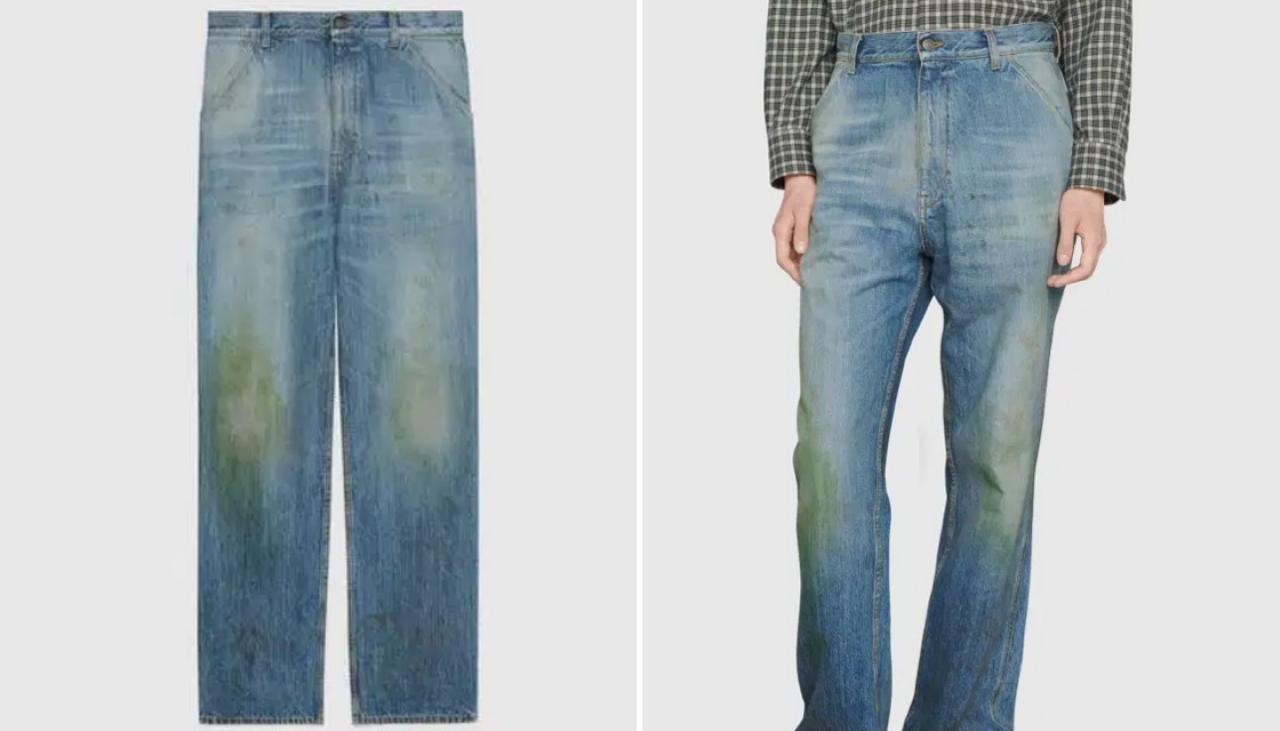
Gucci grass stained jeans are a controversial luxury denim release from the Italian fashion house’s Autumn/Winter 2020 Men’s collection. Designed under former Creative Director Alessandro Michele, these jeans feature a specialized eco-...
Gucci grass stained jeans are a controversial luxury denim release from the Italian fashion house’s Autumn/Winter 2020 Men’s collection. Designed under former Creative Director Alessandro Michele, these jeans feature a specialized eco-wash treatment that creates the realistic illusion of natural grass stains around the knees and thighs, commanding retail prices between $770 and $1,400.
Contents
The Origin of Gucci’s Grass Stained Denim
The introduction of grass-stained denim occurred during Gucci’s Autumn/Winter 2020 presentation in Milan. Creative Director Alessandro Michele anchored the collection around themes of childhood nostalgia, subverted masculinity, and 1990s grunge culture. Among the standout garments were wide-leg jeans, distressed overalls (dungarees), and sweater vests engineered to look worn, aged, and deliberately scuffed.
The specific item listed officially as the Gucci Eco-Washed Organic Denim Pant aimed to blur the line between utility, childhood play, and high fashion. Rather than relying on natural wear, Gucci’s design team applied custom pigment washes and abrasions onto raw denim panels before assembly. The resulting garments resembled pair of jeans worn during outdoor childhood activities, complete with vivid green discoloration around the knee area and subtle distressing along the hem.
Alessandro Michele’s decision to include pre-stained garments fits into a broader movement within luxury fashion known as "distressed luxury." By taking an item associated with physical labor or childhood play and recontextualizing it inside a high-end luxury house, Gucci challenged traditional concepts of garment value, immaculate presentation, and status symbols.
Technical Specifications, Materials, and Pricing
While critics frequently focused on the aesthetic choice of faux staining, the technical production of the jeans adhered to Gucci’s broader environmental commitments introduced in the early 2020s.
Material Composition and Manufacturing
The primary fabric used for the grass-stained collection was 100% GOTS-certified organic cotton. The Global Organic Textile Standard (GOTS) ensures that the cotton is grown without synthetic pesticides or chemical fertilizers.
The manufacturing workflow involved multiple specialized steps:
- Organic Weaving: The denim was woven from organic yarns into a heavy-weight twill structure designed to hold rigid washes.
- Eco-Washing: To achieve an aged look without excessive environmental harm, Gucci utilized eco-friendly washing processes that reduced water usage and eliminated harsh chlorine bleaches.
- Targeted Pigment Application: The "grass stain" effect was added using localized dye-printing techniques and specialized chemical treatments. Unlike real plant chlorophyll, which breaks down over time and turns brown, the synthetic green pigments were engineered to resist fading during cold water washes.
- Hardware and Detailing: The jeans featured vintage-treated brass buttons, a metallic zip fly, and a distinctive vintage Gucci leather logo patch stitched to the rear waistband.
Original Retail vs. Secondary Market Pricing
Upon release in late 2020, the pricing reflected standard luxury denim positioning, though the public reaction amplified scrutiny surrounding the cost:
- Gucci Eco-Washed Organic Denim Pant (Standard Fit): $770 USD (£600 GBP)
- Gucci Eco-Washed Organic Denim Overall / Dungaree: $1,400 USD (£850–£1,000 GBP)
As of 2026, original pairs from the FW20 collection have migrated entirely to the secondary luxury resale market, including platforms like Grailed, The RealReal, and Vestiaire Collective. Resale prices vary depending on condition and size, generally ranging between $350 and $650 for the jeans, while pristine overalls frequently hold values above $900 due to their lower production volume.
| Feature / Metric | Gucci Grass Stained Jeans (FW20) | Standard Gucci Organic Denim | DIY / Natural Grass Stained Denim |
|---|---|---|---|
| Original Retail Price | $770 USD | $650 – $850 USD | Cost of base denim |
| Material | 100% GOTS-Certified Organic Cotton | 100% Organic Cotton or Cotton Blend | Varies (Standard Cotton) |
| Stain Permanence | Fixed dye pigment (Wash-resistant) | N/A (Clean Finish) | Fades to yellow-brown, organic degradation |
| Distressing Method | Industrial eco-wash & targeted printing | Light washing or distressing | Natural friction and plant enzyme contact |
| Primary Target Market | High-fashion collectors, avant-garde dressers | Traditional luxury consumers | Casual dressers / Workwear enthusiasts |
Public Reaction and the Cultural Debate
When product listings for the grass-stained jeans went live on retailer websites, they immediately ignited widespread social media commentary and news reporting across major publications.
Media Coverage and Internet Culture
Commentators across digital media framed the release as a prime example of luxury fashion satire. Critics argued that selling pre-soiled garments at a premium price point mocked working-class individuals and parents whose clothing becomes stained through manual labor or childcare. Memes circulated widely, suggesting consumers could replicate the $770 design simply by rolling on a lawn in an inexpensive pair of standard jeans.
Conversely, fashion historians and runway analysts defended the collection as an intentional commentary on consumerism. In modern fashion history, houses such as Maison Margiela, Diesel, and Balenciaga have long tested consumer boundaries through pre-destroyed sneakers, distressed knitwear, and mud-splattered jacket treatments.
Distressed Luxury as an Aesthetic Movement
The grass-stained denim was not an isolated experiment. Luxury distress techniques serve a distinct function within streetwear and runway culture:
- Instant "Lived-In" Appeal: High-end raw denim can take months or years of continuous wear to break in. Pre-distressed garments provide immediate vintage character.
- Subversion of Prestige: Wearing intentionally scuffed or stained luxury clothing conveys a sense of non-chalance, suggesting the wearer does not need to maintain pristine garments to project wealth or social standing.
- Nostalgic Storytelling: Alessandro Michele explicitly designed the FW20 collection to evoke the messy, uninhibited nature of childhood playtime, making the grass stains a narrative element rather than a defect.
How to Authenticate Gucci Grass-Stained Denim
Due to the publicity surrounding the FW20 collection, counterfeiters produced replica versions of both the jeans and the overalls. Identifying authentic pairs requires evaluating specific construction details and labeling features.
Authenticity Verification Checklist
- Inner Care Tag & Fabric Content
- Verify "100% Cotton" (Organic) designation
- Check for standard Gucci serial number formatting (6 digits + 5 digits)
- Leather Rear Patch
- Check heat-stamped "Gucci Made in Italy" typography
- Confirm distressed leather aging consistent with garment wash
- Pigment Distribution & Texture
- Verify green dye is embedded into fibers, not painted on top
- Ensure fading is smooth around knee panels, not harsh lines
- Hardware Verification
- Engraved "GUCCI" text on internal rivets and waist button
- Aged brass finish matching FW20 hardware specifications
Key Authentication Features
- Internal Labeling: Authentic pairs feature Gucci’s black and off-white woven main label attached cleanly at the inner waistline. Beneath the pocket bag, look for the white fabric care tag containing the style code format (typically a 6-digit number followed by a 5-digit fabric code).
- Pigment Quality: Counterfeit versions often utilize cheap textile paints that sit heavily on top of the fabric, creating a stiff or rubbery texture. Authentic Gucci pairs integrate the pigment directly into the eco-washed cotton fibers, maintaining a soft, flexible hand-feel.
- Hardware Engravings: Check all metallic components. The front button and interior rivets should feature sharp, symmetrical "GUCCI" branding with an antiqued, non-shiny finish.
- Leather Patch Detail: The rear waist patch is made from genuine leather that undergoes the same washing process as the denim. It should exhibit subtle tonal variation rather than bright, unaged tan leather.
Care and Maintenance Guidelines
For owners of authentic Gucci grass-stained jeans, improper laundering can degrade the custom finish or cause unwanted fabric distortion. Maintaining pre-distressed luxury denim requires specific care practices.
Washing and Cleaning
- Limit Machine Washing: Frequent laundering accelerates indigo breakdown and can soften the intentional contrast of the green pigment stains. Wash only when necessary.
- Use Cold Water: Always launder the jeans inside-out in cold water (maximum 30°C / 86°F) on a gentle cycle to preserve both the indigo dye and the applied green pigments.
- Select Mild Detergents: Avoid detergents containing optical brighteners, bleaching agents, or heavy enzymes, as these chemicals can alter the localized dye treatments.
Drying and Storage
- Air Dry Only: Never place luxury distressed denim in a tumble dryer. High heat shrinks organic cotton fibers and degrades the structural integrity of pre-worn knee abrasions. Hang the jeans to air-dry away from direct sunlight.
- Hanging vs. Folding: Store the jeans flat or hang them by the waistband using clip hangers to avoid creating unintended creases across the knee or thigh areas.
Frequently Asked Questions
Are Gucci grass stained jeans made with real grass?
No. The grass-strain effect is created using synthetic pigments and industrial eco-washing techniques. Real grass stains contain chlorophyll, which degrades and turns yellow-brown over time when exposed to oxygen and light. Gucci's dyes are engineered to remain fixed and stable.
How much did the Gucci grass stained jeans cost at retail?
The standard Gucci Eco-Washed Organic Denim Pant retailed for approximately $770 USD, while the overall (dungaree) version from the same Autumn/Winter 2020 collection retailed for approximately $1,400 USD.
Why did Gucci design jeans with grass stains?
Creative Director Alessandro Michele designed the collection as a tribute to childhood play, 1990s grunge culture, and subverted masculinity. The intent was to evoke nostalgia and push the boundaries of traditional luxury aesthetics by elevating distressed garments into high fashion.
Can you wash out the grass stain effect on authentic pairs?
No. Normal laundering in cold water will not remove the grass-stain design because the effect is applied using permanent garment dyes rather than organic matter. However, using strong bleaches or harsh chemical treatments can damage the overall fabric color and integrity.
Where can you buy authentic Gucci grass stained jeans today?
Because the FW20 collection is no longer in production, authentic pairs can only be acquired through vetted luxury resale platforms, vintage boutiques, or secondary marketplaces specializing in designer archive pieces.
Final Recommendation
For collectors and fashion enthusiasts seeking to purchase Gucci grass stained jeans on the secondary market, prioritizing authenticity and condition is essential. Always request detailed photos of the internal care tags, check the serial numbers against known Gucci product registries, and verify that the soft hand-feel of the organic cotton has not been ruined by improper drying or aftermarket alterations. If your goal is simply to achieve a vintage grunge look, exploring standard pre-distressed Japanese selvage denim or vintage workwear provides a practical aesthetic alternative without the luxury archive price tag.
Image Gallery