Enterprise Payment Systems: Architecting Scalable Global Financial Infrastructure for 2026
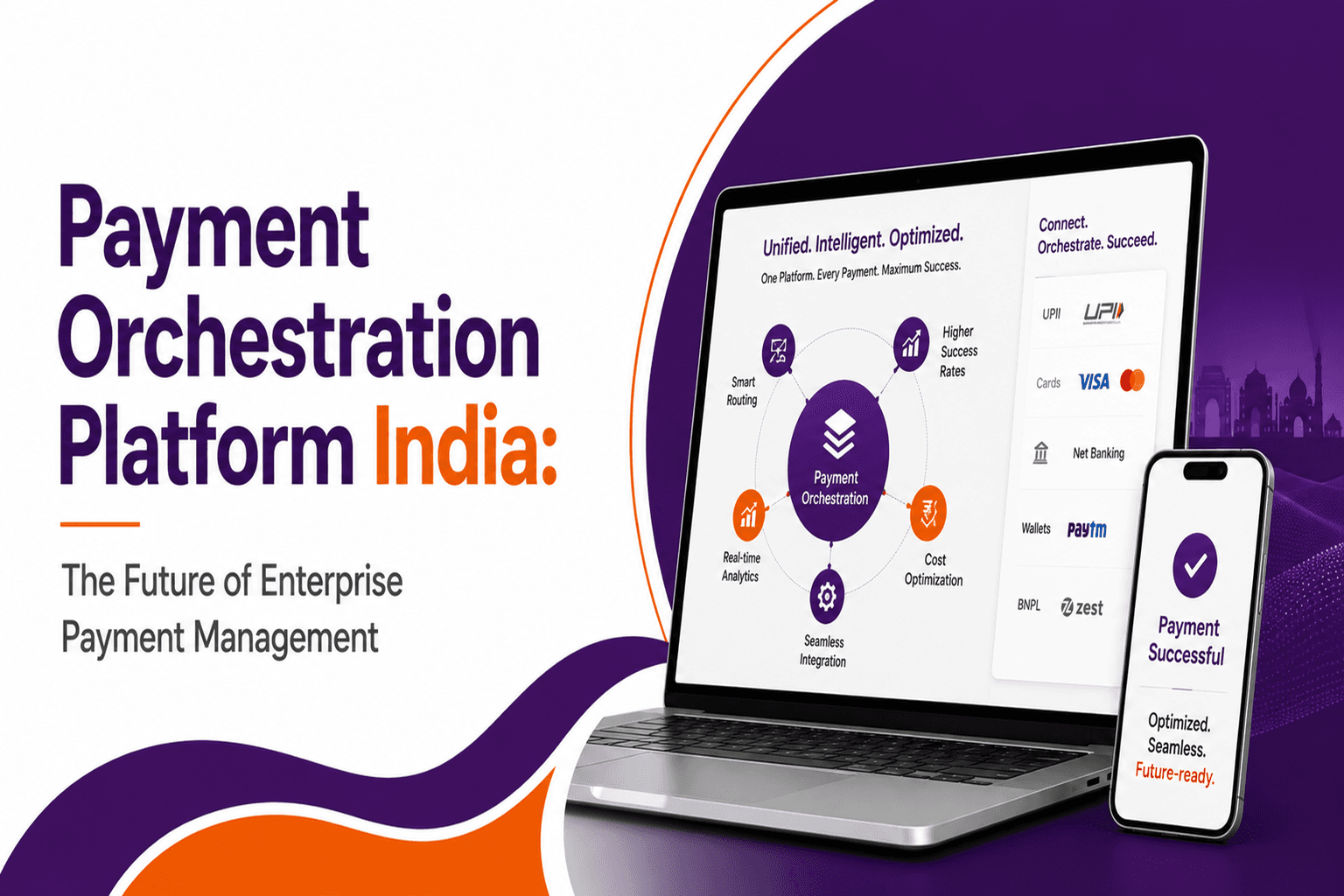
Enterprise payment solutions enable large-scale organizations to orchestrate complex transaction flows, integrate disparate global banking rails, and automate reconciliation processes. By centralizing payment orchestration, enterprises...
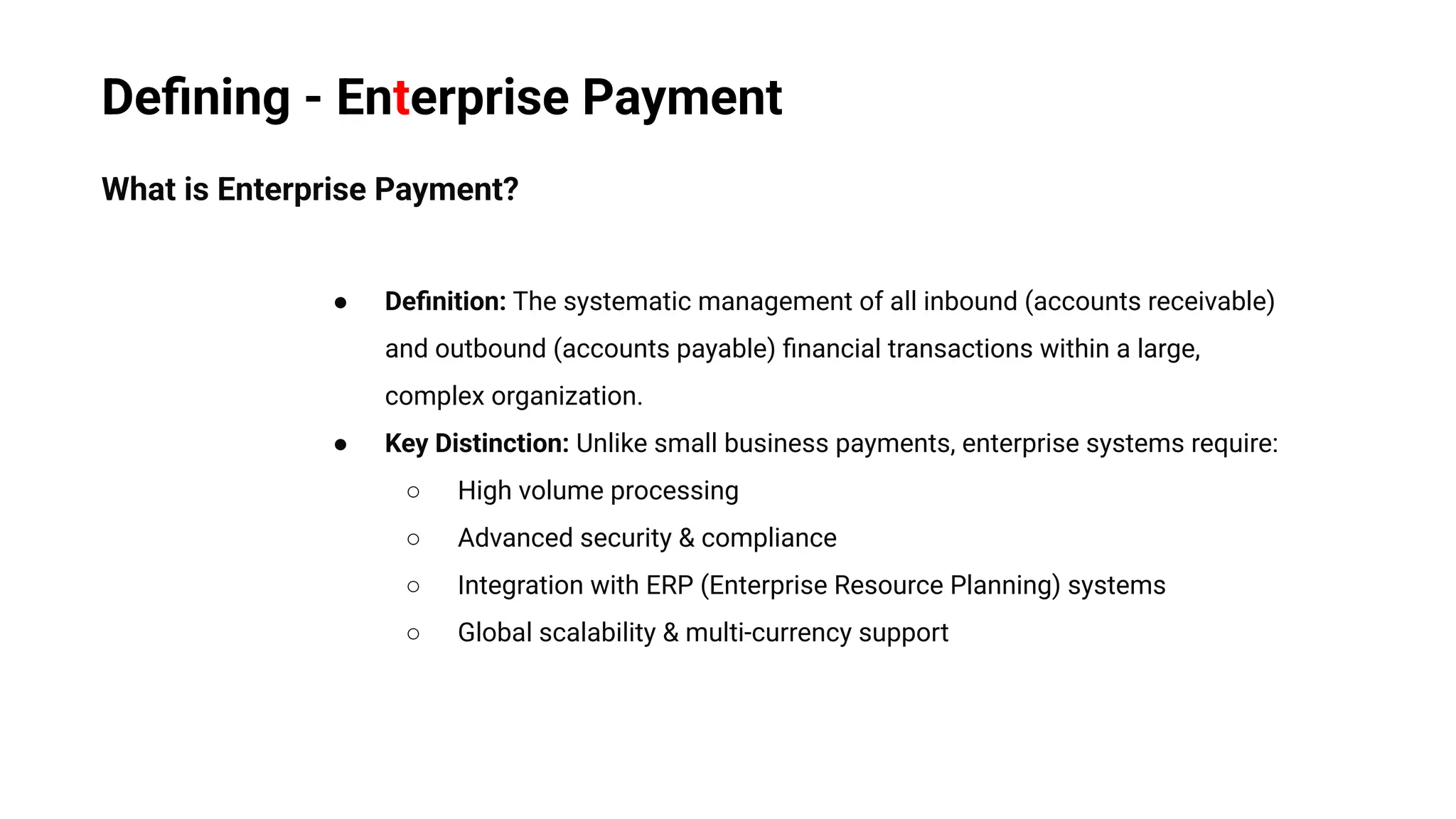
Enterprise payment solutions enable large-scale organizations to orchestrate complex transaction flows, integrate disparate global banking rails, and automate reconciliation processes. By centralizing payment orchestration, enterprises reduce technical debt, improve cross-border settlement efficiency, and maintain strict adherence to evolving international financial compliance standards across multiple currencies and local regulatory environments.
Contents
Core Pillars of Enterprise Payment Architecture
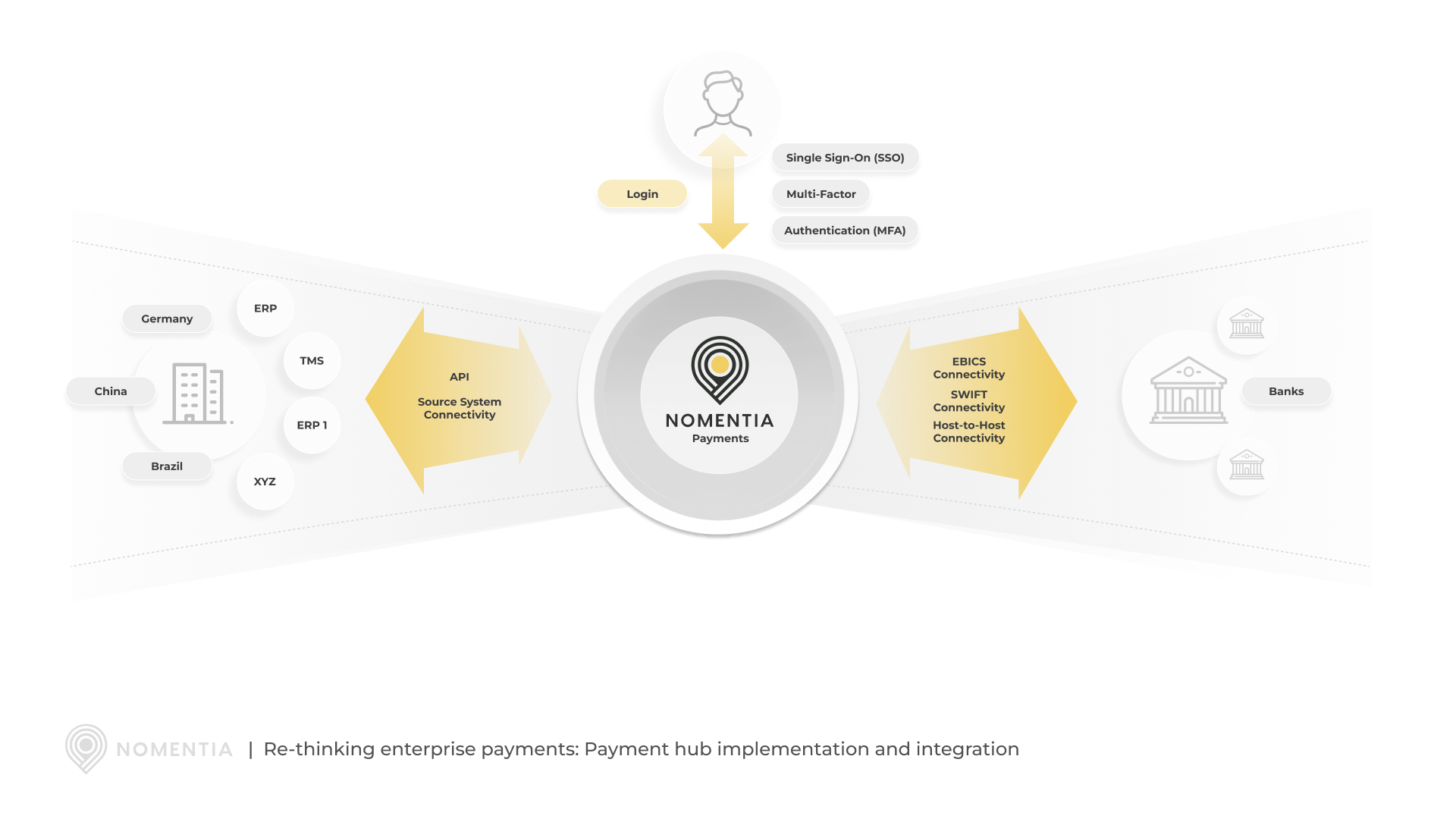
Modern enterprise payment ecosystems function as the central nervous system of a business's treasury operations. Unlike retail payment processing, which focuses on individual merchant-to-customer transactions, enterprise platforms must reconcile high-volume, B2B, B2C, and internal fund transfers across legacy banking systems and modern fintech APIs.
To successfully manage an enterprise payment stack in 2026, organizations must prioritize the following components:
- Payment Orchestration Layers: Middleware that sits between the internal ERP (Enterprise Resource Planning) and multiple external payment service providers (PSPs). This ensures routing logic can automatically failover to secondary processors during outages.
- Unified Tokenization: The implementation of multi-vault tokenization to ensure cardholder data remains secure and PCI DSS 4.0 compliant, regardless of the gateway being used.
- Liquidity Management: Real-time visibility into cash positions across global accounts, utilizing virtual account management (VAM) structures to reduce idle cash and optimize interest yield.
- Automated Reconciliation: AI-driven matching engines that ingest bank statement files (MT940, camt.053) and map them against invoice data within the ERP to minimize manual accounting overhead.
Navigating Regulatory and Security Standards
Operating at an enterprise scale necessitates rigorous adherence to both regional mandates and global cybersecurity frameworks. In 2026, the complexity of cross-border data residency requirements—such as those dictated by the EU's DORA (Digital Operational Resilience Act)—requires payment infrastructure to be localized while maintaining centralized oversight.
Governance and Compliance Requirements
Data Sovereignty: Systems must be configured to ensure that sensitive financial data remains within the jurisdiction of origin where required by local law. This is particularly critical for enterprises operating in markets with strict PII (Personally Identifiable Information) protection laws.
PCI DSS 4.0 Adherence: As of 2026, all enterprise systems must demonstrate full compliance with the continuous security requirements of PCI DSS 4.0, moving away from annual "point-in-time" assessments to proactive monitoring.
AML and KYC Automation: Integration with global watchlists and automated identity verification services must be embedded directly into the onboarding and payment origination workflows to prevent fraudulent entities from accessing the corporate treasury.
Technical Comparison: Payment Orchestration vs. Traditional Gateway Integration
Selecting the right architecture depends on the enterprise's volume, geographical footprint, and the number of banking partners currently utilized.
| Feature | Direct Gateway Integration | Enterprise Payment Orchestration |
|---|---|---|
| Scalability | Limited to the specific provider | Highly scalable across 50+ providers |
| Routing Logic | Hardcoded into the application | Dynamic, rule-based, and real-time |
| Maintenance | High (API updates per vendor) | Low (Centralized abstraction layer) |
| Failover | Manual or non-existent | Automated (Instant vendor switching) |
| Cost Efficiency | Fixed, often higher transaction fees | Optimized via least-cost routing |
Operationalizing Global Payouts and Cross-Border Settlements
Global expansion requires the ability to move funds in local currencies (LCY) to bypass the inefficiencies of correspondent banking. Enterprise systems leverage "Local-In, Local-Out" networks, where the company maintains local virtual accounts in target countries, significantly reducing FX (Foreign Exchange) friction and settlement times.
Key Strategies for FX Management
- Netting: Consolidating intercompany payables and receivables to reduce the total volume of currency exchange required, thereby lowering bank fees.
- API-Driven Hedging: Connecting treasury management systems to live FX markets to lock in rates at the moment of payment origination, rather than at the time of final settlement.
- Real-Time Rails: Utilizing networks such as ISO 20022-compliant messaging and instant payment schemes (e.g., SEPA Instant, FedNow) to expedite the velocity of working capital.
Troubleshooting Common Enterprise Payment Failures
Even the most robust systems encounter failures. The most common technical hurdles involve latency in API responses and mismatching file formats between banking partners.
- API Timeouts: If an external gateway does not respond within the SLA threshold, the orchestration layer should trigger a retry policy or immediately reroute to an alternative provider. Do not attempt to retry more than three times to avoid duplicate debits.
- Format Mismatches: When integrating with legacy banks, use a middleware translation service that converts modern JSON payloads into the specific ISO 20022 XML requirements requested by the receiving institution.
- Reconciliation Discrepancies: Ensure that your transaction ID (UUID) is carried through the entire lifecycle—from order creation to bank statement posting. If the ID is dropped by a processor, downstream reconciliation will fail.
Frequently Asked Questions
What is the primary benefit of an enterprise payment orchestration layer? The primary benefit is vendor agnosticism; it decouples the enterprise's internal systems from any single payment processor, enabling cost optimization and high availability. This allows companies to add or swap providers without rewriting core ERP integration code.
How does PCI DSS 4.0 impact my 2026 payment strategy? PCI DSS 4.0 demands more rigorous, ongoing assessment of security controls compared to previous iterations. Enterprises must shift focus toward continuous monitoring, stricter authentication for access to cardholder data, and mandatory incident response testing to remain in good standing.
Is it necessary to maintain local bank accounts in every country of operation? Not necessarily. Many enterprise payment platforms provide virtual account solutions that allow you to receive and hold funds in local currencies without opening physical bank accounts in every jurisdiction, reducing administrative burden and capital requirements.
How do I handle payment failures with cross-border transactions? You should implement a clear status polling mechanism that monitors the "End-to-End" status of a payment. If a transaction reaches a "Rejected" state, your system must trigger an automated notification to the finance team and, if possible, initiate a logic-based retry or a manual review workflow.
What role does ISO 20022 play in enterprise payments? ISO 20022 is the global standard for financial messaging. It allows for richer, more structured data to be transmitted alongside payments, which significantly improves the success rate of automated reconciliation and reduces compliance-related payment holds.
Recommendations for Enterprise Scaling
For organizations currently scaling their global operations, the transition from monolithic payment integrations to an orchestration-first approach is inevitable. Evaluate your current technical debt by calculating the man-hours required to integrate a new payment method or regional banking partner. If that timeframe exceeds three weeks, your architecture requires an abstraction layer. Audit your treasury workflows in 2026 to ensure you are capturing all metadata associated with payments, as this data is essential for AI-driven cash flow forecasting. Consult with your primary banking partners regarding their support for ISO 20022 and prioritize integrations with providers who offer robust, developer-first RESTful APIs.
Image Gallery