Mastering the Washington Post Crossword Puzzle: A Strategic Guide for 2026
The Washington Post crossword puzzle is a daily intellectual challenge published by The Washington Post, featuring grid-based word games designed by expert constructors. Whether accessed through the digital portal or the print edition,...
The Washington Post crossword puzzle is a daily intellectual challenge published by The Washington Post, featuring grid-based word games designed by expert constructors. Whether accessed through the digital portal or the print edition, the puzzle remains a staple of high-level cognitive engagement, requiring a blend of vocabulary depth, lateral thinking, and knowledge of current events as of 2026.
Contents
Understanding the Structure and Origins of Washington Post Puzzles
The Washington Post crossword has evolved significantly since its inception, moving from a standard newspaper feature to a sophisticated digital experience. As of 2026, the publication collaborates with renowned puzzle editors to maintain a balance of difficulty that appeals to both casual solvers and seasoned enthusiasts. These puzzles follow traditional American-style crossword conventions, characterized by symmetrical black-and-white grids and a specific ratio of black squares to white ones.
Unlike some crosswords that focus solely on niche trivia, the Washington Post puzzle emphasizes a "clue-to-answer" logic that rewards pattern recognition. The grids are meticulously checked for structural integrity, ensuring that every word intersects correctly both horizontally and vertically. By 2026, the digital interface allows for a seamless transition between platforms, enabling users to maintain their solving streaks across mobile devices, tablets, and desktop browsers.
Navigating the Daily Solving Experience in 2026
For those engaging with the puzzle in 2026, the experience is largely centered on the digital subscription model. The Washington Post provides a daily puzzle that increases in complexity throughout the work week—starting with accessible themes on Monday and peaking with a rigorous challenge by Saturday. Sunday puzzles remain the most expansive, often featuring larger grids and more intricate wordplay or meta-themes.
Key Components of a Successful Solve
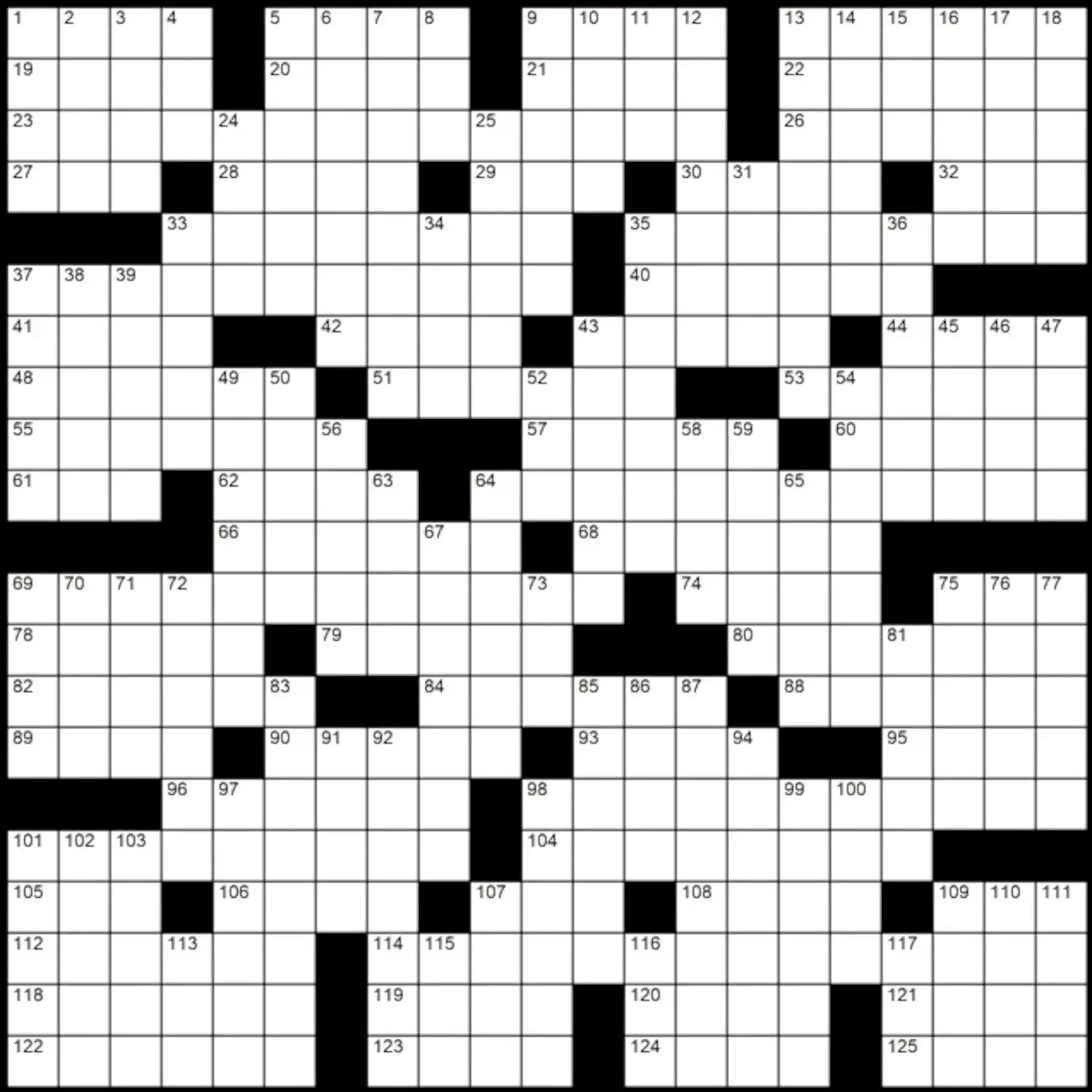
- The Grid Logic: Most puzzles operate on a standard 15x15 grid, though Sunday editions often scale to 21x21.
- Clue Categorization: Clues are typically divided into two categories: "Across" (horizontal) and "Down" (vertical).
- The Theme Hook: Many puzzles incorporate a unifying theme, which is often found in the longest entries of the grid. Identifying the theme early acts as a force multiplier for solving the remaining clues.
Tactical Approaches to Complex Crossword Clues
Solving a high-level crossword requires more than just a large vocabulary. It involves understanding the specific syntax used by constructors. In 2026, the most effective solvers rely on these established methodologies to break through difficult sections of the grid.
The Principle of Wordplay Identification
Many advanced clues contain a indicator of wordplay. When a clue seems too direct to be true, it is likely a misdirection. Look for question marks at the end of clues, which signal puns or literal interpretations of metaphorical phrases. If a clue uses a possessive or a contraction, the answer frequently shares that same grammatical structure.
Essential Solving Techniques
- Cross-Referencing: Never obsess over a single clue. If a long entry is elusive, solve the intersecting shorter words first. The more intersections you create, the more constrained the possibilities for the difficult word become.
- The Pencil-In Strategy: Use the digital "pencil" tool for entries you are unsure about. This allows you to test hypotheses without committing to incorrect letters that could ruin the structural integrity of your grid.
- Vowel Hunting: In extremely difficult corners, focus on where vowels (A, E, I, O, U) are likely to fall. In English, common word endings like -ING, -ED, -ER, and -TION provide essential anchors for building out the rest of the word.
Comparison of Digital Solving Tools and Resources
When comparing the Washington Post crossword experience to other major industry players, it is helpful to look at how specific metrics, such as grid quality and user interface (UI) design, impact the solver.
| Feature | Washington Post Crossword | Industry Standard (Major Competitors) |
|---|---|---|
| Grid Complexity | Moderate to High | Variable (Range from Easy to Expert) |
| Theme Creativity | High (Cultural & News Focus) | High (Varies by Publisher) |
| Digital UX (2026) | Optimized for Multi-Device | Standardized Web-Based |
| Hint Systems | Dynamic & Context-Aware | Static or Limited |
| Archive Access | Extensive (Subscription-Based) | Variable (Often Paywalled) |
Common Troubleshooting and Solving Errors
Even experienced solvers occasionally run into "dead ends" where no words seem to fit. This usually happens when one incorrect word creates a false foundation for the rest of the quadrant.
- The False Positive: If you have 80% of a section filled but the remaining words don't form English sentences, stop and reassess the first few words you placed. One wrong letter can make the entire section impossible to complete.
- Ignoring the Theme: If you are stuck on a Friday or Saturday puzzle, look back at the clues you have already solved. Are there words that share a common category? If the theme is "Time," you might find that seemingly random clues are actually related to clocks, history, or measurements.
- External Help vs. Self-Correction: Relying on automated hint systems should be a last resort. If you are stuck for more than 15 minutes, step away from the screen. A fresh perspective is often the most effective tool for "Aha!" moments.
Frequently Asked Questions
Are there specific rules for how the Washington Post chooses its crossword constructors? Yes, the editors select constructors based on a rigorous vetting process that ensures the clues are fair, accurate, and free of bias. By 2026, the standard requires that all clues must be verifiable through credible lexicographical or historical sources.
Does the Washington Post crossword require a subscription to access daily? The crossword is part of the Washington Post digital subscription package. While some promotional access is provided, a recurring subscription is required to access the full archive and daily puzzles for the 2026 calendar year.
How do I handle "pop culture" clues that are dated? The Washington Post prides itself on contemporary relevance. If a clue feels dated, it is likely referencing a historical event or classic media. Treat these as "knowledge" clues rather than "wordplay" clues, and utilize cross-references to confirm the answer.
Can I play the crossword offline in 2026? While the digital experience requires an initial load to sync your progress, the interface allows for temporary offline solving on mobile applications, provided you have already opened the puzzle for that specific date.
What is the best way to improve my solving time? Consistency is key. Focus on mastering "fill" words—short, common words that appear frequently in puzzles—to build momentum. Reducing the time spent on these anchors allows you to spend more time on complex, theme-based entries.
Achieving Mastery Through Consistent Engagement
Becoming a proficient solver is an iterative process. By familiarizing yourself with the unique style of the Washington Post's editing team and practicing regularly, you will find that your speed and accuracy improve naturally. Start your journey by tackling the easier weekday puzzles before testing your skills against the more demanding weekend editions. Remember, the goal of the crossword is not just to reach the finish line, but to enjoy the mental workout that comes with deciphering the constructor's intent. Start your daily subscription today and join a community of solvers who value precision, wit, and intellectual rigor.
Image Gallery