Understanding State Health Insurance in Missouri: A Complete Guide to MO HealthNet and Marketplace Plans
State health insurance in Missouri primarily consists of MO HealthNet—the state’s Medicaid program—and individual private coverage offered through the federal HealthCare.gov marketplace. Qualifications rely on income relative to the Fe...
State health insurance in Missouri primarily consists of MO HealthNet—the state’s Medicaid program—and individual private coverage offered through the federal HealthCare.gov marketplace. Qualifications rely on income relative to the Federal Poverty Level, household size, age, and health status, with application pathways managed by the Missouri Department of Social Services and the federal exchange.
Contents
Navigating healthcare coverage requires understanding how state-administered benefit programs align with federal policy. In Missouri, major legislative updates and constitutional amendments over recent years have expanded access, allowing more low-income adults to qualify for state-funded insurance. Understanding your options, income thresholds, application timelines, and managed care selections ensures you secure comprehensive medical coverage without facing unexpected out-of-pocket costs.
Disclaimer: Healthcare eligibility rules and income thresholds update periodically. This guide provides general educational information for state health coverage in Missouri. For official individual determinations, consult the Missouri Department of Social Services or a certified healthcare navigator.
The Main Health Insurance Pathways in Missouri
Missouri residents seeking public or state-subsidized health coverage generally fit into one of two primary pathways: state-administered public assistance (MO HealthNet) or commercial marketplace coverage backed by federal premium tax credits. Determining which path applies to you depends on your annual household income, employment status, family structure, and medical conditions.
1. MO HealthNet (Missouri Medicaid Expansion for Adults)
Following the voter-approved constitutional amendment expanding Medicaid, Missouri expanded MO HealthNet coverage to non-disabled adults between the ages of 19 and 64. Under adult expansion, individuals qualify based primarily on modified adjusted gross income (MAGI) rather than traditional categorical requirements like severe disability or dependent children.
Coverage under MO HealthNet includes essential health benefits such as doctor visits, hospital care, emergency services, prescription drugs, behavioral health services, and preventive screening.
2. MO HealthNet for Children and Families (CHIP)
The Children’s Health Insurance Program (CHIP), integrated into the MO HealthNet framework, covers children under 19 whose family incomes exceed standard Medicaid thresholds. Missouri structures CHIP into multiple coverage tiers depending on income, offering comprehensive pediatric medical, dental, and vision services. Lower income tiers require no monthly premium, whereas slightly higher income brackets may involve small monthly premiums and nominal copayments.
3. MO HealthNet for Aged, Blind, and Disabled (ABD)
Missouri maintains dedicated Medicaid programs for individuals aged 65 and older, individuals with permanent disabilities, and blind residents. Unlike adult expansion, the ABD program evaluates both monthly income and countable liquid assets (such as savings accounts and investments). ABD coverage often works alongside Medicare as dual-eligible coverage, assisting low-income seniors with Medicare Part B premiums, deductibles, and long-term care or nursing facility needs.
4. HealthCare.gov Marketplace Plans
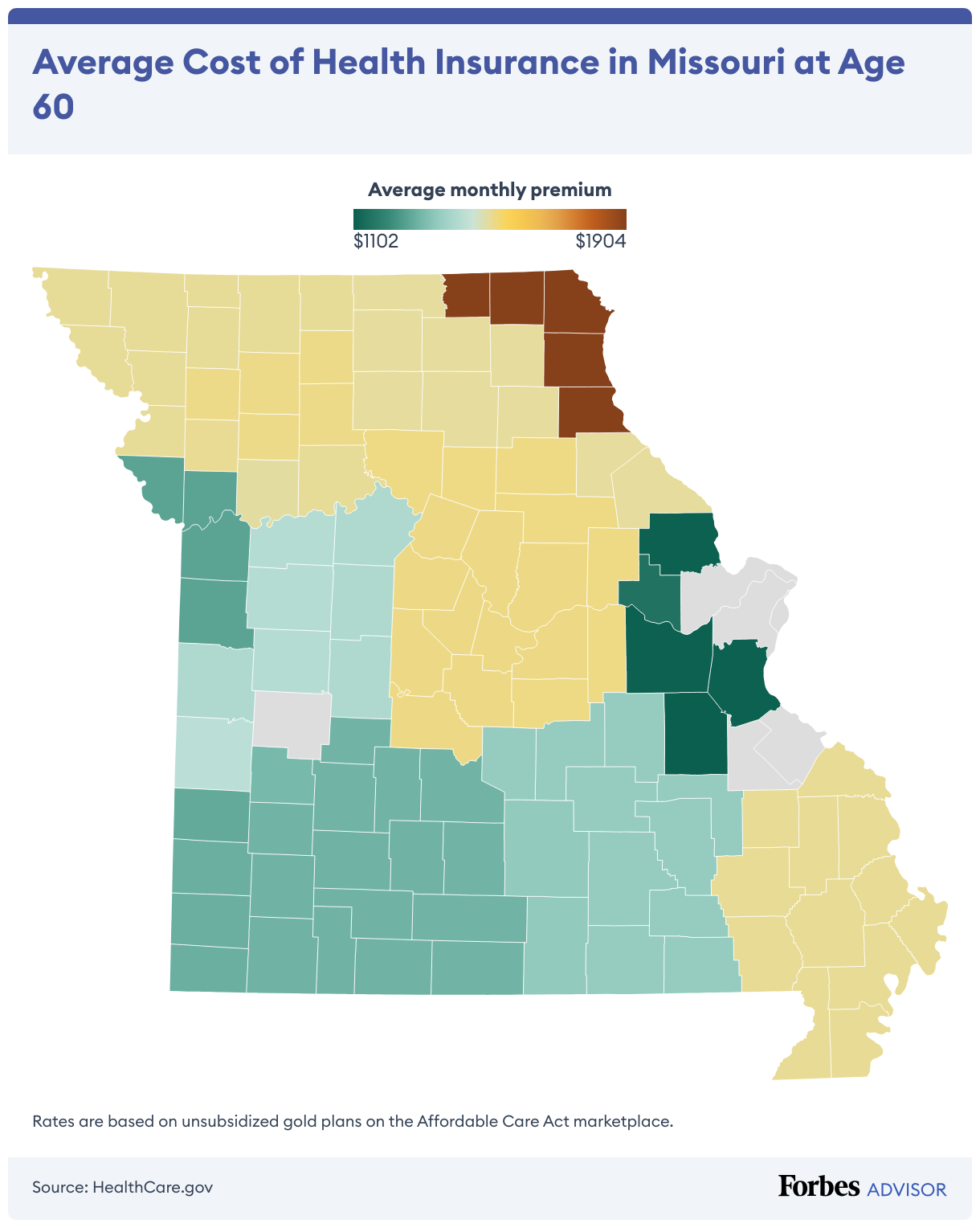
For Missourians whose household incomes exceed the limit for MO HealthNet expansion, the federal HealthCare.gov portal acts as Missouri’s official exchange. Subsidies, known as Advance Premium Tax Credits (APTC), lower monthly premium costs for qualifying individuals. Marketplace plans are categorized into metal tiers—Bronze, Silver, Gold, and Platinum—balancing monthly premiums against out-of-pocket deductibles and copays.
Summary of Missouri Health Insurance Programs
The table below outlines key state and marketplace options available to Missouri residents, including target populations, eligibility parameters, and financial structures.
| Program Name | Target Audience | Primary Income / Eligibility Benchmark | Monthly Premium Range | Primary Managed Care Plans |
|---|---|---|---|---|
| MO HealthNet Adult Expansion | Adults aged 19–64 without dependents or disability | Up to 138% Federal Poverty Level (MAGI) | $0 | Healthy Blue, Home State Health, UnitedHealthcare Community Plan |
| MO HealthNet for Children (CHIP) | Uninsured children under age 19 | Up to 300%+ FPL (varies by tier) | $0 to nominal monthly premium based on tier | Healthy Blue, Home State Health, UnitedHealthcare Community Plan |
| Show-Me Healthy Babies | Unborn children / pregnant women ineligible for standard Medicaid | Up to 300% FPL | $0 | MO HealthNet Fee-for-Service or Managed Care |
| MO HealthNet Aged, Blind, Disabled (ABD) | Seniors (65+) and disabled adults | Income limits vary; strict asset caps apply | $0 (Spenddown options available) | Direct state administration / Dual Eligible Special Needs Plans (D-SNP) |
| ACA Marketplace (HealthCare.gov) | Individuals and families above 138% FPL | Above 138% FPL for premium subsidies | Tiered premiums reduced by tax credits | Private insurers (e.g., Ambetter, Anthem BCBS, CoxHealth, Oscar) |
Key Eligibility Standards and Income Guidelines
Eligibility for Missouri’s state healthcare coverage relies heavily on the Federal Poverty Level (FPL), updated annually by the federal government. Missouri uses modified adjusted gross income (MAGI) to calculate household income for most non-senior programs.
Income Calculation Under MAGI
MAGI standardizes income evaluation across programs. It typically reflects your taxable gross income reported on federal income tax returns, including wage earnings, self-employment profits, farm income, social security benefits, and taxable interest. Child support received, SSI payments, and certain educational grants are generally excluded from MAGI for Medicaid determinations.
Income Benchmarks by Program
- Adult Expansion (Ages 19–64): Up to 138% FPL (effectively 133% baseline FPL plus an automatic 5% income disregard).
- Pregnant Women: Up to 196% FPL for standard MO HealthNet pregnant women’s coverage, providing prenatal, delivery, and 12-month postpartum care.
- Show-Me Healthy Babies: Covers pregnant women up to 300% FPL who do not meet citizenship or immigration criteria required for standard MO HealthNet, extending coverage to the unborn child.
- Children (CHIP): Coverage extends to children in households with incomes up to 300% FPL, with sliding-scale premiums applying to higher income brackets.
Residency and Status Requirements
To qualify for MO HealthNet, applicants must live in Missouri, demonstrate intent to remain in the state, and satisfy identity and citizenship requirements. U.S. citizens and qualified lawfully present legal permanent residents (typically meeting the five-year waiting period) qualify for full MO HealthNet benefits. Immigrants without permanent status who meet income qualifications may access emergency medical services or specialized care under Show-Me Healthy Babies.
How to Apply for Coverage in Missouri
The application process differs depending on whether your household expects to qualify for MO HealthNet or Marketplace private plans.
Step 1: Collect Required Documentation
Before beginning your application, gather essential household documents to prevent processing delays:
- Government-issued photo identification and Social Security numbers for all household members.
- Proof of Missouri residency (such as a utility bill, lease agreement, or Missouri driver's license).
- Proof of income for the past 30 days (recent pay stubs, W-2 forms, self-employment ledger, or tax returns).
- Details of any employer-sponsored health coverage offered to your household.
Step 2: Choose the Correct Application Method
Applying for MO HealthNet (Medicaid)
Missouri offers several channels to apply for state health coverage:
- Online Portal: Create an account on the Missouri Department of Social Services myDSS Portal to submit an electronic application, upload verification documents, and track status.
- Telephone Application: Call the Family Support Division (FSD) call center at 855-373-4636 to complete an application over the phone with an agent.
- In-Person Visit: Apply in person at any local Family Support Division resource center located across Missouri's counties.
- Paper Application: Download, complete, and mail or fax a physical application form to the Family Support Division.
Applying for HealthCare.gov (Marketplace Subsidies)
If your income exceeds the limit for MO HealthNet, apply directly through the federal exchange at HealthCare.gov. When you submit an application on HealthCare.gov, the system automatically checks whether you or your family members qualify for MO HealthNet before assessing your eligibility for financial subsidies. If your income falls within the Medicaid range, the federal portal transfers your file directly to the Missouri Family Support Division for processing.
Step 3: Select a Managed Care Health Plan
Once approved for MO HealthNet under adult expansion, family, or CHIP programs, you must select a contracted Managed Care Organization (MCO). Missouri divides its managed care network among qualified health plans responsible for organizing physician networks, handling claims, and providing customer care.
The major managed care plans operating in Missouri include:
- Healthy Blue (affiliated with Anthem Blue Cross and Blue Shield)
- Home State Health (affiliated with Centene Corporation)
- UnitedHealthcare Community Plan
Each health plan delivers the same core Medicaid benefits established by the state, but they differ in provider networks, preferred drug lists, and extra benefit incentives (such as reward programs for preventive checkups, free transportation assistance, or expanded vision perks). If you do not choose an MCO within the designated timeframe after approval, the state automatically assigns one to you.
Critical Deadlines and Enrollment Periods
Knowing when to apply prevents lapses in medical coverage and eliminates tax-time financial penalties or unexpected medical bills.
| MO HealthNet (Medicaid / CHIP) | ACA Marketplace (HealthCare.gov) |
|---|---|
| • Open Year-Round• No seasonal restrictions• Benefits start date often retroactively covers up to 3 months prior if eligible | • Annual Open Enrollment: Nov 1–Jan 15• Coverage starts Jan 1 or Feb 1• Requires SEP for mid-year enrollment (marriage, moving, job loss, etc.) |
Year-Round Enrollment for MO HealthNet
MO HealthNet does not use restricted open enrollment windows. Eligible Missourians can apply for Medicaid or CHIP at any point during the year. Furthermore, if you are eligible when you incur medical bills prior to applying, MO HealthNet can provide up to three months of retroactive coverage prior to the application month, provided eligibility requirements were met during those prior months.
Open Enrollment for Marketplace Plans
If you purchase private plans through HealthCare.gov, you must enroll during the annual Open Enrollment Period, which runs from November 1 through January 15. Enrolling by December 15 ensures coverage begins January 1, while enrolling between December 16 and January 15 delays your coverage start date to February 1.
Special Enrollment Periods (SEP)
Outside the standard Open Enrollment window, you can enroll in a Marketplace plan only if you experience a Qualifying Life Event. SEPs usually last 60 days from the event date and include:
- Losing minimum essential coverage (such as job loss, aging off a parent's plan at 26, or losing MO HealthNet eligibility).
- Changes in household size (marriage, birth, adoption, or divorce).
- Permanent relocation to a new ZIP code or county within Missouri.
- Significant income changes that alter your subsidy eligibility status.
Navigating Renewals and Coverage Changes
Maintaining coverage requires active management of your state health profile, especially during annual redeterminations.
Annual Medicaid Redeterminations
Every 12 months, the Missouri Family Support Division conducts an annual renewal (redetermination) to verify that your household remains eligible for MO HealthNet.
- Ex Parte Renewals: FSD attempts to automatically verify your income and status using secure state databases (such as Department of Revenue wage records). If verified, your coverage renews automatically without requiring paperwork.
- Pre-populated Renewal Packets: If the state cannot automatically verify your data, FSD mails a renewal packet to your address on file. You must sign, complete, and submit this packet with supporting financial documents before the listed deadline to avoid coverage cancellation.
Managing Income Transitions
If your income fluctuates near the 138% FPL border, you may transition between MO HealthNet and HealthCare.gov Marketplace plans.
- Income Increases: If your income rises above Medicaid limits, report the change to the Family Support Division immediately. Once MO HealthNet sends a formal notice of closure, you qualify for a 60-day Special Enrollment Period on HealthCare.gov to select a subsidized private plan.
- Income Decreases: If your commercial plan becomes unaffordable or your income drops below 138% FPL, update your income profile on HealthCare.gov or submit an application directly to MO HealthNet for immediate enrollment.
Frequently Asked Questions
What is the primary difference between MO HealthNet and Medicare in Missouri?
MO HealthNet is Missouri’s state-administered Medicaid program based primarily on financial need and lower income levels. Medicare is a federal health insurance program primarily based on age (65 and older) or specific permanent disabilities, regardless of income. Individuals who qualify for both programs are considered "dual-eligible" and can receive MO HealthNet assistance to cover Medicare premiums, copays, and services Medicare does not fully cover.
How long does it take for Missouri to process a Medicaid application?
By federal and state standards, the Missouri Family Support Division must process standard MO HealthNet applications within 45 days. Applications based on disability evaluation may take up to 90 days. Providing complete proof of income, state residency, and identity when submitting your initial application helps avoid processing delays.
Can I keep my doctor if I enroll in MO HealthNet?
Whether you can keep your primary care provider depends on whether they participate in the provider network of the Managed Care Organization (Healthy Blue, Home State Health, or UnitedHealthcare Community Plan) you select. Before finalizing your managed care plan choice, search the plan’s online provider directory or call your physician's office to verify which MO HealthNet managed care contracts they accept.
What is MO HealthNet "Spenddown" and how does it work?
MO HealthNet Spenddown functions similarly to an insurance deductible for individuals in the Aged, Blind, and Disabled (ABD) program whose income exceeds standard Medicaid limits. Under Spenddown, you maintain Medicaid eligibility, but state coverage begins only after you incur a specific dollar amount of medical expenses each month. Once your monthly out-of-pocket medical bills meet or exceed your state-calculated Spenddown amount, MO HealthNet pays remaining covered medical costs for the rest of that month.
Next Steps for Missouri Residents
Securing health coverage in Missouri involves evaluating your household income, determining your eligibility tier, and taking deliberate action.
- Calculate Your Household Income: Check your projected MAGI against current Federal Poverty Level guidelines to determine whether you qualify for MO HealthNet (under 138% FPL for adults) or HealthCare.gov Marketplace tax credits.
- Create Your Online Account: Visit the myDSS Portal for Medicaid or HealthCare.gov for Marketplace plans to start an application online.
- Consult a Local Navigator: If you need help filing your application or choosing a managed care plan, contact a certified Missouri Healthcare Navigator through the Cover Missouri Coalition or call the Missouri Family Support Division for assistance.
- Keep Contact Details Updated: Always update your mailing address, telephone number, and income changes with the state to ensure you receive critical redetermination notices and avoid losing coverage.
Image Gallery