What Does SE Bike Stand For? The History, Meaning, and Evolution of SE Bikes
SE Bikes stands for Statewide Everything Bikes, a legendary brand name that originated from the early days of Southern California BMX culture in the 1970s. Founded by racer Scot Breithaupt, the brand grew from local Southern California...
SE Bikes stands for Statewide Everything Bikes, a legendary brand name that originated from the early days of Southern California BMX culture in the 1970s. Founded by racer Scot Breithaupt, the brand grew from local Southern California racing roots into a global phenomenon synonymous with big-wheel BMX and the urban wheelie lifestyle.
Contents
Understanding the origins of SE Bikes requires looking back at the formative years of bicycle motocross. While many modern consumers recognize the brand for its iconic big-wheel bikes like the Big Ripper and PK Ripper, the corporate heritage runs deep through the history of the sport. From its early racing dominance to its modern cultural footprint, the brand has maintained a distinct identity in the cycling world. This guide explores what the name means, how the company evolved, and what riders should consider when looking at their lineup today.
The Origin Story: Scot Breithaupt and "Statewide Everything"
In 1977, a teenage racing pioneer named Scot Breithaupt established SE Racing in Southern California. Breithaupt was a central figure in the nascent BMX scene, organizing races, promoting events, and building equipment capable of handling the brutal demands of dirt track racing.
Initially, the acronym "SE" stood for Statewide Everything, reflecting Breithaupt's ambitious vision for his organization. At the time, he was not just manufacturing bicycle frames; he was promoting statewide races, organizing clubs, and distributing gear. The name encapsulated a comprehensive approach to the sport, positioning the company as a total lifestyle and racing ecosystem rather than a simple frame-building shop.
As the sport transitioned from informal dirt lot gatherings to organized nationwide events, the company shortened its name to SE Racing and eventually SE Bikes, but the foundational ethos remained. The brand became a vehicle for high-performance BMX engineering, paving the way for innovations that changed bicycle design permanently.
The PK Ripper and Technical Evolution
No discussion of SE Bikes is complete without mentioning the PK Ripper, arguably the most famous frame in BMX history. Introduced in 1979, the PK Ripper was designed by Perry Kuiper (hence the "PK" initials), a young frame builder working for the company.
The defining technical feature of the PK Ripper was its patented "Loop Tail" rear end and the use of aircraft-grade 6061 aluminum tubing. At a time when most high-end BMX frames were constructed from heavy, welded hi-tensile or chromoly steel, the aluminum PK Ripper offered a stiffer, significantly lighter ride. The unique ovalized tubing and multi-gilded weld areas gave the frame structural integrity that could withstand heavy racing abuse.
Over the decades, SE expanded its engineering scope beyond traditional 20-inch racing frames. The brand embraced changing market demands, incorporating chromoly tubing lines like the Quadangle—featuring a distinctive four-tube rear triangle—and developing dedicated freestyle models for flatland and ramp riding.
Transition to the Modern Era: Advanced Sports International
Following various changes in ownership throughout the 1980s and 1990s, SE Bikes eventually found a stable corporate home under Advanced Sports International (ASI). ASI, which also manages heritage cycling brands like Fuji and Kestrel, acquired SE Bikes to revitalize its product catalog and expand global distribution.
Under ASI stewardship, SE Bikes maintained its Southern California aesthetic while leveraging modern manufacturing supply chains. This corporate backing allowed the brand to survive industry downturns and pivot effectively when market trends shifted away from traditional track racing toward lifestyle and urban riding segments.
Today, the brand operates out of Philadelphia, Pennsylvania, under the ASI umbrella, while preserving its distinct Southern California BMX roots through retro styling, classic colorways, and aggressive geometry.
The Big-Wheel BMX Revolution and Urban Culture
While SE Racing built its reputation on dirt racing tracks, its modern cultural relevance is driven largely by the big-wheel BMX movement. Led by brand manager and legendary rider Todd Lyons (commonly known as "Wildman"), SE pioneered the 26-inch, 27.5-inch, and 29-inch BMX category.
Models like the Big Ripper, Om Flyer, and Fast Ripper adapted traditional BMX geometry for adult riders. These oversized frames allowed urban riders to comfortably cruise, commute, and execute technical wheelies and manuals.
| Model Name | Wheel Size | Frame Material | Primary Riding Style |
|---|---|---|---|
| PK Ripper Super Elite | 20 Inches | 6061 Aluminum | Elite BMX Racing |
| Big Ripper | 29 Inches | 6061 Aluminum | Urban Cruising, Wheelies |
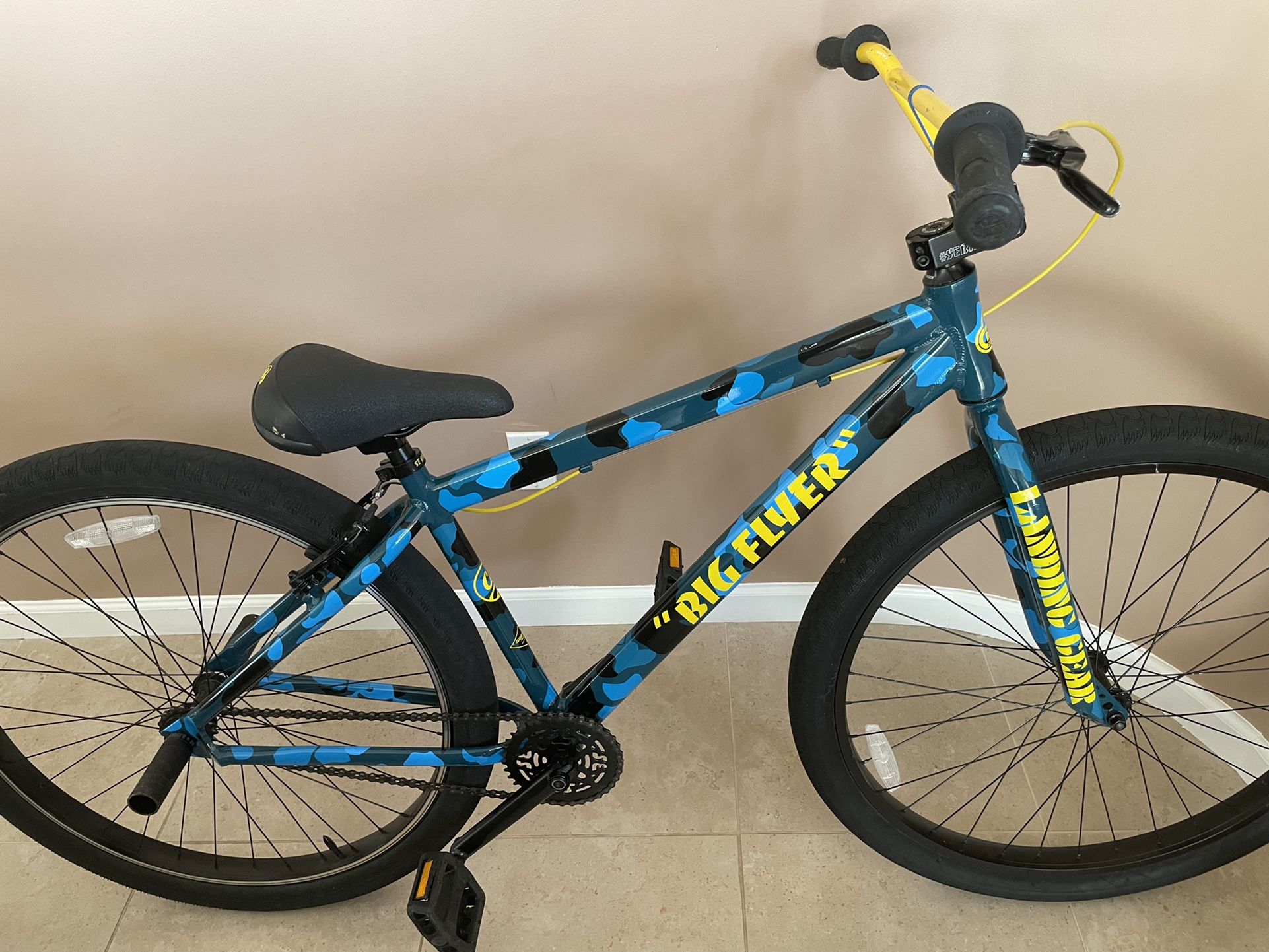
| Blocks Flyer | 26 Inches | 6061 Aluminum | Street Riding, Stunts |
| Fast Ripper | 29 Inches | 6061 Aluminum | Geared Urban Commuting |
| Quadangle 24 | 24 Inches | Cr-Mo Steel | Retro Cruising, Trail |
This shift transformed SE Bikes from a niche racing brand into a cornerstone of urban cycling culture. The bikes became deeply integrated into city riding communities, most notably highlighted by the "Bikes Up, Guns Down" movement and large-scale group rides popularized on social media.
Key Engineering and Design Characteristics
SE Bikes maintain a recognizable visual and mechanical identity that sets them apart from mountain bikes and standard commuter hybrids. Understanding these traits helps riders select the correct model for their specific needs.
- Floval Tubing: Many SE frames utilize ovalized tubing ("floval"), which increases lateral stiffness at the bottom bracket and head tube without adding excessive weight.
- Landing Gear Forks: Characterized by their multi-bend design, these forks offer high impact resistance and precise steering control.
- Retro Aesthetics: High-profile landing gear forks, pad sets, alloy valve caps, and vibrant colorways (such as "California Orange" or chrome finishes) pay homage to 1980s BMX styling.
- Single-Speed Simplicity: Many classic models feature a straightforward single-speed drivetrain, minimizing mechanical maintenance while maximizing frame durability.
Purchasing Considerations: Choosing the Right SE Bike
When buying an SE bike, prospective owners must evaluate their riding intentions, as the catalog spans multiple distinct categories.
- Racing vs. Street: If your goal is competitive track racing, look to the Super Elite series, which features modern race geometry, disc brakes, and internal cable routing. If you want to ride in the streets or join group rides, the Ripper and Flyer lines are appropriate.
- Sizing: Big-wheel BMX bikes are designed for adults, but frame sizing still matters. A 26-inch Blocks Flyer suits riders looking for a nimble stunt bike, whereas a 29-inch Big Ripper provides a stable, high-speed cruising platform for taller riders.
- Component Upgrades: Entry-level models often utilize entry-level mechanical components. Serious riders frequently upgrade components like bottom brackets, handlebars, and braking systems to handle high-stress urban riding.
Frequently Asked Questions
What does the "SE" in SE Bikes stand for?
The "SE" stands for Statewide Everything, reflecting founder Scot Breithaupt's original 1970s vision of managing a comprehensive network of BMX races, clubs, and product distribution across Southern California before the company focused exclusively on bicycle manufacturing.
Who owns SE Bikes today?
SE Bikes is owned by Advanced Sports International (ASI), a parent company that also oversees other prominent cycling brands including Fuji Bikes and Kestrel. ASI manages the global distribution and manufacturing operations while keeping the brand's design team rooted in its classic aesthetic.
Are SE Bikes good for skateparks and dirt jumps?
While SE Bikes can handle light skatepark and trail use, most modern models—especially the large 29-inch cruisers—are engineered primarily for urban cruising, commuting, and street style riding like wheelies and manuals. For dedicated skatepark and dirt jump riding, traditional 20-inch chromoly models or specialized dirt jump mountain bikes offer superior durability and geometry.
What is the difference between a Big Ripper and a PK Ripper?
The PK Ripper is a classic 20-inch high-performance race or lightweight freestyle bike featuring the iconic loop tail design. The Big Ripper scales up that design to a 29-inch wheel platform, built specifically for adult riders, taller frames, and urban street cruising.
Why are SE Bikes popular for wheelies?
SE Bikes gained dominance in the urban wheelie scene because of their long top tubes, stable 29-inch wheelbases, and responsive geometry. These design elements make it easier for riders to find and hold the balance point during manual and wheelie stunts compared to standard mountain bikes.
Image Gallery