NYC DOE Pay Schedule 2026: Official Payroll Calendar and Salary Guidelines
The NYC DOE pay schedule for 2026 follows a structured distribution based on your specific payroll bank, with Q-Bank employees receiving payments on the 1st and 16th of each month and H-Bank employees following a bi-weekly Friday cycle...
The NYC DOE pay schedule for 2026 follows a structured distribution based on your specific payroll bank, with Q-Bank employees receiving payments on the 1st and 16th of each month and H-Bank employees following a bi-weekly Friday cycle. This schedule applies to all Department of Education employees, including teachers, paraprofessionals, and administrative staff across New York City’s five boroughs. While this guide focuses primarily on the New York City Department of Education (NYC DOE) payroll system—the most frequent search intent for this term—it also serves as a framework for understanding general public sector compensation cycles.
Contents
Understanding your pay schedule is more than just knowing when the money hits your account; it involves navigating the complexities of the New York City "Payroll Portal," understanding the distinction between different payroll banks, and tracking the various contractual increases negotiated by the United Federation of Teachers (UFT) and the Council of School Supervisors and Administrators (CSA). As we move through the 2026 fiscal and calendar years, staying aligned with these dates ensures better financial planning and helps you verify that salary steps, differentials, and longevity increases are applied correctly.
The Two Primary NYC DOE Payroll Banks
The NYC DOE utilizes two distinct payroll systems, commonly referred to as "banks." Your placement in one of these banks determines your pay frequency and the specific dates you receive your salary.
Q-Bank (Semi-Monthly)
The Q-Bank is the primary payroll system for pedagogues. This includes teachers, guidance counselors, school secretaries, school psychologists, and social workers. Q-Bank employees are paid semi-monthly, typically on the 1st and 16th of each month. If these dates fall on a weekend or a bank holiday, the pay date is moved to the preceding business day.
H-Bank (Bi-Weekly)
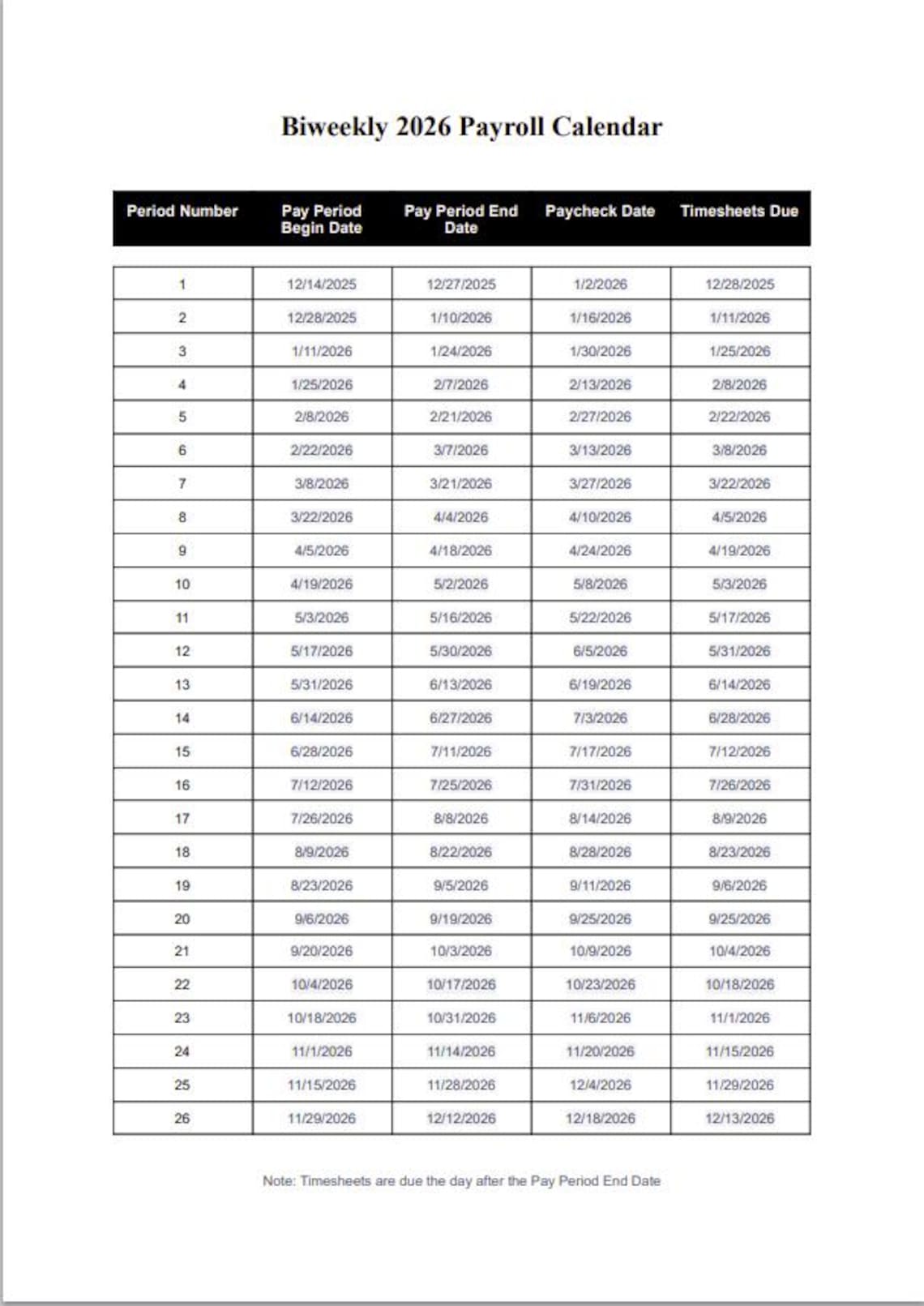
The H-Bank covers hourly employees, certain administrative staff, and various support roles. Unlike the fixed dates of the Q-Bank, H-Bank employees are paid every other Friday. This results in 26 pay periods over the course of the 2026 calendar year, though occasionally a "27th pay period" occurs in certain fiscal cycles.
Official NYC DOE 2026 Q-Bank Pay Dates
For those on the semi-monthly schedule, 2026 presents a few instances where weekend and holiday shifts affect the actual deposit date. Below is the projected 2026 Q-Bank schedule.
| Month | First Pay Date (Projected) | Second Pay Date (Projected) | Notes |
|---|---|---|---|
| January 2026 | December 31, 2025 | January 16, 2026 | New Year’s Day observation shift. |
| February 2026 | January 30, 2026 | February 13, 2026 | Feb 1st is Sunday; Feb 16th is Presidents' Day. |
| March 2026 | February 27, 2026 | March 16, 2026 | March 1st is Sunday. |
| April 2026 | April 1, 2026 | April 16, 2026 | Standard cycle. |
| May 2026 | May 1, 2026 | May 15, 2026 | May 16th is Saturday. |
| June 2026 | June 1, 2026 | June 16, 2026 | Standard cycle. |
| July 2026 | July 1, 2026 | July 16, 2026 | Standard cycle. |
| August 2026 | July 31, 2026 | August 14, 2026 | Aug 1st and 16th fall on weekends. |
| September 2026 | September 1, 2026 | September 16, 2026 | Standard cycle. |
| October 2026 | October 1, 2026 | October 16, 2026 | Standard cycle. |
| November 2026 | October 30, 2026 | November 16, 2026 | Nov 1st is Sunday. |
| December 2026 | December 1, 2026 | December 16, 2026 | Standard cycle. |
Official NYC DOE 2026 H-Bank Pay Dates
H-Bank employees follow a bi-weekly cycle. Because 2026 begins on a Thursday, the specific Friday sequence depends on your pay cycle offset. Most DOE hourly staff will follow the schedule below:
- January 9, 2026
- January 23, 2026
- February 6, 2026
- February 20, 2026
- March 6, 2026
- March 20, 2026
- April 3, 2026
- April 17, 2026
- May 1, 2026
- May 15, 2026
- May 29, 2026
- June 12, 2026
- June 26, 2026
- July 10, 2026
- July 24, 2026
- August 7, 2026
- August 21, 2026
- September 4, 2026
- September 18, 2026
- October 2, 2026
- October 16, 2026
- October 30, 2026
- November 13, 2026
- November 27, 2026 (Black Friday - Banks may process early)
- December 11, 2026
- December 24, 2026 (Shifted for Christmas Day)
Salary Steps, Differentials, and Longevity Increases
In 2026, many DOE employees will see adjustments to their pay based on the multi-year UFT contract. It is vital to cross-reference your pay stub against these milestones.
Salary Steps (1A through 8B)
Most DOE staff advance a "step" twice a year—once on the anniversary of their hire date and once on March 1st. In 2026, you should verify that your "Step" on the payroll portal updates correctly during these windows. If you are at the maximum step (8B), your increases will primarily come from longevity increments.
Salary Differentials
Differentials are additional pay for earned credits beyond a Bachelor's degree (e.g., C1+ID, C1+PD, C2+ID). If you complete your coursework in late 2025, your 2026 pay schedule should reflect these changes. Note that the DOE often takes 12-20 weeks to process differential applications, but the pay is generally retroactive to the date the application was submitted or the credits were earned.
Longevity Increments
Longevity pay is added after 5, 10, 13, 15, 18, 20, and 22 years of service. For 2026, the specific dollar amounts for these increments are governed by the 2022-2027 UFT contract. These are cumulative and significantly impact your "gross" amount shown on each check.
How to Access and Interpret Your Pay Stub
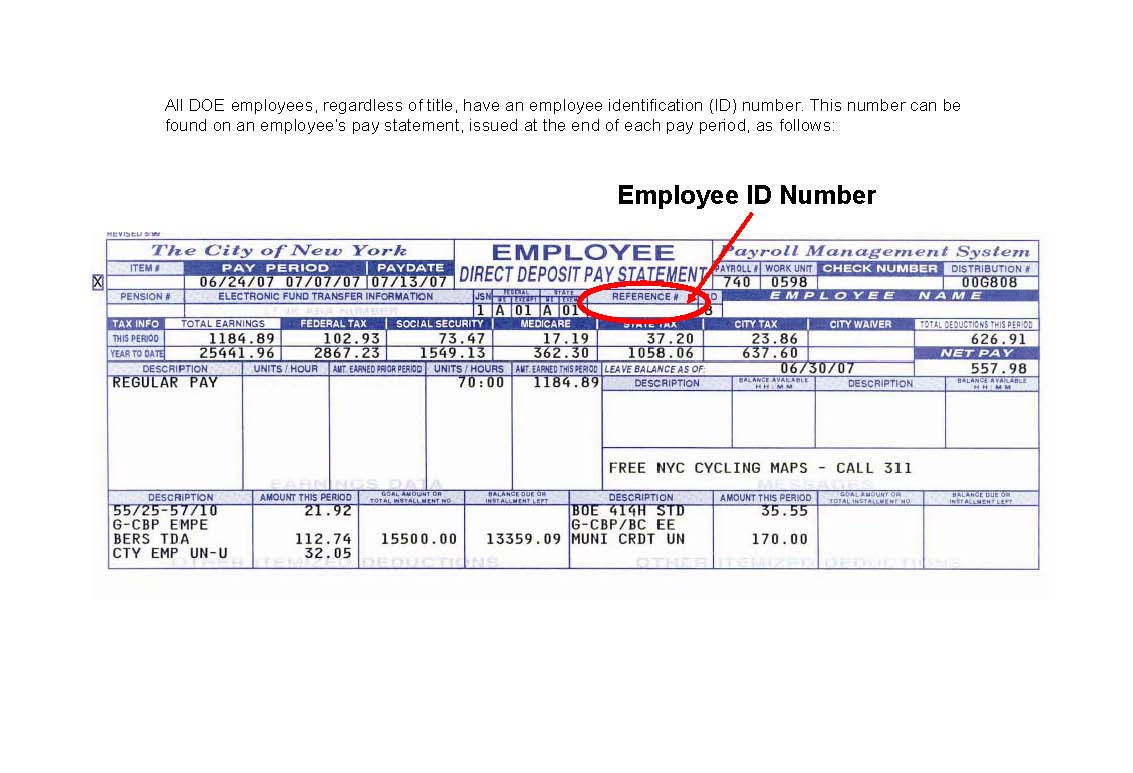
The NYC DOE Payroll Portal is the central hub for all financial information. To ensure your pay is accurate in 2026, you should check your "Pay Details" at least two days before each scheduled pay date.
- Gross Pay: Your base salary divided by 24 (for Q-Bank) or 26 (for H-Bank).
- Net Pay: The amount actually deposited into your account after deductions.
- Payroll Codes: Look for codes like "REG" (Regular Pay), "ADJ" (Adjustment/Retroactive), and "LIF" (Longevity).
- Deductions: These include federal, state, and city taxes, as well as Social Security (FICA) and Medicare.
In 2026, it is important to monitor the "Tax Info" section of the portal, especially if there are changes to city tax brackets or your personal filing status.
Mandatory and Voluntary Deductions
Navigating your pay schedule also requires understanding why your net pay might fluctuate.
- TRS (Teachers' Retirement System): Most pedagogues are part of Tier 4 or Tier 6. Tier 6 members have a variable contribution rate (between 3% and 6%) based on their annual salary. In 2026, if a salary increase pushes you into a higher bracket, your TRS deduction will increase, which may slightly lower your expected net increase.
- UFT Dues: Union dues are automatically deducted.
- TDA (Tax-Deferred Annuity): If you participate in the TRS TDA program, these are pre-tax deductions. You can change your contribution percentage via the TRS portal, which will reflect in your DOE pay schedule within one to two pay cycles.
- Health Benefits: While basic health insurance through the city is generally premium-free for most plans (like GHI-CBP), optional riders or specific plan selections may result in bi-weekly or semi-monthly deductions.
Per Diem and Per Cowl Payment Timelines
If you are a substitute teacher or an regular employee performing extra work (Per Cowl), your pay schedule differs from the standard salary distribution.
- Reporting Cycles: Per Cowl hours are usually reported by your school's payroll secretary. There is typically a one-cycle lag between the time work is performed and the time it appears on your check.
- Verification: Always keep a personal log of hours worked in 2026. If hours worked between Jan 1-15 do not appear on the Feb 1 check, contact your school secretary immediately.
- Summer Pay: For pedagogues, summer pay is usually distributed in four "checks" (or deposits) during July and August. These are essentially your "banked" salary from the school year and follow the Q-Bank summer schedule.
Troubleshooting Missing or Incorrect Payments
Despite the automated nature of the NYC DOE payroll system, errors can occur. In 2026, use the following protocol to resolve issues:
- Compare with the Portal: Check if the gross pay matches your expected step and differential.
- Check for "Garnishments" or "Refunds": Sometimes the DOE processes "overpayment recovery" which can reduce a check without much warning.
- Speak with the School Secretary: The payroll secretary at your site has access to the "EIS" (Employee Information System) and can see if a specific payment was "pulled" or not processed.
- Contact HR Connect: If the issue is not resolved at the school level, the HR Connect service center is the official escalation point for DOE employees.
Comparison: Q-Bank vs. H-Bank
| Feature | Q-Bank (Pedagogical) | H-Bank (Hourly/Administrative) |
|---|---|---|
| Frequency | Semi-Monthly | Bi-Weekly |
| Number of Checks | 24 per year | 26 per year (sometimes 27) |
| Primary Date | 1st and 16th | Every other Friday |
| Weekend Rule | Moves to Friday (or earlier business day) | Generally remains on Friday |
| Eligible Roles | Teachers, Counselors, Secretaries | Paras (hourly), Sub Teachers, Aides |
FAQs: NYC DOE Pay Schedule 2026
What happens to my pay if the 16th falls on a Monday holiday? If a pay date falls on a holiday (such as Martin Luther King Jr. Day or Presidents' Day), the payment is traditionally deposited on the last business day before the holiday. In 2026, for example, if the 16th is a holiday Monday, you can expect the deposit on Friday the 13th.
Why is my first check in September smaller than usual? The first check in September often covers a partial pay period depending on when the school year officially begins for staff. Additionally, some deductions that were paused over the summer may resume, affecting your net total.
When will I receive my retroactive pay in 2026? Retroactive pay depends on the timing of contract implementations or differential approvals. If you are waiting for retro pay from a 2025 differential application, it typically arrives as a separate line item labeled "ADJ" on a standard Q-Bank or H-Bank check.
Are paraprofessionals on the Q-Bank or H-Bank? Most paraprofessionals are on the H-Bank because they are technically hourly employees, even though they work a set schedule. However, certain "Lead Paras" or those in specific administrative roles might have different designations. Always check your Payroll Portal "Profile" to confirm your bank.
How do I change my direct deposit for 2026? Direct deposit changes must be made through the NYC DOE Payroll Portal. It typically takes one to two pay cycles for a new account to be verified through a "pre-note" process, during which time you may receive a physical check at your school or by mail.
Will there be a salary increase in 2026? Based on the current UFT contract (2022-2027), there are scheduled percentage increases and "Retention Bonuses" that occur annually. In 2026, a 3% general salary increase is scheduled to take effect, usually in the month of May or September, depending on the specific bargaining unit's schedule.
Ensure you maintain a copy of the 2026 pay calendar in your workspace or digital planner to avoid confusion during school holidays and breaks. For the most accurate and up-to-date individual information, always refer to the official NYC DOE Payroll Portal.
Image Gallery